
Trescore–Lovere Tramway
The Trescore–Lovere tramway, also known as the Val Cavallina tramway, was part of an integrated transport network connecting the provinces of Bergamo and Brescia via Lake Iseo.
Opened in stages between 1904 and 1908, the line was steam-operated and had long sections on its own right-of-way, making it similar to a railway. It was closed in 1931 in favour of a bus service.
History
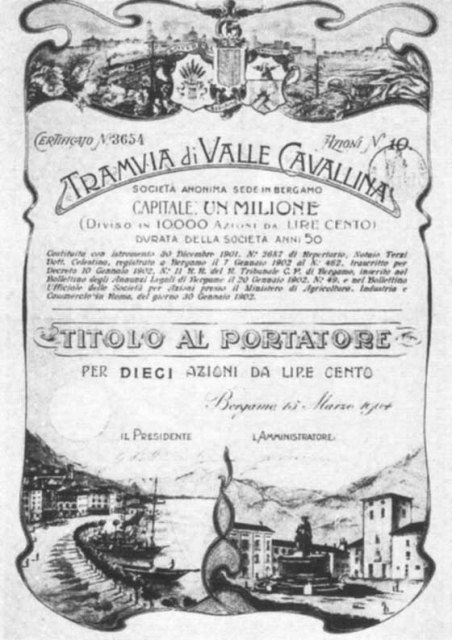
On 3 June 1901, the Società Tramvia di Valle Cavallina (TVC) was established to build and operate a tramway along the Trescore–Endine–Pianico–Castro–Lovere route, complementing the recently completed Bergamo–Trescore–Sarnico tramway. The concession was granted for 50 years from the date of the decree approved by the court of Bergamo; among the financial backers was the Banca bergamasca di depositi e conti correnti, which also supported other public enterprises such as the Sarnico tramway and the Brembana Valley railway.
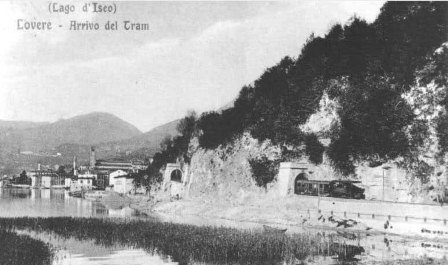
Construction work began, and by 30 June 1904 the line was ready as far as Sovere, a municipality overlooking the lake; the inauguration took place the following day, 1 July 1904. The terminus, located above Lovere, however caused discontent, and an extension down to the lake port was called for to facilitate transfers to steamboats for Iseo, as well as to allow onward travel on the Camonica Valley tramway, the Lovere–Cividate Camuno Tramway.
The new extension to Lovere was finally inaugurated on 1 January 1908, with two daily round trips on the entire Bergamo–Lovere route, in addition to the five daily round trips scheduled between Trescore and Lovere–Pianico; travel time was one hour and thirteen minutes.
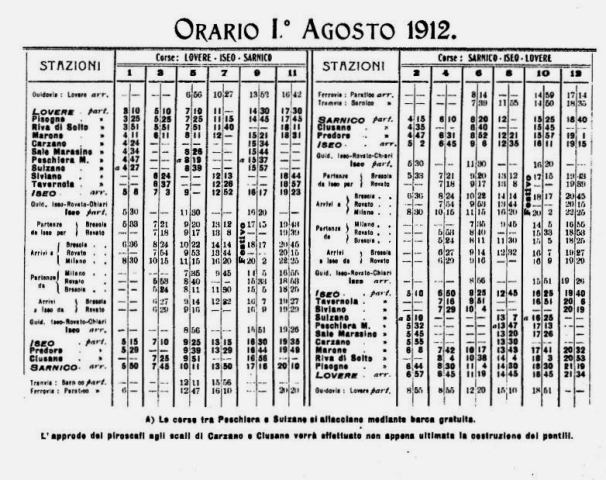 From November 1917, the tram service on the Val Cavallina line was extended from Trescore to Bergamo, while the service on the other line was limited to Trescore–Sarnico.
It was precisely the Trescore–Sarnico section that was suppressed in 1921, leading to discussions about suppressing the remaining section to Bergamo as well as the Val Cavallina line, provoking opposition from the mayors of the affected towns, industrialists, and the fascist Lombard railway workers' union. The operating deficit accumulated by the management company, which was severely affected by the economic crisis following the Great Depression, proved too onerous for the provincial administration called upon to restore it.
The entire Bergamo–Lovere service ceased on 16 December 1931, replaced by buses operated by the Luigi Busti company of Bergamo, which had already been running the Bergamo–Lovere–Darfo bus line since 1929. The same company also operated the Bergamo–Sarnico bus line.
Characteristics
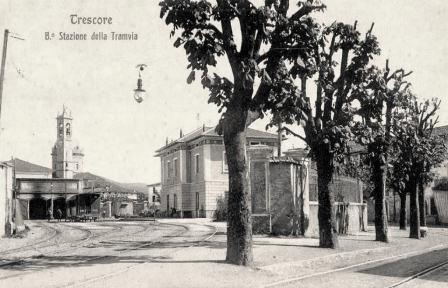
According to the local press, the Trescore–Lovere line "can be called more than a simple tramway, an economic railway, both for the quality of the locomotives, carriages and wagons, and for that stretch of private road that goes from Piangaiano to Lovere".
The entire line, with gradients on a six-kilometre section reaching 35 per thousand, measured just under fifty kilometres in total, twenty-nine of which constituted the newly built section. To reach Lovere from Bergamo took two hours and forty minutes.


Rolling stock
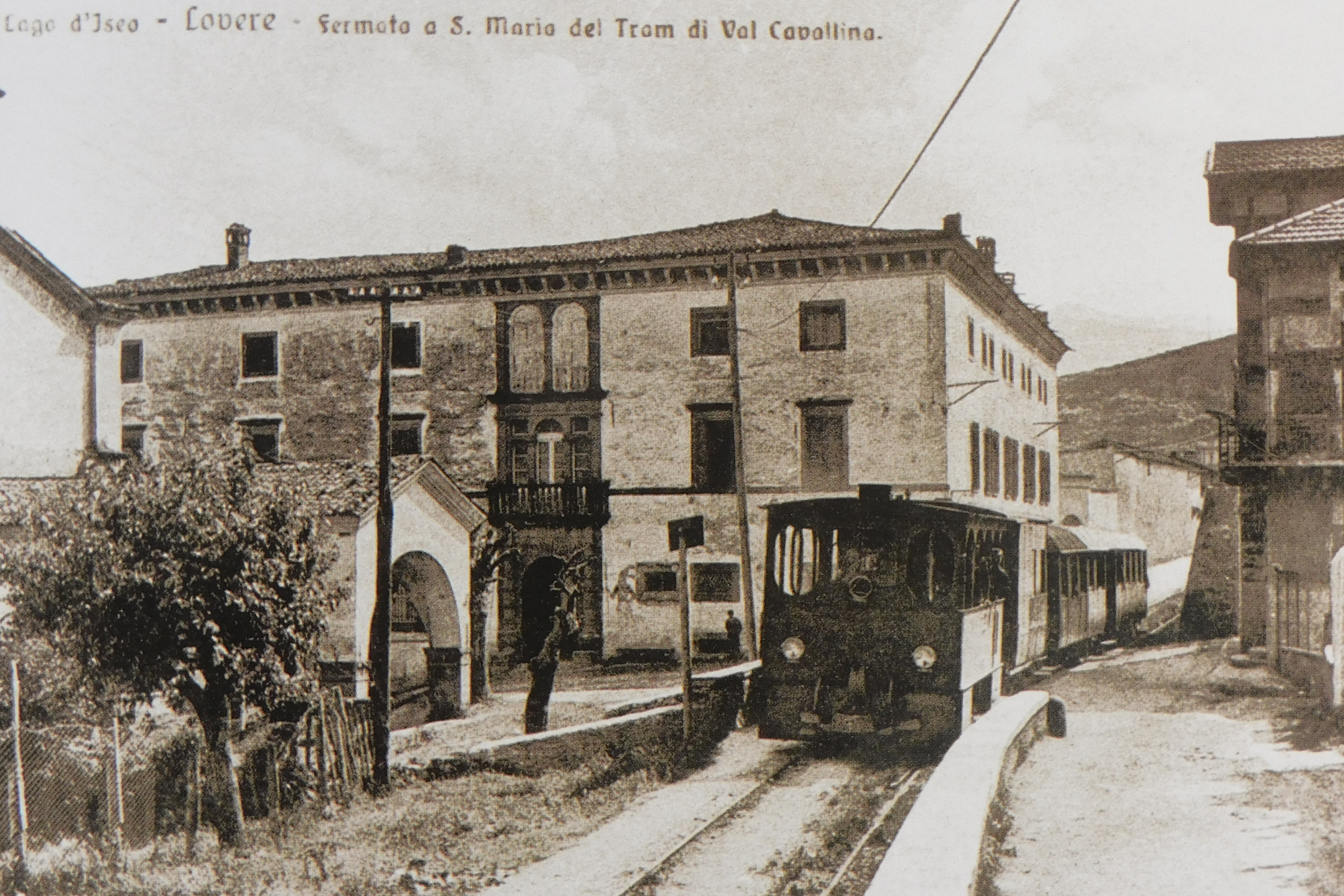
On the Bergamo–Trescore–Lovere–Bersaglio line, four Borsig steam locomotives, numbered 1 to 4, built in 1904/1905, were in service. Equipped with three driving axles (C wheel arrangement), they could reach a speed of 45 km/h, outperforming traditional trams and many economic railways. They cost twenty thousand lire each.
The carriages were supplied by Carminati e Toselli of Milan and came in two types: the longer ones, on bogies, were divided into compartments; the other, smaller ones with radial axles, featured the classic single saloon suitable for local services. All units were fitted with Westinghouse brakes.
After the First World War, the Seriana Valley Railway company, which also operated the , expressed its intention to abandon the latter. In 1921, following opposition to the closure from local administrations and public opinion, this company decided to donate the infrastructure and rolling stock to the provinces of Bergamo and Cremona. To ensure its operation, the two administrations entered into a provisional agreement with the TVC and the Bergamo–Trescore–Sarnico tramway (BTS). The new agreement lasted from 1 August to 31 December 1921 and saw the transfer of rolling stock from Bergamo FVS station to the station shared by the two tram lines.
See also
- List of railway stations in Lombardy
- History of rail transport in Italy
- Trescore Balneario
- Bergamo–Trescore–Sarnico tramway
- Monza–Trezzo–Bergamo tramway
- Lovere–Cividate Camuno Tramway
Bibliography
Available on Google Books