
Tormini–Vestone–Idro Tramway
The Tormini–Vestone–Idro tramway was a tramway line of the extra‑urban Brescia tram network that connected Tormini, a frazione of Roè Volciano and a tram stop of the Brescia–Salò–Gargnano Tramway, to Vestone and Idro.
History
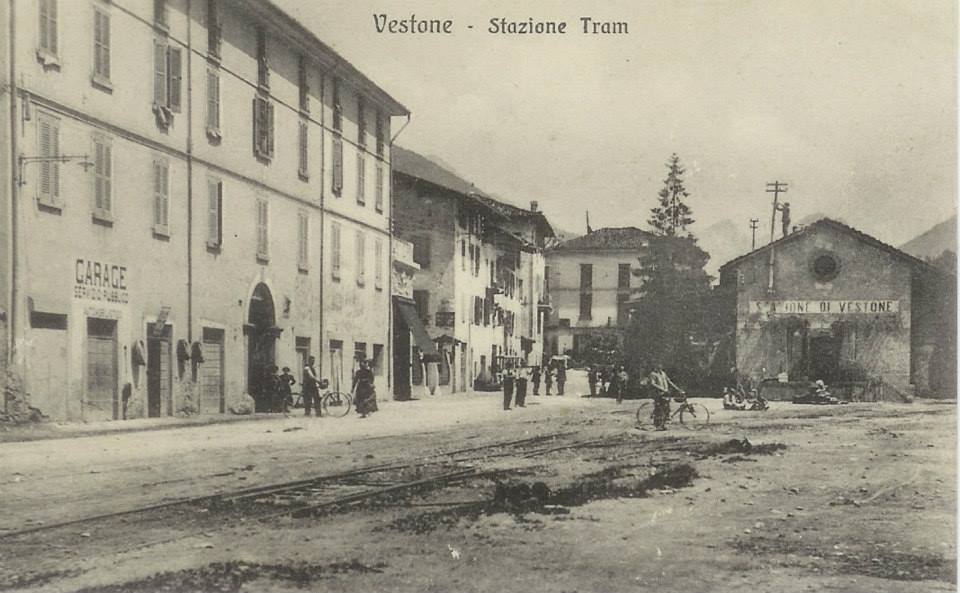 Its creation was mainly due to the interests of the Migliavacca Ironworks of Vobarno in having a fast connection to the Milan–Venice railway. Before its construction, the Province of Brescia had advanced projects aimed at connecting the capital Brescia with Trento, via a railway line passing by Lake Garda, or with Bolzano, through the Val Sabbia and the Giudicarie valleys.
The Provincial Deputation accepted the application of the engineer Giovanni Corti for the construction of a Brescia–Vobarno tramway. As happened for the other tramway concessions obtained in the province, he transferred the concession first to the British company The Province of Brescia Steam Tramway Company Limited, and then to the Belgian Tramways à Vapeur de la Province de Brescia (TPB), which began construction work. The Ministry of Public Works authorised the opening of the line on condition that at least five metres of width be guaranteed for the roadway not occupied by the tracks in urban streets, which rose to six for extra‑urban ones, and that curves have a minimum radius of 40 metres. The first section, from Brescia to Rezzato, was opened to public service on 21 June 1881; Gavardo was reached on 1 October, while the final section up to Vobarno was activated on 8 December.
The provincial administration immediately requested an extension to Barghe, while the municipalities of the Upper Val Sabbia asked for Vestone to be reached. The TPB accepted the extension on condition that the tramway be connected to the Vobarno ironworks. Work therefore continued: on 14 June 1885 Barghe was reached, on 19 September 1886 the tram arrived at Ponte del Re, a frazione of Nozza (now part of Vestone), while Vestone became the terminus from 25 August 1887. Three months earlier, on 1 May 1887, the tramway connecting Tormini to Salò was activated; from then on, the main service was diverted to the Garda line, while the service towards Val Sabbia terminated at Tormini, connecting with services coming from, or destined for, the capital.
In May 1907, the Società Elettrica Bresciana (SEB) took over the operation of the Brescia extra‑urban tram network with the primary aim of switching to electric traction. Work for the electric conversion began in 1914: the renovated section was opened to public service on 20 April of the same year.
During World War I, the Italian front was stationed at Ponte Caffaro, where the Decauville Ponte Caffaro–Storo–Baitoni railway had been built for the transport of materials. At the request of the General Staff, between April and June 1917, the SEB extended the tramway to Idro, opening it to service, with steam traction, on 10 July. At the same time, studies and work were prepared to lay the tracks as far as Ponte Caffaro. The Military Engineering Corps intended to have the new line ready within a few months, also exploiting the potential of the Rezzato–Vobarno railway and transforming the Vobarno Ferriera railway station into an interchange point between trains and trams. In early 1918, the electrification of the new section up to Idro was completed.
The end of the war suspended the projects, leaving several issues for the province to deal with, such as the reimbursement for the expropriations of the Vestone–Idro line and the continuation of the Military Engineering Corps' work on the Idro–Ponte Caffaro line. The offers from the Ministry of War for the transfer of the work carried out on the section up to Idro–Ponte Caffaro were not accepted by the provincial administration, because they were considered excessively burdensome for the finances of the local authority. In February 1924, the Royal Extraordinary Commission, which administered the province of Brescia at that time, renounced any negotiations with the military authorities and the tramway remained terminated at Idro.
The latter, at the beginning of the 1930s, began a policy of suppressing tram lines: in the summer of 1931, the Vestone–Idro section was suppressed, followed on 1 June 1932 by the section between Tormini and Vestone. Thanks to the Royal Decree of 14 October 1932, n. 1496, which favoured the transition from tram services to bus services, the TEB began a bus service to replace the tram service along the Vobarno Ferriera–Vestone–Idro route. Tram service was maintained between Tormini and Vobarno, transferring it to the railway track between the stations of Tormini Stazione and Vobarno Ferriera, pending the construction of a connection between the railway and the tramway near the latter yard. However, the connection was never built, despite requests from the municipalities of Val Sabbia, and the tram service was suppressed in November 1935.
Characteristics
At the time of opening, the rails used were of the Vignoles type weighing 18 kg/m. Following the renovation carried out by the Società Elettrica Bresciana, the weight of the new rails was 22 kg/m on extra‑urban sections and 34 kg/m on urban ones.
The traction of the convoys was steam‑operated until 1914, when the tramway was electrified with 1200 V direct current, extended to the Vestone–Idro line in early 1918.
Service
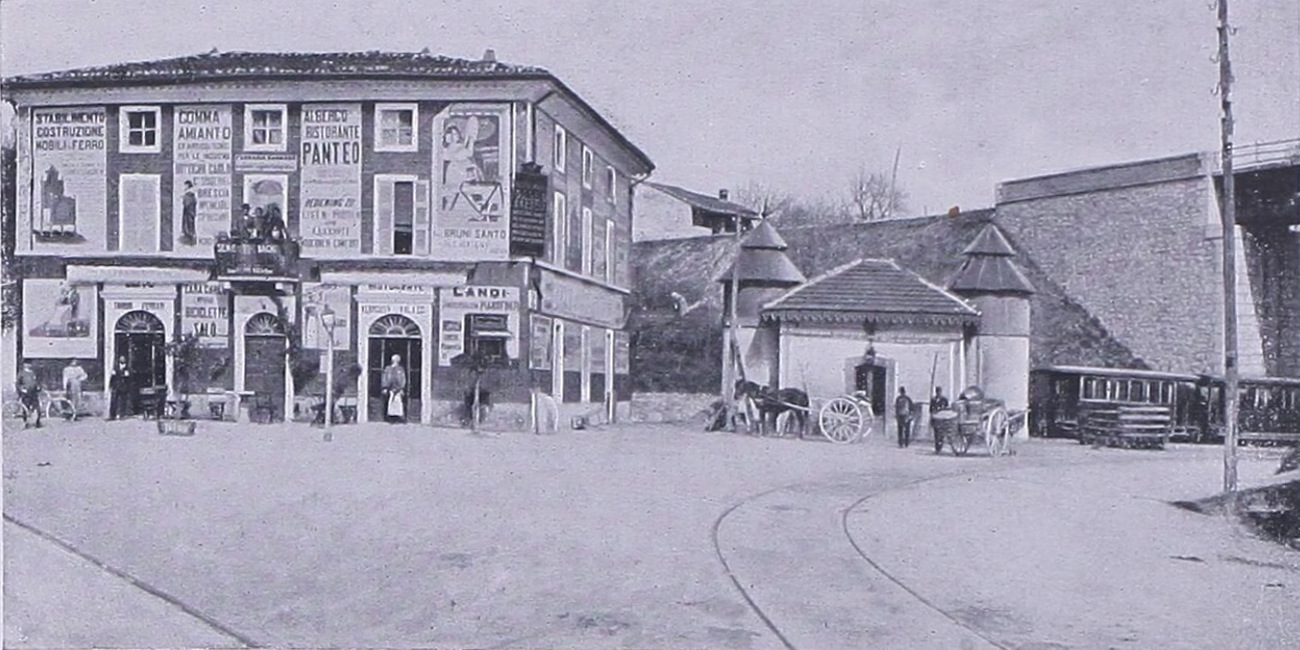
Before the opening of the Tormini–Salò section, the tram service operated on the Brescia–Vobarno route until 1885, when the terminus was moved to Barghe. The latter remained the terminus until September 1886, when the section up to Ponte del Re di Nozza was opened.
From 1 May 1887, the service operated on the Tormini–Nozza route until the opening of the section reaching Vestone.
With the opening of the section to Lake Idro, the service operated with pairs of Vestone–Idro services separate from the Tormini–Vestone services, but connecting with them.
See also
- History of rail transport in Italy
- List of railway stations in Lombardy
- Lodi–Treviglio–Bergamo Tramway