
Second Afghan-Mughal War (1532–1540)
The Second Afghan-Mughal war was fought between Humayun and Afghans under the leadership of Sher Shah Suri. It resulted in Afghan victory in 1540, all Mughals were expelled from India.
Battle of Daurah
In 1532, at a place called Daurah on the river gomti, Humayun defeated the Afghan forces under Biban and Bayazid that had conquered Bihar and overrun Jaunpur in eastern Uttar Pradesh. Shiekh Bayazid was killed and back of Afghan opposition broken. Some of the Afghan sardars fled to the court of Bahadur shah of Gujarat and found refuge there.
First Siege of Chunar
After This success Humayun seized the fort of chunar known as gateway of eastern India. It had recently come in the possession of Afghan, known as Sher khan, who had become the most powerful of Afghan Sardars. After the siege of Chunar that had gone on for AbOUT months, Sher khan persuaded Humayun to allow him possession of the fort. In return he promised to be loyal to the Mughals and sent one of his sons to humayun as a hostage. Humayun accepted the offer because he was anxious to return to Agra.
Humayun's campaign against Gujarat
He then marched against Bahadur Shah in the west who was pursuing a policy of expansion. In 1535 Humayun defeated the Shah at Gujarat. During Humayun campaign in Gujrat, Sher Shah had further strengthened his position in bihar. Shortly after Humayun's return to Agra, he defeated Bengal king and compelled him to pay huge indemnity.
First Siege of Chunar
Towards the end of 1537 Humayun marched against Sher Shah and besieged chunar fort which was occupied by Sher Shah's son Jalal khan. The fort was strongly defended by afghans and it took six months for humayun to capture it.
Sher Khan invasion of Bengal
In the meanwhile sher khan invaded Bengal for second time and captured its capital Gaur. Though Humayun managed to oust Sher Shah temporarily from Bengal's capital of Gaur, he was soon trapped by the monsoon and lost part of his army to bad weather
Battle of Chausa
At Chausa, The armies of Sher Shah and Humayun lay facing each other for three months (April to June 26, 1539), but neither of them took up the offensive. Sher Shah purposely delayed the contest, as he felt that the coming of rainy season would hamper the Mughal army and give them a decided advantage over the. During the period there was an interchange of envoys for a peaceful settlement but it did not worked. The Afghan chief showed his hand as soon as the rains set in. the Mughal encampment, which stood on the low land between the Ganga in the north and the Karmanasa in the west, was flooded, causing confusion and indiscipline among its ranks.
Sher Shah made a surprise attack on the Mughals. The Afghan army, which was divided into three divisions under Sher Khan, his son Jalal Khan, ands his greatest general Khawas Khan respectively, attacked the Mughals from three directions. Consternation fell upon the imperialists. The whole of the Mughal army was defeated. Humayun himself, attended by a few men, fled towards Agra. In the battle fell eight thousand Mughals troops and a number of Mughal notables, including the restless Muhammad Zaman Mirza was eihter killed or drowned.
Battle of Kanauj
Following Chausa, the Muslim Sher Shah drove the Moghul Humayun to the west, defeating him again at Kanauj on the Ganges River in April 1540. 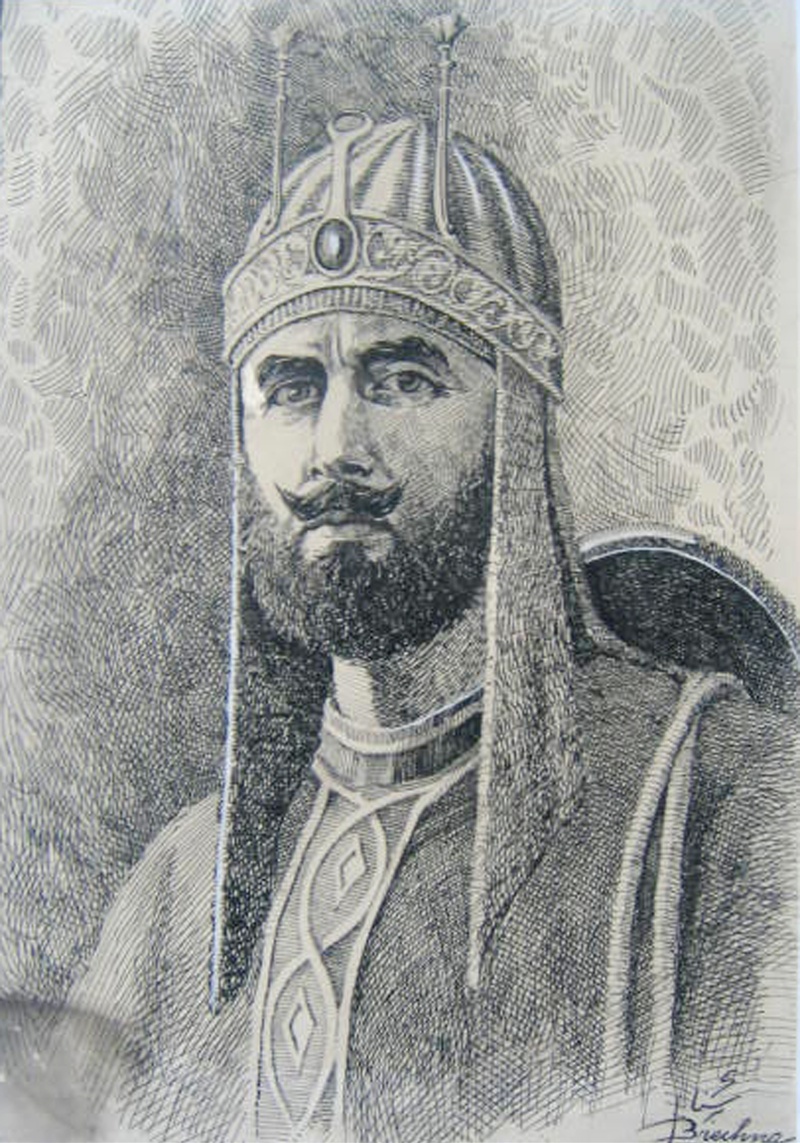
Battle of Bilgram
In February 1540 Humayun proceeded to meet the enemy and reached Bhojpur near Kanauj, and set up his encampment there. Sher Shah, who had already arrived, pitched his camp on the other side of the Ganga opposite Kanauaj at a distance of about 23 miles from Humayun’s encampment. Humayun’s troops continued to swell; their number reached two lakhs. One month passed, neither side taking the offensive. The only activity displayed by Humayun was to cross the Ganga to the side of the town of Bilgram. He encamped at a distance of 3 miles from the Ganga and near Bilgram.
On May 15 there was heavy shower of rain which swamped the Mughal camp. It was consequently decided to shift the encampment to a higher spot in the neighbourhood. As the Mughals issued out of their camp to make a demonstration on 17 May 1510, preparatory to the shifting of their camp which was fixed for the following day, Sher Shah ordered his men to take the field and launch an attack on the enemy. Sher Shah cleverly deprived Humayun of the use of his heavy guns. Moreover, the Mughals, who were not yet ready for battle, were taken by surprise. Humayun had already Appointed Mirza Haider his generalissimo under whose direction the Mughal troops were quickly marshalled in battle array. Humayun and Mirza Haider commanded the centre. The left wing, which was near the river, was placed under Hindal, while the right wing was commanded by Yadgar Nasir Mirza. Askari led the advance guard. The front was stiffened by 5,000 matchlock men. There was no reserve and no flanking parties. The effective fighting strength of the Mughals was 40,000.
The heavy Mughal guns could not be drawn to the battle-ground in the hurry of the contest, the Mughal artillery played no part. The artillery was totally useless. The army of Afgan King Sher Shah Suri completely defeated the Mughal army of Humayun. Humayun had to flee to Agra. He crossed the river with difficulty. A vast number of his men were drowned in the Ganga and he had only a small band of followers left.
Aftermath
Humayun fled to Agra. When the Afghans followed him, the emperor abandoned the city and hurried west to Lahore. Hardly had he reached Lahore when news came that the Afghans had taken the capital city of Agra. Meanwhile, Sher Shah reached the Punjab and sent his general in pursuit of Humayun, instructing him not to capture the emperor but to drive him out of India. Sher Shah suri founded the Sur Dynasty of India with its capital at Delhi.
See also
- First Afghan-Mughal War (1526–1529)
- Third Afghan-Mughal War (1555–1561)