
Fifth Afghan-Mughal War (1580–1630)
From 1580 to 1630, Afghans in the North West and Bengal resisted Mughal military expeditions against them. Bengal was properly conquered in 1612 while Yousafzai Afghans in the North west successfully maintained their Independence.
Roshaniyya Movement
Pir Roshan assembled Pashtun armies to fight against the Mughal emperor Akbar in response to Akbar's continuous military agitations, and to counter Akbar's Din-e Ilahi. He established his base in the Tirah valley where he rallied other tribes to his cause. He eventually raised the flag of open rebellion to the Mughal Emperor Akbar after Akbar's proclamation of Din-i-Ilahi and although he led his army successfully in several skirmishes and battles against Mughal forces, they were eventually routed in a major battle in Nangarhar by the Mughal General Muhsin Khan. He escaped but later would be surrounded, and wounded, by a Yousafzai Lashkar near Topi and later killed by them near Tarbela in 1581.
Afghan uprising in Bengal
In 1579, rebellion duly broke out. Led by Baba Khan Qaqshal and Ma‘sum Khan Kabuli, a manṣabdār who had come from Bihar to join the Bengal revolt, the rebels seized and plundered the official fortress in Tanda, executed Akbar’s hapless governor, and set up a “revolutionary government” amongst themselves. Hindu zamīndārs in both the southeastern and the southwestern delta swiftly threw off their allegiance to the Mughals, while other disaffected manṣabdārs in Bihar joined the movement in Bengal. For two years the delta passed completely beyond imperial authority, until 1582–83, when Akbar’s application of overwhelming force eventually quashed the revolt. Only one high-ranking Mughal officer would remain at large, the unrepentant Ma‘sum Khan Kabuli, who led a bitter fight against Mughal authority down to his death seventeen years late In 1582-3 rebellion broke out among the Afghans led by Qatlu Khan and his son, Osman; though finally the emperor's much larger and better-equipped army of Delhi emperor prevailed. It took until 1612 to conclusively defeat the Afghan rebels. the ...r.
Defeat of Birbal by Yousafzais
After troops sent to crush the Yousafzai Afghans suffered losses, Akbar sent Birbal with reinforcements from his new fort at Attock, to help the commander Zain Khan in 1586. Birbal and the army advanced into a narrow pass in Swat valley (present-day Pakistan) where the Afghans were waiting in prepared positions in the hills. In the ensuing heavy defeat, Birbal and over 8000 soldiers were killed and his body was never found.
This was one of the largest military losses for Akbar. He was said to have expressed his grief over the loss his favourite courtier and not taken food or drink for two days. He was anguished since his body could not be found for Hindu cremation. He proclaimed that it was his greatest tragedy since his coming to the throne.
Badayuni writes,
His majesty cared for the death of no grandee more than for that of Bir Bar. He said, 'Alas! they could not even get his body out of the pass, that it might have been burned"; but at last, he consoled himself with the thought that Bir Bar was now free and independent of all earthly fetters, and as the rays of the sun were sufficient for him, there was no necessity that he should be cleansed by fire.
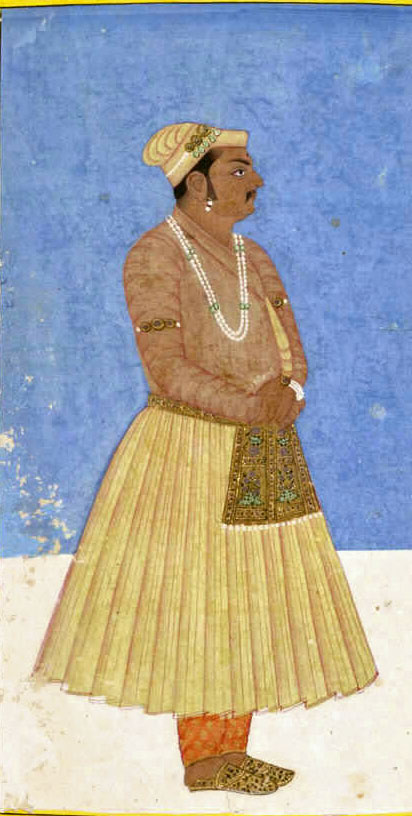
Military expedition of Todar Mal in Yousafzai country
Akbar immediately fielded new armies to reinvade the Yusufzai lands under the command of Raja Todar Mal. Over the next six years, the Mughals tried to contain the Yusufzai in the mountain valleys but failed.
Afghan resistance from 1592 to 1630
After Jalala's death on the battlefield, his nephew Ahdad (also spelled Ihdad)Khan took charge of the struggle against many of the famous Mughal commanders of that time, like Raja Man Singh, Zain Khan Kokaltash, Qaleech Khan, Mahabat Khan, Ghairat Khan and Muzaffar Khan. As part of a concerted campaign to destroy the Roshaniyyas, around 1619 or 1620, Mahabat Khan, under the Emperor Jahangir, treacherously massacred 300 Daulatzai Orakzai in the Tirah (which straddles the Khyber and Kurram agencies today), who were Roshaniyya members. Absent and on a visit to see Emperor Jahangir at Rohtas, Ghairat Khan was sent back to the Tirah region to engage the Roshaniyya forces with a large military force via Kohat. He advanced to the foot of the Sampagha pass, which was held by the Roshaniyyas under Ahdad Khan and the Daulatzai under Malik Tor.
The Rajputs attacked the former and the latter were assailed by Ghairat Khan's own troops, but the Mughal forces were repulsed with great loss. Six years later, however, Muzaffar Khan, son of Khwaja Abdul Hasan, then Sibahddr of Kabul, marched against Ahdad Khan by the Sugawand pass and Gardez, and after five or six months' of intense fighting, Ahdad Khan was killed fighting sword in hand and his head sent back to Emperor Jahangir. Ahdad Khan's Roshaniyya followers then took refuge in the Logar. The death of Jahangir in 1627 led to a general uprising of the Pashtuns against Mughal forces to put an end to attempts of Mughal domination.
Later Abdul Qadir, Ahdad's son, along with his mother and Ahdad's widow, Allai Khatoon (daughter of Pir Jalala), returned to the Tirah to seek badal (vengeance). There, under Abdul Qadir's command, the Roshaniyya defeated Muzaffar Khan's forces. Muzaffar Khan was attacked while on his way from Peshawar to Kabul, and severely handled by the Orakzai and Afridis. Muzaffar Khan was killed near Peshawar. Abdul Qadir attacked Peshawar, plundered the city, and invested the citadel.
It was not till the time of Mughal Emperor Shah Jehan (1628–1658) the grandson of Emperor Akbar (1542–1605) when a truce was brokered through Mughal commander Said Khan with Abdul Qadir, Bayazid's great grandson.
See also
- Sixth Afghan-Mughal War (1667–1678)