
Moonga
Moonga is a gotra found amongst Rajput and Khatri clans originally from Punjab and Haryana. In India, Moonga is a popular Khatri family name of Hindus and in fewer number Sikhs.
The Moongas are descendants of the Chandravanshi Rajputs, in North India. They were amongst the most educated clans and were the most senior in the whole of the Punjab, apart of the 36 royal castes of Rajputs.
The Moonga tribe was mentioned by the Greek historians, at the time of Alexander's invasion in the 4th century B.C. The Greek historians mention a ruler Phegelas or Phegus of a native tribe, when Alexander approached the river Hyphasis (Beas) in 326 BC.
Alexander's invasion of the Punjab
Alexander overran the Achaemenid Empire in 331 BCE and marched into present-day Afghanistan with an army of 50,000. His scribes do not record the names of Gandhara or Kamboja; rather, they locate a dozen small political units in those territories. This lessens the possibility of Gandhara or Kamboja having been great kingdoms in the late 4th century BCE. In 326 BCE. Most of the dozen-odd political units of the former Gandhara/Kamboja Mahajanapadas were conquered by the Macedonian conqueror.
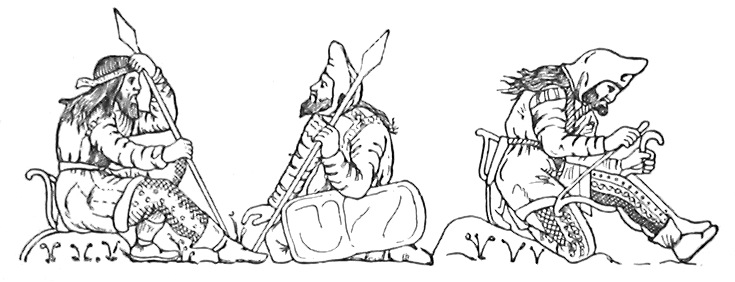
Alexander invited all the chieftains of the former satrapy of Gandhara to come to him and submit to his authority. Ambhi, ruler of Taxila, whose kingdom extended from the Indus to the Hydaspes (Jhelum), complied. After confirming him in his satrapy, Alexander marched against those who had refused to submit to him, including the Sakas (Moongas are considered to be descendents of the Sakas) and Kamboja highlanders of the Kunar also Swat valleys known in Greek texts as Aspasios and Assakenois (q.v.) and in Indian texts as Ashvayana and Ashvakayana (names referring to their equestrian nature).
Thereafter, Alexander marched east to the Hydaspes, where Porus, ruler of the kingdom between the Hydaspes (Jhelum) and the Akesines (Chenab) refused to submit to him. The Two armies fought the historic Battle of the Hydaspes River on the riverbank outside the town of Nikaia (near the modern city of Jhelum). Porus's army fought bravely, but was no match for Alexander. When the defiant Raja (though wounded and having lost his sons) was brought before Alexander, a legendary conversation took place in which Alexander inquired of Porus, "How should I treat you?", the brave Porus shouted back, "The way a victorious king treats the defeated king." Alexander was struck by his spirit. He not only returned the conquered kingdom to Porus, but added the land lying between the Akesines (Chenab) and the Hydraotis (Ravi), whose ruler had fled. Alexander's army crossed the Hydraotis and marched east to the Hesidros (Beas), but there his troops refused to march further east, and Alexander turned back, following the Jhelum and the Indus to the Arabian Sea, and sailing to Babylon.
In the middle of the 2nd century BC, the Yuezhi tribe of modern China moved westward into Central Asia, which, in turn, caused the Sakas (Scythians) to move west and south. The Northern Sakas, also known as the Indo-Scythians, moved first into Bactria, and later crossed the Hindu Kush into India, successfully wresting power from the Indo-Greeks. They were followed by the Yuezhi, who were known in India as the Kushans or Kushanas. The Kushanas founded a kingdom in the 1st century that lasted for several centuries. Both the Indo-Scythians and the Kushans embraced Buddhism, and absorbed elements of Indo-Greek art and culture into their own. Another Central Asiatic people to make Punjab their home were the Hephthalites (White Huns), who engaged in continuous campaigns from across the Hindu Kush, finally establishing their rule in India in the fifth century.