
Ross Allen Rosenberg
Ross Allen Rosenberg (born March 16, 1961) is an American psychotherapist, author, and educator known for his work on codependency, narcissism personality traits, and attachment-related trauma. He coined the term Self-Love Deficit Disorder (SLDD) as an alternative framework for describing codependency and founded the Self-Love Recovery Institute, an organization that provides counseling and training programs based on his concepts.
Early life and education
Rosenberg was born in Chicago, Illinois and raised in Mount Prospect. He served in the U.S. Army's Signal Intelligence branch before completing his undergraduate and graduate studies. He earned a Bachelor of Arts degree in psychology (magna [...] laude) from Towson State University and a Master of Arts degree in counseling psychology from Boston University in 1988.
Career
Rosenberg began his clinical career in 1988 and has since worked in clinical, supervisory, and educational roles. He has presented workshops and professional-development seminars for continuing-education providers such as PESI and Kripalu Center.
He founded the Self-Love Recovery Institute in Illinois, which offers counseling services, online courses, and recovery resources related to trauma and codependency. Information about the organization's programs originates primarily from its own publications and website, which serve as self-published sources.
Rosenberg has also served as a presenter and lecturer at conferences including the Illinois Counseling Association Conference and the Summit for Clinical Excellence.
Concepts and models
Rosenberg has proposed a series of therapeutic models and metaphors describing relational dynamics and attachment injuries that he associates with codependency and narcissism. His IDeaS are primarily outlined in his books, lectures, and professional workshops.
Self-Love Deficit Disorder (SLDD)
Rosenberg coined Self-Love Deficit Disorder (SLDD) to reinterpret traditional views of codependency. He defines SLDD as a pattern of self-neglect and dependency rooted in childhood attachment trauma and a chronic lack of self-worth. According to Rosenberg, these patterns lead individuals to form relationships with narcissistic or controlling partners.
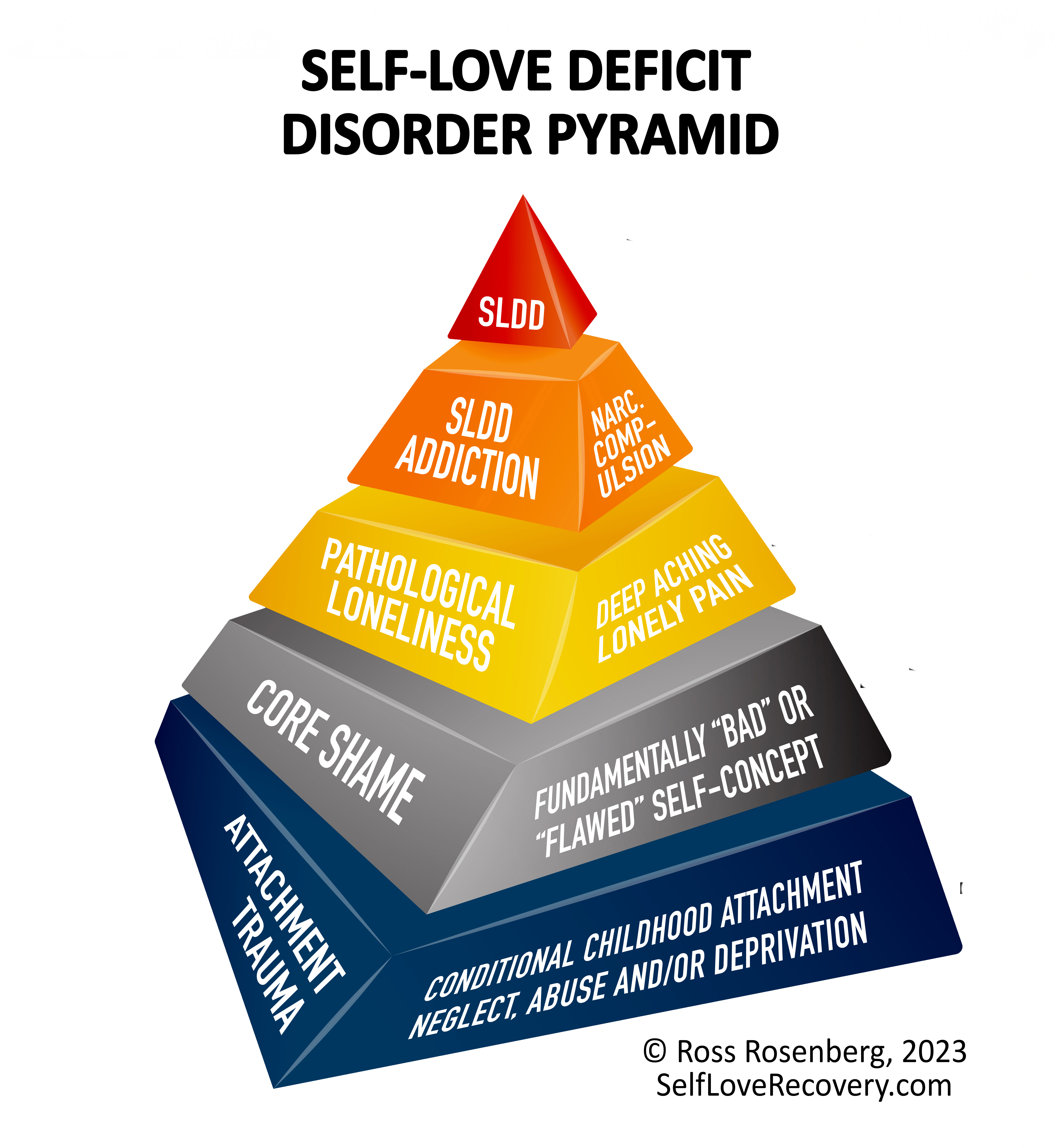
Rosenberg presents SLDD as a developmental model encompassing five levels of progression: Attachment Trauma, Core Shame, Pathological Loneliness, SLDD Addiction, and Externalized Dysfunction. Each stage reflects emotional responses to early neglect or conditional love. He describes SLDD as a learned coping style rather than a mental disorder.
The Human Magnet Syndrome
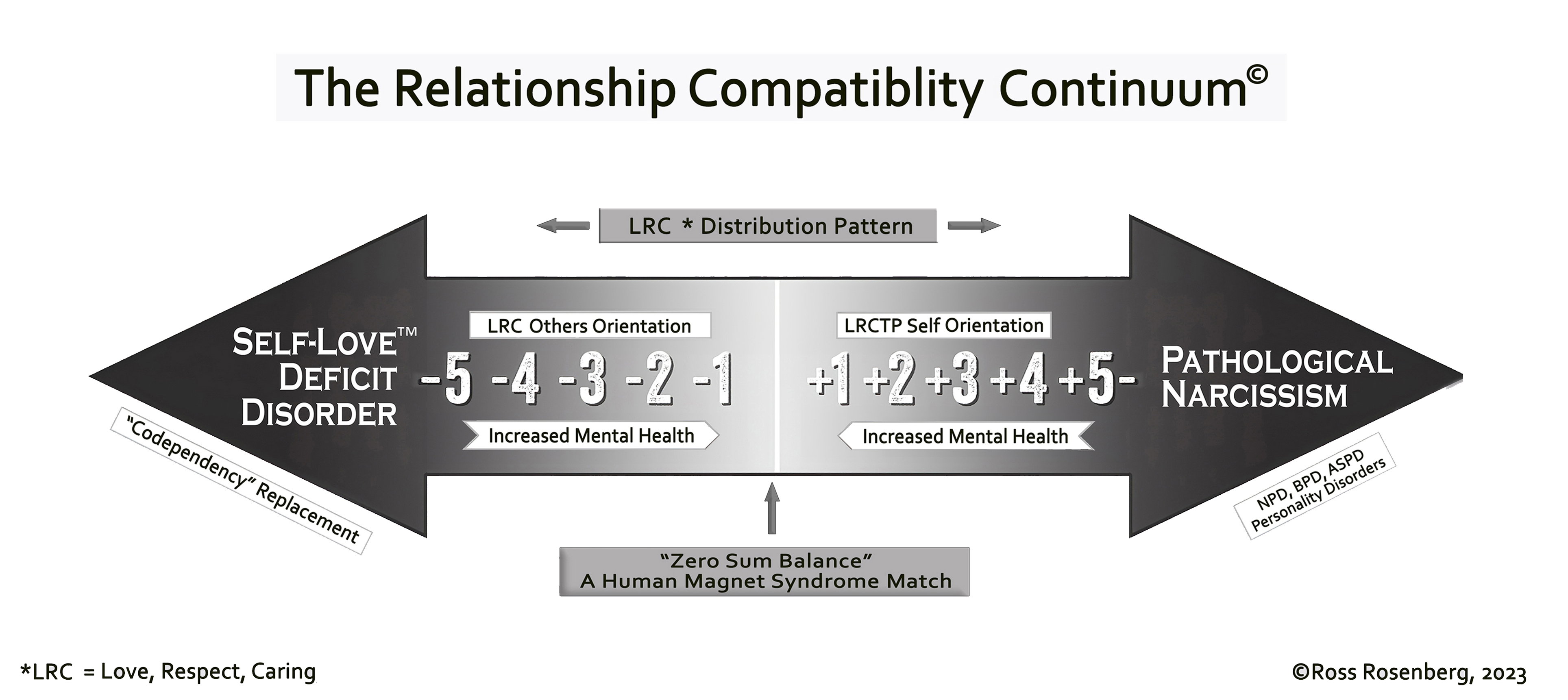
Rosenberg's Human Magnet Syndrome theory proposes that people with codependent tendencies are unconsciously drawn to partners with narcissistic traits, creating a recurring cycle of attraction and imbalance. He characterizes these dynamics as “magnetic” opposites, in which over-giving individuals (negatively charged) are pulled toward self-focused individuals (positively charged).
Typology of Codependency Subtypes
In The Codependency Revolution (2024), Rosenberg outlines several behavioral subtypes of codependency, such as active, passive, oblivious, cerebral, and threshold reactor types, among others. These categories are intended as descriptive tools for clients and practitioners rather than formal diagnostic distinctions.
Self-Love Recovery Treatment Model
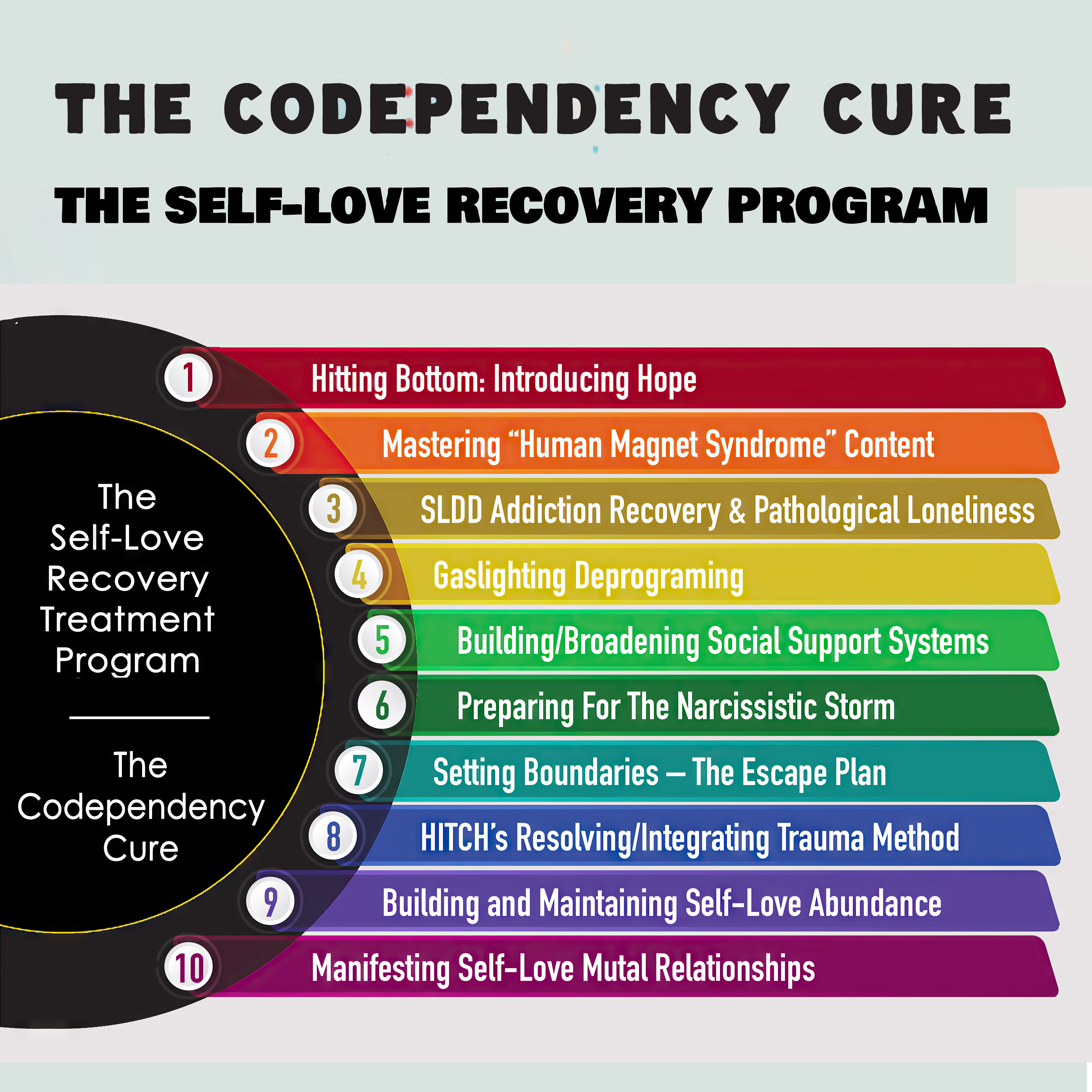 Rosenberg's Self-Love Recovery Treatment Model describes a ten-stage therapeutic process addressing SLDD. The stages include concepts such as "Hitting Bottom," "Gaslighting Deprogramming," "Boundary Setting," and "Trauma Resolution." The model is taught through his institute's programs and continuing-education courses.
HITCH Method
Healing the Inner Trauma Child (HITCH) is Rosenberg's trauma-resolution method developed as part of his Self-Love Recovery program. It aims to help clients access and integrate unresolved attachment trauma associated with SLDD. The technique is taught through workshops and continuing-education courses.
Publications
- The Human Magnet Syndrome: Why We Love People Who Hurt Us (2013)
- The Human Magnet Syndrome: The Codependent–Narcissist Trap (2017)
- The Codependency Revolution: Fixing What Was Always Broken (2024)
- The Human Magnet Syndrome Workbook (2025)
According to the Self-Love Recovery Institute, Rosenberg's The Human Magnet Syndrome books (2013, 2017) have sold over 200,000 copies, been translated into 12 languages, and have remained Amazon bestsellers in the codependency category since publication. He has contributed articles on self-help, codependency, trauma, and interpersonal relationships to Psych Central, HuffPost, The Good Men Project, and Counseling Today Magazine.
Awards
- 2013 – Excellence in Mental Health Award, Illinois Mental Health Counselors Association
- 2014 – Outstanding Professional Counseling Publication Award, Illinois Counseling Association
- 2014 – Wendell S. Dysinger Award for The Human Magnet Syndrome, Illinois Counseling Association
See also
- Narcissistic abuse
- Attachment theory
- Trauma-informed care