
Politics of the Rio de Janeiro bid for the 2016 Summer Olympics
Rio de Janeiro is submitting a bid to host the 2016 Summer Olympics and Paralympics, recognised by the International Olympic Committee (IOC). The application is governed by the Rio de Janeiro Organizing Committee for the Olympic Games (ROCOG), and is under the leadership of an Honorary Council and an Executive Board. The Honorary Council comprises Brazilian government authorities and IOC members in the country. The Executive Board comprises secretaries of councils and commissions of the ROCOG and its president, Carlos Arthur Nuzman, who is also president of the Brazilian Olympic Committee (BOC).
Rio de Janeiro has full support from the three levels of Brazilian government—Federal, State and Local—and strong popular support. Luiz Inácio Lula da Silva, President of the Federative Republic of Brazil, Sérgio Cabral Filho, Governor of the State of Rio de Janeiro, and Eduardo Paes, Mayor of the Municipality of Rio de Janeiro; have signed the guarantees and convenants required by the IOC, as well as some additional undertakings. Polls shows 78% support in the Municipality and the State of Rio de Janeiro and 60% support across Brazil. The candidature includes support from international federations, organizations, athletes and celebrities.
Rio de Janeiro has no legal impediments to the organization of the Summer Olympics and Paralympics in Brazil, according to the ROCOG. The existing legislaton is conducive to the successful staging of the games, and will be amended or modified as necessary to accommodate any specific requirements. Government is committed to respect the provisions of the Olympic Charter, the Host City Contract and will enact the Olympic Acts, that will be progressively amended to ensure all ongoing obligations and responsibilities are captured as detailed planning results in the identification of additional legislative requirements.
Political aspects
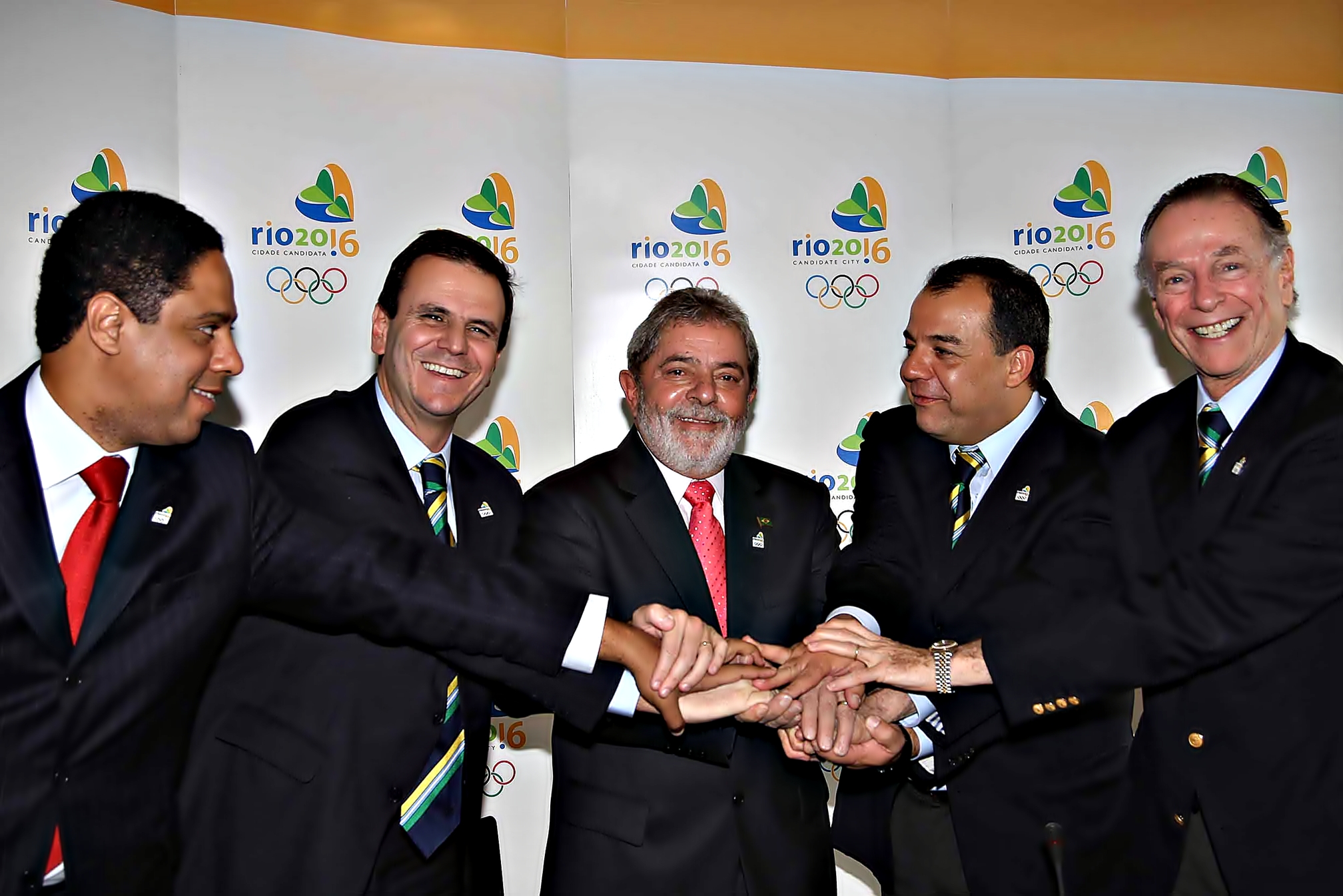
Rio de Janeiro's government and all major political parties of Brazil have endorsed and pledged complete support for Rio de Janeiro's candidature and the ultimate conduct of the Summer Olympics and Paralympics in Brazil. The members of the Honorary Council of the ROCOG have led their respective governments to provide fully integrated and mutually supportive undertakings in relation to the 2016 Summer Olympics and Paralympics. This integrated government solution will respect that the ROCOG, in partnership with the IOC and the International Paralympic Committee (IPC), will establish Games requirements and lead Games delivery to meet client requirements. Under the patronage of the ROCOG, a Government Coordination Committee is convened to support the detailed work across all levels of government and ROCOG generally. The President of Brazil, Luiz Inácio Lula da Silva, has formed a Federal government Inter-Ministerial Committee whose Secretariat and Coordination is provided under the patronage of the Minister of Sport, Orlando Silva. The Ministry of External Relations and the Ministry of Labor and Employment guaranteed the entry, exit and working arrangements for Games personnel. The Federal government has guaranteed that all accredited persons in possession of a valid passport and an Olympic or Paralympic Indentity and Accreditation Card in lieu of a visa will be able to enter Brazil.
Legal aspects
Rio de Janeiro had asked to identify the laws or other means in place in Brazil to combat doping in sport, and whether the relevant authorities in the country had in compliance with the World Anti-Doping Code. The government of Rio de Janeiro will be required to ratify and adopt the UNESCO International Convention against doping in sport prior to the election of the 2016 Summer Olympics host city. According to the ROCOG, there are no legal obstacles to the organization of the 2016 Summer Olympics and Paralympics in Brazil. The existing legal framework is conducive to the successful staging of the Games, and will be amended or modified as necessary to accommodate any Games-specific requirements. The three levels of government are united in their commitment to respect the provisions of the Olympic Charter and the Host City Contract, and will enact the Olympic Acts. These Acts—Olympic Development Authority (ODA), Olympic Traffic and Transport Division (OTTD) and Olympic Sustainability Division (OSD)—will be progressively amended to ensure all ongoing obligations and responsibilities are captured as detailed planning results in the identification of additional legislative requirements. The ROCOG will be the legal entity responsible for planning and staging the 2016 Summer Olympics and Paralympics.
See also
- {{ citation | title = Official website | url = http://www.rio2016.com/en/Default.aspx | publisher = Rio de Janeiro Organizing Committee for the Olympic Games (ROCOG). }}
- {{ citation | title = Official website | url = http://www.cob.org.br/home/home.asp | publisher = Brazilian Olympic Committee (BOC). }}
- {{ citation | title = Official website | url = http://www.olympic.org/uk/index_uk.asp | publisher = International Olympic Committee (IOC). }}
- {{ citation | title = Official website | url = http://www.fifa.com/ | publisher = International Federation of Association Football (FIFA). }}
- {{ citation | title = Official website | url = http://www.gamesbids.com/eng/ | publisher = GamesBids (GB). }}
- {{ citation | title = Official website | url = http://www.bbc.co.uk/ | publisher = British Broadcasting Corporation (BBC). }}
- {{ citation | title = Official website | url = http://www.reuters.com/ | publisher = Reuters Group Limited (R). }}