
Palazzo Bonzi
Palazzo Bonzi (originally Benvenuti, later Vimercati) is an 18th-century palazzo ('palace') in Crema, Italy. It currently houses the historical archive of the Diocese of Crema, the diocesan library, the editorial offices of the weekly newspaper Il Nuovo Torrazzo, and the studios of radio station Radio Antenna 5.
History
In the early 18th century, the brothers Alfonso, Claudio, Manfredo, and Paolo Benvenuti (of the Montodine branch) purchased three adjacent houses along the Contrada di Porta Ripalta (today's Via Giacomo Matteotti) to build a new family palazzo. Construction began in 1710 and was supervised by the cousins Giuseppe Bos and Andrea Luchini. In 1711, a request was submitted to the Deputati delle strade (street commissioners) to add a balcony above the main portal, and by 1712, with the work of stucco artist Sebastiano Aliprandi, the façade was likely completed.
A further document from 1715—a request to install small columns to prevent carts from passing too close to the building—reveals that the façade was set back compared to the previous structures, thereby widening the street.
The residence remained in the possession of the Benvenuti family until 1852, when Ercole Benvenuti sold it to Antonio Bisleri, who held it only briefly. In 1858, it was sold to Agostino Vimercati. From 1861 onward, he commissioned a series of transformations, both external (particularly the façade) and internal, with a substantial renovation of the rooms. The decorative work was entrusted to Giuseppe Rizzardi and Eugenio Giuseppe Conti.
Agostino Vimercati died unmarried in 1886, and his estate was inherited by his nephew and niece, Lodovica and Fausto Carioni. However, Lodovica died the same year at 30 years old, and her brother followed a few months later (May 1887) at age 32. The building then passed to their uncle Antonio Bonzi, who sold it after World War I. After several changes of ownership, it came into the possession of the new Episcopal Seminary in 1934, which had been built just behind the palazzo, with its façade facing Via Dante Alighieri.
With the unification of the two properties, a section of the garden and a frescoed view by Giuseppe Motta depicting a lake scenery disappeared. The building was used as a clergy house and as the seat of the male Azione Cattolica (Catholic Action). To settle debts, the bishop recommended the institution of the Giornata pro Seminario (Seminary Day).
At some time before 1941, the editorial office of the diocesan newspaper Il Nuovo Torrazzo was also moved there, into the left wing (entrance from Via Goldaniga).
On 8 December 1977, after a gestation and study phase also supported by Bishop Carlo Manziana, Radio Antenna 5 began broadcasting from studios in the right wing of the building (entrance from Via Magenta), with the transmitting antenna placed on the roof. The first director was the future member of parliament Gianni Risari.
After a series of relocations, the historical archive of the Diocese of Crema was transferred to Palazzo Bonzi in 1997.
On 19 April 2011, in the presence of Cardinal Paul Poupard, the diocesan library was inaugurated. Designed by architect Ercole Barbati, it succeeded the seminary's library and was augmented by donations from private individuals and priests. It was opened to the public in 2012.
People associated with the palazzo

- Manfredo and Agostino Benvenuti, father and son, who lived between the 17th and 19th centuries, presented themselves as Jacobins after the fall of the Republic of Venice. Manfredo was President of the democratic municipality between 1802 and 1805. Agostino, together with Marquis Gambazocca, was among the promoters of the constitution of the Republic of Crema, becoming a member of the Committee of Defence. During the Kingdom of Italy, he became podestà, a position he also held in 1815 (and until 1816) despite the establishment of the Kingdom of Lombardy–Venetia. In 1820, he sat in the Congregazione generale di Lombardia (General Congregation of Lombardy) in Milan.
- Ottavio Benvenuti (son of Manfredo and brother of Agostino) was Receiver and Minister of the Maltese Order in Venice; he attended the coronation of Napoleon as King of Italy in Milan in 1805.
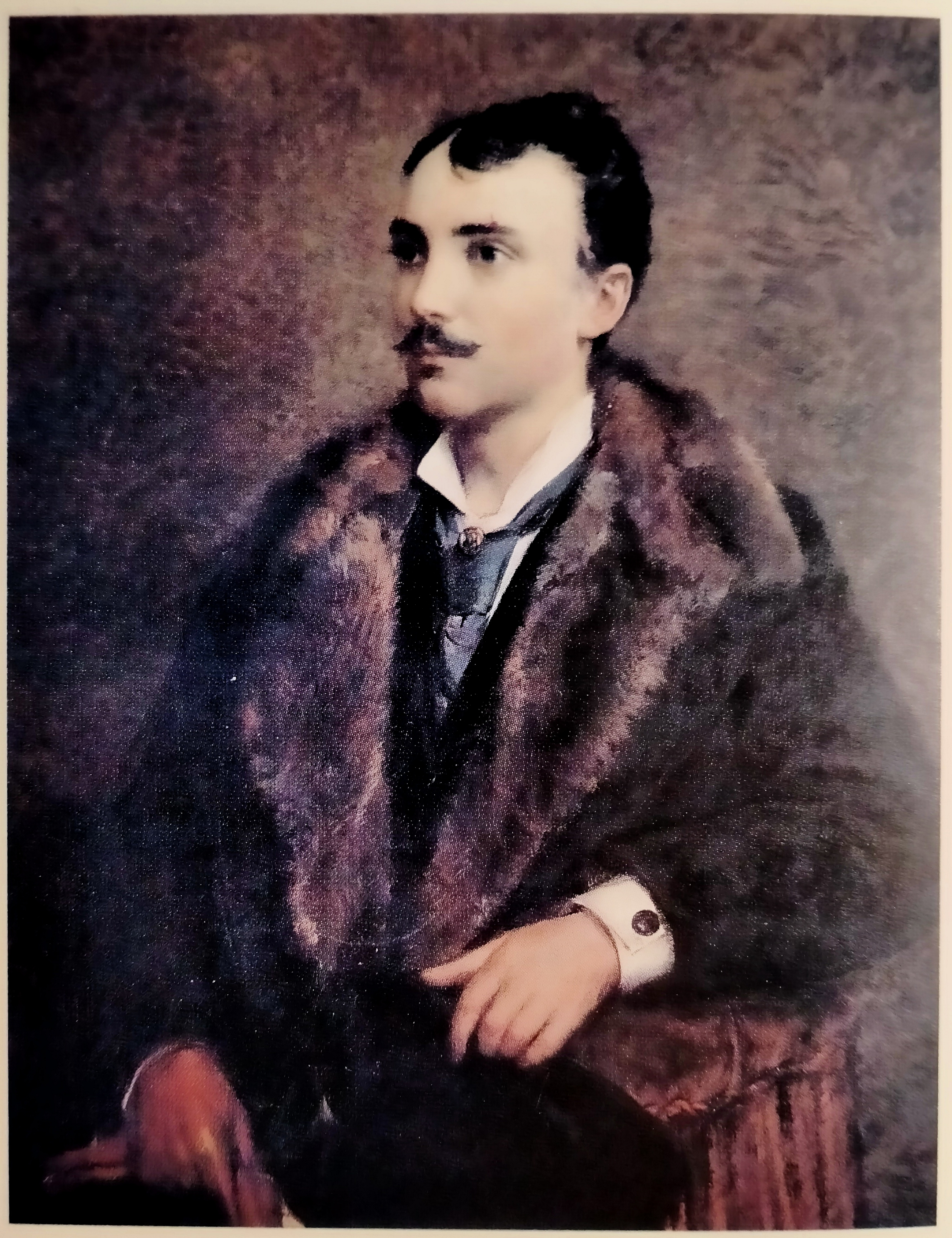
- The nobleman Fausto Carioni, who inherited the residence from his uncle Agostino Vimercati, died very young in 1887. In his will, he bequeathed 190,000 lire to charitable institutions, divided as follows: 10,000 lire to each of these charitable works: Ospedale degli Infermi, Istituto della Misericordia, Zitelle, Ritirate, Asilo infantile, Istituto Buon Pastore, Sordomute, Scrofolosi; 500 lire to the poor of Credera; but above all, the substantial sum of 100,000 lire to the municipality of Crema for the foundation of a workhouse. The bequest was approved by the administration on 14 July 1887, with the intention of transferring the sum to the Congregazione di Carità (Charity Congregation), an operation subsequently approved by its Council, the Provincial Deputation, and various authorities up to the state level. This charitable institution was merged in 2004 into the Fondazione Benefattori Cremaschi Onlus.
Guests
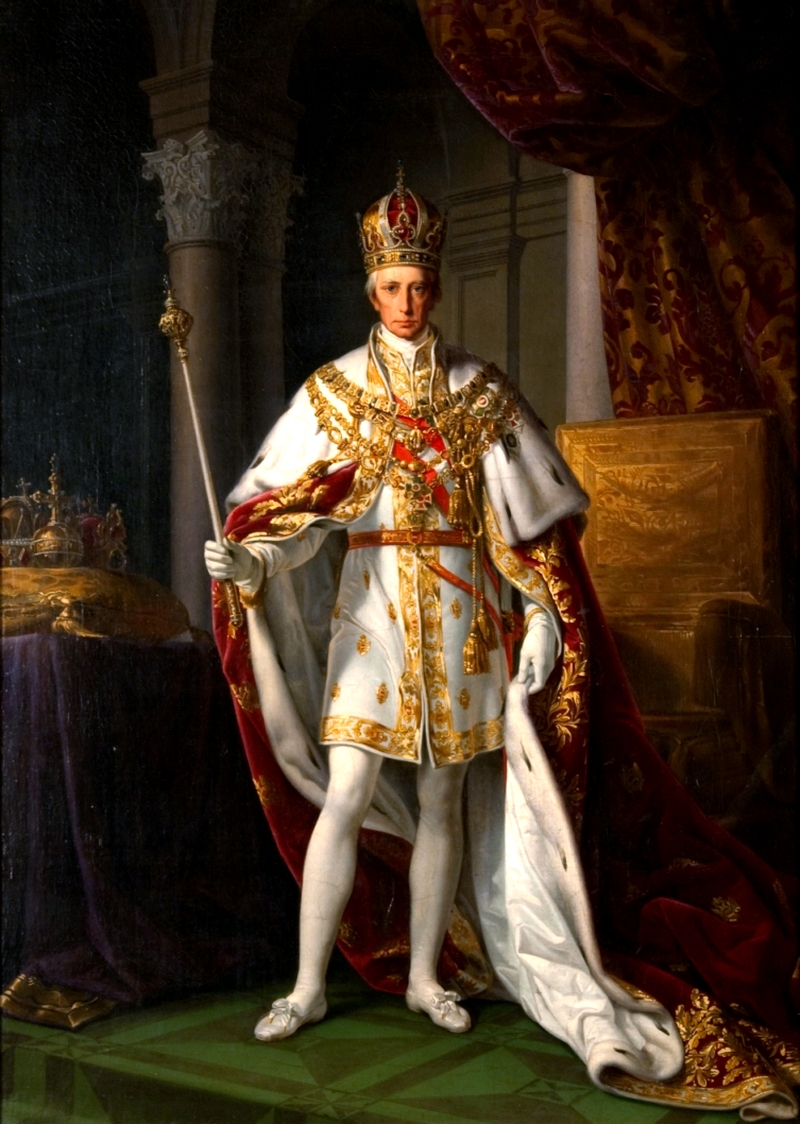
- Emperor Francis II of Austria visited the city from 17 to 19 February 1816 and stayed for two nights as a guest of Agostino Benvenuti, for whom a gala reception was organised.
- Don Primo Mazzolari was a guest at this building on 17 November 1938, shortly after Azione Cattolica had moved there.
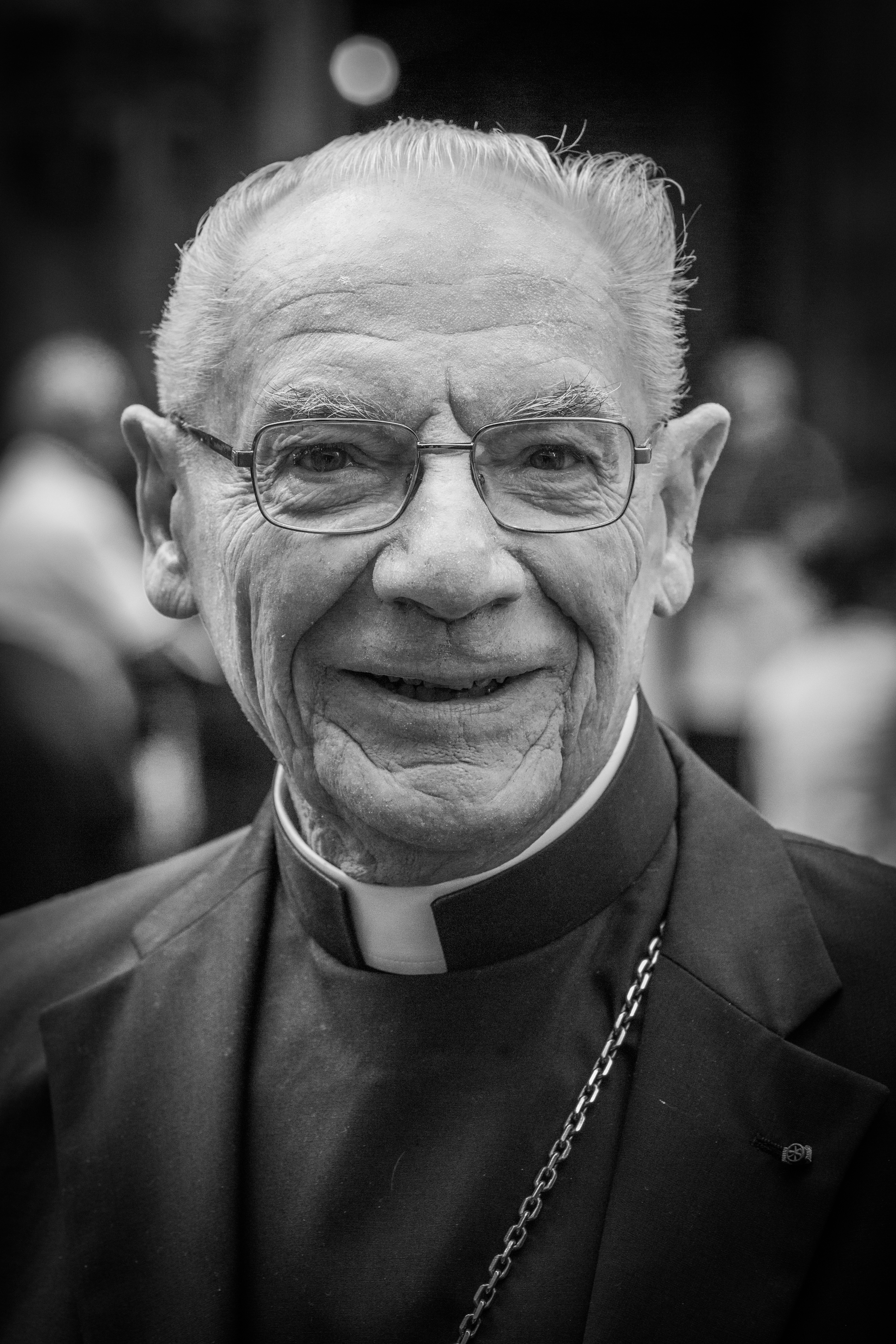
- Cardinal Paul Poupard inaugurated the diocesan library in 2011.
Features
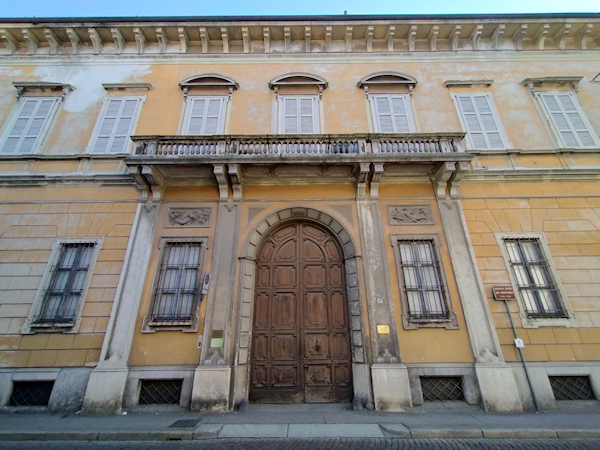 The exterior blends 18th-century elements with additions commissioned by Agostino Vimercati starting in 1861, which gave the residence a predominantly Neoclassical style. The façade is developed over two orders divided by a double string course. On the ground floor, flanking the portal, there are four windows on each side with simple frames aligned with as many small openings at ground level. On the upper floor, three windows, three doors (with curved pediments), and another three windows alternate; the doors open onto a balustraded balcony with stone balusters, supported by four pairs of corbels.
The round-arched portal once bore the Vimercati coat of arms. After the sale to the Seminary, it was removed in 1936 and transported to Villa Vimercati-Groppallo Castelbarco in Torlino Vimercati.
Above the two windows immediately flanking the portal, two reliefs are walled in: the first depicts a woman in a flowing robe, her head veiled, sleeping under the flight of a bat while a putto shows a trumpet. The second depicts a semi-nude erect figure holding a torch, and putti pouring flowers and grain. Given the period in which they were installed, it has been hypothesised that they symbolically represent Austrian obscurantism contrasted with the abundance brought by the nascent Kingdom of Italy.
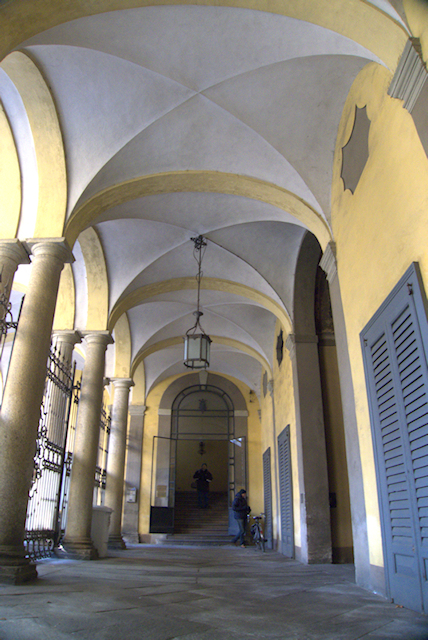 Through the entrance hall, frescoed with coffered motifs, one reaches the portico, which is quite deep with a double row of Tuscan columns. At the far end of the portico, to the right when coming from the entrance, the grand staircase rises to the piano nobile, retaining its 18th-century balusters, as do two fireplaces from the Benvenuti era. The rest of the rooms mostly have a 19th-century decorative aspect, the work of Giuseppe Rizzardi. The most noteworthy room is the former chapel, where Eugenio Giuseppe Conti painted the vault with the Apotheosis of Saint Louis, King of France and the Four Cardinal Virtues above the doors.
Three drawings by Conti are also preserved at the newspaper's editorial office: they are three polveri (pounce patterns) representing the Three Theological Virtues, preparatory cartoons for frescoes to be executed in the church of Bolzone.
The Diocesan library
Holdings
The institution, specialising in Christian theology and Christian doctrinal theology, holds a collection of 50 manuscripts, 5 bound manuscripts, 10 loose letters, 70 current periodicals, 23,950 volumes and pamphlets, 51 incunables, 411 16th-century editions, and 315 17th-century editions.
To these are added 2,000 volumes and 322 folders (over a thousand archival units) from a bequest of Cardinal Paul Poupard.
Services
In collaboration with the Istituto Superiore di Scienze Religiose (Higher Institute of Religious Sciences), the Library offers consultation and local lending, bibliographic information, local reference, Internet access, and photocopying.
Historical archive
The archive was established in 1580 concurrently with the erection of the Diocese of Crema, and older documents were subsequently incorporated. It was initially housed in the episcopal palace and was moved several times during the 20th century.
Canon Gemello Scarpini carried out an initial arrangement in 1870, and a substantial reorganisation was undertaken during the episcopate of Bishop Carlo Manziana.
After a brief period in Via Giuseppe Mazzini, it was finally transferred to its current location in 1997.
It preserves all types of documents that testify to the history of the Crema church.
Archive collections
Collection |
Years |
Notes |
|---|---|---|
Associazione Cattolica (Catholic Association) |
- |
|
Biblioteca del Seminario vescovile di Crema ("Musiche") (Library of the Episcopal Seminary of Crema – "Music") |
- |
|
Capitolo della Cattedrale di Crema (Chapter of Crema Cathedral) |
1416–1854 |
|
Carte Agostino Foppa Pedretti e carte Cecilia Cremonesi (eredità Luigi Cavaletti) (Agostino Foppa Pedretti and Cecilia Cremonesi papers – Luigi Cavaletti inheritance) |
1868–1971 |
|
Carte Angelo Aschedamini (Angelo Aschedamini papers) |
20th century |
|
Carte Angelo Zavaglio e Giuseppe Quadri (Angelo Zavaglio and Giuseppe Quadri papers) |
1926–1935 |
|
Carte Antonio Lingiari (Antonio Lingiari papers) |
1918 |
|
Carte Gabriele Lucchi (Gabriele Lucchi papers) |
late 19th century – 20th century |
|
Carte Angelo Patrini (Angelo Patrini papers) |
1901–1905 |
|
Carte Schiavini (dono Angela Crivelli) (Schiavini papers – donation by Angela Crivelli) |
1274–1806 |
|
Confraternita del SS. Sacramento presso la Cattedrale di Crema (Confraternity of the Blessed Sacrament at Crema Cathedral) |
1580–1906 |
|
Curia Vescovile di Crema (Episcopal Curia of Crema) |
1453–1993 |
|
Democrazia Cristiana di Crema (Christian Democracy of Crema) |
1945–1997 |
|
Fabbriceria della Cattedrale di Crema (Building Committee of Crema Cathedral) |
1404–1984 |
|
Giudicatura di pace di Crema (Justice of the Peace of Crema) |
1807–1805 |
|
Fondo Grioni (Grioni Collection) |
1772–1869 |
|
Opera pia Alzeni (Alzeni Charitable Institution) |
1886–1927 |
|
Seminario vescovile di Crema (Episcopal Seminary of Crema) |
1800–1978 |
|
Tribunale civile di Crema (Civil Court of Crema) |
1813–1860 |
|
Fondo Verga (Verga Collection) |
- |
See also
- Bonzi family
- Vimercati family
- Episcopal Seminary of Crema
References
Bibliography
External links
Bonzi Bonzi