
Naval warfare in the Italo-Turkish War
The naval warfare in the Italo-Turkish War was the naval campaign fought between the Regia Marina of the Kingdom of Italy and the Ottoman Navy during the Italo-Turkish War, from 23 October 1911 to 18 October 1912. Exploiting its overwhelming naval superiority, Italy established control over the Mediterranean and Red Sea, enforced a blockade of Ottoman ports, supported amphibious landings in Tripolitania and the Dodecanese, and carried out bombardments and raids against Ottoman coastal installations. The Ottoman fleet, constrained by Italian dominance and largely confined to the Dardanelles, played only a limited role in the conflict. The campaign demonstrated sea power of the colonial Italy leading to Italy's victory, which was formalized by the Treaty of Ouchy in October 1912.
Background
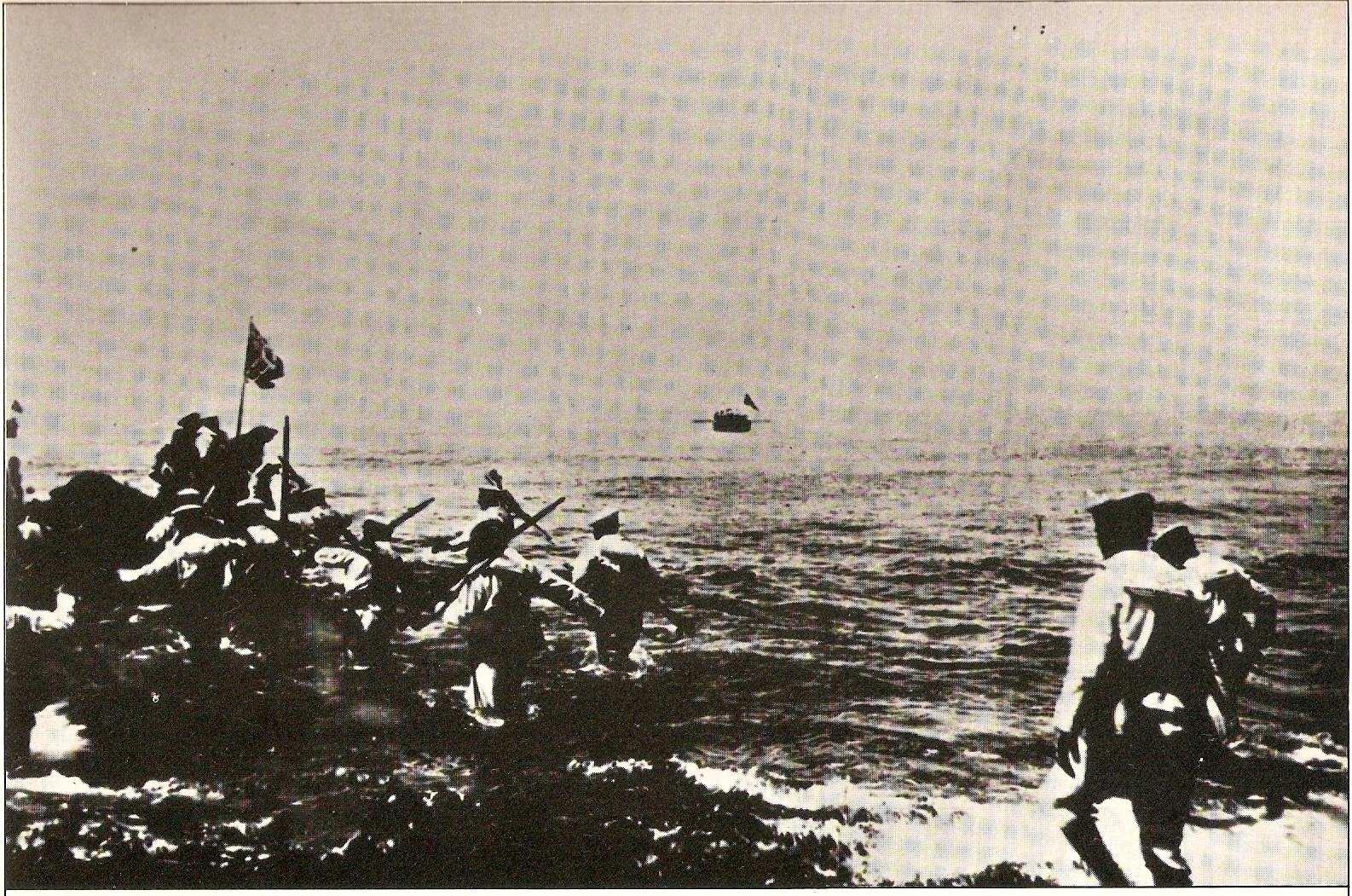
On 29 September, Vice-Admiral Aubry received orders from the ministry to appear in front of Tripoli, avoiding being engaged by the coastal defences or running into minefields, to demand the surrender of the city by threatening to bombard it; in this case Aubry was to concentrate on the fortifications while trying not to hit the city. The entire 2nd squadron under the command of Admiral Faravelli was deployed in front of Tripoli and, after a series of inconclusive negotiations with the city's civil authorities, at 3.30 pm on 3 October the bombardment began, initially engaging the 7,000 metre forts with the main artillery and subsequently from shorter distances with all available artillery: the 2nd division under the command of Rear Admiral Thaon di Revel attacked the eastern sector (Fort Hamidié), the Training Ships Division under Rear Admiral Borea Ricci took care of the western sector (Fort Sultaniè and Fort B), in the centre the 1st division under the command of Luigi Faravelli bombarded the port (north-east bastion and lighthouse battery). By evening the defences appeared seriously weakened and the bombardment was resumed for half an hour the following morning; A reconnaissance by the torpedo boat Albatros confirmed the complete destruction of the fortifications and the Turkish abandonment of the coastal defenses. On November 5, the first contingent of sailors landed in Tripoli. As soon as he received the order to begin operations, Aubry diverted Rear Admiral Presbitero to Derna, where the cruisers Pisa and Amalfi destroyed the radiotelegraph station; they then continued on to Benghazi where they dropped anchor in front of the roadstead.
Prelude
In January 1912, 24 pieces of artillery, machine guns, Mauser rifles, ammunition, grenades and radiotelegraphic material were found on the steamer Odessa, which had left Sfax and was stopped before reaching Libyan waters the Italian Royal Navy was therefore forced to organize cruises to intercept those vessels which were carrying war cargoes for the benefit of the Turks in Libya. At the beginning of January, the navy had been informed that an aviator and an airplane had been embarked on the French steamer Carthage, leaving Marseille, who were supposed to operate in the service of the Ottoman forces in Libya; following this report, the cruiser Agordat intercepted the Carthage which, given the commander's refusal to hand over the airplane, was escorted to Cagliari where it was held until 20 January. While a diplomatic incident with France was being narrowly avoided, the presence of Turkish passengers on the French steamer Manouba was reported, which was intercepted and searched by the Agordat. On 18 January, eleven of the twenty-nine Turkish passengers on board were identified as members of the International Red Cross and Red Crescent; a considerable sum of money in gold coins was also discovered. The steamer Manouba was diverted to Cagliari, which it was able to leave together with the Carthage, handing over the Turkish officials to the Italian authorities. Only on 26 January did Italy and France agree to submit the matter to the Permanent Court of Arbitration in The Hague the Turkish passengers would be handed over to the French consul in Cagliari, who would take them back to Marseille, while the French government would ensure that they did not re-embark for Tunisia or the theatre of operations. As a consequence of the incident, Minister Leonardi Cattolica prohibited the control of French ships unless they were in the waters of Tripolitania or Cyrenaica.
War
Aegean Sea Campaign
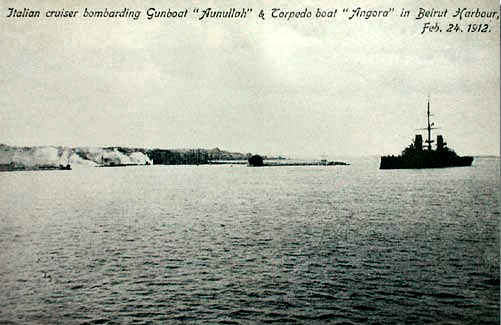
As early as 23 October, the two main squadrons of the Italian fleet that had returned to Augusta from Libya had been moved to Taranto to operate in the Aegean Sea; the Italian government, however, put a brake on any attempt at naval military action outside the waters already controlled by the Royal Navy. On February 20, the commander of the Aegean squadron, Rear Admiral Paolo Thaon di Revel, received orders to capture or destroy the Avnillah (a large and obsolete casemate corvette reclassified as an armored gunboat 2 400 t) and the torpedo boat Angora based in Beirut. The Italian formation composed of the two cruisers Giuseppe Garibaldi and Francesco Ferruccio appeared on 24 February in front of the port of Beirut and, after having ordered the surrender without receiving a response, at 09:00 opened fire sinking both Turkish ships; despite the order not to shell the city, some long shots landed killing two gendarmes and 52 civilians.
In the second half of March the fleet sent individual ships on a mission to the coasts of Samos (bombardment of a barracks) and Lemnos (cutting of submarine telegraph cables); an attempt was also made to force the Dardanelles using some torpedo boats. On 18 April an attempt was made to lure the Turkish fleet out of the straits by presenting itself with the 2nd division (battleships Benedetto Brin, Ammiraglio di Saint Bon, Emanuele Filiberto and Regina Margherita) which met 10 kilometres from the entrance to the straits with the other divisions waiting behind Imbros. The Turks did not take the bait and the operation ended in an artillery duel which lasted 2 hours with the coastal forts.
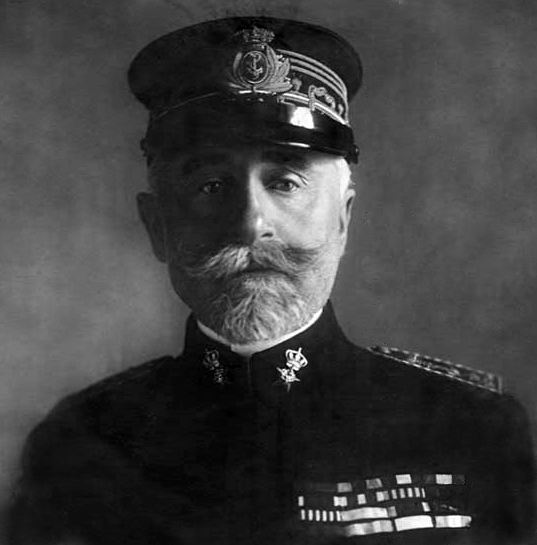
From the beginning of the war, the Royal Italian Navy had developed plans to force the Dardanelles through the straits, forcing the less-prepared Turkish fleet into a decisive battle. However, analyses had concluded that using larger ships (battleships and cruisers) would result in severe damage to the ships and estimated losses of around 2,000 men, so the plan was put on hold. However, the languishing diplomatic negotiations prompted the Italian Navy to revive the project in July 1912, with the aim of carrying out a demonstration operation in the straits that, regardless of the outcome, would have had political repercussions. It was decided to use the torpedo boats of the 3rd squadron (Spica, Centauro, Perseo, Astor, Climene) under the command of Captain Enrico Millo, who drew up the plans in Rome in collaboration with Rear Admiral Emanuele Cutinelli Rendina (Deputy Chief of Staff of the Royal Navy), while in the Aegean the only ones who knew the nature of the mission were Admirals Viale and Corsi. The island of Strati was selected as the logistical base for the action, indirect support would be provided by the cruiser Vettor Pisani and the destroyers Borea and Nembo.
The torpedo boats reached the mouth of the strait at 10:30 PM on July 18, sailing in a line at 12 knots, with Millo aboard Spica leading the line. At 12:40 AM, the torpedo boat Astore was illuminated by the searchlight at Cape Helles, on the European coast, and began shelling and raising the alarm. The torpedo boats managed to evade Turkish artillery fire, maneuvering first at 20 and then 23 knots, and came within sight of Chanak Bay, where the Turkish fleet was located. Spica was blocked near Kilid Bar by a steel cable (probably a torpedo net), which damaged its propellers. After several attempts, just as Millo was about to give the order to abandon ship, Spica managed to free herself, but by then the chances of success were greatly reduced, and the mission was aborted. After having retraced the 20 kilometers of the strait, the torpedo boats passed the entrance under fire from the forts of Cape Helles and Kum Kalé, travelling at full speed and in open formation; the torpedo boats rejoined the support ships at sea. According to Millo's report the Spica was damaged by hits to the funnel (one from70 mm), the Astore suffered a hit from57 mm in the superstructure and two small caliber hits in the hull, the Perseo was riddled with about ten hits from25 mm in deck and hull.
Ionian Sea Campaign
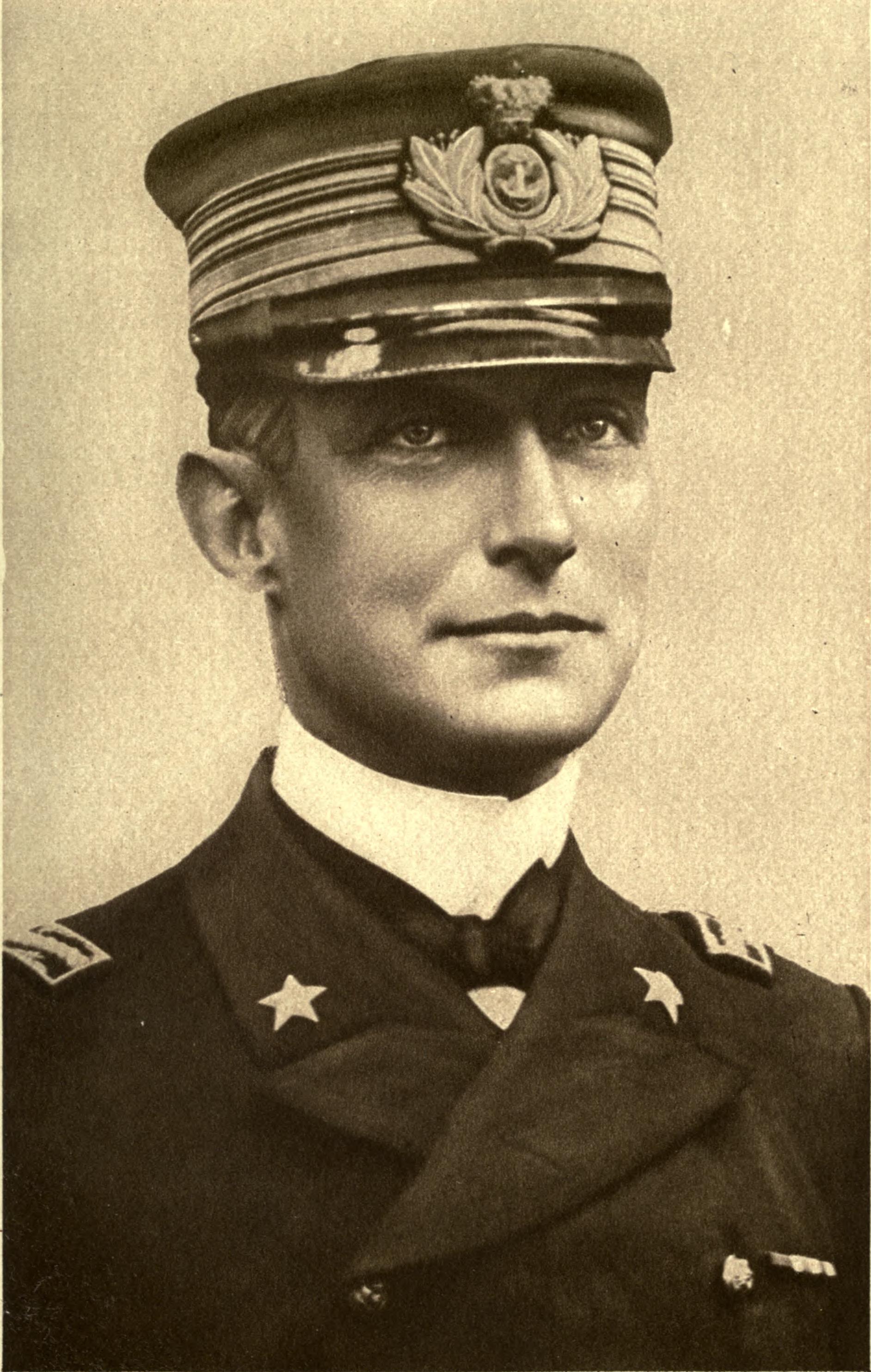
The Ionian Sea theater of operations was affected by several skirmishes during the initial part of the conflict. Just a few hours after the declaration of war on September 29, an Italian flotilla of five destroyers under the command of then Rear Admiral Luigi Amedeo di Savoia-Aosta moved toward Corfu in search of enemy ships, clashing with two Turkish torpedo boats off Igoumenitsa , one of which was hit and forced to run aground. The Italian ships then appeared before the port of Preveza on September 30 and, after a brief engagement, sank three more Ottoman torpedo boats without suffering any losses, as well as capturing a steamer and an auxiliary cruiser ; the local fortress of Agios Andreas was bombed and damaged.
On 1 October, a flotilla composed of the cruisers Vettor Pisani (flagship of Luigi Amedeo) and Marco Polo and the auxiliary ship Lombardia carried out an incursion on the port of San Giovanni di Medua, where two Turkish steamers were captured. Italian operations along the coast of Albania continued until 5 October; after diplomatic protests from Greece regarding an alleged encroachment of the units into its waters, and given the support of Athens' protests by Russia and Austria-Hungary, the units of the Royal Navy were recalled and transferred to other theatres, maintaining only small surveillance detachments in the Ionian Sea.
Red Sea Campaign
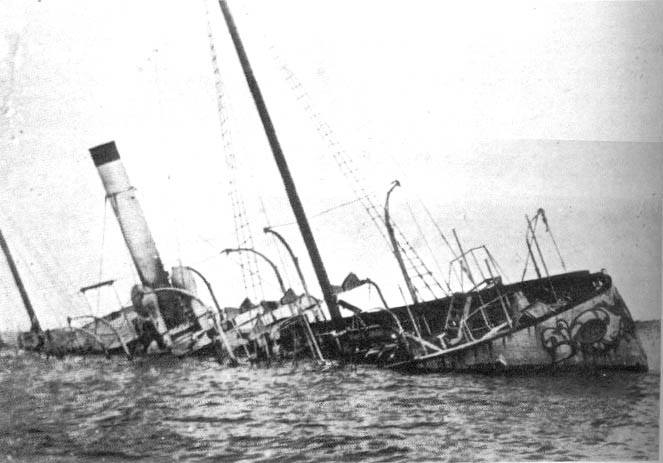
The Italian Red Sea Fleet was based in Eritrea where four smaller units were stationed, the cruiser Aretusa, the torpedo boat Puglia, the gunboat Volturno and the Avviso Staffetta transformed into a hydrographic vessel; during the war the small squadron was enlarged by the cruiser Calabria, the torpedo boat Piemonte, the destroyers Artigliere, Garibaldino, Elba, Liguria, Governolo, Caprera , Granatiere and Bersagliere. All the units were under the command of Captain Giovanni Cerrina Feroni, whose first war actions caused the sinking of two gunboats and eleven Ottoman sambuchi, probably intended for a landing in Eritrea to open a diversionary front against Italy. For its part, Italy provided aid to Sheikh Asir Sa'id Idris, who was fighting the Turks in Arabia.
As part of the actions agreed with the Arab rebels, the Italian ships bombarded Turkish fortifications and camps on the peninsula and blocked their ports, forcing the Ottomans to transfer reinforcements only by land; the cruise of the Puglia and Calabria, which took place on 1 January 1912 against Djabana, falls within these activities.
The most significant episode was a clash that took place on 7 January near the coast of present-day Saudi Arabia between the Italian ships Puglia, Piemonte, Calabria, Artigliere and Garibaldino and seven Turkish gunboats (Autah, Ordon, Costamuni, Refakie, Moka, Bafra and Quenkeche) supported by the armed yacht Shipka, which had served under France as Fauvette. While Calabria and Puglia bombarded the forts of Medi and Loheia, the other units were engaged by Turkish units near Kunfida; within three hours the Ottoman ships were sunk or forced to run aground and the yacht was captured, renamed Kunfida in memory of the victory, and incorporated into the Italian Royal Navy. This action was also useful to the Arab rebels, as it deprived the Turks of a tactical advantage at sea and made Ottoman connections with the forces on land operating against the Arab guerrillas more difficult. After this episode, the Royal Navy continued its actions to control maritime smuggling and to provide support from the sea to Idris, without any further possibility of opposition from the Turkish navy. During the remaining months of the conflict, the Italian Royal Navy blocked at least three British merchant ships and a dozen dhows carrying contraband goods. and carried out bombardments at Bab el Mandeb, Gebhana, Medi and Loheia, as well as direct support actions in favour of the insurgents of Idris. In particular, a precision bombardment against al-Hudayda was carried out on 27 July by the Piemonte and the Caprera, which destroyed the city's fort and a Turkish camp with its ammunition depot, without damaging the adjacent hospital.
Aftermath
As soon as the war began, the Italian government's hope of resolving everything in a few months was underlined by the annexation of Libya at a time when the military situation was still confused. The decree was issued for essentially political purposes, that is, to put the European powers before what was hoped to be a "fait accompli" and attempting to transform the whole war into an Italian "internal event"; Ottoman Empire's non-acceptance of the proclamation called into question Italian politics and its expansionist tendencies. Italy was diplomatically supported by the United Kingdom and the Russian Empire, while France kept a low profile but was still substantially favorable to Italy, although it had purposely ignored the Turkish arms smuggling through Tunisia. Germany had been supplying the Turkish government with weapons and military advisors for several years, while Austria-Hungary maintained a substantially hostile position towards Italy.
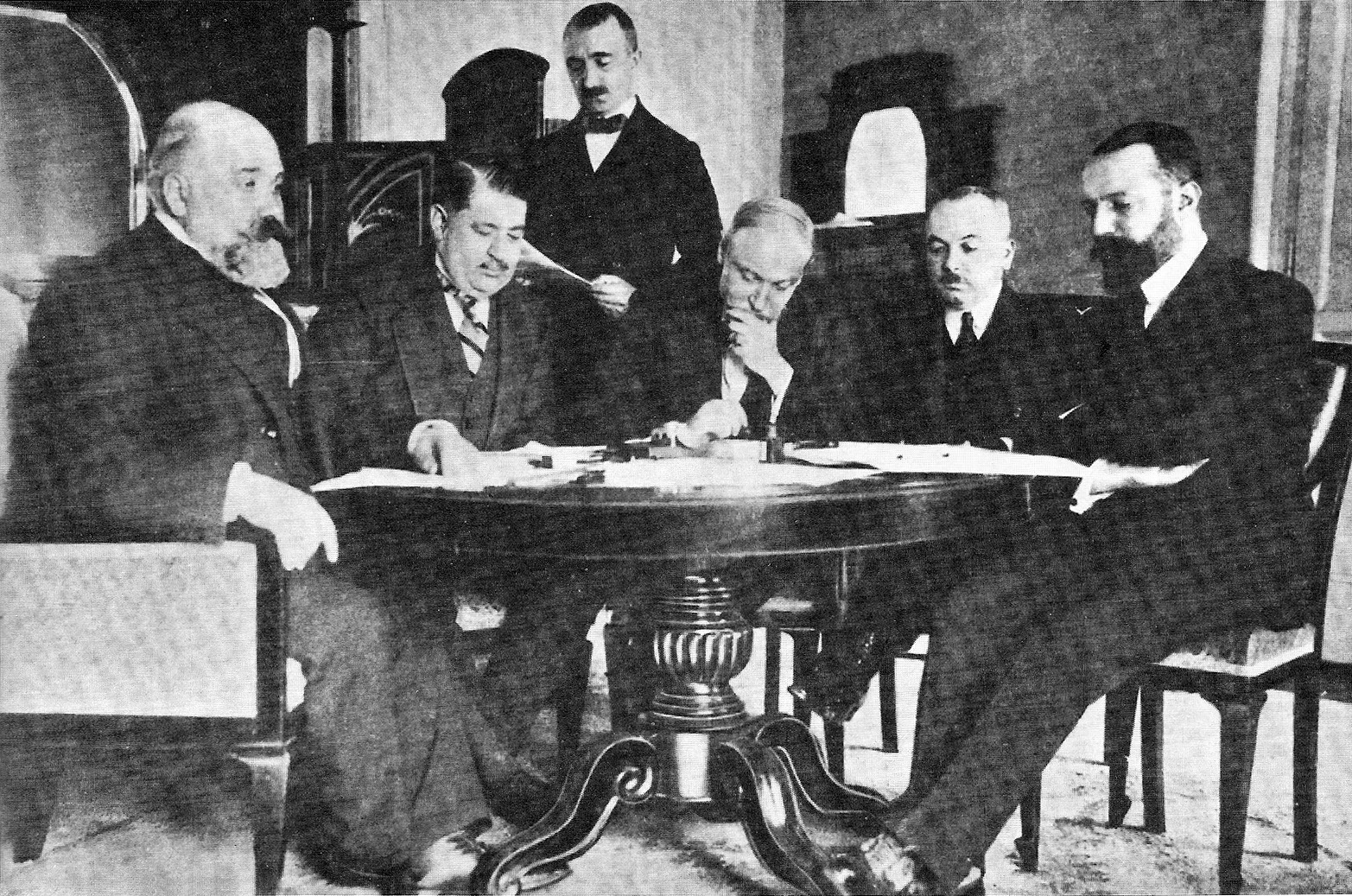
The first unofficial contacts were initiated by Commander Giuseppe Volpi , followed on 12 July 1912 by talks in Lausanne between an Italian delegation (the Honourable Bertolini, the Honourable Fusinato and Volpi himself) and a Turkish delegation (Prince Salid Halim Pasha). This phase of the negotiations was interrupted on 24 July due to a political crisis in the Turkish government. Negotiations resumed on 13 August at Caux, with the Italian delegation unchanged and the Turkish delegation in which two diplomats (Naby Bey and Freddin Bey) supported Salid Halim. While the negotiations were being carried out, the internal Turkish situation worsened noticeably, with desertions of many regiments in Turkey and Thrace. The Treaty of Lausanne, therefore, did not provide for "the full and complete sovereignty of the Kingdom of Italy" over Tripolitania and Cyrenaica, as unilaterally declared by Italy with Royal Decree no. 1247 of 5 November 1911, converted into law on 23 and 24 February 1912. Full Italian sovereignty over Tripolitania, Cyrenaica and the Dodecanese was recognized by a second Treaty of Lausanne, signed by all the Entente Powers and the Republic of Turkey, on 24 July 1923
See also
- Naval warfare of World War I
- Naval warfare in the Russo-Ukrainian war
- Naval warfare in the Winter War
Footnotes
Reference
Citations
External links
- Antonio De Martino.Tripoli italiana Societa Libraria italiana (Library of Congress). New York, 1911
- Turco-Italian War at Turkey in the First World War website
- Map of Europe during Italo-Turkish War at omniatlas.com.
- V. I. Lenin, The End of the Italo-Turkish War, September 28, 1912.