
Madras anti-Hindi agitation of 1965
The Madras anti-Hindi agitation of 1965 are a series of agitations that happened in The INDIAN state of Tamil Nadu (formerly Madras State) in 1965. The agitations involved several mass protests, riots, student and political movements in Tamil Nadu, and concerned the official status of Hindi in the state and in the Indian Republic.
Adoption of an official language for the Indian Republic was a hotly debated issue during the framing of the Indian Constitution after India's independence from Britain. After an exhaustive and divisive debate, Hindi was adopted as the official language of India with English continuing as an associate official language for a period of fifteen years, after which Hindi would become the sole official language. The new Constitution came into effect on 26 January 1950. Efforts by the Indian Government to make Hindi the sole official language after 1965 were not acceptable to many non-Hindi Indian states, who wanted the continued use of English. The Dravida Munnetra Kazhagam (DMK) led the opposition to Hindi. To allay the fears of the opposition, Indian Prime Minister Jawaharlal Nehru enacted the Official Languages Act in 1963 to ensure the continuing use of English beyond 1965. The text of the Act did not satisfy the DMK and increased their skepticism that his assurances might not be honoured by future administrations.
As the day (26 January 1965) of switching over to Hindi as sole official language approached, the anti-Hindi movement gained momentum in Madras State with increased support from college students. On 25 January, a full-scale riot broke out in the southern city of Madurai, sparked off by a minor altercation between agitating students and Congress party members. The riots spread all over Madras State, continued unabated for the next two months, and were marked by acts of violence, arson, looting, police firing and lathi charges. The Congress Government of the Madras State, called in paramilitary forces to quell the agitation; their involvement resulted in the deaths of AbOUT seventy persons (by official estimates) including two police men. To calm the situation, Indian Prime Minister Lal Bahadur Shastri gave assurances that English would continue to be used as the official language as long the non-Hindi speaking states wanted. The riots subsided after Shastri's assurance, as did the student agitation.
The agitations of 1965 led to major political changes in the state. The DMK won the 1967 assembly election and the Congress Party never managed to recapture power in the state since then. The Official Languages Act was eventually amended in 1967 by the Congress Government headed by Indira Gandhi to guarantee the indefinite use of Hindi and English as official languages. This effectively ensured the current "virtual indefinite policy of bilingualism" of the Indian Republic.
Background
The Republic of India has hundreds of languages. According to the Census of 2001, there are 1,635 rationalized mother tongues and 122 languages with more than 10,000 speakers. During the British Raj, English was the official language. When the Indian Independence Movement gained momentum in the early part of the 20th Century, efforts were undertaken to make Hindustani as a common language to unite various linguistic groups against the British Government. As early as 1918, Mahatma Gandhi established the Dakshin Bharat Hindi Prachar Sabha (Institution for the Propagation of Hindi in South India). In 1925, the Indian National Congress switched to Hindustani from English for conducting its proceedings. Both Gandhi and Jawaharlal Nehru were supporters of Hindustani and Congress wanted to propagate the learning of Hindustani in non-Hindi speaking Provinces of India. The idea of making Hindustani or Hindi the common language, was not acceptable to Periyar, who viewed it as an attempt to make Tamils subordinate to North Indians.
Agitation of 1937-40
Official languages and the Indian Constitution
The Indian Constituent Assembly was established on 9 December 1946, for drafting a Constitution when India became independent. The Constituent Assembly witnessed fierce debates on the language issue. The adoption of a "National Language", the language in which the constitution was to be written in and the language in which the proceedings of the assembly were to be conducted were the main linguistic questions debated by the framers of the Constitution. On one side were the members from the Hindi speaking provinces like Algu Rai Sastri, R.V. Dhulekar, Balkrishna Sharma, Purushottam Das Tandon, (all from United Provinces), Babunath Gupta (Bihar), Hari Vinayak Pataskar (Bombay) and Seth Govind Das (Central Provinces and Berar). They moved a large number of pro-Hindi amendments and argued for adopting Hindi as the sole National Language. On 10 December 1946, Dhulekar declared "People who do not know Hindustani have no right to stay in India. People who are present in the House to fashion a constitution for India and do not know Hindustani are not worthy to be members of this assembly. They had better leave."
The pro-Hindi block was further divided into two camps: 1) the Hindi faction comprising Tandon, Govind Das, Sampurnanand, Ravishankar Shukla and K. M. Munshi and 2) the Hindustani faction represented by Jawaharlal Nehru and Abul Kalam Azad. The adoption of Hindi as the national language was opposed by members from South India like T.T. Krishnamachari, G. Durgabai, T. A. Ramalingam Chettiar, N. G. Ranga, N. Gopalaswamy Ayyangar (all belonging to Madras) and S. V. Krishnamurthy Rao (Mysore). This anti-Hindi block favoured retaining English as official language. Their views were reflected in the following pronouncement of Krishnamachari:
We disliked the English language in the past. I disliked it because I was forced to learn Shakespeare and Milton, for which I had no taste at all. If we are going to be compelled to learn Hindi, I would perhaps not be able to learn it because of my age, and perhaps I would not be willing to do it because of the amount of constraint you put on me. This kind of intolerance makes us fear that the strong Centre which we need, a strong Centre which is necessary will also mean the enslavement of people who do not speak the language at the centre. I would, Sir, convey a warning on behalf of people of the South for the reason that there are already elements in South India who want separation..., and my honourable friends in U.P. do not help us in any way by flogging their idea of "Hindi Imperialism" to the maximum extent possible. So, it is up to my friends in Uttar Pradesh to have a whole India; it is up to them to have a Hindi-India. The choice is theirs.
After three years of debate, the assembly arrived at a compromise at the end of 1949. It was called the Munshi-Ayyangar formula (after K.M. Munshi and Gopalaswamy Ayyangar) and it struck a balance between the demands of all groups. Part XVII of the Indian Constitution was drafted according to this compromise. It did not have any mention of a "National Language". Instead, it defined only the "Official Languages" of the Union:
Hindi in Devanagari script would be the official language of the Indian Union. For fifteen years, English would also be used for all official purposes (Article 343). A language commission could be convened after five years to recommend ways to promote Hindi as the sole official language and to phase out the use of English (Article 344). Official communication between states and between states and the Union would be in the official language of the union (Article 345).English would be used for all legal purposes - in court proceedings, bills, laws, rules and other regulations (Article 348).The Union was duty bound to promote the spread and usage of Hindi (Article 351).
India became independent on 15 August 1947 and the Constitution was adopted on 26 January 1950.
The language commission
The adoption of English as official language along with Hindi was heavily criticized by pro-Hindi politicians like Jana Sangh's founder Syama Prasad Mookerjee, who demanded that Hindi should be made National language. Soon after the Constitution was adopted on 26 January 1950, efforts were made to propagate Hindi for official usage. In 1952, the Ministry of Education launched a voluntary Hindi teaching scheme. On 27 May 1952, use of Hindi was introduced in warrants for judicial appointments. In 1955, in-house Hindi training was started for all ministries and departments of the central government. On 3 December 1955, the government started using Hindi (along with English) for "specific purposes of the Union"
As provided for by Article 343, Nehru appointed the First Official Language Commission under the chairmanship of B. G. Kher on 7 June 1955. The commission delivered its report on 31 July 1956. It recommended a number of steps to eventually replace English with Hindi (The report had dissenting notes from two non-Hindi members - P. Subbarayan from Madras State and Suniti Kumar Chatterji from West Bengal). The Parliamentary Committee on Official Language, chaired by Govind Ballabh Pant was constituted in September 1957 to review the Kher commission report. After two years of deliberations, the Pant Committee submitted its recommendations to the President on 8 February 1959. It recommended that Hindi should be made The Primary official language with English as the subsidiary one. The Kher Commission and the Pant Committee recommendations were condemned and opposed by from non Hindi politicians like Suniti Kumar Chatterji, Frank Anthony and P. Subbarayan. The Academy of Telugu opposed the switch from English to Hindi in a convention held in 1956. Rajaji, once a staunch supporter of Hindi, organised an All India Language Conference (attended by representatives of Tamil, Malayalam, Telugu, Assamese, Oriya, Marathi, Kannada and Bengali languages) on 8 March 1958 to oppose the switch and declared "Hindi is as much foreign to non-Hindi speaking people as English is to the protagonists of Hindi."
As the opposition to Hindi grew stronger, Nehru tried to reassure the concerns of non-Hindi speakers. Speaking in the parliamentary debate on a bill introduced by Anthony to include English in the Eighth Schedule, Nehru gave an assurance to them (on 7 August 1959):
I believe also two things. As I just said, there must be no imposition. Secondly, for an indefinite period - I do not know how long - I should have, I would have English as an associate, additional language which can be used not because of facilities and all that... but because I do not wish the people of Non-Hindi areas to feel that certain doors of advance are closed to them because they are forced to correspond - the Government, I mean - in the Hindi language. They can correspond in English. So I could have it as an alternate language as long as people require it and the decision for that - I would leave not to the Hindi-knowing people, but to the non Hindi-knowing people.
This assurance momentarily allayed the fears of the South Indians. But the Hindi proponents were dismayed and Pant remarked "Whatever I achieved in two years, the prime minister destroyed in less than two minutes".
DMK's anti-Hindi policies
The Dravida Munnetra Kazhagam (DMK) which split from the Dravidar Kazhagam in 1949, inherited the anti-Hindi policies of its parent - Dravidar Kazhagam. DMK's founder Annadurai had earlier participated in the anti-Hindi agitations during 1938-40 and in the 1940s. In July 1953, the DMK launched an agitation for changing the name of a town - Dalmiapuram - to Kallakudi. They claimed that the town's name (after Ramkrishna Dalmia) symbolised the exploitation of South India by the North. On 15 July 1953, M. Karunanidhi (later Chief Minister of Tamil Nadu) and other DMK members erased the Hindi name in Dalmiapuram railway station's name board and lay down on the tracks. In the altercation with the Police that followed the protests, two DMK members lost their lives and several others including Karunanidhi were arrested.
In the 1950s DMK continued its anti-Hindi policies along with the secessionist demand for Dravidistan. On 28 January 1956, Annadurai along with Periyar and Rajaji signed a resolution passed by the Academy of Tamil Culture endorsing the continuation of English as the official language. On 21 September 1957 the DMK convened an anti-Hindi Conference to protest against the imposition of Hindi. It observed 13 October 1957 as "anti-Hindi Day". On 31 July 1960, another open air anti-Hindi conference was held at Kodambakkam, Madras. In November 1963, DMK dropped its secessionist demand in the wake of the Sino-Indian War and the passage of the anti-secessionist 16th Amendment to the Indian Constitution. But the anti-Hindi stance remained and hardened with the passage of Official Languages Act of 1963. The DMK's view on Hindi's qualifications for official language status were reflected in Annadurai's response to the "numerical superiority of Hindi" argument: "If we had to accept the principle of numerical superiority while selecting our national bird, the choice would have fallen not on the peacock but on the common crow."
Official Languages Act of 1963
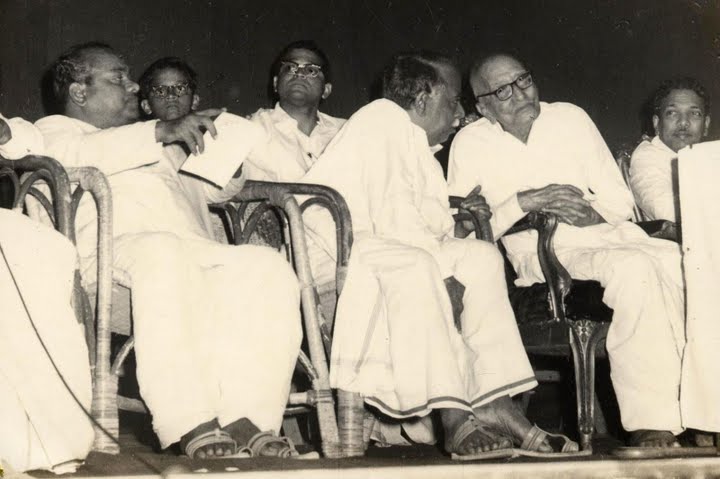
As the deadline stipulated in Part XVII of the Constitution for switching to Hindi as primary official language approached, the central government stepped up its efforts to spread Hindi's official usage. In 1960, compulsory training for Hindi typing and stenography was started. The same year, India's president Rajendra Prasad acted on the Pant Committee's recommendations and issued orders for preparation of Hindi glossaries, translating procedural literature and legal codes to Hindi, imparting Hindi education to government employees and other efforts for propagating Hindi.
To give legal status to Nehru's assurance of 1959, the Official Languages Act was passed in 1963. In Nehru's own words:
This is a Bill, in continuation of what has happened in the past, to remove a restriction which had been placed by the Constitution on the use of English after a certain date i.e. 1965. It is just to remove that restriction that this is placed.
The Bill was introduced in Parliament on 21 January 1963. Opposition to the Bill came from DMK members who objected to the usage of the word "may" instead of "shall" in section 3 of the Bill. That section read: "the English language may...continue to be used in addition to Hindi". The DMK argued was that the term "may" could be interpreted as "may not" by future administrations. They feared that minority opinion will not be considered and non Hindi speakers' views would be ignored. On 22 April, Nehru assured the parliamentarians that, for that particular case "may" had the same meaning as "shall". The DMK then demanded, if that was the case why "shall" was not used instead of "may". Leading the opposition to the Bill was Annadurai (then a Member of the Rajya Sabha). He pleaded for an indefinite continuation of the status quo and argued that continued use of English as official language would "distribute advantages or disadvantages evenly" among Hindi and non-Hindi speakers. The Bill was passed on 27 April without any change in the wording. As he had warned earlier, Annadurai launched state wide protests against Hindi. In November 1963, Annadurai was arrested along with 500 DMK members for burning part XVII of the Constitution at an anti-Hindi Conference. He was sentenced to six months in prison. On 25 January 1964, a DMK member - Chinnasamy committed [...] at Trichy by self immolation, to protest the "imposition of Hindi". He was claimed as the first "language martyr" of the second round of the anti-Hindi struggle by the DMK.
Nehru died in May 1964 and Lal Bahadur Shastri became Prime Minister of India. Shastri and his senior cabinet members Morarji Desai and Gulzari Lal Nanda were strong supporters of Hindi being the sole official language. This increased the apprehension that Nehru's assurances of 1959 and 1963 will not be kept despite Shastri's assurances to the contrary. Concerns over the preference of Hindi in central government Jobs, civil service examinations and the fear that English will be replaced with Hindi as medium of instruction brought students into the anti-Hindi Agitation camp in large numbers. On 7 March 1964, the chief minister of Madras State, M. Bhaktavatsalam at a session of the Madras Legislative Assembly recommended the introduction of Three-language formula (English, Hindi and Tamil) in the state. Apprehension over the Three-language formula increased student support for the anti-Hindi cause.
Events leading up to January 26
As January 26, 1965 approached, the anti-Hindi agitation in Madras State grew in numbers and urgency. The Tamil Nadu Students Anti Hindi Agitation Council was formed in January as an umbrella student organisation to coordinate the anti-Hindi efforts. The office bearers of the council were student union leaders from all over Madras State including P. Seenivasan, K. Kalimuthu, Na. Kamarasan, Seyaprakasam, Ravichandran, Tiruppur. S. Duraiswamy, Sedapatti Muthaiah, Durai Murugan, K. Raja Mohammad, Navalavan, M. Natarajan and L. Ganesan. Explaining the anxiety of the students, The Indian Express noted in its editorial on 6 February 1965:
It was inevitable that the Madras students should have taken the lead in opposing the elevation of Hindi. After all a decision whether Hindi or English is to be the official language of the country affects them much more than any other section of the population. It is the students of the South who stand to lose most, when Hindi alone becomes the official language.
Several student conferences (sponsored by industrialists like G. D. Naidu and Karumuttu Thiagarajan Chettiar) were organised throughout the state to protest against Hindi imposition. On 17 January, the Madras State Anti-Hindi Conference was convened in Trichy. Participants included Rajaji (Swatantara Party), V. R. Nedunchezhiyan (DMK), P. T. Rajan (Justice Party), G. D. Naidu, Karumuthu Thyagaraja Chettiar, S. P. Adithan (We Tamils Party), Muhammad Ismail (Muslim League) and 700 other delegates from Madras, Maharashtra, Kerala and Mysore. They called for the indefinite suspension of Part XVII of the constitution. In the Conference Rajaji declared that the Part XVII should "be heaved and thrown into the Arabian Sea." The Home and Information & Broadcasting ministries of the central government (headed by Nanda and Indira Gandhi respectively) upped the ante and issued circulars for replacing English with Hindi from 26 January. On 16 January, Annadurai announced that 26 January (also the Republic Day of India) would be observed as a day of mourning. He wrote to Shastri asking for the language transition to be postponed by a week so that Tamils could celebrate Republic Day with the rest of the country. Shastri refused and the stage was set for the confrontation.
"Day of mourning"
Madras State’s Chief Minister Bhaktavatsalam warned that the state government would not tolerate the sanctity of the Republic day blasphemed and threatened the students with "stern action" if they participated in politics. The DMK advanced the "Day of Mourning" by a day. On 25 January, Annadurai was taken into preventive custody along with 3000 DMK members to forestall the agitations planned for the next day. On 26 January, 50,000 students from Madras city's colleges marched from Napier park to the Government secretariat at Fort St. George to present a petition to Bhaktavatsalam. But he refused to meet with the students saying "Why should i see the students?". The students viewed his refusal as an insult and were further enraged.
Madurai incident
In the morning of 25 January, students in Madurai took out a procession toward the Thilagar thidal (lit. Grounds) at the centre of the city. Their intention was to stage a public burning of Part XVII of the constitution. They burned a huge effigy of "Hindi Demoness" and shouted slogans against Hindi like "Down with Hindi" and "Hindi Never, English Ever" . As the procession approached the Congress Party district office at North Masi Street, some Congress "volunteers" who had arrived in a Jeep shouted insults and obscenities at the students. A volley of sandals from the students returned the insult. The provoked Congress volunteers, who ran back into the Party’s office, returned with knives and attacked students, wounding seven. As the riot broke out, students set fire to the pandal in the Congress office, constructed for the Republic day celebrations. When news of the attack spread riots broke out in Madurai and other parts of the State. In retaliation for the attack, students cut down flag poles of the Congress party all over Madurai.
Two months of riots
As the riots spread, police responded with lathi charges and firing on student processions. This further inflamed the situation. Acts of arson, looting and damage to public property became common. Railway cars and Hindi name boards at railway stations were burned down; telegraph poles were cut and railway tracks displaced. The Bhaktavatsalam Government considered the situation as a law and order problem and brought in para military forces to quell the agitation. Incensed by police action, violent mobs killed two police men. Five agitators (Sivalingam, Aranganathan, Veerappan, Muthu, and Sarangapani) committed [...] by pouring gasoline and setting themselves on fire and three more (Dandapani, Muthu, and Shanmugam) died by consuming poison. (a sixth [...] by self immolatation - by Sarangapani of Mayavaram occurred two weeks later). In two weeks of riots, around 70 people were killed (by official estimates). Some unofficial reports put the death toll as high as 500. A large number of students were arrested. The damage to property was assessed as one crore Rupees.
On 28 January, classes in Madras University, Annamalai University and other colleges and schools in the state were suspended indefinitely. Within the Congress, opinion was divided - On 31 January, a group of Congress leaders including Mysore Chief minister S.Nijalingappa, Bengal Congress leader Atulya Ghosh, Union Minister Sanjeeva Reddy and Congress president K. Kamaraj met in Bangalore and issued an appeal not to force Hindi on non-Hindi speaking areas as they believed it might endanger the unity of the country. Morarji Desai refused their demands regretting that Hindi was not made official before the anti-Hindi protests crystallized. He said Congress leaders in Madras should convince people there and no regional sentiments should come in the move to forge the integration of the country. Union Home Minister Gulzari Lal Nanda agreed with Bhaktavatsalam's handling of the agitation and commended him for standing "hard as a rock".
Rioting continued through out the first week of February. On February 6, student representatives met Bhatavatsalam to find a compromise. But the talks failed and violence continued unabated. Processions, fasts, general strikes, burning of Hindi books, destruction of Hindi name boards, agitations in front of Post offices became commonplace. By the second week of February the students had lost control of protests. Annadurai (who had been released on 1 February) condemned the violence and asked the students to suspend the movement. But violence continued unabated. Efforts were made by both sides to find a compromise - Indira Gandhi visited Madras to try and reconcile the situation, while Bhaktavatsalam toned down his stance and started advocating "permanent bilingualism". In a Union cabinet meeting on 11 February, C. Subramaniam, the Minister for Food, demanded statutory recognition for English as official Language. When he was voted down, he resigned along with another minister from Madras State (O. V. Alagesan).
Faced with open revolt in his cabinet, Shastri remained unfazed. He recommended the acceptance of their resignations to the Indian president Sarvepalli Radhakrishnan. Radhakrishnan refused his recommendations by saying "Do you want to lose Tamil Nadu from India?. If not, kindly take back your recommendation". Shastri backed down and made a broadcast through All India Radio on February 11. Expressing shock over the riots, he promised to honour Nehru's assurances. Further he made four assurances of his own:
Every state will have complete and unfettered freedom to continue to transact its own business in the language of its own choice, which may be the regional language or English. Communications between one State to another will either be in English or will be accompanied by authentic English translation. The non-Hindi states will be free to correspond with the Central Government in English and no change will be made in this arrangement without the consent of the non-Hindi States. In the transaction of business at the Central level, English will continue to be used.
Later he added a fifth assurance: The All India Civil Services examination would continue to be conducted in English rather than in Hindi alone.
Impact of the agitation
Immediate impact
Shastri's assurances calmed down the volatile situation. On 12 February, the students council postponed the agitation indefinitely and on 16 February, C. Subramaniam and O. V. Alagesan withrew their resignations. Sporadic acts of protests and violence continued to happen throughout February and early March. On 7 March, the administration withdrew all the cases filed against the student leaders and on 14 March, the Anti-Hindi Agitation Council dropped the agitation. Shastri's climbdown angered the pro-Hindi activists in North India. Members of Jan Sangh went about the streets of New Delhi, blackening out English signs with tar.
Impact on 1967 election
After dropping the agitation in March 1965, the Tamil Nadu Students Anti-Hindi Agitation council continued to push for the scrapping of the Three Language formula and for a constitutional amendment to drop part XVII. On 11 May, a three-person delegation of the student council met with Prime minister Shastri to press their demands. The anti-Hindi agitation slowly changed into a general anti-Congress organisation with the goal of defeating the congress in the 1967 election. On 20 February 1966, the first statewide conference of the council was held. It was attended by Rajaji, who asked the students to work toward defeating the Congress. In the 1967 elections, student leader P. Seenivasan contested against Kamaraj in the Virudunagar constituency. A large number of students from all over the state campaigned for him and ensured his victory: the Congress party was defeated and DMK came to power for the first time in Madras State.
Long term impact
The agitations of 1965 led to major political changes in the state. Many political leaders of the DMK and ADMK, like P. Seenivasan, K. Kalimuthu, Durai Murugan, Tiruppur. S. Duraiswamy, Sedapatti Muthaiah, K. Raja Mohammad, M. Natarajan and L. Ganesan, owe their entry and advancement in politics to their stints as student leaders during the agitations. After losing the 1967 elections Congress Party never managed to recapture power in the state. The agitations also ensured the passage of Official Languages Act of 1963 and its amendment in 1967, thus ensuring the continued use of English as an official language of India. They effectively brought about the "virtual indefinite policy of bilingualism" of the Indian Republic.
See also
- Anti-Hindi agitations of Tamil Nadu
- Dravidian parties
- Rise of Dravidian parties to power in Tamil Nadu
- Hindi–Urdu controversy
References
| ref=harv |OCLC=37770527}}
External links