
Discovery of the Book of the Law
The discovery of the Book of the Law (Hebrew: מציאת ספר התורה) is a pivotal biblical event described in the Hebrew Bible . According to the narrative, the High Priest Hilkiah found a sacred scroll inside the First Temple during renovations.
The reading of this scroll inspired King Josiah to initiate a sweeping religious reformation, centralizing sacrificial worship exclusively in Jerusalem and eliminating foreign cultic practices. In modern biblical criticism, this event is widely considered a foundational milestone in the development of the Torah and the historical composition of the Book of Deuteronomy.
Biblical Narrative
Discovery and Verification
The primary accounts of the discovery are recorded in 2 Kings 22 and 2 Chronicles 34. In the eighteenth year of his reign, King Josiah ordered the royal scribe Shaphan to oversee temple repairs financed by public contributions. During the renovations, Hilkiah the High Priest informed Shaphan that he had "found the Book of the Law in the house of the Lord" ().
Shaphan brought the scroll to King Josiah and read it aloud before him. Upon hearing the severe curses and judgments detailed in the text for disobeying God's commandments, Josiah tore his clothes in grief and repentance. Seeking guidance, the king dispatched a delegation including Hilkiah and Shaphan to consult the prophetess Huldah. She confirmed that the divine wrath described in the book would indeed fall upon the nation due to its apostasy, but promised that Josiah would be spared the sight of the destruction because of his genuine humility.
Josiah's Reformation
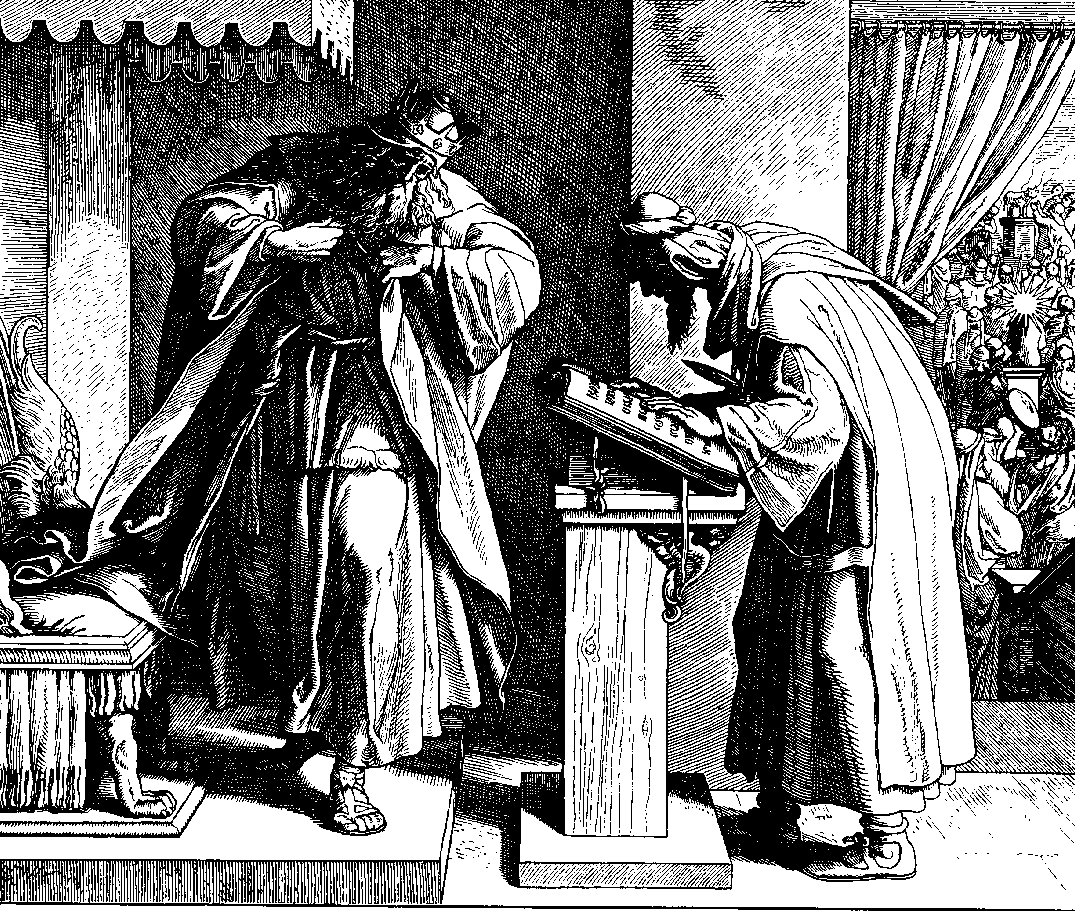 In response to the prophecy, King Josiah summoned all the elders, priests, and citizens of Judah to the Temple. He read the entire contents of the discovered scroll to the assembly and made a formal covenant to follow the Lord and keep His commandments.
This sparked a radical religious purge throughout Judah and parts of Israel:
- All shrines, altars, and vessels dedicated to foreign gods like Baal and Asherah were destroyed.
- High places (bamot) outside of Jerusalem were dismantled, and their priests were disqualified from altar service.
- The national celebration of Passover was reinstituted on a scale unprecedented since the days of the Judges ().
Academic and Historical Analysis
Identification with Deuteronomy
Since the pioneering work of German theologian Wilhelm Martin Leberecht de Wette in 1805, the overwhelming consensus among modern biblical scholars is that the "Book of the Law" discovered in the temple was either the Book of Deuteronomy or a core legal nucleus of it (specifically chapters 12–26).
Several factors support this identification:
- Centralization of Worship: Deuteronomy is the only book in the Torah that strictly demands a single centralized sanctuary for all sacrificial worship (Deuteronomy 12), a policy directly mirrored in Josiah's systematic destruction of rural high places (bamot).
- The Blessings and Curses: Josiah's extreme reaction to the reading matches the severe admonitions and warnings unique to Deuteronomy 28.
- The Passover Law: The centralized celebration of Passover described in 2 Kings 23 aligns closely with the laws in Deuteronomy 16, which transformed Passover from a domestic family ritual into a national pilgrimage festival.
Theories of Origin
Scholarship offers different interpretations regarding how the book came to be "found":
- The "Pious Fraud" / Josianic Composition Theory: Many secular and critical historians suggest that the scroll was not lost, but rather composed by Jerusalem priests or scribes during Josiah's reign. In this view, "finding" the book was a staged political maneuver to grant ancient divine authority to Josiah's centralizing reforms and political ambitions to reclaim former northern territories.
- The Hezekian Composition Theory: Other scholars argue the book may have been written a century earlier during the reign of King Hezekiah (who also attempted a religious reform) and hidden or forgotten during the oppressive, idoltrous reign of King Manasseh. Under this theory, the discovery was genuine.
- Traditional Religious View: Traditional Orthodox Judaism and conservative Christian theology hold that the scroll was an authentic, original copy of the entire Torah written by Moses, which had been hidden to protect it from destruction during periods of widespread apostasy.
Significance
The discovery of the Book of the Law is widely viewed by historians as the birth of Deuteronomistic History and a turning point toward monotheism and a text-based religious identity. It marked the transition of ancient Israelite religion from a cult centered primarily around local shrines and temple sacrifices to a religion centered on the study and observance of a canonized written text, paving the way for post-exilic Rabbinic Judaism.
See also
- Deuteronomist
- Josiah
- Composition of the Torah
- Hilkiah