
Centralization of the cult
The centralization of the cult (also referred to as centralization of worship; Hebrew: ריכוז הפולחן, Rikuz HaPulhan) is a biblical law found primarily in the Book of Deuteronomy and the Book of Leviticus which restricts sacrificial worship and religious rituals to a single centralized location designated by God.  The core command of the law is articulated in Deuteronomy 12:
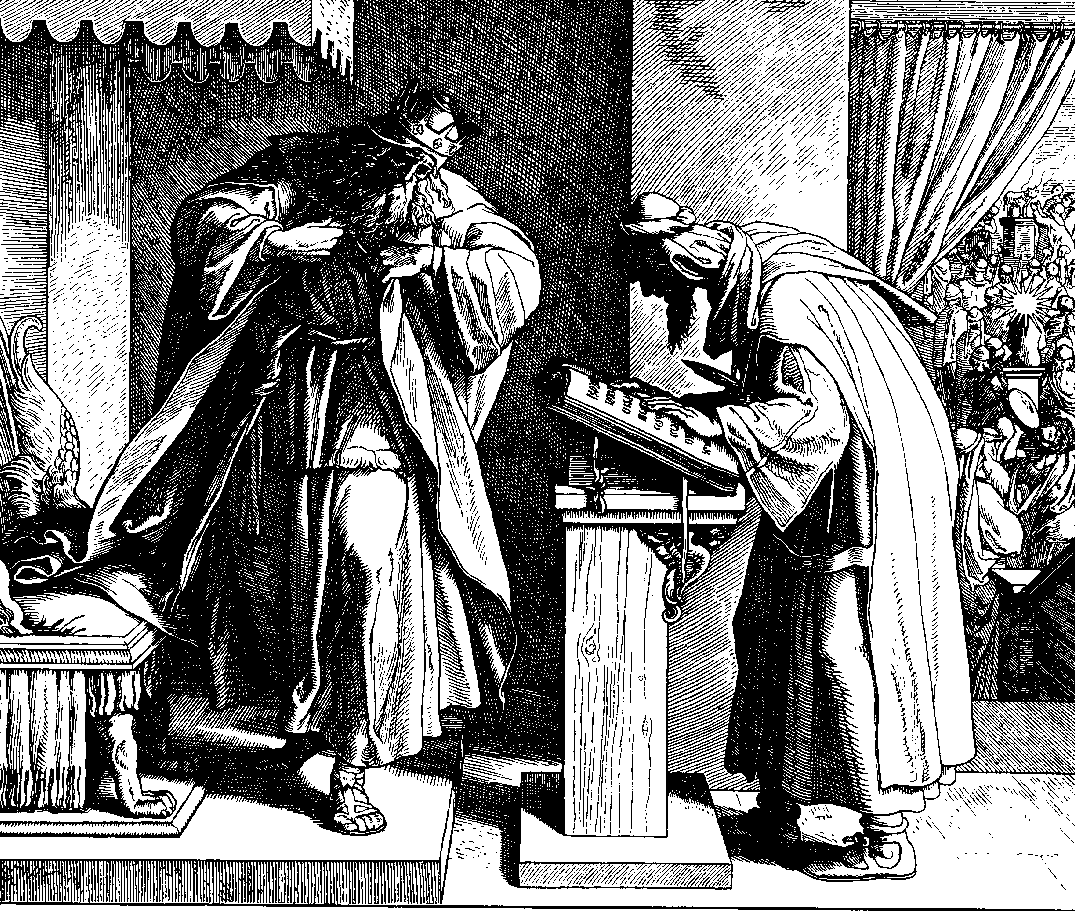 According to the biblical narrative, from the period of the Judges until the late First Temple period, the majority of the Israelite population continued to practice worship at localized, scattered altars called bamot. This decentralized worship was officially sanctioned or tolerated by most kings of Judah and Israel. In biblical historiography, the law of centralization was successfully implemented only during three major historical intervals: during the time of Joshua, briefly when the tribes of Reuben and Gad built an altar by the Jordan; and much later under the religious reforms of King Hezekiah and his great-grandson King Josiah of Judah. In modern biblical criticism, the religious reform of Josiah following the discovery of a "Book of the Law" is widely considered the pivotal historical event that firmly established cultic centralization.
Historical Context
The historical framework for the execution of the centralization law began in the Kingdom of Judah. King Hezekiah is described as having removed the high places, smashed the sacred stones, and cut down the Asherah poles, effectively channeling sacrificial worship exclusively to Jerusalem. However, his son Manasseh reversed these policies and rebuilt the local high places.
Decades later, King Josiah launched a sweeping iconoclastic campaign, defiling localized altars throughout the land. According to the narrative in 2 Kings, during the renovations of the Temple in Jerusalem, the High Priest Hilkiah discovered a forgotten "Book of the Law". Since the 1805 work of German theologian Wilhelm Martin Leberecht de Wette, a vast consensus in biblical criticism identifies this discovered scroll as the Book of Deuteronomy (or its core legal nucleus), which provided the direct ideological framework and legislative justification for Josiah's reform.
In the biblical narrative, centralization served a critical theological function: separating Israel from the polytheistic customs of the Canaanites. Localized high places were frequently associated with syncretic synods and the worship of pagan deities. Smashed altars and centralized worship in Jerusalem were designed to eradicate idolatry and maintain the purity of Yahwism.
Core Concept: "The Place the Lord Will Choose"
Throughout the legal code of Deuteronomy, the command to worship exclusively at "the place that the Lord your God will choose out of all your tribes to put his name" appears repeatedly, yet the text never explicitly names the chosen location. In biblical scholarship, this anonymity is understood differently depending on authorship dating: if written during the wilderness wanderings, the site remained an unrevealed future destination; if composed during the late monarchy under Josiah, the phrase functioned as a deliberate, pseudo-historicized reference to Jerusalem, validating its socio-political supremacy without explicitly backdating the city's name into the Mosaic era.
Impact on Religious and Social Life
The centralization of worship completely reshaped the religious, social, and economic life of ancient Israelite society:
- Secular Slaughter (Shehitat Hulin): Prior to centralization, every slaughter of a domestic animal for meat was considered a sacral act accompanied by a sacrificial ritual at a local altar (as outlined in Leviticus 17:3–4). Because traveling to Jerusalem for every meal was impossible for remote populations, Deuteronomy explicitly innovated the permission of "profane" or secular slaughter—allowing citizens to slaughter and eat meat in their local towns without an altar ritual (Deuteronomy 12:20–22).
- Pilgrimage and Festivals: Localized celebrations of seasonal festivals (such as Passover) were transformed into mandatory national pilgrimages to Jerusalem. This significantly boosted the geopolitical prestige and economic status of Jerusalem and the Temple.
- Displacement of Rural Levites: Centralization severely damaged the livelihood of rural Levites and priests who operated local high places. Left without altars to service and lacking tribal land inheritances, these local Levites became a marginalized, impoverished class. Deuteronomy repeatedly instructs the public to care for the displaced Levite living "within your towns" alongside the stranger, the fatherless, and the widow (Deuteronomy 12:12, 14:27).
- Rise of Prayer: As physical access to the sacrificial cult became a rare occurrence for ordinary people living far from the capital, prayer and non-sacrificial liturgies gradually evolved to fill the spiritual void, laying the earliest conceptual foundations for post-exilic synagogue worship.
Political and Economic Motives
Many historians and critical scholars argue that beyond its theological aims, centralization served vital political and economic interests of the ruling elite in Judah. By consolidating all religious tithes, contributions, and pilgrimage expenditures exclusively into the Jerusalem Temple, Josiah's administration effectively monopolized national wealth distribution. Politically, it unified a fragmented population under a single royal sanctuary, strengthening the central power of the Davidic dynasty against local tribal autonomy.
See also
- Josiah's reform
- High place
- Deuteronomistic History
- Priestly source
- Sacrifice in Judaism
Further reading
Deuteronomy Category:Phoenicians in the Hebrew Bible Category:The Exodus 5 Category:Tabernacle and Temples in Jerusalem