
Chile–Netherlands relations
Chile–Netherlands relations are the international relations between Chile and the Netherlands. They are framed within the broader relations between Chile and the European Union and have been close and aligned in social, cultural, and economic spheres, with the exception of the period of the military regime of Augusto Pinochet, during which the Dutch government was a significant opponent on the international stage. At present, both countries maintain an important bilateral relationship across various areas.
History
19th century
Bilateral relations between the two countries date back to 2 June 1849, when the Chilean government officially recognized José Boonen as the first Vice-Consul of the Netherlands in Chile. For its part, on 22 August of the same year, the Dutch monarchy officially recognized Consul Eduardo Serruye as the first Chilean representative on Dutch soil.
As part of the process of European colonization of Araucanía in the late 19th century, the Chilean government recruited Dutch settlers in order to populate and found towns in this sparsely inhabited area of southern Chile. Nueva Transvaal Colony is a locality located in the commune of Gorbea, founded by Boer settlers from the Dutch colonial empire who sought refuge in Chilean territory as a result of the Boer Wars. Other localities founded by, or with a significant number of, Dutch immigrants include Boroa, Faja Maisan, and Pitrufquén.
20th century
In 1910, Chile raised the status of its diplomatic legation in the Netherlands by accrediting Jorge Huneeus Gana as Envoy Extraordinary and Minister Plenipotentiary. This was reciprocated in November 1917, when the Dutch diplomat Hendrik van Oordt de Lavenrecht assumed the same position, with permanent residence in Chile. On 26 May 1937, a trade agreement was signed between the two countries, allowing Chile to export nitrate, copper, cereals, and honey, while the Netherlands exported rice, cocoa, and light bulbs. The close relations between the two countries were further confirmed by the official visit to Chile by Prince Bernhard, husband of Queen Juliana of the Netherlands, between 10 and 20 April 1951. On that occasion, he was awarded the Collar of the Order of Merit of Chile by President Gabriel González Videla, who in turn was awarded the Grand Cross of the Order of the Netherlands Lion by the prince. In 1955, both countries decided to once again raise the level of their bilateral relations to that of embassies, appointing the diplomats Luis Renard Valenzuela in The Hague and Petrus Albertus Kenstell in Santiago, Chile.
In 1961, the Dutch government established a system of credit guarantees to facilitate the export of capital goods to Chile, which was endorsed by the central banks of both countries. The following year, the two countries signed a migration agreement that encouraged Dutch immigration to Chile, particularly of farmers, livestock breeders, and technicians to engage in dairy farming activities in the south of the country. In 1966, a Dutch trade mission offered to finance, on behalf of the Netherlands, the construction of a high-frequency telecommunications network in Chile. This project was entrusted to the National Telecommunications Company, with funding exceeding 2.5 million Dutch guilders at the time, provided by the Netherlands Investment Bank.
Following the 1973 coup d'état in Chile, relations between the two countries became politically strained. One year earlier, the Dutch Minister for Development Cooperation, Jan Pronk, had founded a solidarity movement with the government of Salvador Allende, and there was sympathy among Dutch trade unions and Labour Party members for what Prime Minister Joop den Uyl described as "a social democratic experiment." Days after the military coup, approximately 20,000 Dutch citizens marched in Amsterdam and other cities in protest against the dictatorship, including politicians and members of the government. The immediate response of the Dutch government was total opposition and the adoption of measures to reduce political and economic relations with the new Chilean government, as well as a strong condemnation of human rights violations at both the international and bilateral levels. The Netherlands did not sever diplomatic relations with Chile, as it sought to maintain contact in order to provide assistance to political prisoners and offer them asylum, as well as to protect Dutch citizens residing in Chile and other opponents of the military regime. 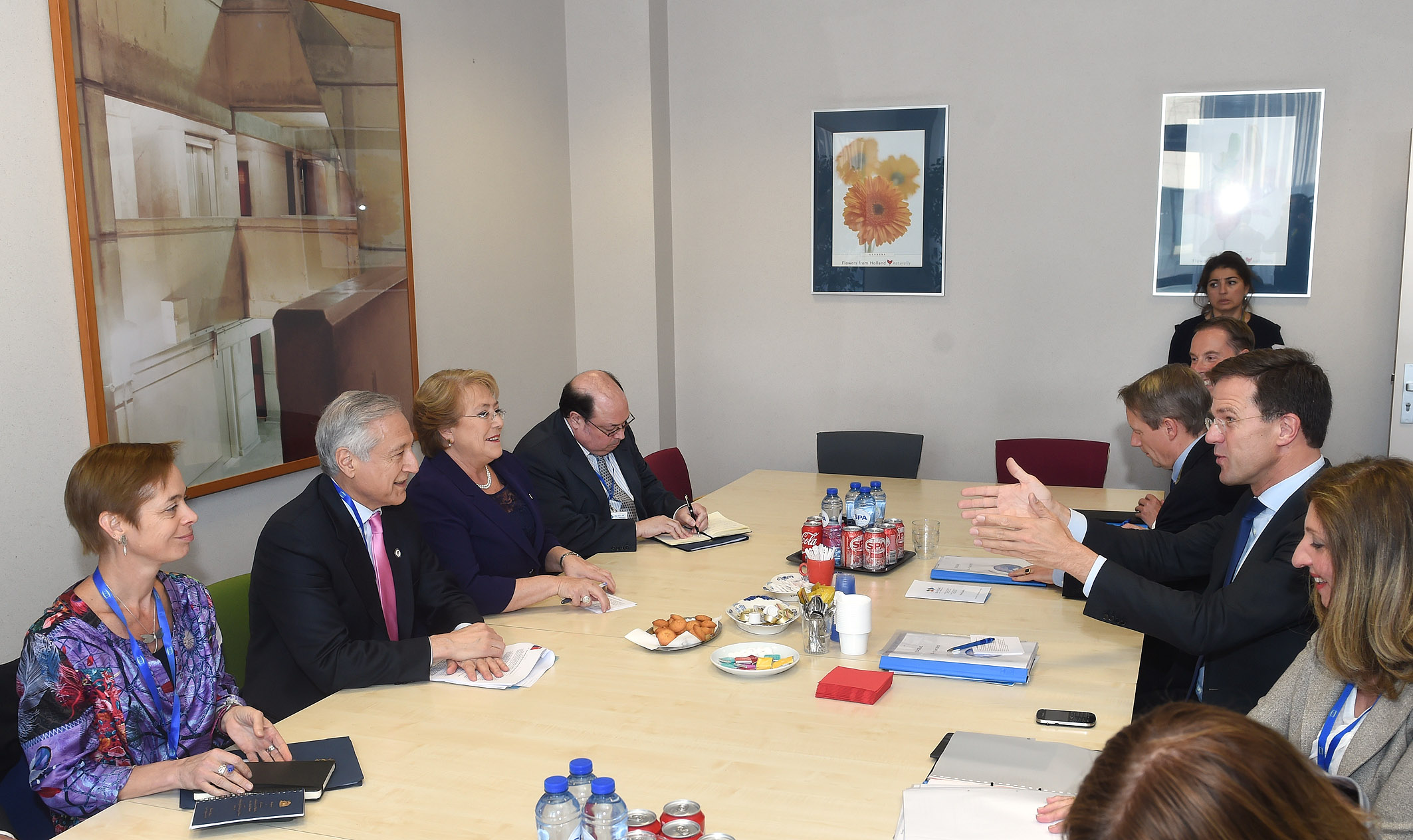 With the return of democracy to Chile in March 1990, relations between the two countries were normalized. In October of that year, Chile and the Netherlands signed an agreement on economic and technological cooperation, and in January 1996, a social security agreement was concluded.
21st century
In 2009, the two countries signed cooperation agreements for the development of advanced human capital and in the field of technology transfer, as well as the exchange of experiences in agricultural and food sectors.
See also
- Foreign relations of Chile
- Foreign relations of the Netherlands
- Dutch Chileans
References
Netherlands Category:Bilateral relations of the Netherlands