
1991 Royal Saudi Air Force C-130 Hercules crash
On 21 March 1991, a Royal Saudi Air Force (RSAF) Lockheed C-130H Hercules military transport aircraft crashed on approach to Ras Mishab Airport in the Eastern Province of Saudi Arabia while returning a contingent of Senegalese soldiers from a religious pilgrimage to Mecca to their deployment area on the Persian Gulf coast. Of the 101 occupants, 98 were killed in the immediate impact, including all six Saudi crew and 92 Senegalese soldiers; one of the three initial survivors later died of his injuries, bringing the total death toll to 99. The accident was attributed to thick black smoke from the Kuwaiti oil fires combining with darkness and fog to obscure the crew's visibility, causing the aircraft to descend too low and strike the ground a few kilometres short of the runway.
It remains the deadliest air accident in the history of the Royal Saudi Air Force and the worst single loss in the Senegalese Armed Forces.
Background
Senegalese participation in the Gulf War
Following the Iraqi invasion of Kuwait in August 1990, the West African nation of Senegal joined the United States-led coalition assembled to liberate the emirate and contributed roughly 500 soldiers to the deployment, known in Senegal as the Jambars (a Wolof term meaning "warriors"). The Senegalese contingent operated alongside troops from eight other predominantly Muslim nations in a multinational task force that advanced up the coastal highway into Kuwait during the ground offensive of February 1991. On 21 February 1991, eight Senegalese soldiers had been wounded when their position was struck by an Iraqi Army Frog missile.
After the coalition declared a cease-fire on 28 February, the Senegalese troops remained in Saudi Arabia. Saudi authorities offered to fly groups of them to the holy cities of Mecca and Medina to perform the lesser pilgrimage (Umrah) before they returned home to Dakar.
Aircraft and crew
The aircraft was a Lockheed C-130H Hercules with the registration 469 and manufacturer's serial number 4754, built in 1977 and operated by 4 Squadron RSAF out of King Abdullah Air Base in Jeddah. The Hercules carried a crew of six.
Accident
On the night of 20–21 March 1991 the Hercules took off from Jeddah carrying 95 Senegalese soldiers who had completed pilgrimage activities in Mecca, with the intention of returning them to their forward base near Ras Mishab on the Persian Gulf coast, about 200 km north of Dammam and just south of Khafji.
At approximately 04:45 local time, during the final approach to Ras Mishab Airport, the aircraft impacted the ground a few kilometres short of the runway. US Marines of Battalion Landing Team 3rd Battalion, 1st Marines, on guard duty at the adjoining naval compound, reported seeing the Hercules perform an "S-turn" on what looked like a landing approach before it disappeared from view and exploded.
All six Saudi crew members and 92 of the 95 Senegalese soldiers were killed at the scene; three Senegalese were pulled from the wreckage alive, one with severe burns and two with serious fractures. One of the three survivors subsequently succumbed to his injuries, raising the final death toll among the Senegalese to 93.
Cause
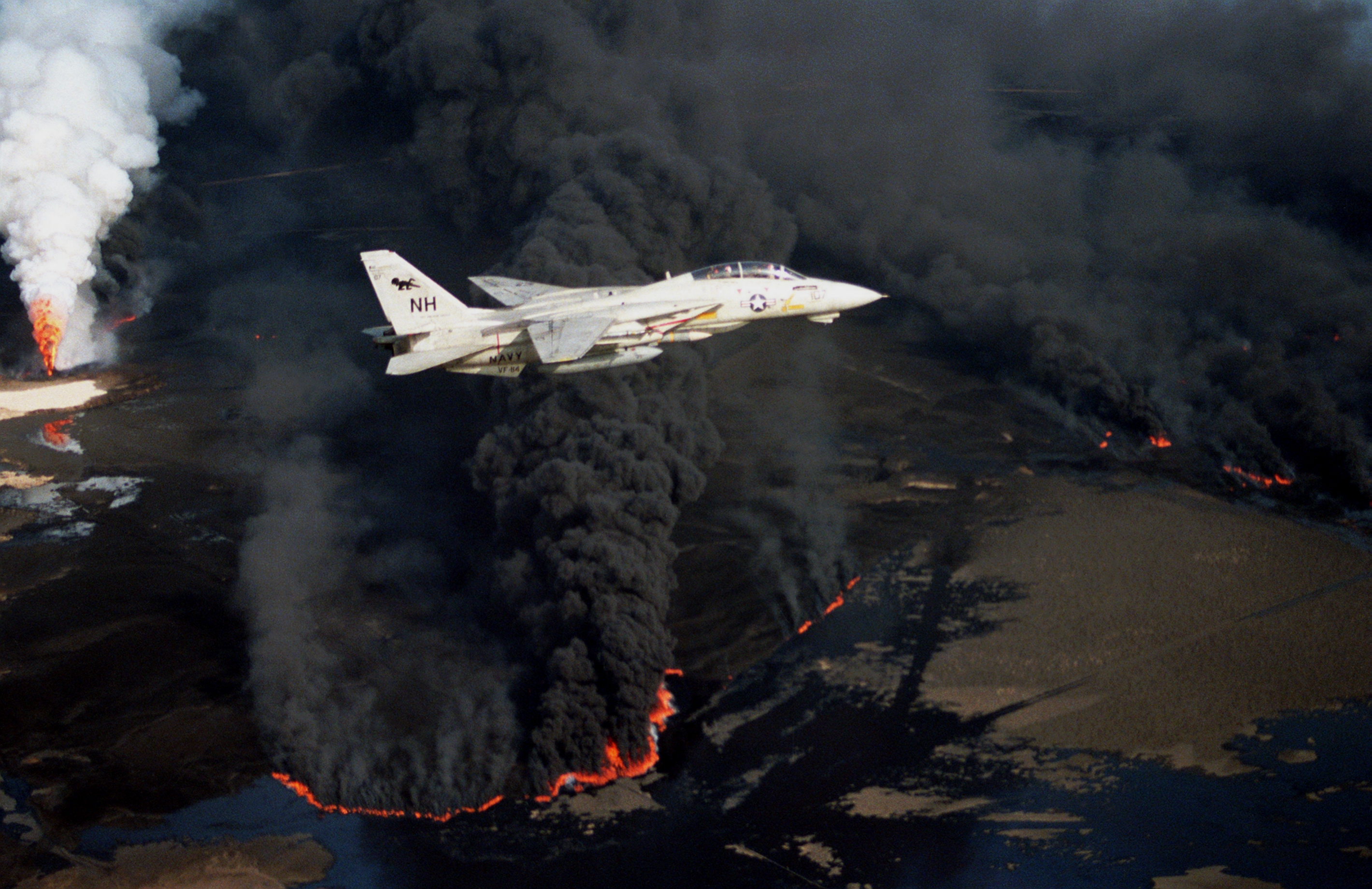
The Saudi Ministry of Defence, in a statement issued in Riyadh on the day of the crash, attributed the accident to "bad weather conditions and reduced visibility created by the smoke resulting from blowing up the oil wells in southern Kuwait" by Iraqi forces during their retreat from Kuwait. Hundreds of oil wells in Kuwait had been set on fire by withdrawing Iraqi troops in late February 1991, producing dense black plumes that drifted south over Saudi Arabia and significantly degraded visibility along the Gulf coast. The Bureau of Aircraft Accidents Archives lists the cause as controlled flight into terrain: while approaching Ras Mishab Airport, the crew encountered poor visibility from the oil-fire smoke and descended below the safe approach profile, striking the ground a few kilometres from the airfield.
Senegalese veterans and victims' families later challenged the official explanation, suggesting that the type of aircraft used was poorly suited to the mission and that the Hercules had been overloaded, although these claims have not been substantiated by any published investigation.
Aftermath
The dead Senegalese soldiers were buried in Saudi Arabia at the request of their families, so that they could rest near the holy cities of Islam. Senegal's Defence Minister Médoune Fall said the soldiers had "fallen on the field of the faith, thousands of kilometres from home, where they had gone to defend peace and justice".
In Senegal, the accident remains a deeply traumatic episode that is commemorated as the loss of the "93 Jambars". A dedicated room at the Senegalese Armed Forces Museum in Dakar is reserved for the Gulf War contingent and the victims of the Ras al-Mishab crash. Veterans of the 1990–91 deployment continue to lobby successive Senegalese governments over recognition and compensation for the families.
It was the deadliest accident involving an aircraft of the Royal Saudi Air Force and one of the deadliest accidents of the Gulf War period for coalition forces.
See also
- List of accidents and incidents involving the Lockheed C-130 Hercules
- Kuwaiti oil fires
- Coalition of the Gulf War
- Gulf War air campaign