
1922 unrest in Dagestan and Chechnya
In 1922, uprisings broke out in Dagestan and Chechnya under the leadership of Najmuddin of Gotsinsky. These revolts were part of a broader movement for independence in the North Caucasus, resisting the consolidation of Soviet power following the Russian Civil War.
Background
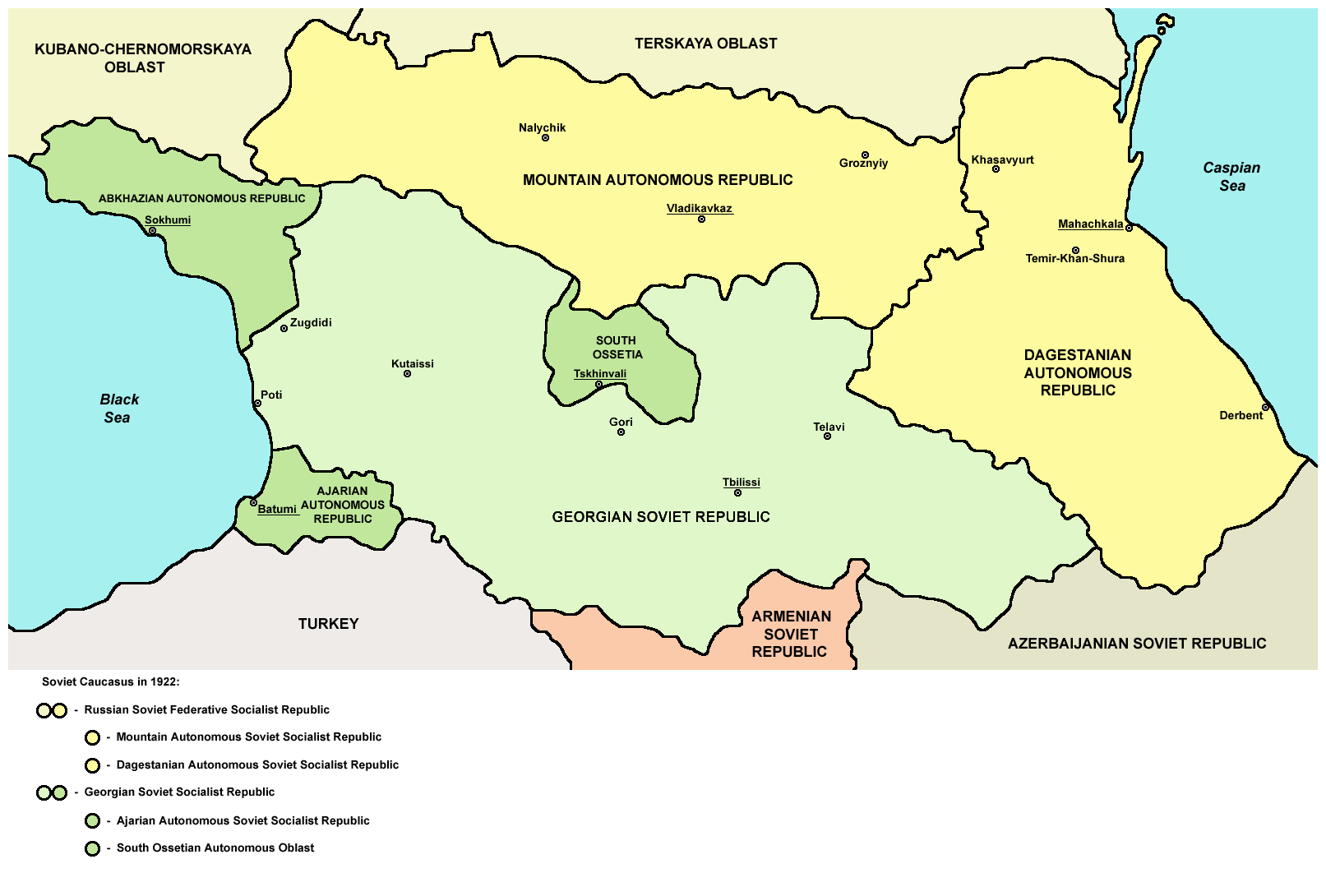
In 1920, the North Caucasus experienced significant unrest following the Russian Civil War. In 1920–1921, the Dagestan uprising, led by the Naqshbandi brotherhood and supporters of Imam Shamil's legacy, challenged Bolshevik control over the region. Although the rebels initially gained control of much of the mountainous terrain, the Red Army eventually suppressed the revolt by May 1921. These events weakened local resistance networks but left lingering discontent, setting the stage for further uprisings in 1922, including those led by Najmuddin Gotsinsky in Dagestan and Chechnya.
During Enver Pasha's campaign in Bukhara, his victories earned him fame across the Islamic world. Encouraged by these successes, according to Cemal Kutay and İlyas Kara, unrest spread to Dagestan in early 1922. Early that year, major uprisings fired up in Dagestan and Chechnya.
The unrest
In early 1922, Soviet authorities warned that the situation in Dagestan was critical. A telegram from March 1922 described a surge in "banditism," growing anti-Soviet agitation led by mullahs and "Turkish emissaries," and feared that the uprising was spreading into Dagestan.
Between 1922 and 1925, small armed groups operated in the forests of Dagestan. They targeted civilians, attacked infrastructure such as fisheries and railways, and occasionally engaged Soviet law enforcement forces.
In response to the armed detachments of N. Gotsinsky, the Soviet authorities established the Republican Military Council for Combating Banditry in Dagestan on January 30, 1922. By August 1922, the situation had escalated to the point that Dagestan was placed under martial law. In the summer of 1922, Soviet forces were deployed to Chechnya, where they seized several hundred rifles and three machine guns, and targeted the homes of suspected insurgents.
As a result of the conflict in Dagestan in 1922, a senior Bolshevik official who had served as Deputy Narkomput' and head of the Caucasus Railways was killed.
Casualties
According to Alex Marshall, in 1922 the Soviet forces suffered 9,338 losses in the Caucasus region due to combat and desertion.
Aftermath
In the same year, Gotsinsky's associates sought international recognition from the League of Nations for a future independent Caucasian state, citing solidarity with broader Muslim resistance movements. On 30 November 1922, the Chechen Autonomous Oblast was established when it was separated from the Mountain Autonomous Soviet Socialist Republic. In the same year, the Aukh region, previously mainly populated by Chechens, was transferred by Moscow authorities to the newly established Dagestan Autonomous Soviet Socialist Republic.