
Russia–Togo relations are the bilateral diplomatic relations between Russia and Togo.
History
On 11 March 2002, a Protocol on Consultations was signed in Lomé between the Ministry of Foreign Affairs of the Russian Federation and the Ministry of Foreign Affairs and Cooperation of the Togolese Republic. The first and so far the only consultations were held on 29 May 2002 in Lomé.
In 1992, the Russian embassy in Lomé was closed, and the Togolese embassy in Moscow suspended its activities in 1999.
After the closure of the embassy in Lomé, the Russian ambassador to Togo is concurrently appointed as the ambassador to Benin, with the embassy located in Cotonou, Benin.
Trade and economic relations
In 1991, the trade turnover between the two countries was approximately 12 million USD. Togo exported cocoa beans to Russia and imported frozen fish from Russia. Shortly thereafter, trade between Russia and Togo sharply declined. By 2008, the Russia–Togo trade turnover reached 26.6 million USD.
Cultural and educational relations
During the Soviet era, cultural relations between the countries were based on two-year Soviet–Togolese protocols on cultural cooperation. Over the years, around 900 Togolese students were trained and graduated from Russian universities. Currently, approximately 40 Togolese citizens are studying in Russia. In the 2008–2009 academic year, 3 students from Togo were admitted to study in Russia; in 2002–2003, 3 students; and in 2001–2002, 5 students.
Visa regulations
The minimum processing time for a visa to Togo is 3 days. The application form can be completed in Russian or French. The entry visa is valid for 90 days.
See also
- Foreign relations of Russia
- Foreign relations of Togo
References
Togo Category:Bilateral relations of Togo
Mozambique–Zambia relations are the bilateral diplomatic relations between Mozambique and Zambia. The two countries share a border measuring 439 km in length.
History
Mozambique and Zambia have developed warm and friendly relations, cooperating in both economic matters and joint efforts to combat terrorism. During the Mozambican Civil War, Zambia supported the Mozambican government against RENAMO rebels. In August 2010, the two countries signed eight intergovernmental agreements aimed at promoting cooperation in transportation, communications, and tourism.
In June 2015, Zambian President Edgar Lungu visited Maputo on a state visit and participated in events marking the 40th anniversary of Mozambique's independence from Portugal. In July 2015, the governments of both countries agreed to jointly counter the threat of terrorism. On 19 March 2016, the presidents signed a Memorandum of Understanding intended to boost trade and economic cooperation. In July 2016, Lungu called on the Mozambican government to lift trade restrictions to foster economic activity with Zambia.
See also
- Foreign relations of Mozambique
- Foreign relations of Zambia
- Mozambique–Zambia border
References
Zambia Category:Bilateral relations of Zambia
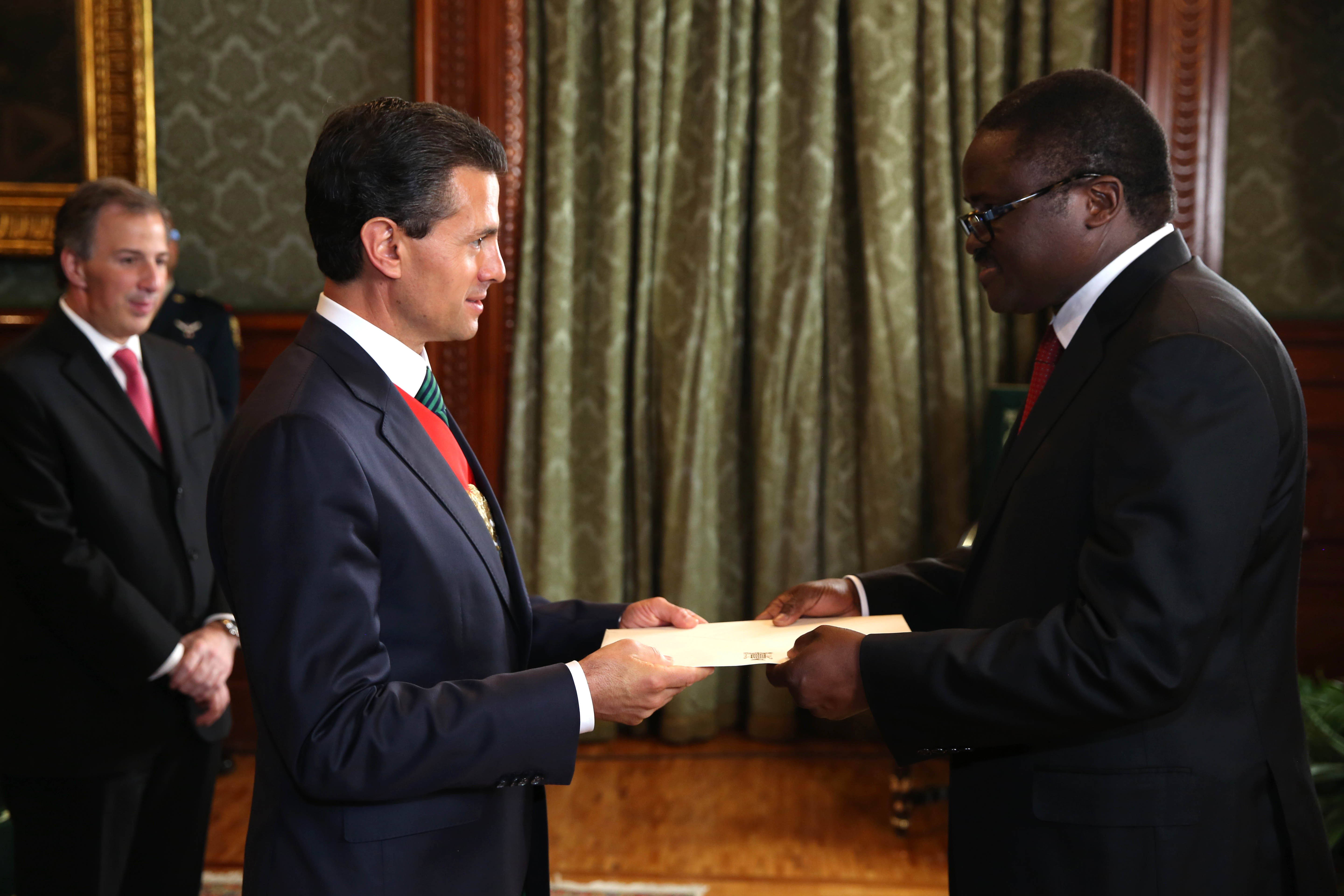 Mexico–Zambia relations are the bilateral relations between Mexico and Zambia. Both nations are members of the United Nations. Neither country has a resident ambassador.
History
Mexico and Zambia established diplomatic relations on 15 October 1975. Relations between the two countries have developed primarily within the framework of multilateral forums.
In November 2010, the Government of Zambia sent a delegation of 41 members to attend the 2010 United Nations Climate Change Conference held in Cancún, Mexico.
In April 2014, Zambia participated with a delegation headed by Kasonde Henry Mwila in the First High-Level Meeting of the Global Partnership for Effective Development Co-operation, which took place in Mexico City.
In May 2013, the Undersecretary for Foreign Trade of Mexico's Ministry of the Economy, Dr. Francisco de Rosenzweig, and the Ambassador of Mexico to Ethiopia, Juan Alfredo Miranda Ortiz, visited Zambia in order to promote the candidacy of Dr. Herminio Blanco Mendoza for the position of Director-General of the World Trade Organization.
See also
- Foreign relations of Mexico
- Foreign relations of Zambia
References
Zambia Category:Bilateral relations of Zambia
Mali–Mexico relations are the bilateral diplomatic relations between Mali and Mexico. Both nations are members of the United Nations.
History
Mali and Mexico established diplomatic relations on 23 March 1977. Relations have developed mainly within the framework of multilateral forums. In 2001, Mexico established an honorary consulate in Bamako.
In 1961, the president of Mexico, Adolfo López Mateos, sent a presidential goodwill delegation, headed by Special Envoy Alejandro Carrillo Marcor and Delegate José Ezequiel Iturriaga, to visit Mali and pave the way for the establishment of diplomatic relations between the two nations.
In September 2010, a Malian delegation arrived in Mexico City to participate in the celebrations of the Bicentennial of the Independence of Mexico.
In November 2010, the Government of Mali sent a delegation of 37 members to attend the 2010 United Nations Climate Change Conference held in Cancún, Mexico.
In March 2012, Mexico condemned the coup d'état in Mali and joined the call of the international community for the immediate return to constitutional order. It emphasized the importance of respecting democratic institutions and the rule of law. Mexico also expressed concern over the constitutional crisis in Mali and the situation prevailing in the northern part of the country.
In April 2014, the minister of economy and finance of the Government of Mali, Fily Sissoko Bouaré, paid a working visit to Mexico to participate in the first high-level meeting of the Global Partnership for Effective Development Co-operation. Likewise, in May 2014, the secretary general of Mali's Ministry of Environment, Zibo Maïga, made a working visit to Mexico to participate in the Fifth Assembly of the Global Environment Facility, held in Cancún.
In 2024, the two nations marked 47 years of bilateral relations.
See also
- Foreign relations of Mali
- Foreign relations of Mexico
References
Mexico Category:Bilateral relations of Mexico