
Wigwam (DuBois, Pennsylvania)
"The Wigwam" was the family home of Major Israel McCreight in Du Bois, Clearfield County, Pennsylvania. 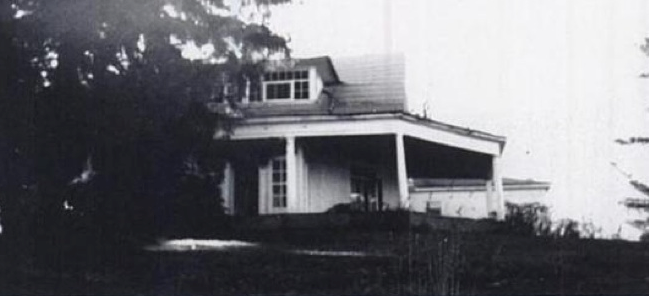 The Wigwam was a Native American heritage center and once the Eastern home of Oglala Lakota traveling with Wild West Shows.
Major Israel McCreight
Major Israel McCreight (Oglala Lakota: Cante Tanke ("Great Heart) in Standard Lakota Orthography) (April 22, 1865 - October 13, 1958) is notable in American history as an expert on Native American culture and policy and the author of President Theodore Roosevelt’s conservation policy on public education. McCreight dedicated his life to public education about Native American culture and was a nominee for U.S. Commissioner of Indian Affairs. McCreight collaborated with Flying Hawk, an Oglala Lakota Chief, to write a Native American's view of U.S. history, classic accounts of the Battle of the Little Big Horn and Crazy Horse, and commentaries on Native American philosophy.
The Wigwam in Du Bois, Pennsylvania
The Wigwam Estate
The Wigwam, McCreight’s home in Du Bois, Pennsylvania, was part of a 1,300 acre estate with heavily forested lands. The Wigwam sits at 2,140 feet atop Prospect Knob in Sandy Township, Clearfeld County, Pennsylvania, near the Goschgoschink Path where the Great Divide of the Alleghenies was once visible 18 miles to the East. The Wigwam is located in the wilds of northcentral Pennsylvania and once had an electric beacon for navigation of New York to San Francisco Air Mail flyers. The Wigwam was once considered for development as a Pennsylvania State Park.
The Wigwam Native American Heritage Center
The Wigwam was a Native American heritage center and once the Eastern home of Oglala Lakota traveling with Wild West Shows. 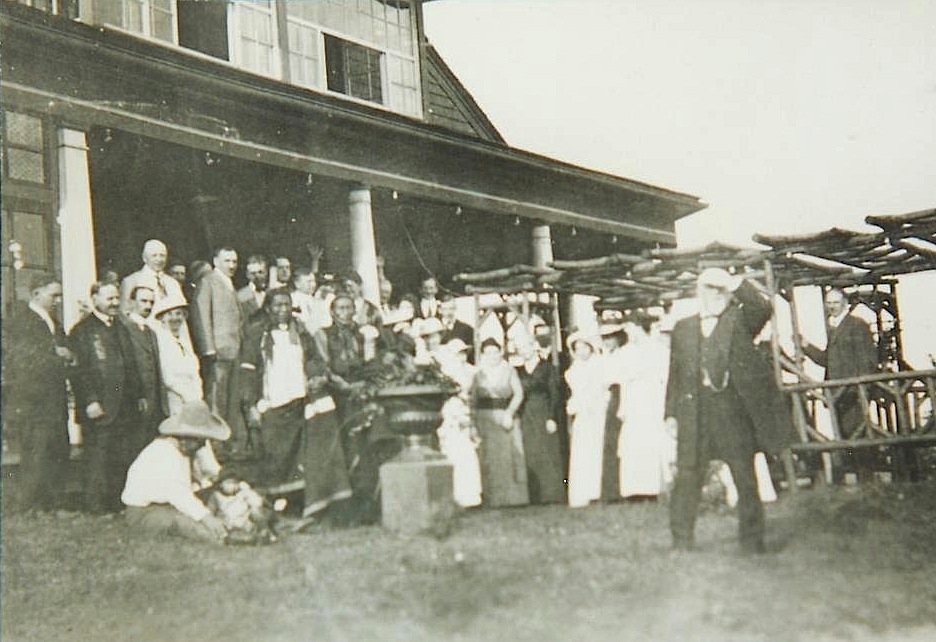
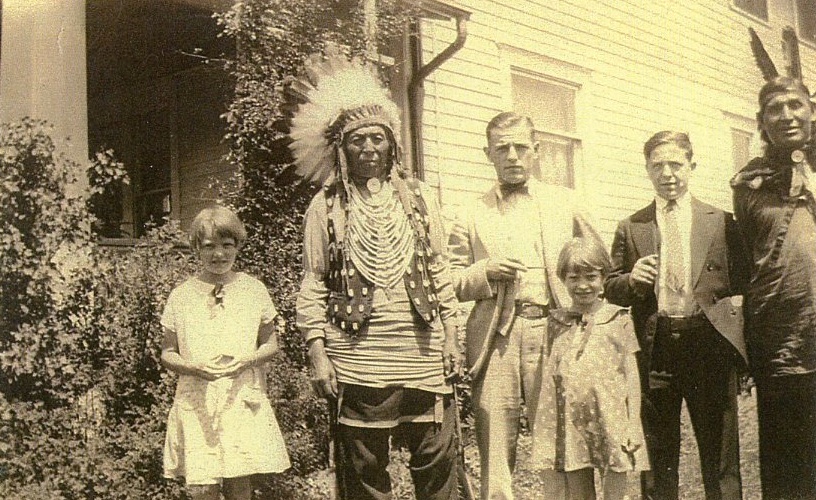
Legendary visitors to The Wigwam included U.S. Army Cavalry Scouts such as Buffalo Bill Cody and famous Native American Chiefs from the Plains Wars traveling with Wild West Shows. U.S. Army Scouts Robert E. Strahorn, Captain Jack Crawford and Colonel William “Buffalo Bill” Cody were frequent guests. Oglala Lakota Chiefs Iron Tail and Flying Hawk considered The Wigwam their home in the East. Oglala Lakota Chiefs American Horse, Blue Horse, Jim Grass, Whirlwind Horse, Turkey Legs, Lone Bear, Iron Cloud, Bear Dog, Yellow Boy, Rain-In-The-Face, Hollow Horn Bear, Kills-Close-To-Lodge, Red Eagle, Good Face (Eta Waste) and Thunder Bull visited The Wigwam. Legendary Crow Chief Plenty Coups was also a welcome visitor.
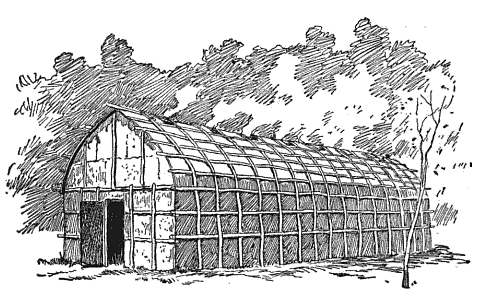
An “old-time” Mohawk Council House of the Six Nations was erected for ceremonies and visits, and on one occasion 150 Indians camped in the forests of The Wigwam.
Surprise visits, parties and gala celebrations were common at The Wigwam. In 1915, McCreight hosted a grand reception for Chief Iron Tail and Chief Flying Hawk. McCreight’s Native American Collection at The Wigwam contained hundreds of historically significant items and was considered to be among the best-documented Native American collections in the nation.
Joseph Blue Horse, the grandson of Chief Blue Horse, was a friend of Major Israel McCreight of Du Bois, Pennsylvania, and full time resident of The Wigwam for three years. A veteran of World War I, Blue Horse joined Miller Brothers 101 Ranch and for many years was billed as “The World’s Champion Rider”. Later, Blue Horse was billed as a musician with Miller Brothers 101 Ranch. During his years at The Wigwam, Blue Horse preferred a traditional tipi to a bedroom in the home and was known affectionately as “Teddy”. Joseph Blue Horse assisted McCreight with estate duties and frequently visited local schools talking to children about Oglala Lakota heritage, singing songs and performing stunts.
McCreight resided at The Wigwam with his wife Alice until his death on October 13, 1958 at the age of 93.
Chief Flying Hawk
The Wigwam was Chief Flying Hawk’s second home for nearly 30 years. Traveling with Wild West shows, pony riding, war dances and inclement weather weighed on Chief Flying Hawk’s health. Chief Flying Hawk could have rest and relaxation at The Wigwam. Here he could rise with the morning sun for a walk in the forest, enjoy a breakfast of bacon and eggs, with fruit and coffee, smoke his redstone pipe and have a glass of sherry before retiring. 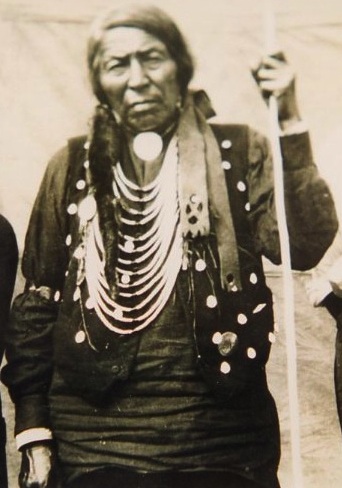 McCreight collaborated with Flying Hawk, an Oglala Lakota Chief, to write an Native American’s view of U.S. history and classic accounts of the Battle of the Little Big Horn, Crazy Horse and commentaries on Native American philosophy. Flying Hawk was a profound historian and philosopher, and after years of collaboration with McCreight, excerpts were published under the titles Chief Flying Hawk’s Tales: The True Story of Custer’s Last Fight (1936) and Firewater and Forked Tongues: A Sioux Chief Interprets U.S. History (1947).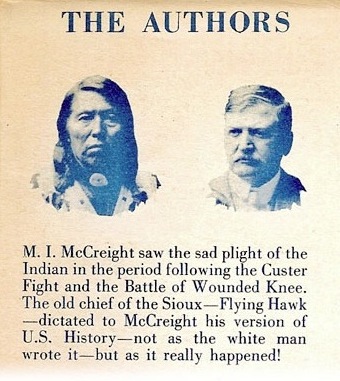
Native American Collection
 The Wigwam was the home of Major Israel McCreight’s famous Native American collection. The collection was considered to be among the best-documented Native American collections in the nation and contained hundreds of historically significant items. Many artifacts were gifts and tokens of personal adornment left by Native American visitors in gratitude and friendship. McCreight carefully recorded the names, dates and occasions, later detailing the events in books he authored during the 1920s, 1930s and 1940s. During the fall of 1886, while residing in Devils Lake, Dakota Territory, McCreight a young man of 21, was given a special gift of a pipe and tobacco bag by Chief Wa-na-ta. McCreight forever remembered the kindness and generosity of Chief Wa-na-ta. These gifts marked the beginning of a collection of Native American artifacts to grow in national prominence and number during the next seven decades. McCreight was an historian and the collection served as an educational tool for the study of Native American heritage. The collection was publicly displayed at The Wigwam to local residents, school children, politicians, businessmen and Native Americans for over fifty years. The Wigwam was a treasure house of relics for many years, and thousands of school children, scouts and others interested in Indian lore have had the opportunity of viewing the collection. McCreight dedicated his life to educating the public and “Young America” about Native American history and culture, giving many speeches and inviting visiting Native Americans to speak at public schools. Joseph Blue Horse from Pine Ridge Indian Reservation, South Dakota, resided at The Wigwam for three years and frequently visited local schools talking to children about Oglala Lakota heritage, singing songs and performing stunts.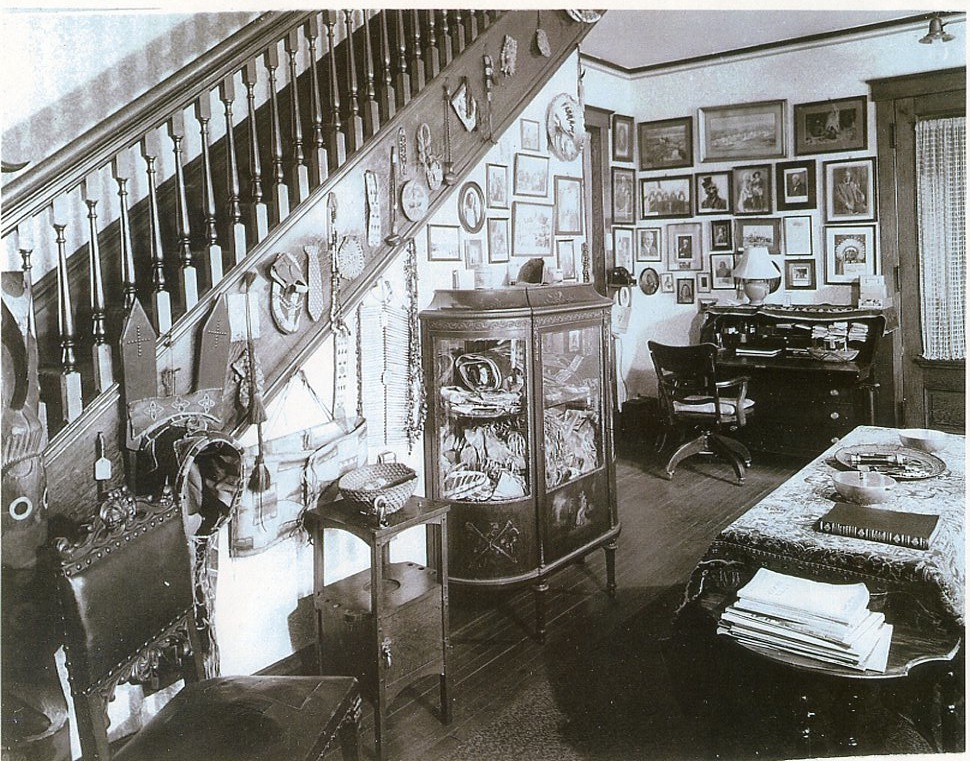
McCreight knew many of the great Native American chiefs whose personal adornments filled The Wigwam, many of whom had been visitors to Du Bois, Pennsylvania, and he spoke of their stories with great eloquence, esteem and kinship. Plenty Coups, Grand Chief of the Crows, was an occasional visitor to The Wigwam during President Warren G. Harding’s Term. “The tall and dignified Chief took a lively interest in looking over the collection of Indian relics at the Wigwam.” “Flying Hawk related a time when he and Iron Tail spent an evening in the Indian room of the Wigwam going over all of the items there including pipes, war bonnets, moccasins, and other paraphernalia once belonging to Wanata, Red Cloud, Sitting Bull and other of their old-time friends. He said that Iron Tail told him it made him sad when he looked at all these things.” Chief Flying Hawk contributed his personal adornments and possessions to McCreight’s collection. “When my brother Kicking Bear died he was put on a grave on a hill. All his things are put in a grave with him. I will see his son, Kicking Bear, if they will let us dig open the grave and take out the arrow-head and send it to this wigwam to put along with my things.” When Chief Flying Hawk passed to the “Sand Hills” on December 30, 1930, McCreight expressed his kinship and esteem with a public announcement and exhibit in the Du Bois Public Library displaying Chief Flying Hawk’s beaded jacket, pouch and pipe. Chief Flying Hawk was well known to the people of Du Bois, Pennsylvania, and McCreight remarked, “The schools are much interested in the exhibit as well as others of the town who had met him on other occasions.” In his later years, McCreight attempted to donate the collection to museums, but without any success. McCreight cared for these national heritage treasures in The Wigwam until his death at the age of 94 in 1958. After his death, McCreight's Native American Collection at The Wigwam was sold and is now with private collectors and museums around the world.
Historic Preservation
The Wigwam is sill standing and in need of historic preservation and restoration.