
Vale (author)
Vale, name commonly known as Gabriel José Vale Valera, who is a Venezuelan philosopher, playwright, novelist, poet, literary critic, painter, sculptor and architect; self-taught. He was born in Caracas (February 23, 1979), city where takes his elementary education. Through literature he still prefers drawing the proportions of his philosophic ideas which already has a genuine type among modern philosophy. Although there is no in his literary influences but the simple divulgation of the universal literature, rather than a limited study, he does not distinguishes that mosaic from another writers to concerns him. In effect, his work dares in prolixity of secular inventory, for whose proportions only it has his confessions as inquiry certainty. In a sense, his general catalogue differs from all paleontological comparison of his epoch, yet when he recklessly abused upon vertiginous promises of the 20th century.
Work
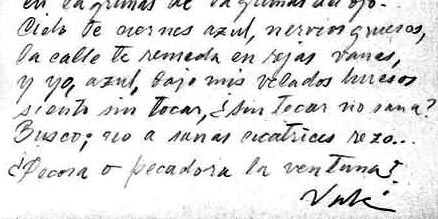 Since 1999 to 2001, he compiles a poetry volume (Apócrifo XX), in which the truthful compulsion’s periods delays among the alternatives of an ordinary uncertainty. So poems as "Sales Derrumbadas", at the same declination of its rhythm, to go describing the orb till a notorious and quiet end. Thus, he paints, engraves and sculptures a series that with that literary rigor, an in parallel greed to collate emphasis, he proposes it among the time-line of known. In 1999, he writes an essay at the time to foresee himself with that exercises of exacerbated prophecy, which could be about the young writer’s justification when not about his redeemable excess.
Before his first selection of poems, he writes more ten theatrical works scarcely simplified in a monogram: (Primero Sábado que Domingo). Although that exception theme was an arbitrary exception by the author, those heroes’ mean had the genuine complicity of its purpose. Beyond this body, composed his first novel (9 Ejemplos), the which was writing, since 1999 to its publication, in nine chapter distinctly expounded by its respective postulations, but whose division only with the defects of a necessary and tough parabola. The characters, bibliographic distinguished, coincides with the etymology of its summary, because, though scattered, has them forms into algebraic top floor. This novel is plenty of technical exaggerations; nevertheless it gave to author the judge to explore at several of his predilections.
For 2005, he composed his second novel (El hijo de quién fue su Padre), based on the Gospels. A dilemmatic Jesus gets in the number of the apostles his own singularity. Month later, he ventures to write a tragedy in five acts; Rey Real, there a king, in an internal recreation, compels the clown’s delirious and so tries to increase the arbitrariness in his kingdom, but a last such imposture, at the same time that a complot against the kingdom, the king overlooks himself in his degenerate genealogy. Successively, it appears other two plays with similar extension. El Senado, inspired on a mythological epoch of Rome, where the deputy’s ambition of king considers his career to the detriment of the patriarchal laws, though without suspecting the accomplice’s intrigues. The third tragedy (Hebén) treats upon the feudalism of an illusory 11th century. The lord will be precipitated by one of vassals, this last has a son, who has turned from abroad, treats, no matter how destiny block up to him, with father's woman in the meantime delaying between the complot at issue and an inconsiderate enjoyment. Scarcely the vassal prevails only for disclosure of a superstition as castrated as him. In this tern, the playwright convenes a tumultuous dramatis personae among the principals’ vigor and immediately get, combining them species, that all characters mix the particular ambitions to cruel consummation of one general reality.
From 2006 to 2007 he writes, compensating so bloodsheds, other plays with five acts. Three fortunate comedies constitute this tern; each one, in the own manner, greatly transcend the funny characters’ simple portrait. The three goes from theological irony to the down fall of philosophy controversy more quiet and deep. The first (La Matriarca) show the mother’s restlessness, whose coward son get through search of a maternal exile the success in his life. The second (Dungara), inspired on a Rudyard Kipling’s tale (The Judjement of Dungara), increase the imaginative reason of that plot. Finally, the last play (El Exegeta), maybe most polemic of three, draws a shy exegete who, among fever of his auguries, blindly accepts the contiguous involving to him. It deserves special attention the author’s dramatic art, where it completely sees the measure of universal writer.
Before 2008 he writes his third novel. A mediocre community of theatrical actors collegate within a room and there they deceive the exact abbreviation of them claims. Other novel, at the end 2008, follows with the innovations in the schemes.
At the beginning of 2009 he complete the hundred sonnets for the second selection of poems. Each sonnet, as a singular jewel, solve its respective theme into concentrical divulgation of its wave.
A miscellany about his literary and artistic methods figure among the ruins de vigorous editions. He has translated the lines, plentiful commented, from The Waste Land by T.S. Eliot, besides writing other solitary opinions about the literature of 20th century. Now, at his thirsty age old, it can take one of his irony as proof of his solitary voice:
Anyhow is the history of impersonal writer who come to confess, in this epoch, his origin without any anachronistic exile of his profession, perhaps like a unique prejudices of his peculiar modernity.
Philosophy
 First of all, as with poems, he tried to join the impressions about his ideas of youth, though like that he worry more about all accidents which his artistic theory may admit. Later he introduced, among the heroes' controversy, the variations of a maieutic resolution that is not purely a logic exercise of false irony, but an inquiry beyond its first conceptions, for that dialogues has been, since its beginning, the conspicuous progression of a system, though more or less known in its nature, that justify even the characters' external default and not only the simple outlines in conflict. Like Plato’s Parmenides, the dissertation is at first sight very difficult and after being the established projection from this same complexity.
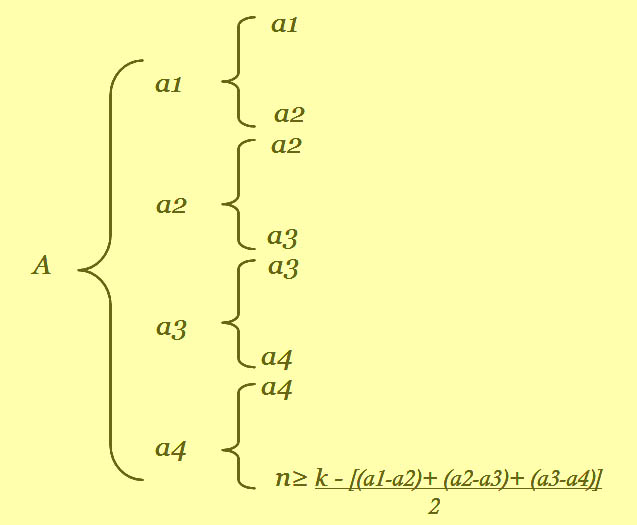
The Vale’s philosophy, adding to the literature other isolated contribution, it can synthesize his ideas in a famous formula that establish the bases of Valian philosophy. Alter a genere A proceed four kinds: a1, a2, a3, a4. Being A the main determination from which it succeeds that secondary kinds, then each kind derives toward two elements of third order and degree: one alike to which succeed it and other alike to next kind, so that a4 has a second element at which Vale defines so: 8/4.n + [(a1-a2)+ (a2-a3)+ (a3-a4)] ≥ k; where 8 is the number of last derivations (even n); 4 is the number of kinds that it knows; n is the minimum of irreducibility and k is a constant valor. That algebra can only be a mathematic artifice which it evolve here; nevertheless, beyond doubt to a4 there is an irreducible threshold of indetermination as for the concourse is exactly known in its elements.
Art and architecture
![Female [...]. Vale, 2000.](/images/wiki/342761/3f81815b221568ec59ac48e4d39e1ed6.jpg "Female [...]. Vale, 2000.")
 Early he inclined to art without letting the distractions around mechanical phenomenon. Although Vale did not complete any special study in addition to elemental education, he was taking lessons upon himself about the great master of art. Likewise his drawing, depending on the Renaissance’s selection, had the definite valor of apprenticeship. For the most part the works of this period were about painter who directly would has influence upon the manners of his drawing, or at most that author’s collections were the essential variations of such preliminaries.
Since 1998, he admits the speculations of his theme. Then he induces archetypes as legitimate as the white of an inconceivable work. After the space of academic task, he begins to explore with several techniques very audacious in the prolongation of 20th century. Nevertheless, without the resignation of those residual feats, he invents a class of useful age, maybe as illusory as 20th century, for which he writes an essay about the egoism of that solitary duty.
The theory paradoxically postulate, as its title says, the progressive suppression of phases is troubled with a complex vertigo, according as it prolongs. The figures of creature, roaming into arbitrary of them amputation, does not copy an anatomy modify to them, but all that stamps personifies an anthropologic synthesis from a real world. Almost all that works, together in progression and style, were titled at the same time his first selections of poems.
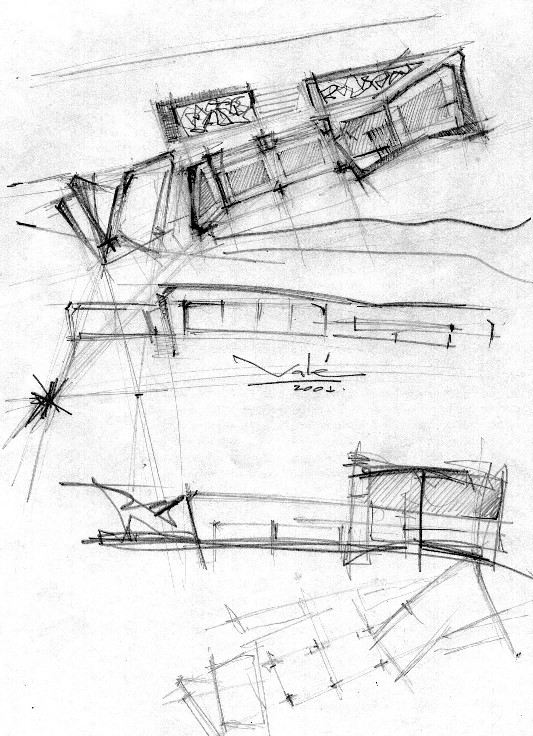
The Vale’s architecture is spacious in its classic forms, even if the walls settles almost as a metaphysical fortification from which, however, [...] and light structures proceeds to other sober conception about spaces. His sketch changes from blind volumes, as sort of Stonehenge, to the described ground floor that already admits supplementary forms around main. On the other hand, the frontages are obvious upon the ground not only by thickness of walls, but rather than by the equilibrium of the volumes. With regard to top floors is evident in itself to a translucent evocation of its foundations. By contrast the town planning, there is a technique and singular vision in his design of houses. In these the forms and structure lives together as a whole. By the way architecture Vale has not recourse to his artistic theory; instead he takes refuge in the evolution of his experience, though not in detriment the known.