
Triumphi (Vincenzo Calmeta)
The Triumphi of Vincenzo Calmeta is a poem in five cantos, inspired by Petrarch and Dante, composed in terza rima of hendecasyllables. Written in 1497, the poet laments the untimely death of Beatrice d'Este, Duchess of Milan, of whom he was secretary, and rails against cruel Fate, invoking death to allow him to follow her, then moves to a deeper meditation on human misery, Fortuna, and God, extending even to apostasy. The woman then appears to him in angelic guise to comfort him and lead him out of his "past error", showing him that in truth everything is governed according to God's just will.
Structure and themes
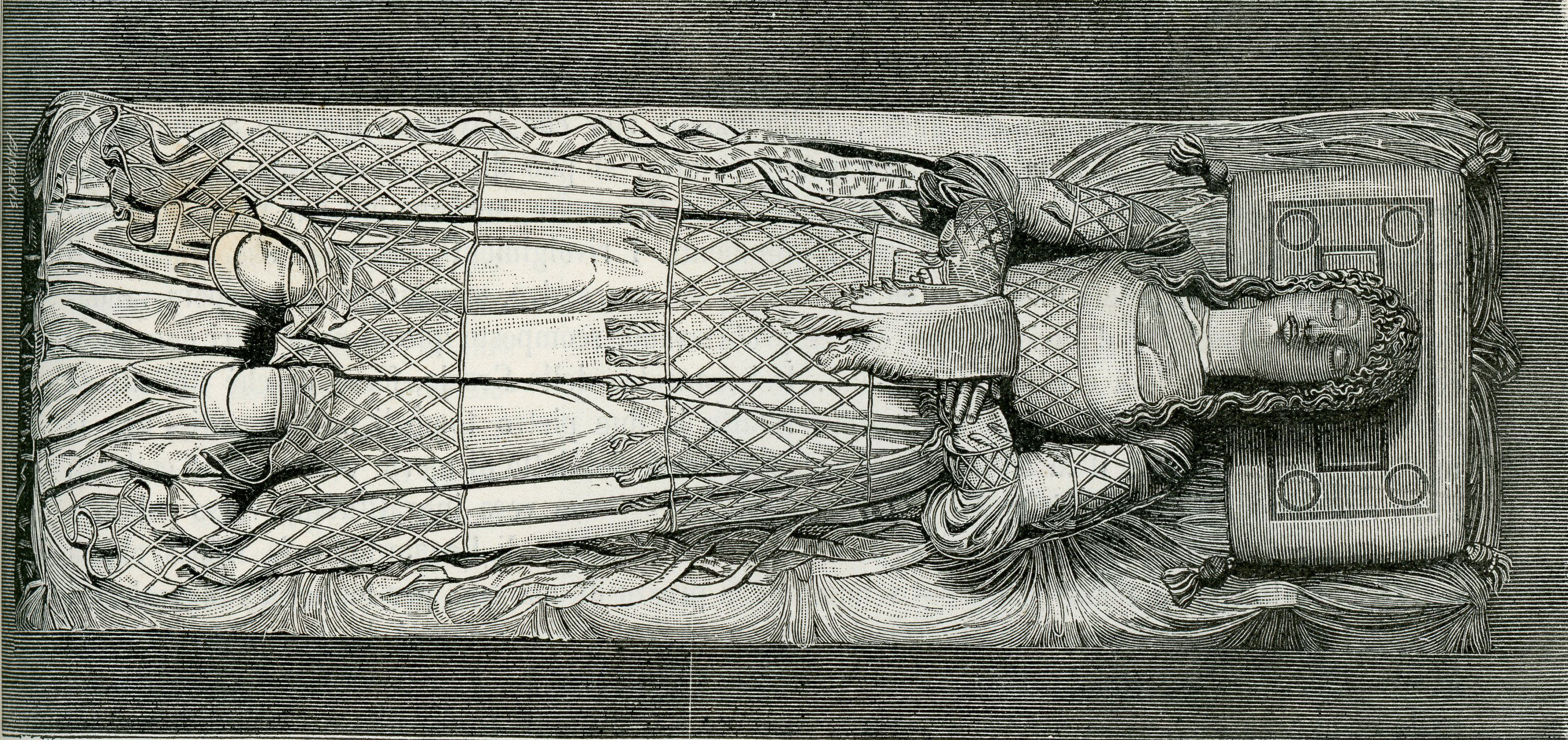 The work opens with a dedicatory letter to Beatrice preceded by "Vincenzo Calmeta to Beatrice d'Este, greetings" (), followed by a sonnet in her honour. The five chapters are each preceded by rubrics that illustrate their content and serve as a preamble. The print is closed by four sonnets attributed to the poet and probably composed for the death of Serafino Aquilano, his dearest friend.
The main theme is love for the woman who, following in the footsteps of the Dolce Stil Novo, leads the poet to salvation. Also in this case, according to Rossella Guberti's interpretation, this is a purely spiritual love, not physical, in a philosophical-religious vision: Beatrice is a guide for the poet's lost senses.
The work, which fits into the Renaissance tradition of Trionfi, draws inspiration from Dante Alighieri's Divine Comedy and Francesco Petrarca's Trionfi, of whose works it re-elaborates motifs and suggestions in an original way. Beatrice d'Este thus represents here the successor of Dante's Beatrice and Petrarch's Laura. The poet's vividly emphatic tone, the motif of excessive love, of voluptas dolendi (taking pleasure in pain) and of isolation from the social context towards wild nature, on the other hand, hark back to contemporary fifteenth-century poetry. The recurring pairing of grief and bucolic setting derives from the tradition of the disperata, which stages the deviant effects of love-madness.
Furthermore, as Claudia Berra observes, "asocial and irrational isolation" (the poet indeed retires to a villa surrounded by woods), "caused by grief for unhappy love", effectively recalls the madness of the paladin Orlando in Ludovico Ariosto's Furioso (though written after Vincenzo's death), "investigating the most obscure and subversive power of passion". In the case of the Triumphi, the poet-protagonist manifests all the symptoms of a growing fury: anger, weeping, shouting, hybris, suicidal fury, up to the final fainting. He undergoes a journey that begins as sentimental and becomes gnoseological, but always remains more on the path of devotion than of actual love. Love-passion would thus be absent, "supplanted by the secretary's veneration for his lady".
On the other hand, certain verses of an epicedium composed on an unspecified date (perhaps 1501) by the humanist Pier Francesco Giustolo and dedicated to Vincenzo seem to offer a different interpretation regarding the author's feelings. It is the lament of a young poet, a pupil of Vincenzo, who in the blessed heavenly grove delights the souls of the dead with the verses that Vincenzo himself taught him:
Among the throng of souls, therefore, there suddenly appears a Beatrice who cannot be identified other than with the Duchess of Milan herself. She asks the young poet about Vincenzo's current condition and says she forgives him for his "", plausibly translatable as "subsequent loves". In a later edition of the epicedium, the printed one, Vincenzo's name was removed, while Beatrice's underwent various substitutions: first an attempt was made to transform it into that of an anonymous Lycore; this attempt having failed, the name Beatrix became Hermosine, a mysterious woman loved by Angelo Colocci, who carried out a veritable literary theft, substituting himself for Vincenzo as the work's dedicatee.
Finally, unlike his illustrious predecessors, Vincenzo does not fall asleep, but receives the apparition of his beloved while in a state of "psychophysical daze", only to abandon himself to a pacifying sleep at the end.
The following structure of the work can be observed, where each chapter constitutes the triumph, i.e. the overcoming, of the previous one:
- Triumph of Devotion/Love (also the Triumph of the Duchess's Chastity) and overcoming of Death and grief over the poet;
- Triumph of Time and Error/Madness; overcoming of Fortuna;
- Triumph of Beatrice, bringer of salvation, over Death;
- Triumph of Wisdom, Virtue and Fame;
- Triumph of Reason, Faith and Eternity/Immortality.
Genesis of the work
Already in the compendium to Ovid's Ars Amandi, written between 1494 and 1497, Vincenzo had expressed the desire to celebrate the then-living duchess in a more elevated work: "Elsewhere I hope to show my intellect / raising to flight an immortal phoenix / that will be a lofty subject for my lowly style". The Triumphi were thus not a wholly extemporaneous product.
The work does not appear simply as a courtly consolation, nor does it appear that Vincenzo ever presented it to Duke Ludovico Sforza, Beatrice's husband, who is in any case mentioned only a few times, and always in reference to the woman (that is, as husband or consort). The incipit letter, addressed to Beatrice in the heading, is in reality addressed to the readers (especially posterity), so it would seem that there is no dedicatee or that, if there is, it is Beatrice herself. In the preface, the author declares that he composed the poem in Rome, immediately after receiving news of the woman's death. Thus he writes: "therefore I, who had placed all my hope in her and had dedicated my service to her until death, and finding myself in Rome on some business of mine and unaware of such an event, after her sudden and untimely death was announced to me, so bitterly did I begin to deplore".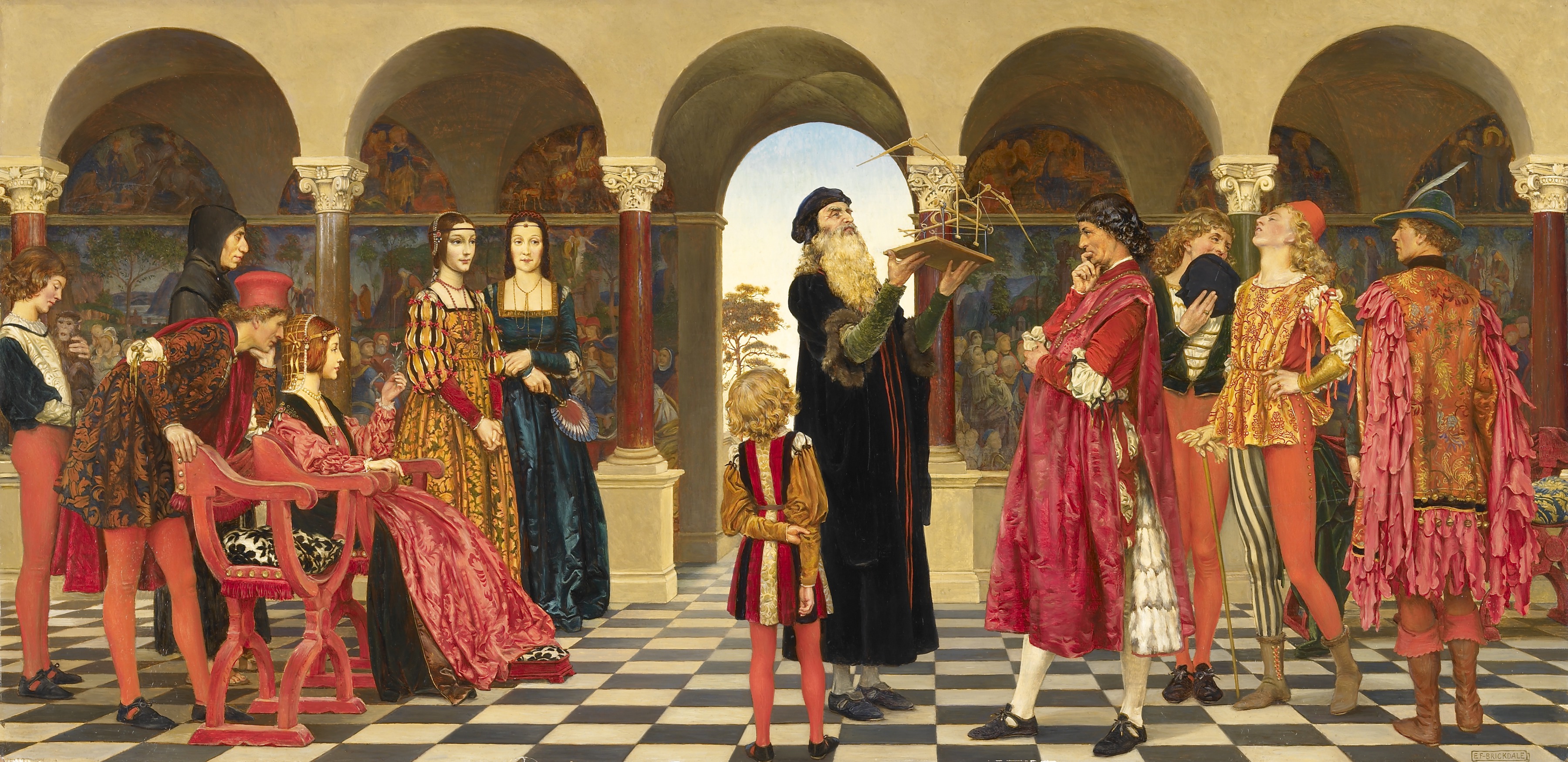
It is not at all clear when he had left Milan nor why, a motive he deliberately omits to explain, but he is to be believed, as Vincenzo appears convinced that the woman's death occurred "on the fifth day of January", when in reality it dated to the night between the 2nd and 3rd of the same month. This would suggest that he assumed as the day of death the day on which the news reached Rome, the roads being snowy and communications difficult at that time, and that he had "separated himself from human society" and been led "to a pleasant and solitary villa not far from Rome" before waiting for clearer news, unless it is a printing error. Simone Albonico, however, expresses astonishment that Vincenzo had left the court precisely at such a delicate moment in his lady's life.
Mysterious fate
The original manuscript has been lost: only two printed copies remain, printed by Pietro Capha and preserved one at the Palatina Library in Parma, the other at the Trivulziana Library in Milan, in poor condition. Both bear on the title page the title "".
The two printed volumes bear no publication date, but it is likely that it is posthumous to the author. Based on some clues, the date is fixed by Rossella Guberti at 1510. The wording on the title page in any case confirms that the author had no control over the printing, indeed that he was already dead. It is not possible to state whether this is a editio princeps or a reprint, but "" suggests the second possibility.
From the composition (1497) to the first surviving prints (1510) over ten years pass, and it is not known what happened to the work in this interval. Vincenzo may not have wished to publish it for various reasons. Indeed, in that period, with the impetus of the new printing press, the publication of posthumous works by various authors was in vogue. The verses of the epicedium by Pier Francesco Giustolo cited earlier, associated by Augusto Campana with Calmeta and thus with the rhymes in memory of Beatrice, suggest a manuscript circulation or a printed edition prior to that of 1510.
Argument
Dedicatory letter
The poet weaves praises of the duchess with a description of her virtues and activities; he briefly recounts her death, the profound grief shown by her husband the duke, and no less his own.
First chapter
For 136 verses the poet laments the woman's premature death. He begins by asking himself, with incredulity, if the news is true. He turns to those who want to learn what suffering is, inviting them to listen to "my unhappy song" and then warns that "if there is anyone in the world who is content", they should turn their eyes away and close their ears, so as not to accompany him "in such torment".
From here begins a heart-rending lament against Death, who has taken from him the dearest good, in dispensing which "the avaricious Heaven" had been so generous to him. It should also be noted that in literary language, "good" means the beloved person. He wishes he had the hundred eyes of Argus, since his own are now consumed by tears, and compares himself to songbirds of myth: a swan of the Meander, a river in Lydia whose waters were home to many swans: according to myth, the swan, already dear to Apollo for the sweetness of its song, sings even more sweetly when it feels death approaching; Philomela, violated by Tereus king of Thrace and transformed into a nightingale; the turtle dove, symbol of pure, faithful and eternal love, since, according to tradition, "it never fails its mate, and if one dies, the other observes perpetual chastity, and never alights on a green branch and never drinks clear water".
There follows the poet's request to die, so that he may continue to serve his lady devotedly as he did when she was alive. He asks to rest beside her "chaste bones" and even dares to provoke Death with these words:
There follows a deploration of the unfortunate birth and the fate of the child, who died together with the mother, destined for Limbo as unbaptised, while Beatrice has, in his opinion, now been elevated to Heaven:
Then he invokes her, declaring that he wishes to give her this poem, being unable to give her anything else, since Heaven has granted him only the virtue of poetry: He finally begs her to pray to God on his behalf, so that He may cause him to die soon and thus allow him to reach her:
Second chapter
The poet decides to separate himself from human society and retires to a pleasant solitary villa not far from Rome. After some days, overtaken by night while wandering through a wood, he begins for 172 verses a meditation "on God, on the heavens, on fortune and destiny, and finally on human misery":
After this violent outburst, he is seized by an "unbridled desire [...] impetuous to die", to such an extent that he truly feels he is dying and believes he is about to see his "goddess" again, who has granted his wish. Therefore, overcome by grief, he lets himself fall onto the grass.
Third chapter
It consists of 169 verses. While the poet is semi-conscious on the meadow, he seems to hear from afar a voice breaking the "nocturnal silence" and softly pronouncing: "O my faithful Vincenzio". It is Beatrice, who has descended from heaven, appearing to console him and draw him out of his "past error". Her head is crowned with roses and her bosom girt with ambrosia, and she reproaches him with these words:
The poet, moved and dismayed, feels himself on the point of dying from the sweetness of the "honeyed words", which make him burn and freeze at the same time. He then addresses her with this invocation:
To which Beatrice replies by telling him the experience of her own death:
Hearing her account, Vincenzo falls weeping at her feet. Beatrice, moved, with a corner of her mantle wipes his face and explains that she appeared to him because she could not bear to see him in that state, consuming his days in fruitless weeping. She appears to him so resplendent that he can scarcely look at her. Vincenzo questions her about the nature of the Heavens, Fortuna and Destiny, and Beatrice is happy to reveal to him the mysteries of the Universe.
Fourth chapter
Over the course of 160 verses Beatrice explains that God is intent only on working good, but human "imbecile nature" is not capable of understanding it. God created so many eternal essences from nothing: the heavens, the stars, the planets, ideas and signs, but "blind human nature" labours in vain over deceptive astrological calculations, regulating its life on this. But he who tries to dominate the future based on astrology always errs, because God can change it at any moment as He pleases. This appears almost a reproach to Duke Ludovico Sforza, obsessed with astrology. True wisdom comes from Jesus Christ, but she invites the poet to curb his thirst for knowledge, reminding him of the fate of Icarus, "precipitated by rash daring". She reveals to him that God created man last, as a privileged being, so that he might find the world already prepared for him, and that He invested him with great power, since if "he employs his intellect in virtue, from earthly and mortal he becomes immortal". Thus he was in great error in judging every mortal unhappy, because while animals all look downwards, man is the only one who can look at the sky and measure every step with reason. Man is the only one to have mixed in his flesh a divine spirit and endowed with free will. If someone then places his hopes in fleeting goods and feels every event contrary to him, the fault is not Heaven's, but of his "fallacious thought", blinded by earthly goods, ambition and fame. If it is true that, unlike animals, man is born naked, it is also true that he possesses the shield of reason, which has made him master of the earth. Beatrice anticipates the poet's possible questions, namely why, loving him so much, God exposed man to so many mortal sufferings. She replies that man was "so delightful and dear" to Him, that He gave him two lives: one bitter, mortal and finite, the other tranquil, divine and infinite. The first is granted to all who are born, the second only to those who prove worthy of it, since, if it were granted indiscriminately to everyone, it would not be worthy of virtuous souls. Vincenzo, full of shame for his errors, does not even dare to reply to her, but remained "a mute statue".
Fifth chapter
The shortest, of 97 verses, corresponding to the date of the duchess's death. Invigorated by the sweet gaze of the woman who has the power to penetrate to the depths of his heart, the poet begins to question her about Fortuna and whether there is a way to dominate it. Beatrice replies that Fortuna is always unjustly cursed by those who find it contrary, but that, if it has power over fallacious goods, it has no power over the human mind, "because there reason holds its empire". Foolish, then, to seek any stable good in Fortuna, "which is only constant in being variable". No good end can depend on it, which hinders the just and shines upon the wicked. Only he who observes modesty in good fortune and prudence in bad fortune is capable of dominating it. It befits man to maintain a stable faith, which may lead him to beatitude. She therefore invites him to abandon earthly goods to turn entirely to God, "in whom alone consists the supreme good". The living, she says, cannot, like the blessed, fully understand the divine design, but he too, once dead, will be freed from every doubt. Thus concluding her discourse, Beatrice returns to Heaven, accompanied by the harmonious songs of the angels. Vincenzo accompanies her "as far as his eyes can go", but soon falls overcome by a sweet sleep.