
Success of the Iraq War
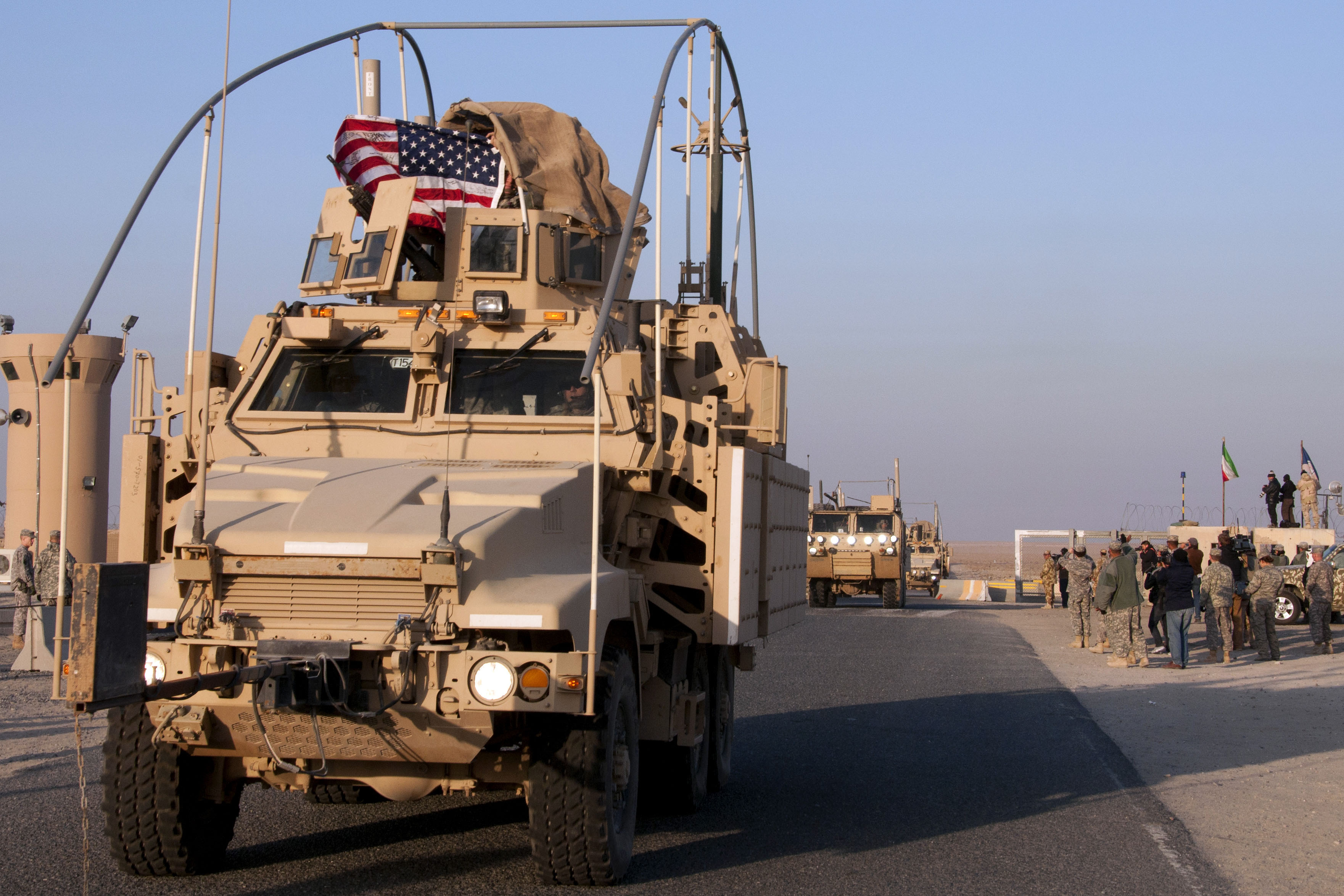
The success of the Iraq War has remained a point of debate in the wake of the withdrawal of U.S. forces on December 18, 2011. This post-war dispute largely results from the clash in American perceptions regarding its status as a success or failure for the United States and its Coalition of the Willing. These perceptions have been influenced by the many moral and ideological flashpoints that have persevered throughout the length of the conflict. This includes: the confusion regarding the purpose and objective of the war; the questions surrounding the legality of US conduct of the war; the perceived truthfulness, accuracy, and consistency of US claims; the politicization of the war; and the legitimacy of the war itself. Joining these factors in the war’s aftermath are the Obama administration’s reluctance to use the word “victory” to describe the Iraq War and the question regarding the completion of US war aims.
The vast number of perspectives regarding the success of the war may be due, at least in part, to the question of where the results of the war end and The Effects of the war begin; a possibility magnified by the Obama administration’s failure to declare “victory” in Iraq and the confusion concerning the actual benchmarks that define victory in the war. While some analyses have already concluded the success or failure of the conflict, others believe that the correct appraisal of the war will take years to make. Most, however, agree that the outcome of this analysis could impact the US strategy in wielding its military might abroad and will have lasting effects on US credibility on the domestic and international scales.
War Aims
The aims of a war provide the benchmarks that define victory and serve as the standard by which the legitimacy of the war as a whole is judged. As a result, war aims are an important factor in crafting one’s perception of the success and legitimacy of a conflict. The importance of this is furthered when it is socially, politically, or culturally difficult for a country to wage war and claim victory in conflicts their people view as illegitimate.
Throughout Iraq War the various branches of government and the military released a plethora of statements, declarations, and reports listing the various objectives of the war. The vast quantity of these statements has led to confusion regarding the objectives and reason for war as well as the ultimate completion of US war aims due to an uncertainty of which benchmarks to use.
Objectives and Reason for War

The initial declaration of the military objectives of Operation Iraqi Freedom was presented by General Tommy r. Franks and Defense Secretary Donald H. Rumsfeld in their press briefing of March 22, 2003. In this briefing he outlined eight main objectives: (1) end the regime of Saddam Hussein; (2) to identify, isolate, and eliminate Iraq’s weapons of mass destruction; (3) to search for, to capture and to drive out [...] from that country; (4) to collect such intelligence as we can relate to [...] networks; (5) to collect such intelligence as we can related to the global network of illicit weapons of mass destruction; (6) to end sanctions and to immediately deliver humanitarian support to the displaced and to many needy Iraqi citizens; (7) to secure Iraq’s oil fields and resources, which belong to the Iraqi people; and (8) to help the Iraqi people create conditions for a transition to representative self-government.
The Executive Branch primarily listed their objectives in 3 separate statements: “Our National Strategy for Victory in Iraq” in November 2005, “Highlights of the Iraq Strategy Review” in January 2007, and “Fact Sheet: Five Years Later: New Strategy Improving Security in Iraq” from March 2008.
The “Victory in Iraq Defined” section of the National Security Council's "Our National Strategy for Victory in Iraq" is particularly thorough as it broke down US objectives into short term, medium term, and long term goals. Short term goals included an Iraq that is making steady progress in fighting terrorists and neutralizing the insurgency, meeting political milestones, building democratic institutions, standing up robust security forces to gather intelligence, destroy [...] networks, and maintain security; and tackling key economic reforms to lay the foundation for a sound economy.
Midterm objectives include defeating [...] and insurgents and providing its own security, with a constitutional, elected government in place, providing an inspiring example to reformers in the region, and well on its way to achieving its economic potential.
Long term goals include an Iraq that has defeated the terrorists, that is peaceful, united, stable, democratic, and secure, where Iraqis have the institutions and resources they need to govern themselves justly and provide security for their country; and an Iraq that is a partner in the global war on terror and the fight against the proliferation of weapons of mass destruction, integrated into the international community, an engine for regional economic growth, and proving the fruits of democratic governance to the region.
Other promulgations and discussions of the objectives for the war can be found in the Congressional U.S. Troop Readiness, Veterans' Care, Katrina Recovery, and Iraq Accountability Appropriations Act, 2007 passed on May 27, 2007, General Petraeus’ Report to Congress in September 2007, Ambassador Crocker’s Report to Congress September 2007, the President’s numberous Benchmark Assessment Reports, the GAO’s “Iraq Reconstruction: Better Data Needed to Assess Iraq’s Budget Execution", and “One Year After the Surge: Iraq Benchmark Repot Card” by the Center for American Progress.
Problems
The sheer number of objectives put forth by the various branches of government and the military over the course of the war was an attempt to create departmental aims congruent to the ever evolving nature of the conflict and to address the particular concerns of the declaration’s audience. Even so, the lack of decisive and universally understood benchmarks for the war by the Bush and Obama administrations led to vast discrepancies in the media regarding the ends of the war. In essence, where clarity and certainty ended the media often infused its interpretations to provide the clarity and definition sought by their viewers.
This was further complicated by justification for war being promoted internationally. In the international arena, the US argued that the invasion was aimed at upholding and implementing United Nations Security Council resolution 660 under the authority explicitly listed under UNSC resolution 678 which authorizes UN Member States “to use all necessary means to uphold and implement Resolution 660 and all subsequent relevant resolutions and to restore international peace and security in the area.”
The US also promoted the unanimously passed UNSC resolution 1441 as a precedent for intervention with a statement by US ambassador to the UN, John Negroponte, on the day of the vote stating that “If the Security Council fails to act decisively in the event of further Iraqi violations, this resolution does not constrain any Member State from acting to defend itself against the threat posed by Iraq or to enforce relevant United Nations resolutions and protect world peace and security.” The UN, however, refused to support the war effort and even went so far as to declare the war illegal under the criteria declared in its charter. So important was the approval and support of the UN for a war advertised as an enforcement of its UNSC resolutions that only 54% of Americans favored US invasion without UN backing according to a USA TODAY/CCN/Gallup Poll days before the invasion.
All of this culminated in different news agencies and reporters promoting different objectives and reasons for the war in Iraq as time went on. This held especially true following the realization that the original justification regarding WMDs and links to al-Qaeda were largely exaggerated despite the fact that a May 2003 Gallup poll concluded that 79% of Americans thought the Iraq War was justified, with or without conclusive evidence of illegal weapons. According to the same poll, only 19% thought weapons of mass destruction were needed to justify the war. Nevertheless, in the eyes of many Americans, this plethora of statements, reports, and declarations culminated in a clouded and ever changing picture of what the true aims of the war were and portrayed a government unsure of its reasoning for and confidence in the war.
Completion of Iraq War Aims
On December 14, 2011, President Obama announced the end of the US war in Iraq with the words “We’re leaving behind a sovereign, stable, and self-reliant Iraq, with a representative government that was elected by its people. We’re building a new partnership between our nations.” These accomplishments encouraged President Obama to describe the final withdrawal of US forces as a “moment of success”.
Critics, however, have argued that these objectives are extremely limited in comparison to the original objectives declared by Defense Secretary Donald H. Rumsfeld that would define victory and that the war should be perceived as a failure due to the inability of the US to meet these original criteria. As described by Rumsfeld in his March 22, 2003 press conference, these objectives were: - To “end the regime of Saddam Hussein by striking with force on a scope and scale that makes clear to Iraqis that he and his regime are finished.” - To “identify, isolate, and eventually eliminate Iraq’s weapons of mass destruction, their delivery systems, production capabilities and distribution networks.” - To “search for, capture, drive out terrorists who have found safe harbor in Iraq.” - To “collect such intelligence as we can find related to [...] networks in Iraq and beyond.” - To “collect such intelligence as we can find related to the global network of illicit weapons of mass destruction activity.” - To “end sanctions and to immediately deliver humanitarian relief, food, and medicine to the displaced and to the many needy Iraqi citizens.” - To “secure Iraq’s oil fields and resources, which belong to the Iraqi people, and which they will need to develop their country after decades of neglect by the Iraqi regime.” - To “help the Iraqi people create the conditions for a rapid transition to a representative self-government that is not a threat to its neighbors and is committed to ensuring the territorial integrity of that country.”
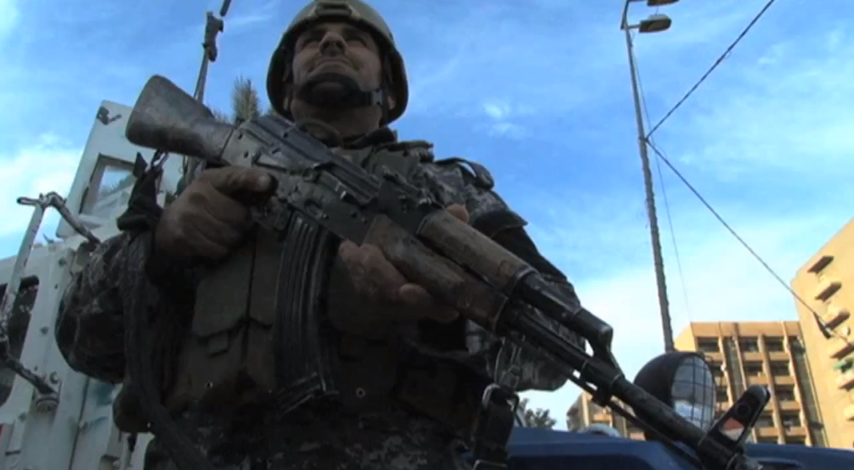
For President Obama and others who wish to champion the war in Iraq as a success, the conclusions of the U.S. led Iraq Survey Group concluded that Iraq had ended its nuclear, chemical and biological programs in 1991 and had no active programs at the time of the invasion coupled with the fact that no evidence of a meaningful al-Qaeda – Iraq connection was ever found has made the complete accomplishment of this Bush-era definition of victory impossible.
Iraq’s allowance of UN weapons inspectors following the passage of resolution 1441 further weakened the original American position that Iraq was uncooperative and force was needed to uphold the mandates of UNSC resolutions. The US considered this sudden shift in behavior a ploy to divide the UN on the issue and to prepare for a possible US invasion. Some argued that the UNSC resolutions were largely invalidated as a foundation for invasion following the UN condemnation of the war due to the difficulty in seeing how the US can enforce UN resolutions by defying the authority of the world body and denigrating it as irrelevant.
Nevertheless, a debate endures regarding whether or not the US accomplished the remaining objectives promoted by the Bush administration and by President Obama on December 2011. The conclusions of these arguments have largely depended upon the timeframe in which the objectives and their fulfillment were examined.
For example, some have argued that by late 2012 Iraq does not seem like a success even in the extremely limited terms promoted by President Obama. It is neither sovereign nor stable nor self-reliant. Its government does not reflect the will of its people; Sunni officials have been marginalized and, in some cases, driven out of office. Furthermore it is not a partner of the US on any key issues in the region: from its evasion of economic sanctions on Iran to its support for the Syrian regime of Bashar Assad, some assert that Iraq stands in Tehran’s camp, not Washington’s. In essence Iraq is less stable domestically and less reliable internationally than the US had envisioned. To these critics the US has not achieved its national security objectives in Iraq and is not likely to do so.
The New York Times in September 2012 reported that “the Obama administration has fallen frustratingly short” in some of the three American goals in Iraq - to leave behind a stable representative government, avoid a power vacuum that neighboring states and terrorists could exploit and maintain influence so Iraq would be a partner or, at a minimum, not an opponent in the Middle East due to political and ethnic tensions.
On the other hand, arguments immediately in the wake of the US withdrawal often declare the Iraq War as an American victory with the elected government of Iraq and its military holding firm, the gaining of an ally and elimination of an enemy, and the presence of a democracy in the Middle East. [Washington Times] The US battlefield casualties in Iraq had all but disappeared in the months leading up to withdrawal and the surge forces instituted during the Bush administration worked. Though the nature of war in the 21st century remains largely without form, the presence of a democracy in such a strategic location arguably inspired reform-minded Arabs – including those in Syria and Egypt – and has been declared a catalyst for the Arab Spring.
Other Perspectives
Victory and defeat are not the only prevalent views of the results of the Iraq War. Many argue that it may take years before Americans can claim with any certainty that Iraq as a long, costly, but ultimately successful campaign or an abject failure. President Obama acknowledged in his August 31 speech at the White House that even though ”our combat mission is ending but our commitment to Iraq’s future is not.”
Others have argued that the Iraq War has actually undermined the legitimacy of US goals and the war on terror itself by becoming a distraction and unnecessarily risking the vital stake the world has in a stable Iraq, contained [...], and promoting democracy and market economy. The world “cannot afford a spectacular American defeat in Iraq” said Ramesh Thakur, Senior Vice-Rector of UN University and Assistant Secretary-General of the UN.
Still others have argued that while the US is not leaving behind a fully stable and prosperous Iraq, it is “a nation steady enough to control its destiny.” Obama’s “veiled claim to success”, some argue, isn't that the US has won, but that the US “trained someone else to keep up the good fight.” Although this is undoubtedly better than many of the “doomsday predictions” discussed prior to the success of the surge it is a much more limited view of success than even that proposed by Obama on December 2011.
The verdict of history risks being skewed by America’s confused intentions in Iraq. The war began by President Bush under the pretense of a dangerous Iraq armed with weapons of mass destruction, aligned with al-Qaeda was eventually stripped of the legitimacy granted by these claims. The US was forced to shift its justification for the war to ridding Iraq of Saddam Hussein; an arguably noble but weak justification for invasion in the eyes of many. The US has suffered from a loss of credibility both domestically; a fact that may ultimately influence history’s judgment of the war’s success or failure. Still, many argue that history will deem the war in Iraq a success and that the US has restored much of its credibility by establishing a self-governing, representative Iraq. “Troops entered a nation dominated by a dictator who had terrorized his people, defied the world, invaded his neighbors and plundered natural resources – and they leave behind a democracy.”
Failure to Claim Victory
Leading up to and after the US withdrawal from Iraq in December 2011, the US Government has tried to avoid relating “the end of war operation” to “victory.” There are numerous theories that attempt to explain the phenomenon. One of the most widely accepted public opinion analyses is that the Obama administration has avoided the term “victory” out of fear that people will associate it to the presumption associated with former President Bush’s “mission accomplished” declared in May 2003. This is an attempt to avoid giving unrealistic expectations to the public for the Iraqi situation due to the uncertainty that clouds post-war Iraq.
Another view revolves around the notion that it would be an exaggeration to call Iraq a victory as all the US achieved is a temporary lull in which Iraq can give democracy a go. And that’s “simply the best we can expect from a very bad mistake.” Similarly, others believe that the withdrawal is not a happening of victory but a necessity due to circumstance. In particular, the fact that the United States armed forces were not granted legal immunity against prosecution by Iraqi officials. The US couldn’t allow its warriors to become wards of a foreign criminal justice system so Obama did what he believed he had to do to protect the US national interest and American soldiers.
See also
- Iraq War
- War on Terror
- Iraqi Insurgency
- Legitimacy of the 2003 invasion of Iraq
- Legality of the Iraq War
- Rationale for the Iraq War
- Post-invasion Iraq, 2003-present