
Santuario de Nuestra Señora de Guadalupe (Guadalajara, Jalisco)
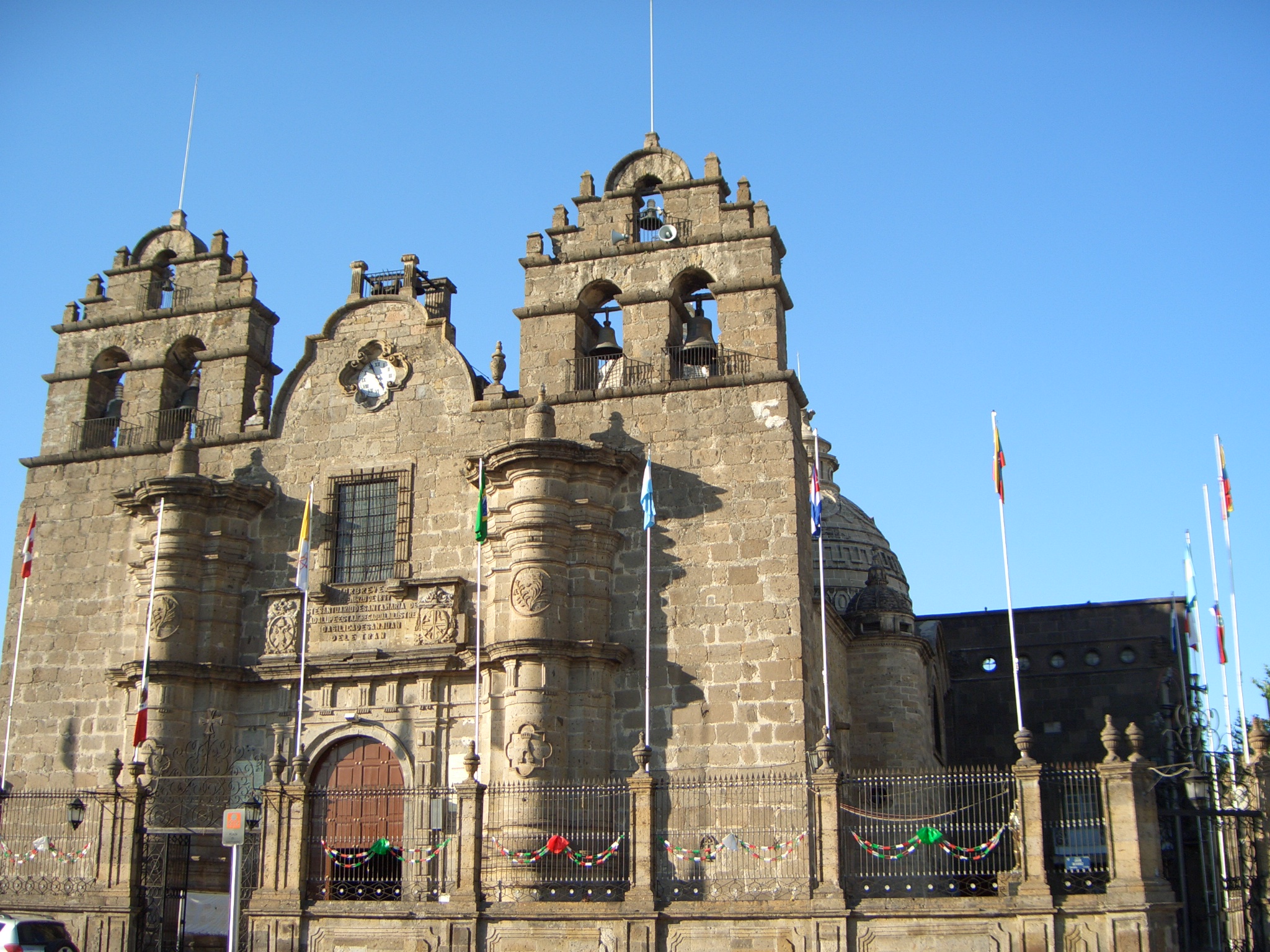 The Sanctuary of Nuestra Señora de Guadalupe is a catholic temple of Churrigueresque style located in Guadalajara, Jalisco in Mexico, dedicated (as its name indicates) to the Marian advocation of Our Lady of Guadalupe. The first stone was placed on January 7 of 1777 and after 4 years of works, the church was opened in 1781. The construction was promoted and financed by the Spanish philanthropist and then Bishop of the diocese, Friar Antonio Alcalde y Barriga.
History
Bishop Friar Antonio Alcalde y Barriga was the one who had the idea of building a church in the northern part of the city of Guadalajara, which at that time was practically uninhabited. It was the same Bishop Mayor who paid the expenses of the construction of the temple, as well as the construction of several houses that would be rented at low prices for the poor people who wanted to live there, called "Las Tortillas del Santuario".
The temple was thought, from the beginning, would be dedicated to the Marian invocation of Our Lady of Guadalupe, for which the Bishop felt great fervor. Thus the first stone was placed on January 7, 1777. For its construction and the construction of the "cuadrillas" quarry of Huentitán was used. Later, on December 3 of 1779, the Bishop Mayor gave a fund of forty thousand pesos so that 19 more houses could be built, everything that was necessary for the religious service and the houses for the priest, the ministers, the chaplain and the sacristan.
On January 7, 1781, four years after the laying of the first stone, the temple was blessed by the mayor and the first Mass was celebrated by Friar Rodrigo Alonso. A procession was made from the Guadalajara Cathedral to the new temple, of which the audience, the town hall, the secular and regular clergy, many personalities of the time and the neighbors of the city.
Description
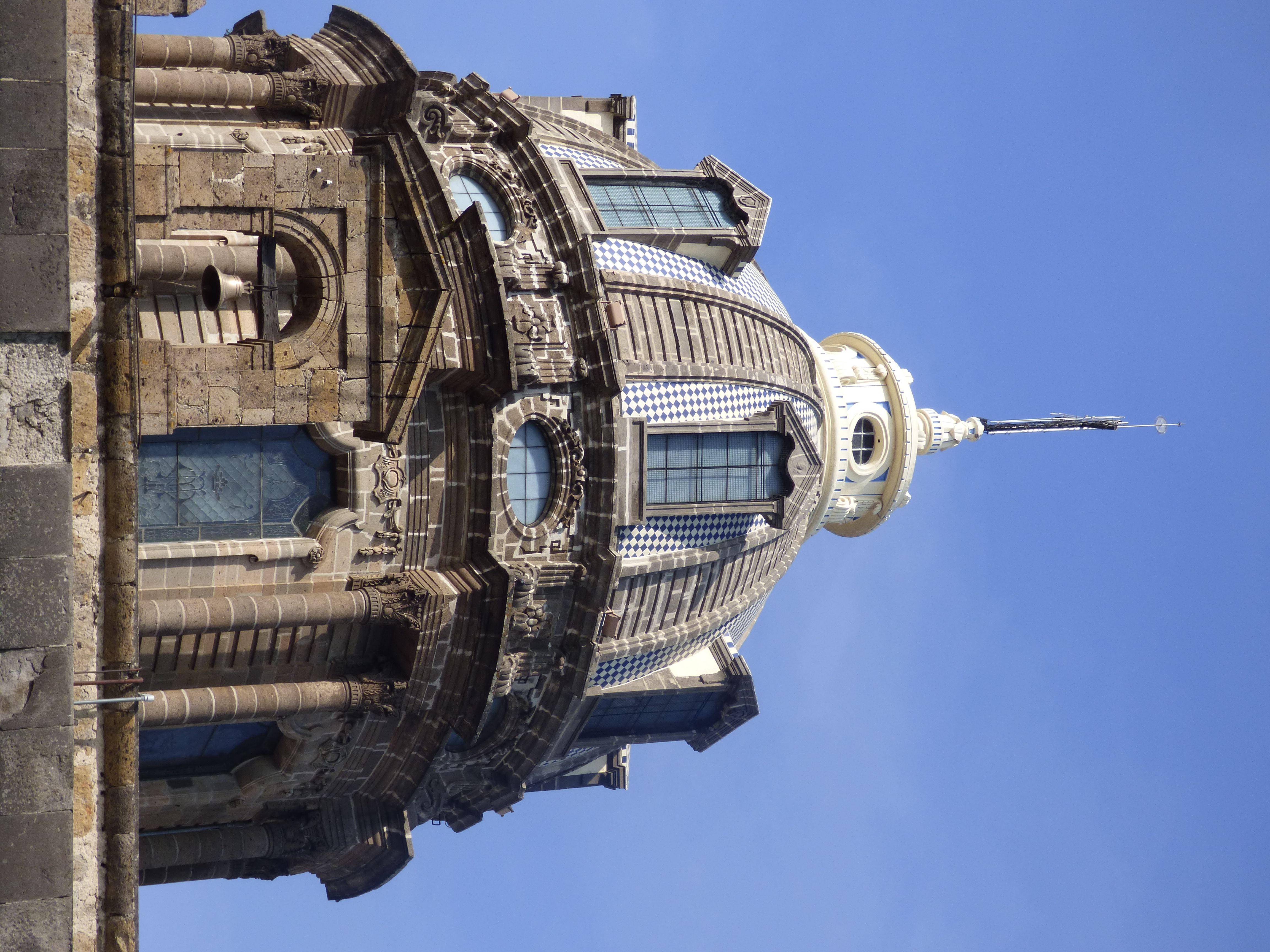 The building is Churrigueresque style, covered with yellow quarry from the Barranca de Huentitán. Only on the cover you can find ornamentation, it is simple but elegant with two bodies; the first flanked by pillar pilasters and in the second body is the coral window in the center. Top the building with two bell towers as a tower whose second body emata in small battlements.
In the interior of the temple the Neoclassical style predominates, highlighting the murals and the columns that imitate the marble. In its interior, its golden Neoclassical reredos stand out; 28 oil painting with themes of the Virgin Mary, of the evangelists and of the supreme pontiffs, which are framed in high reliefs; some oval and others rectangular; as well as two organs, one of them tubular and monumental.
The image of Our Lady of Guadalupe is on the main altar, a painting dating from 1779 by Don José de Alcíbar, crowned with a rich gold crown.