
Rolia Whitinger
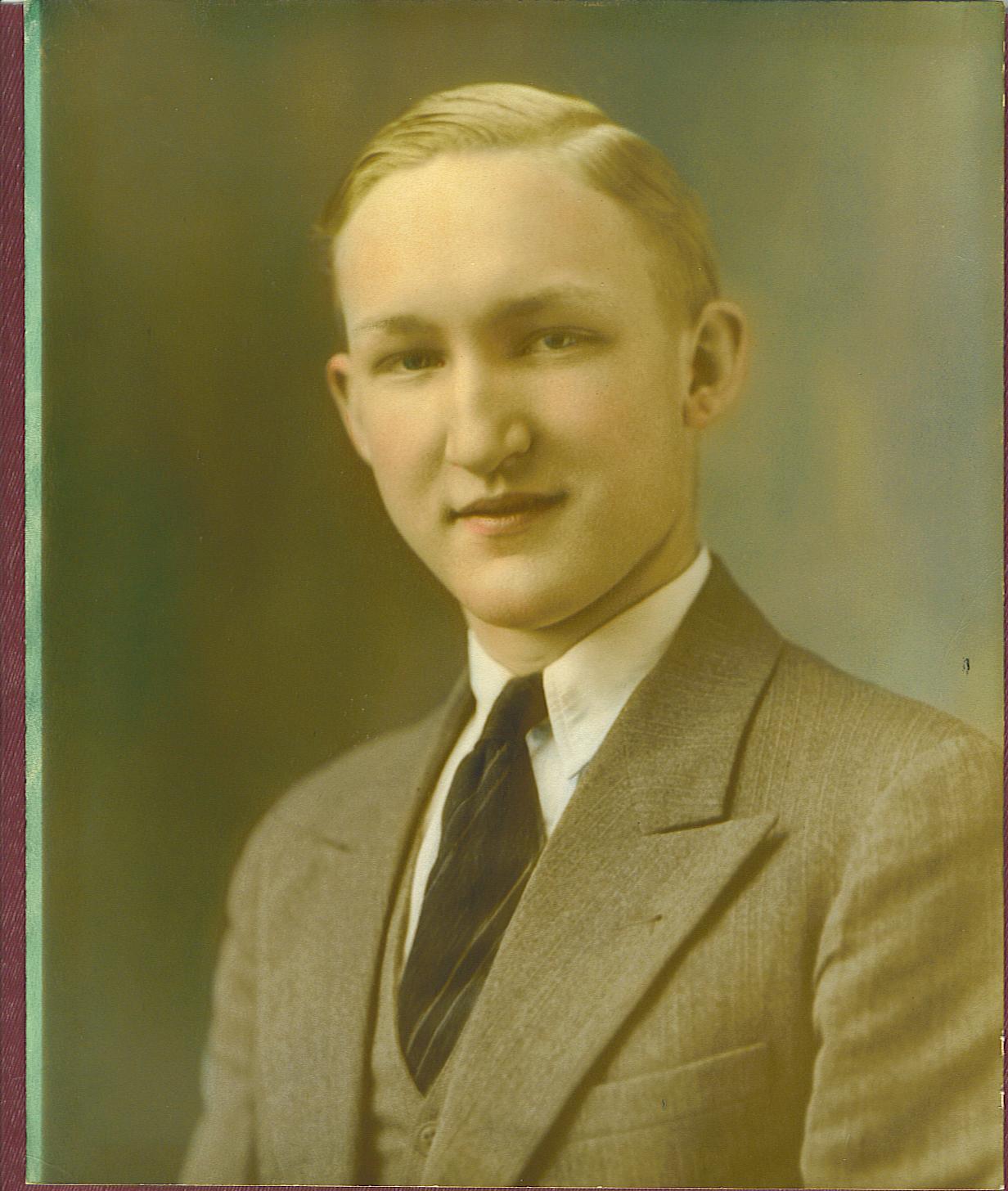
Rolia Harvey Whitinger (; June 26, 1916 – October 2, 2001) was a decorated United States soldier of World War II during his 10 months and 6 days in action in the European Theatre.
He received the Bronze Star, it is the fourth-highest combat award of the U.S. Armed Forces and the ninth highest military award (including both combat and non-combat awards) in the order of precedence of U.S. military decorations. He died October 2, 2001 and was interred, with full military honors, 7 years later, on August 15, 2008 in Fort Sam Houston National Cemetery, San Antonio, Texas. Whitinger was one of 78 victims of a crime that was discovered to have taken place on the campus of UTMB in Galveston, Texas.
Biography
Early life
Whitinger was born in Genoa, Ottawa County, Ohio to Rolia Alfred and Nellie Blanche Whitinger (née Myers) who were of German and Dutch descent. Whitinger grew up on a farm outside of Genoa, Ohio. His father, Rolia Alfred Whitinger was the son of Isaac Whitinger and Huldah Van Dyke. His mother, Nellie Blanche Myers, died in April 1920. Her parents were Abram Harvey Meyers and Ellen Jane Wiles. Whitinger was the 2nd of three children, His sisters were, Virginia June and Mary Ellen Whitinger. He was graduated from Clay-Genoa High School on the 23rd of May, 1935. Rolia Harvey Whitinger worked as a farm-hand on his father’s farm which consisted of , planting, cultivating and harvesting tomatoes, soy beans, corn, oats, and sugar beets using a team of horses until he was inducted into the U.S. Army on March 31, 1944, at Camp Atterbury, Indiana, he was 27 years old.
Battles
Whitinger was an Automatic Rifleman (746) and performed duties with Company F., 23rd Infantry Regiment, 2nd Division in the European Theatre of Operations. He loaded aimed and fired a Browning Automatic Rifle to provide power support to tactical units, in capturing and holding enemy positions. Whitinger was part of the 2nd Infantry Division which came ashore on Omaha Beach on D+1 June 7, 1944. The fighting was intensely fierce upon their landing in ten feet of water on Omaha Beach. He saw heavy combat across France and helped hold the line at St. Vith during the Battle of the Bulge. For his gallantry in World War II he was awarded a Presidential Unit Citation. According to Whitinger's Separation Qualification Record he was in Infantry Basic Training (521) as a Private from March 31, 1944 to May 1944 After training in Wales from May 1944 to June 1944, the 2nd Infantry Division crossed the channel to land on Omaha Beach on D plus 1, 7 June 1944, near St. Laurent-sur-Mer. Whitinger helped the Division liberate Trevieres, on June 10 and proceeded to secure St. Lô and then moved west to Brest, which finally surrendered on September 18, 1944 after 39 days of fierce fighting. Whitinger as part of the 2nd Division in September 1944 moved to defensive positions at St. Vith, Belgium. From positions around St. Vith, the Second was ordered, on 11 December 1944, to attack and seize the Roer River dams. He recalled in his notes of spending quite some time in Siegfried Pill Boxes and that the smoke from the fires to stay warm was atrocious. He recalled that after the bombing of St. Vith, that in what was left of the Cathedral there, someone had placed a small cross on the altar. The German Ardennes offensive forced the Division to withdraw to defensive positions near Elsenborn, where the German drive was halted. In February 1945 the Division recaptured lost ground, seized Gemund. Reaching the Rhine 9 March, the 2d advanced south to guard the Remagen bridge, 12–20 March. He recalled a different take on the fall of the Remagen bridge. "I witnessed an episode of two P38 fighters and a stuka dive bomber. The fighters were after the Remagen bridge and rammed together. It sounded like a bunch of tin cans rattling. The boys bailed out of fighters. The stuka succeeded at bombing the bridge taking it out. Meanwhile the wreckage of the planes was coming towards me and the wreckage suddenly stopped and came crashing straight down. When the wreckage hit the ground it blew up with a loud explosion." 
Awards
- Bronze Star (1)
- Good Conduct Medal (1)
- Presidential Unit Citation (4)
- American Campaign Medal (1)
- European-African-Middle Eastern Campaign Medal with 3 Bronze Stars representing Ardennes; Rhineland and Central Europe
- World War II Victory Medal
- Combat Infantryman Badge
Post war illness
Whitinger suffered from post-traumatic stress disorder (PTSD) after his return from the war. As did numerous soldiers from the Second World War. He was reportedly plagued by insomnia, bouts of depression, and nightmares related to his numerous battles. known then and during World War II as "battle fatigue" and also commonly known by World War I term "shell shock". It was discovered later that he had hernias and contracted diabetes. His height and weight at his enlistment were 5 feet 9 inches (175.26 ) and 178 pounds (80.74 kg)
Personal life
Whitinger was honorably discharged from the United States Army on April 13, 1946. A day he considered, “the luckiest day of my life”. Until of course, he married his wife, Annabelle Bertalan in 1958. He returned home to an elderly father and stepmother and to a farm that shrunk in size. For nearly 10 years he helped maintain what was left of farmstead until his father’s death, in October 1955. His stepmother, Lucille Whitinger (née Enright) died in 1956.
Whitinger married Annabelle Katherine Love Bertalan on August 31, 1958 in Genoa, Ohio, by whom he had three children: Margaret Ellen Whitinger (born 1959) Victoria Ann Whitinger (born 1961) and John Rolia Whitinger (born 1963). He adopted Annabelle Bertalan’s child from a previous marriage, Erica Cathlene on May 18, 1959. After a few years of living at the farmhouse in Genoa, Ohio and tired of fighting the frigid winters in Northwestern Ohio, Rolia would repeatedly remark to Annabelle, “I want to move to Texas.” Remembering during his temporary station and training at Camp Fannin, outside of Tyler, Texas in 1944 and his temporary station at Camp Swift, outside of Bastrop, Texas. Finally, one day in the winter of 1961 he finally had repeated it enough times, that Annabelle replied back “Okay, let’s do it.”
They sold the farmhouse to a neighboring farmer and shipped their belongings to Mercedes, Texas, the home of the Rio Grande Valley Livestock Show, that he had visited previously with his nieces and with friends who were migrant farm workers who came from “The Valley” and always talked of “The Valley”. He worked numerous odd jobs, including nightwatchman, and maintenance custodial work for the Harlingen Independent School District. He was attempting to gain employment with Sears for small motor repair (mostly lawnmower engines) when it was discovered in a required physical, that he had multiple hernias. After many unsuccessful surgeries, his practitioner declared him disabled – physically unable to work. He developed diabetes in his later years and was constantly attempting to control his blood sugar levels. This condition may have been from a result of the body not being able to fully recover from the multiple attempts to repair the hernias.
In 1998, he and Annabelle after having discussed the idea over a period of years, decided to jointly, donate their bodies to medical science and signed “contracts” that were provided in a waiting room at a local hospital in Harlingen, Texas.
Death
In August 2001, after attending a quinceañera for a child of a local family in San Benito, Texas, Rolia became ill. He was not able to move out of bed and was very pale. He was admitted to Valley Baptist Medical Center and was in intensive care for 5 days. After which he was moved to a local nursing home where he died AbOUT 2 weeks later, on October 2 , 2001.
His body was donated per his request to the University of Texas Medical Branch in Galveston, Texas through the Willed Body Program. The family requested his cremated remains be returned for proper interment. On June 13, 2002, staff at the Willed Body Program at UTMB in Galveston, issued a letter stating that the program was finished with Rolia Whitinger’s remains and that his cremated remains would be returned as promised under separate cover. However, Annabelle received a phone call on July 3, 2002 from staff at Human Resources stating that Rolia Whitinger’s remains were not going to be returned. It was explained that there was an incident and the FBI was called in to investigate. When Annabelle Whitinger asked about the letter, and what were they planning to send, beach sand was offered as an alternative.
As news articles indicated from The Galveston County Daily News and the Houston Chronicle and August 2003 Texas Monthly magazine, the incident was an employee of UTMB at the Willed Body Program, Allen Tyler was being investigated by the FBI for allegedly selling human remains for his own profit. In the investigative report, Tyler was shown invoices that he had created to receive monies in "honorium" for cadavers to be used in courses. In January 2004, Allen Tyler was declared deceased and the investigation by the FBI was stopped. Although there was indication in news reports that Allen Tyler was not the only person of interest, nothing was ever mentioned publicly who would be or still is of interest in the investigation. The Galveston County District Attorney, Kirk Sistrunk refused to investigate or prosecute anyone in this crime, most likely due to the state’s immunity and funding issues, a prerogative that state law allows.
As time progressed, the Whitinger family and roughly 77 other families sued the University of Texas Medical Branch, The Anatomical Board of the State of Texas and medical research companies as well as Allen Tyler, and his supervisor, Andrew Payer. A District Court in Galveston permitted other families to sue the University. The University immediately appealed that case and the Appellate Court Judge Scott Brister, overruled the lower court decision based on sovereign immunity. Judge Brister spoke to the press (the Galveston County Daily News) on May 29, 2003 prior to the ruling being made (a violation of Judicial conduct), stating, "We can cite Dred Scott but that’s not going to be popular”. “The defense is tough, we are the state. We can promise one thing and do something else.”[4] Thus making all the other suits follow precedent. Texas Governor Rick Perry appointed Scott Brister from the Appellate Court in Houston to the Texas Supreme Court in November 2003, thus ensuring that the other families in the lawsuit could not appeal the Texas Supreme Court. The Whitinger family through their attorney started lobbying for the lifting of sovereign immunity (the only alternative remaining. In April 2005, the Texas Senate passed such a measure and it was enroute for the House, however it was stopped just before it was to be considered for the House, thus allowing the bill to die. Efforts to have the immunity lifted in 2007 once again by the Whitinger family led to a meeting of University officials, Dr. Steven Lieberman and John Stobo with the Whitinger family on January 25, 2007 at State Representative Edmund Kuempel’s office in the State Capitol building in Austin, Texas in which they revealed that after 5 years, that the University knowingly had possession of Rolia Whitinger’s head, shoulders and knees. The rest of his remains were not revealed if known.
Initial efforts to have the body released to the family failed due to the school’s insistence by citing that it was state law that these remains must be cremated. The family insisted that according to state law that the remains be left as they are, for the remains should not be cremated as the statute read that the body can only be cremated if the body is intact, specifying that the statute stated that the body would have to be “intact” (or at least accounted for). After waiting 6 months, July 2007, for the DNA testing to take place, DNA testing was completed by a state agency that stated that the remains were indeed of Rolia Whitinger. The Whitinger family waited until August 2008 for the University to release the remains. On August 15, 2008 a funeral with full military honors took place at Fort Sam Houston National Cemetery in San Antonio, Texas. It was attended by members of the immediate family and newsmedia from local San Antonio newspapers and television. Because of this criminal activity and the lack of enforcement of regulations overseeing organ and body donation, Annabelle Whitinger has now reconsidered body donation.
See also
- body donation
References
- Whitinger archival papers.
- Willed Body lawsuits mulled, Galveston County Daily News, Carter Thompson published May 29, 2003.
External links
- http://findarticles.com/p/articles/mi_go2063/is_200308/ai_n9057291/
- http://www.americal.org/awards/achv-svc.htm
- http://www.mysanantonio.com/news/local_news/medical_branch_returns_mans_remains100.html
- http://www.mysanantonio.com/news/MYSA_060408_1B_bodyparts_3898db3_html5089.html
- http://www.valleymorningstar.com/news/family-27602-fighting-medical.html
- http://www.kwtx.com/news/headlines/19456794.html
- http://www.news8austin.com/content/top_stories/?ArID=210347
- http://www.usatoday.com/tech/science/2006-04-27-body-parts-sold_x.htm