
Ricardo Cox
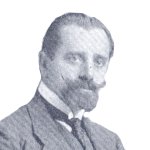
Ricardo Cox Méndez (14 September 1870 – 4 May 1952) was a Chilean politician and physician who served as a member of the Chamber of Deputies of Chile between 1906 and 1915, and again in 1924.
In addition to his politics, Cox belonged to the Scientific Society of Chile and the National Agricultural Society. He was also a member of the Tomás de Aquino Academy of Philosophy. In 1928, he founded the Centro de Estudios Religiosos, where he served as secretary.
Cox was also associated with the Club de la Unión, of which he was both a member and an honorary member. He continued to manage agricultural properties belonging to his family.
Early life
Cox was born in Concepción on 14 September 1870, the son of Guillermo Cox Bustillos and Loreto Méndez Urrejola. He received part of his secondary education at the Seminary of Concepción and subsequently continued his studies with the Jesuits in Santiago. He later enrolled in medical school.
His studies were interrupted by the 1891 Chilean Civil War. During the conflict, Cox served as an officer in the 7th Line Regiment and participated in the battles of Concón, Placilla and Viña del Mar. He was wounded during the fighting and remained in the Army until 1892, leaving with the rank of infantry captain. After returning to his studies, he qualified as a physician and surgeon on 17 June 1895.
Cox subsequently left medical practice to manage his family's agricultural interests, particularly the Cucha Cucha estate in San Antonio. He also developed an interest in scientific, economic and religious subjects and contributed articles to several publications, including El Porvenir, La Unión and El Diario Ilustrado.
On 14 August 1898, he married Teresa Balmaceda Zañartu, with whom he had ten children.
Political career
A member of the Conservative Party, Cox was first elected to the Chamber of Deputies for Arauco, Lebu and Cañete for the 1906–1909 term. During this period, he served on the permanent committee for public instruction.
In 1909, he was elected deputy for Santiago. He remained a member of the public instruction committee and also served on the Mixed Budget Committee in 1910 and the Conservative Commission during the 1911–1912 congressional recess. In 1910, Cox was part of the Chilean delegation that accompanied President Pedro Montt to Argentina for celebrations marking the centenary of that country's independence.
Cox was reelected for Santiago for the 1912–1915 term. He continued his work on the public instruction committee and was a member of the Conservative Commission during the 1912–1913 recess. During this parliamentary period, he participated in debates concerning military procurement and railway electrification, as well as controversies surrounding the 1912 elections in Santiago.
On 15 December 1914, Cox was appointed Minister of War and Navy. He remained in office until 7 June 1915.
After several years outside Congress, Cox returned to the Chamber of Deputies in 1924, representing Victoria, Melipilla and San Antonio for the constitutional period scheduled to end in 1927. He served on the permanent committees for public instruction and correction of style. His term ended prematurely when Congress was dissolved by the Government Junta on 11 September 1924.
Following the dissolution of Congress, Cox participated in the political campaign opposing the constitutional reform of 1925.
He died in Santiago on 4 May 1952, aged 81.