
Ricardo Bascuñán
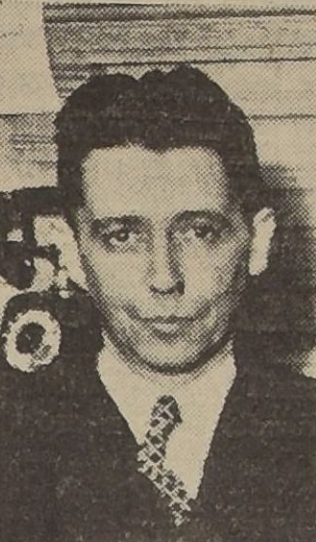
Ricardo Bascuñán Stonner (5 May 1893 – 8 September 1971) was a Chilean politician who served as a minister.
Early life and education
Bascuñán was born in Talca, Chile, on 5 May 1893, the son of Ricardo Bascuñán Bascuñán and Josefina Stonner Ávalos. He had three brothers: Rubén, Jorge and Enrique. Jorge was a farmer who operated the Vega Oriente estate in Pitrufquén, where he also served as a municipal councillor. The estate was devoted to livestock raising and dairy farming. He was also manager of the Toltén Agricultural Cooperative and a member of the Agricultural Development Society of Temuco and the Pitrufquén Social Club.
Enrique was an accountant and businessman who joined the Ministry of Agriculture in 1937 and worked for eight years as an accountant in its Department of Arboriculture. He later managed the Santa Cristina estate in Ovalle, joined the Institute of Agricultural Economics, and subsequently returned to the Ministry of Agriculture, where he served as chief accountant of the Council for Agricultural Development and Research.
Bascuñán received his secondary education at the Liceo de Talca, now the Liceo Abate Molina, and subsequently studied at the University of Chile, graduating as a civil engineer in 1918.
He married Cristina Letelier, with whom he had five children: María Cristina, Cecilia, Ricardo, Carmen and Francisco Javier.
Political career
After graduating, Bascuñán pursued a career in the public sector. He worked on two separate occasions for the Empresa de los Ferrocarriles del Estado (EFE) and later as a structural engineer for the Sociedad Nacional de Buques y Maderas. He also worked as an engineer for the Municipality of Santiago, specifically in its Paving Directorate, of which he later became director. In the private sector, he also worked for the engineering firm Salinas y Fabres, Ingenieros.
From 1931, Bascuñán became involved in agricultural activities in Ovalle, where he operated the 3,000-hectare Santa Cristina estate, devoted to livestock raising and dairy farming. He was a member of the National Agricultural Society (SNA) and the Agricultural Society of the North.
Although politically independent, Bascuñán entered public administration during the second presidency of Arturo Alessandri. In 1933, he was appointed a board member of the Agricultural Colonisation Fund, an agency under the then Ministry of Lands and Colonisation. After several years, he left the position to become director of the Subsistence Department of the General Commissariat of Subsistence and Prices, an agency under the Ministry of Labour.
Bascuñán remained in that position until 26 May 1937, when Alessandri appointed him Minister of Development. He remained in office until the end of Alessandri's presidency on 24 December 1938.
During the presidency of Juan Antonio Ríos, Bascuñán returned to the cabinet on 4 February 1943, when he was appointed Minister of Public Works and Communications, succeeding Socialist politician Manuel Hidalgo Plaza. He served in the position until 6 October 1944.
In 1945, Bascuñán returned to the private sector as general manager of The Anglo Chilean Asphalt Company. He left the company on 2 October 1947, during the presidency of Gabriel González Videla, when he was simultaneously appointed Minister of Lands and Colonisation and Minister of Agriculture. He held the former portfolio for only twelve days, while remaining Minister of Agriculture until 7 July 1948.
Bascuñán subsequently resumed his position as general manager of The Anglo Chilean Asphalt Company. He again left the company to return to government on 29 July 1952, when González Videla appointed him for a third time to head the ministry responsible for public works and infrastructure. He served as Minister of Public Works until 3 November 1952, when González Videla's presidency ended.
Bascuñán was also a member of the Institute of Engineers of Chile and authored the book Normas técnicas para obras de pavimentación.
He died in Santiago, Chile, on 8 September 1971, at the age of 78.