
Red Skorba phase
The Red Skorba phase (4400-4100 BCE) is a period in Maltese prehistory marked by a distinctive style of ceramic vessels. Although related to earlier Grey Skorba wares, they are covered in red ochre. Substantial village remains survive from this period. The Red Skorba phase led to the Żebbuġ phase (4100-3700 BCE) and the temple-builder culture.
Overview
Archaeological remains dating to the Skorba phases suggest that the islanders had developed complex social systems based on a life style of mixed farming, domestic industry and ritual beliefs; the Skorba small village complex contains domestic huts provided with ritual shrines. 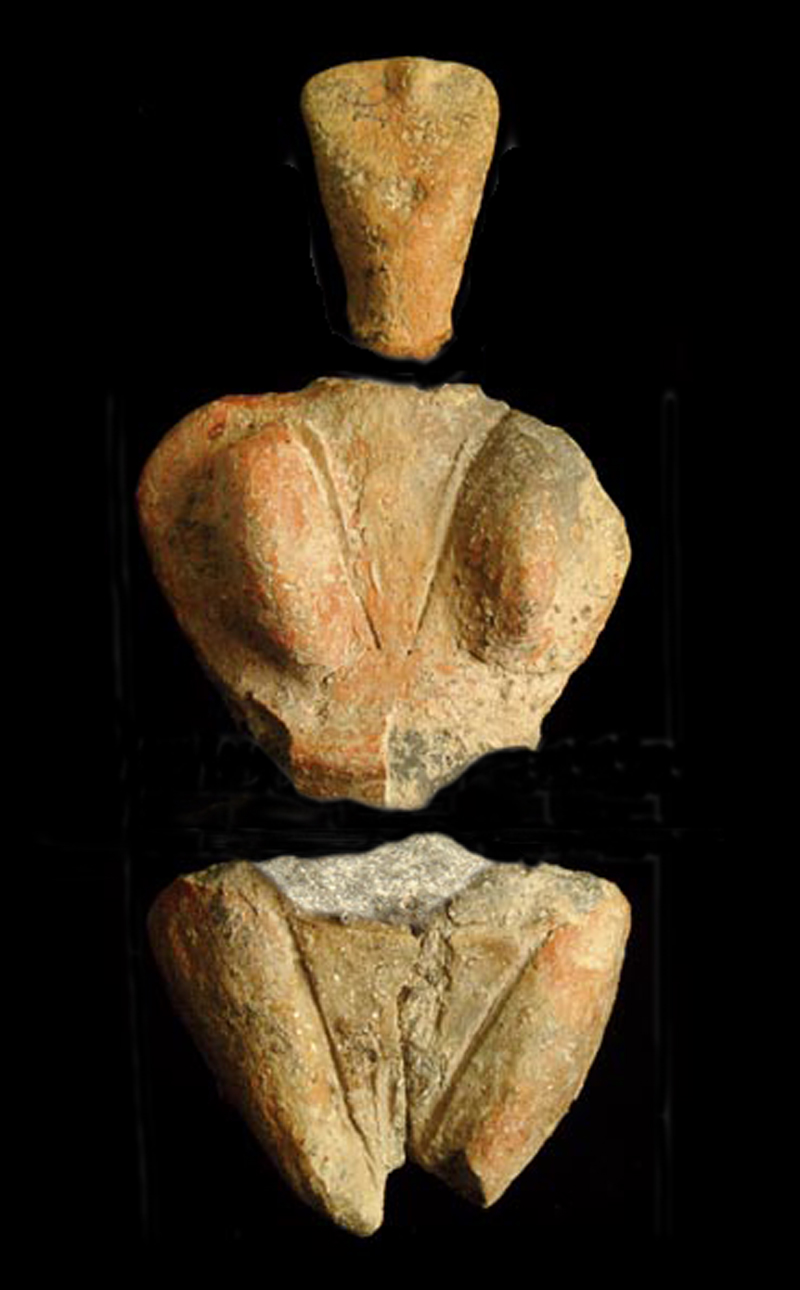 The prehistoric site at Skorba was first noted during the early years of the twentieth century. At the time, a conspicuous megalith was recorded as a menhir; however in 1937 Captain Charles Zammit, curator of archaeology, established the presence of other megaliths in the immediate vicinity and the site was fully excavated by David Trump between 1961-1963.
The importance of Skorba lies chiefly in the information that its artifacts provide about Maltese prehistory.