
Pentellated 6-simplexes

|
|
|
|
|
|
|
|
|
|
|
|
Orthogonal projections in A6 Coxeter plane |
|||
In six-dimensional geometry, a pentellated 6-simplex is a convex uniform 6-polytope with 5th order truncations of the regular 6-simplex.
There are unique 10 degrees of pentellations of the 6-simplex with permutations of truncations, cantellations, runcinations, and sterications. The simple pentellated 6-simplex is also called an expanded 6-simplex, constructed by an expansion operation applied to the regular 6-simplex. The highest form, the pentisteriruncicantitruncated 6-simplex, is called an omnitruncated 6-simplex with all of the nodes ringed.
Pentellated 6-simplex
Pentellated 6-simplex |
|---|
Type |
Schläfli symbol |
Coxeter-Dynkin diagram |
5-faces |
4-faces |
Cells |
Faces |
Edges |
Vertices |
Vertex figure |
Coxeter group |
Properties |
Alternate names
- Expanded 6-simplex
- Small terated tetradecapeton (Acronym: ) (Jonathan Bowers)
Cross-sections
The maximal cross-section of the pentellated 6-simplex with a 5-dimensional hyperplane is a stericated hexateron. This cross-section divides the pentellated 6-simplex into two hexateral hypercupolas consisting of 7 5-simplexes, 21 5-cell prisms and 35 Tetrahedral-Triangular duoprisms each.
Coordinates
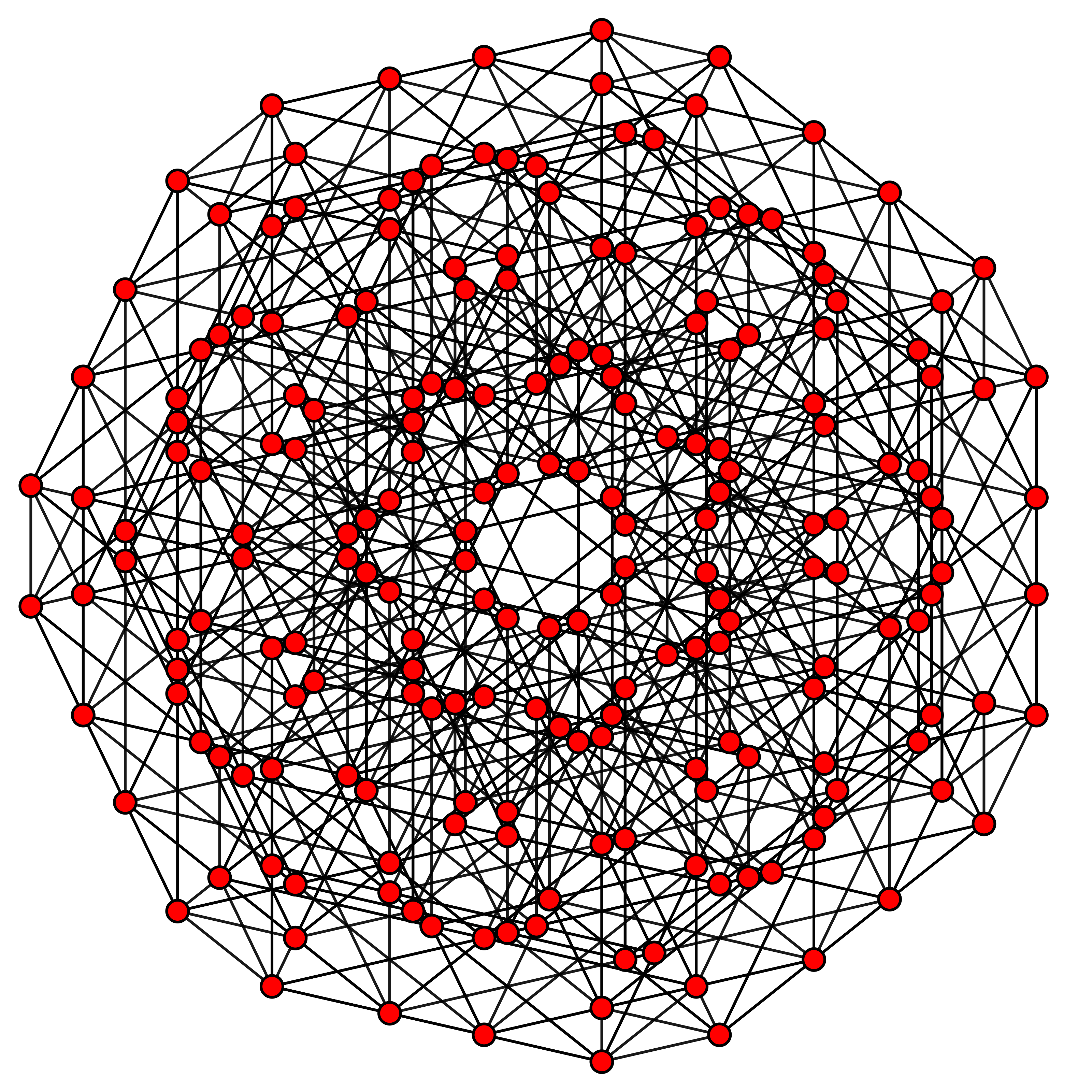
The vertices of the pentellated 6-simplex can be positioned in 7-space as permutations of (0,1,1,1,1,1,2). This construction is based on facets of the pentellated 7-orthoplex.
A second construction in 7-space, from the center of a rectified 7-orthoplex is given by coordinate permutations of:
- (1,-1,0,0,0,0,0)
Root vectors
Its 42 vertices represent the root vectors of the simple Lie group A6. It is the vertex figure of the 6-simplex honeycomb.
Configuration
This configuration matrix represents the expanded 6-simplex, with 12 permutations of elements. The rows and columns correspond to vertices, edges, faces, cells, 4-faces and 5-faces. The diagonal numbers say how many of each element occur in the whole polytope. The nondiagonal numbers say how many of the column's element occur in or at the row's element.
Element |
fk |
|f0 |
|f1 |
f2 |
f3 |
||
|---|---|---|---|---|---|---|---|
f0 |
42 |
10 |
20 |
20 |
20 |
60 |
|
f1 |
2 |
210 |
4 |
4 |
6 |
18 |
|
f2 |
3 |
3 |
280 |
* |
3 |
3 |
|
4 |
4 |
* |
210 |
0 |
6 |
||
f3 |
4 |
6 |
4 |
0 |
210 |
* |
|
6 |
9 |
2 |
3 |
* |
420 |
||
f4 |
5 |
10 |
10 |
0 |
5 |
0 |
|
8 |
16 |
8 |
6 |
2 |
4 |
||
9 |
18 |
6 |
9 |
0 |
6 |
||
f5 |
6 |
15 |
20 |
0 |
15 |
0 |
|
10 |
25 |
20 |
10 |
10 |
10 |
||
12 |
30 |
16 |
18 |
3 |
18 |
||
Pentitruncated 6-simplex
Pentitruncated 6-simplex |
|---|
Type |
Schläfli symbol |
Coxeter-Dynkin diagrams |
5-faces |
4-faces |
Cells |
Faces |
Edges |
Vertices |
Vertex figure |
Coxeter group |
Properties |
Alternate names
- Teracellated heptapeton (Acronym: tocal) (Jonathan Bowers)
Coordinates
The vertices of the runcitruncated 6-simplex can be most simply positioned in 7-space as permutations of (0,1,1,1,1,2,3). This construction is based on facets of the runcitruncated 7-orthoplex.
Penticantellated 6-simplex
Penticantellated 6-simplex |
|---|
Type |
Schläfli symbol |
Coxeter-Dynkin diagrams |
5-faces |
4-faces |
Cells |
Faces |
Edges |
Vertices |
Vertex figure |
Coxeter group |
Properties |
Alternate names
- Teriprismated heptapeton (Acronym: topal) (Jonathan Bowers)
Coordinates
The vertices of the runcicantellated 6-simplex can be most simply positioned in 7-space as permutations of (0,1,1,1,1,2,3). This construction is based on facets of the penticantellated 7-orthoplex.
Penticantitruncated 6-simplex
Penticantitruncated 6-simplex |
|---|
Type |
Schläfli symbol |
Coxeter-Dynkin diagrams |
5-faces |
4-faces |
Cells |
Faces |
Edges |
Vertices |
Vertex figure |
Coxeter group |
Properties |
Alternate names
- Terigreatorhombated heptapeton (Acronym: togral) (Jonathan Bowers)
Coordinates
The vertices of the penticantitruncated 6-simplex can be most simply positioned in 7-space as permutations of (0,1,1,1,2,3,4). This construction is based on facets of the penticantitruncated 7-orthoplex.
Pentiruncitruncated 6-simplex
Pentiruncitruncated 6-simplex |
|---|
Type |
Schläfli symbol |
Coxeter-Dynkin diagrams |
5-faces |
4-faces |
Cells |
Faces |
Edges |
Vertices |
Vertex figure |
Coxeter group |
Properties |
Alternate names
- Tericellirhombated heptapeton (Acronym: tocral) (Jonathan Bowers)
Coordinates
The vertices of the pentiruncitruncated 6-simplex can be most simply positioned in 7-space as permutations of (0,1,1,1,2,3,4). This construction is based on facets of the pentiruncitruncated 7-orthoplex.
Pentiruncicantellated 6-simplex
Pentiruncicantellated 6-simplex |
|---|
Type |
Schläfli symbol |
Coxeter-Dynkin diagrams |
5-faces |
4-faces |
Cells |
Faces |
Edges |
Vertices |
Vertex figure |
Coxeter group |
Properties |
Alternate names
- Teriprismatorhombated tetradecapeton (Acronym: taporf) (Jonathan Bowers)
Coordinates
The vertices of the pentiruncicantellated 6-simplex can be most simply positioned in 7-space as permutations of (0,1,1,2,3,3,4). This construction is based on facets of the pentiruncicantellated 7-orthoplex.
Pentiruncicantitruncated 6-simplex
Pentiruncicantitruncated 6-simplex |
|---|
Type |
Schläfli symbol |
Coxeter-Dynkin diagrams |
5-faces |
4-faces |
Cells |
Faces |
Edges |
Vertices |
Vertex figure |
Coxeter group |
Properties |
Alternate names
- Terigreatoprismated heptapeton (Acronym: tagopal) (Jonathan Bowers)
Coordinates
The vertices of the pentiruncicantitruncated 6-simplex can be most simply positioned in 7-space as permutations of (0,1,1,2,3,4,5). This construction is based on facets of the pentiruncicantitruncated 7-orthoplex.
Pentisteritruncated 6-simplex
Pentisteritruncated 6-simplex |
|---|
Type |
Schläfli symbol |
Coxeter-Dynkin diagrams |
5-faces |
4-faces |
Cells |
Faces |
Edges |
Vertices |
Vertex figure |
Coxeter group |
Properties |
Alternate names
- Tericellitruncated tetradecapeton (Acronym: tactaf) (Jonathan Bowers)
Coordinates
The vertices of the pentisteritruncated 6-simplex can be most simply positioned in 7-space as permutations of (0,1,2,2,2,3,4). This construction is based on facets of the pentisteritruncated 7-orthoplex.
Pentistericantitruncated 6-simplex
Pentistericantitruncated 6-simplex |
|---|
Type |
Schläfli symbol |
Coxeter-Dynkin diagrams |
5-faces |
4-faces |
Cells |
Faces |
Edges |
Vertices |
Vertex figure |
Coxeter group |
Properties |
Alternate names
- Great teracellirhombated heptapeton (Acronym: tacogral) (Jonathan Bowers)
Coordinates
The vertices of the pentistericantittruncated 6-simplex can be most simply positioned in 7-space as permutations of (0,1,2,2,3,4,5). This construction is based on facets of the pentistericantitruncated 7-orthoplex.
Omnitruncated 6-simplex
Omnitruncated 6-simplex |
|---|
Type |
Schläfli symbol |
Coxeter-Dynkin diagrams |
5-faces |
4-faces |
Cells |
Faces |
Edges |
Vertices |
Vertex figure |
Coxeter group |
Properties |
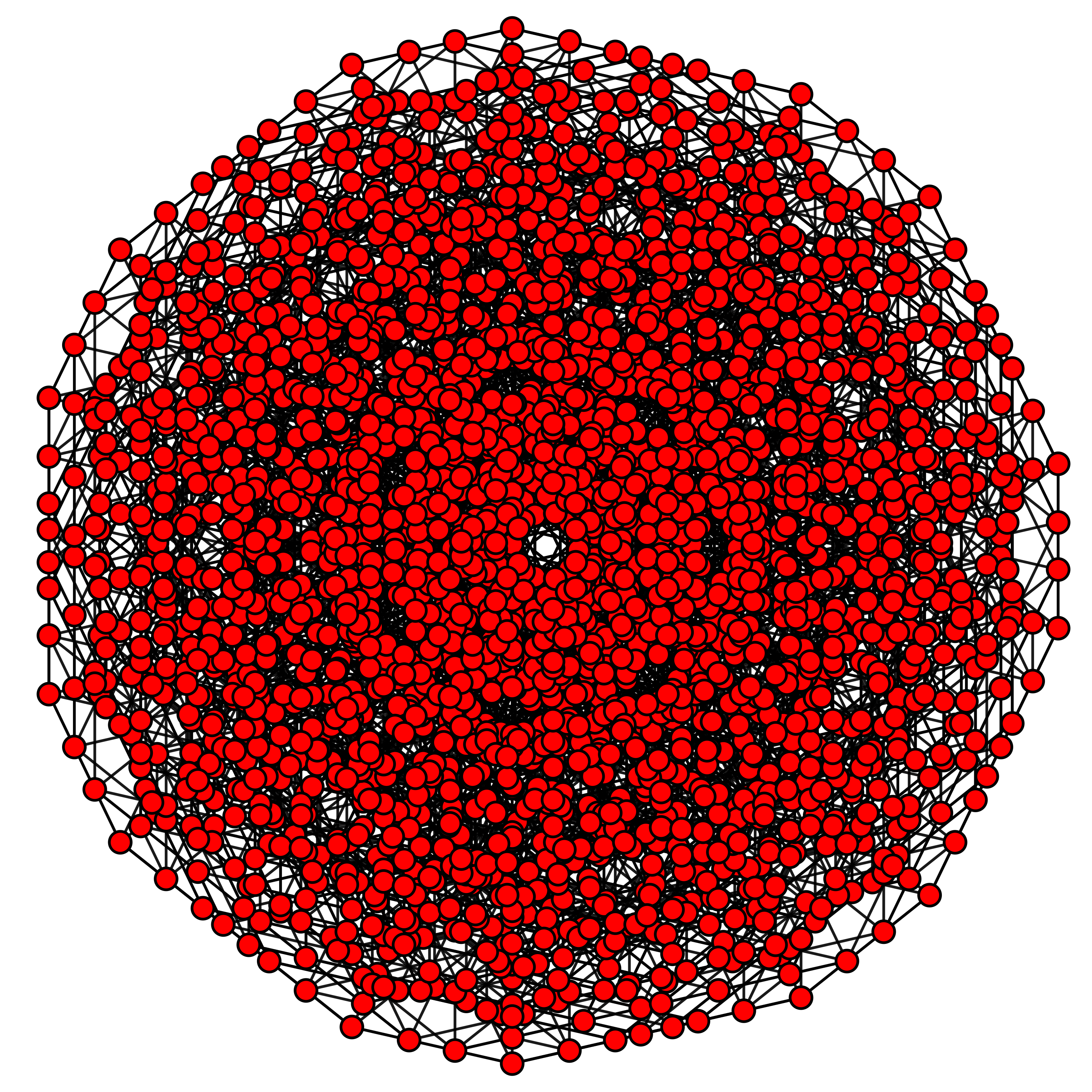
The omnitruncated 6-simplex has 5040 vertices, 15120 edges, 16800 faces (4200 hexagons and 1260 squares), 8400 cells, 1806 4-faces, and 126 5-faces. With 5040 vertices, it is the largest of 35 uniform 6-polytopes generated from the regular 6-simplex.
Alternate names
- Pentisteriruncicantitruncated 6-simplex (Johnson's omnitruncation for 6-polytopes)
- Omnitruncated heptapeton
- Great terated tetradecapeton (Acronym: gotaf) (Jonathan Bowers)
Permutohedron and related tessellation
The omnitruncated 6-simplex is the permutohedron of order 7. The omnitruncated 6-simplex is a zonotope, the Minkowski sum of seven line segments parallel to the seven lines through the origin and the seven vertices of the 6-simplex.
Like all uniform omnitruncated n-simplices, the omnitruncated 6-simplex can tessellate space by itself, in this case 6-dimensional space with three facets around each hypercell. It has Coxeter-Dynkin diagram of .
Coordinates
The vertices of the omnitruncated 6-simplex can be most simply positioned in 7-space as permutations of (0,1,2,3,4,5,6). This construction is based on facets of the pentisteriruncicantitruncated 7-orthoplex, t0,1,2,3,4,5{35,4}, .
Configuration
This configuration matrix represents the omnitruncated 6-simplex, with 35 permutations of elements. The rows and columns correspond to vertices, edges, faces, cells, 4-faces and 5-faces. The diagonal numbers say how many of each element occur in the whole polytope. The nondiagonal numbers say how many of the column's element occur in or at the row's element.
Element |
fk |
|f0 |
f1 |
f2 |
|||
|---|---|---|---|---|---|---|---|
f0 |
5040 |
2 |
2 |
2 |
2 |
2 |
|
f1 |
2 |
5040 |
* |
* |
1 |
1 |
|
2 |
* |
5040 |
* |
1 |
0 |
||
2 |
* |
* |
5040 |
0 |
1 |
||
f2 |
6 |
3 |
3 |
0 |
1680 |
* |
|
4 |
2 |
0 |
2 |
* |
2520 |
||
4 |
2 |
0 |
2 |
* |
* |
||
4 |
2 |
2 |
0 |
* |
* |
||
4 |
4 |
0 |
0 |
* |
* |
||
6 |
0 |
3 |
3 |
* |
* |
||
4 |
0 |
2 |
2 |
* |
* |
||
4 |
0 |
4 |
0 |
* |
* |
||
6 |
0 |
0 |
6 |
* |
* |
||
f3 |
24 |
12 |
12 |
12 |
4 |
6 |
|
12 |
6 |
6 |
6 |
2 |
0 |
||
12 |
6 |
12 |
0 |
2 |
0 |
||
12 |
12 |
6 |
0 |
2 |
0 |
||
12 |
6 |
0 |
12 |
0 |
3 |
||
8 |
4 |
4 |
4 |
0 |
2 |
||
8 |
8 |
0 |
4 |
0 |
2 |
||
12 |
6 |
6 |
6 |
0 |
0 |
||
24 |
0 |
12 |
24 |
0 |
0 |
||
12 |
0 |
12 |
6 |
0 |
0 |
||
f4 |
120 |
60 |
60 |
120 |
20 |
30 |
|
48 |
24 |
48 |
24 |
8 |
12 |
||
48 |
48 |
24 |
24 |
8 |
12 |
||
36 |
18 |
36 |
18 |
6 |
0 |
||
24 |
24 |
12 |
12 |
4 |
6 |
||
36 |
36 |
36 |
0 |
12 |
0 |
||
48 |
24 |
24 |
48 |
0 |
12 |
||
24 |
24 |
0 |
24 |
0 |
12 |
||
120 |
0 |
120 |
120 |
0 |
0 |
||
f5 |
720 |
360 |
720 |
720 |
120 |
180 |
|
240 |
240 |
120 |
240 |
40 |
120 |
||
144 |
144 |
144 |
72 |
48 |
36 |
||
Full snub 6-simplex
The full snub 6-simplex or omnisnub 6-simplex, defined as an alternation of the omnitruncated 6-simplex is not uniform, but it can be given Coxeter diagram and symmetry +, and constructed from 14 snub 5-simplexes, 42 snub 5-cell antiprisms, 70 3-s{3,4} duoantiprisms, and 2520 irregular 5-simplexes filling the gaps at the deleted vertices.
Related uniform 6-polytopes
The pentellated 6-simplexes are in a set of 35 uniform 6-polytopes based on the [3,3,3,3,3] Coxeter group, all shown here in A6 Coxeter plane orthographic projections.






References
- H.S.M. Coxeter:
- H.S.M. Coxeter, Regular Polytopes, 3rd edition, Dover, New York, 1973
- Kaleidoscopes: Selected Writings of H.S.M. Coxeter, edited by F. Arthur Sherk, Peter McMullen, Anthony C. Thompson, Asia Ivić Weiss, Wiley-Interscience Publication, 1995, wiley.com,
- (Paper 22) H.S.M. Coxeter, Regular and Semi-Regular Polytopes I, [Math. Zeit. 46 (1940) 380–407, MR 2,10]
- (Paper 23) H.S.M. Coxeter, Regular and Semi-Regular Polytopes II, [Math. Zeit. 188 (1985) 559–591]
- (Paper 24) H.S.M. Coxeter, Regular and Semi-Regular Polytopes III, [Math. Zeit. 200 (1988) 3–45]
- Norman Johnson Uniform Polytopes, Manuscript (1991)
- N.W. Johnson: The Theory of Uniform Polytopes and Honeycombs, Ph.D.
x3o3o3o3o3x - , x3x3o3o3o3x - tocal, x3o3x3o3o3x - topal, x3x3x3o3o3x - togral, x3x3o3x3o3x - tocral, x3o3x3x3o3x - taporf, x3x3x3x3o3x - tagopal, x3x3o3o3x3x - tactaf, x3x3x3o3x3x - tacogral, x3x3x3x3x3x - gotaf