
Pattamukkil family
The Pattamukkil family is an ancient Syrian Christian family of Kerala (India). They are popularly known as Syrian Christians as they follow the Syriac liturgy in church services since the early days of Christianity in India and this does not refer to any Syrian migration. They are also known as Nasranis.
History
Pattamukkil family and the Christian community in Niranam are one of the oldest in India, they have a rich history of more than 1000 years. It is believed that they are one of the most preeminent among the four Hindu families converted to Christianity by the Apostle St.Thomas in AD 52. In the past 700 years the family has acquired remarkable growth in numbers and members of the family are spread all around the globe.Currently the family has got around 5 branches. They are Niranam, Chennamkery, Cheppad, Manimala, and Vennikulam. In the very beginning of Christianity in Kerala (AD 52) St. Thomas, one of the twelve apostles of Jesus Christ landed at Malankara near Kodugallore at Kerala around A.D.52. He established seven and half churches. Those are, Kodugallore, Palayoor, Kottacave, Kokamangalam, Niranam, Chayal, Kollam and the half church at Thiruvithamkode.On his way from Kollam in northeast direction he arrived at Niranam "Thrikpapaleswaram" by sea.He converted two Hindu Brahmin families named Pattamukkil,Thayyil and two nair families named Manki,Madathilan to christianity.These are the first four families which has been converted by St.thomas to christianity. He also gives priestly powers to the members of Pattamukkil family.
Origin of Family name "Pattamukkil"
The name Pattamukkil is believed to be derived from "Bhattathiri Mukhyan" and "Pattamukkil" became a family name at Niranam. The only survivors of the four families converted by St.Thomas at Niranam today. Pattamukkil tharavad (ancestral home) at Niranam is surrounded from three sides by Niranam church. There is Myth that,Parashurama (Sanskrit: परशराम) ु , (Paraśurāma), is the sixth avatar of Vishnu, descendant of Brahma and pupil of Shiva,Who and his devotees Build Up Ashram Near Pattamukkil Tharavad for Vedic Devotion,Puja and Prayers. During that Period, the place was known by the name "Bhakta Giri". Priests From Pattamukkil family used to stay there and done priesthood and governed Niranam church and its properties in the ancient days.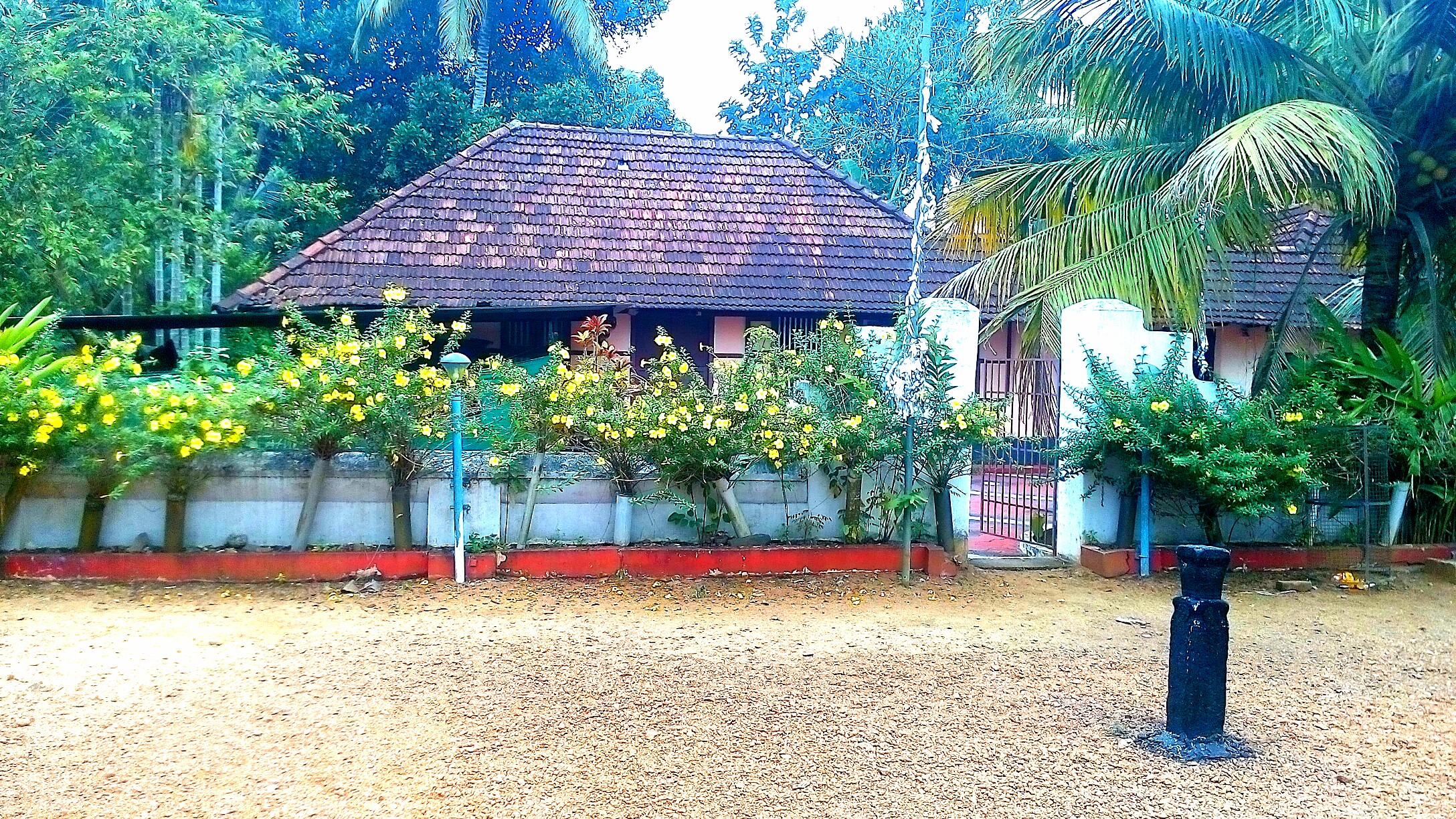
Origin of 'Federal Bank' Or 'Travancore Federal Bank Ltd'
The history of Federal Bank dates back to the pre-independence era.The Bank was incorporated on April 23, 1931 as the Travancore Federal Bank, Nedumpuram under the Travancore Companies Regulation Act,1916. In 1931, Travancore Federal Bank began operations at Pattamukkil Varattisseril house near Nedumpuram, near Thiruvalla, Kerala. The home functioned as the bank office for nearly 15 years. The 14 founders included Pattamukkil Varattisseril Oommen Varghese, his brothers Oommen Chacko, Oommen Kurian, and Oommen George, and Kavumbhagam Mundapallil Lukose. Oommen Varghese was the chairman and Oommen Chacko was the manager. After the bank had functioned for nearly 10 years, the bank's day-to-day operations had to be stopped due to Oommen Chacko's ill-health.
Travancore Federal Bank Limited was incorporated with an authorised capital of rupees five thousand at Pattamukkil Varattisseril house at Nedumpuram, a place near Thiruvalla in Central Travancore on 28/4/1931 under the Travancore Company's Act. It started business of auction-chitty and other banking transactions connected with agriculture and industry.
A lawyer from Perumbavoor named K.P.Hormis, and his acquaintances, bought the bank and took over the management on 1945.In 1945 they moved the bank's registered office to Aluva and Hormis became the Managing Director. In 1947, the bank's name was shortened from Travancore Federal Bank to Federal Bank.
The "John Legend"
John Abraham is recognised as a genius in Malayalam cinema.He is from the Vazhakkat branch,Chennamkary of the Pattamukkil Family. He made his mark with the Tamil film Agraharathil Kazhuthai, but is possibly remembered most for his efforts in starting a people's cinema movement called Odessa.Trained at the FTII, Pune John Abraham created a deep impact in Malayalam cinema with only four films in his credit in his short life span.
References
- David Daniel (1986). The Orthodox Church of India: History. History of Christianity in India.(University of Michigan)[1] Edgar Thurston. "Castes and Tribes of Southern India".
- A. Sreedhara Menon - Political history of modern Kerala, D C Books, 1987, pp. 36 –39, ISBN
- Mundalan, A. Mathias. (1984) History of Christianity in India, vol. 1, Bangalore, India: Church History Association of India.
- Leslie Brown, (1956) The Indian Christians of St. Thomas. An Account of the Ancient Syrian Church of Malabar, Cambridge: Cambridge University Press 1956, 1982 (repr.)
- Podipara, Placid J. (1970) The Thomas Christians. London: Darton, Longman and Tidd, 1970.
- Menachery G (ed) (1982) The St. Thomas Christian Encyclopedia of India, B.N.K. Press, vol. 1;
- Joseph Thekkedath (1982) History of Christianity in India, Volume 1, Theological Publications in India, pp. 33
- Castes and Tribes of Southern India, Volume 1: Edgar Thurston, K. Rangachari
- James Hough (1893) The History of Christianity in India.
- K.V. Krishna Iyer (1971) "Kerala’s Relations with the Outside World", pp. 70, 71 in The Cochin Synagogue Quatercentenary Celebrations Commemoration Volume, Kerala History Association, Cochin.
- Kerala Charithram: A.Sridhara Menon
- The Syrian Church in Malabar: J. C. Panjikkaran,1914, alias SARAS Edition, ICHC I, The Nazranies, pp. 277, 278
- The St. Thomas Christian Encyclopaedia of India, ISBN 978-81-87132-01-1, Vol. I
- K.L. Bernard, A Brief Sketch of the History of the St. Thomas Christians
- K.L. Bernard, Kerala History, pp. 78–79
- Indian antiquary, Volume 60 - Royal Anthropological Institute of Great Britain and Ireland
- Kerala State Gazetteer, Volume 2, 1986
External links
- http://www.ananthapuri.com/kerala-history.asp?page=christian
- http://pattamukkil.in
- http://lsgkerala.in/niranampanchayat/history/
- http://niranamjerusalemmarthomachurch.com/clergy.html/