
Narrow-gauge railways in Denmark
Denmark made extensive use of narrow-gauge railways using a wide variety of gauges for its industrial and agricultural sectors.
For instance, gauge was used by The Danish Sugar Factories for the sugar beet railways roebane. Other industrial railways carried raw material and other freight such as sugarcane, calcium, limestone, chalk, metals, steel, wood, stone, clay, bricks, oil, timber, coal, sand, gravel, peat and meat, fish, salt, minerals, lignite, dirt, stone coal and brown coal, water and other kinds of materials. Some railways was used for personal use and passengers and some for construction use and military use.
Industrial railways
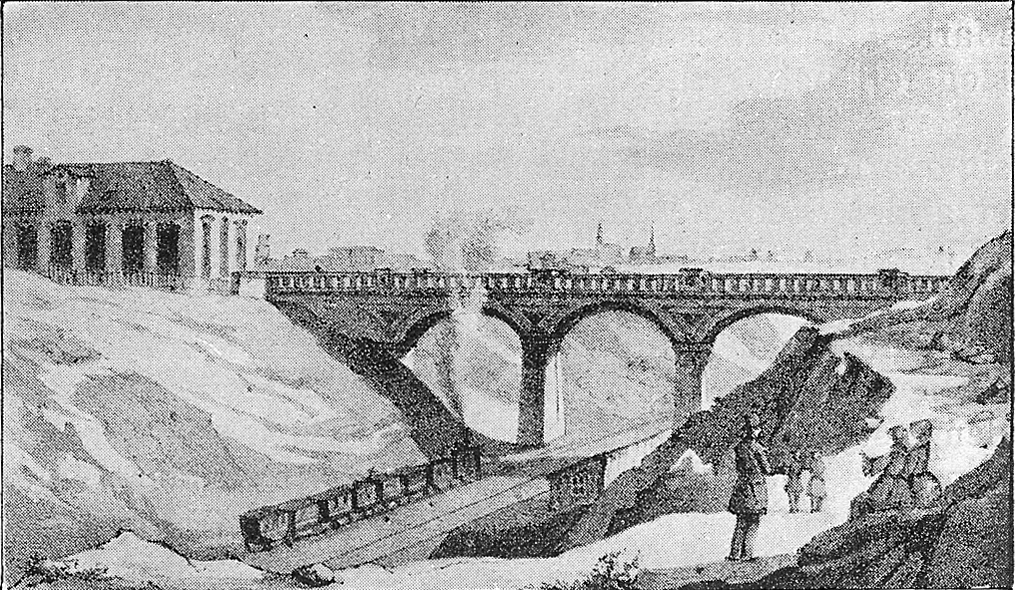 Industrial railways, , included the following railways and gauges:
1,200 mm
Export test tracks (Frichs in Aarhus). The best-known case of "test tracks" abroad is at the Frichs factory. When they had to deliver large diesel locomotives to Siam (now Thailand) in the 1930s, they faced a problem: Thailand used meter gauge (1,000 mm), while the Danish rails were 1,435 mm. The solution: Frichs built a special test track of about 300 meters at the factory in Aarhus. The technique: A "third rail" was inserted into the existing track, so that the Thai locomotives could be run directly on the factory premises before they were sent off.
1,106 mm
1,106 mm – The "wide" Bornholm standard. Before settling on metre gauge (1,000 mm) on Bornholm, there were discussions about using a gauge based on 3.5 British feet (1,067 mm) or the local variant of approximately 1,106 mm (equivalent to 3.5 Danish feet). Some of the earliest construction tracks at the quarries on Bornholm used these strange measurements before they were standardized. 1,106 mm – The rare coastal width. This measurement is found in the records of the early piers at Esbjerg. History: They experimented with using Swedish forest railway rails (which were 1,091 mm) but laid them according to local measurements, which ended up at 1,106 mm. It was used for the cranes that moved the very first granite blocks to the harbor.
1,100 mm
1,100 mm – The "shadow standard" of trams. During the transition from horse-drawn trams to electric trams in Copenhagen (around the 1890s), there were serious considerations about using 1,100 mm (as was used in Kiel and Braunschweig). Technical drawings and a few test rails were prepared in this gauge before it was decided to standardize everything to 1,435 mm in order to be able to share tracks with the right trains in case of emergency. 1,100 mm – The forgotten tram gauge. In Denmark we used either standard gauge or meter gauge for trams. But in cities like Kiel (just south of the border) they used 1,100 mm. When South Jutland was German (until 1920), they looked at these solutions for the southern cities. It never became a great success in Denmark, but the plans can be found in the old archives. 1,100 mm – "The Metric Dream". Before the metric system was completely standardized to 1,000 mm, there were proposals at the end of the 19th century to build the Danish local railways (e.g. on Bornholm) with exactly 1,100 mm. Short test sections were laid near harbor areas to test the stability. However, they ended up choosing 1,000 mm (meter gauge), but the 1,100 mm appears in the early engineering reports as a real, tested option.
- Økjær Mose: Here, traces of early locomotives have been found that ran on a track gauge of 1,100 mm.
1,099 mm
1,099 mm – The "Swedish" ferry gauge. This measurement was observed at the old ferry berths in Helsingør. When Swedish freight wagons with a 1,067 mm gauge (cut track) had to be transferred, ferry flaps with an extreme extension of 1,099 mm were used in some places to ensure that the wagons did not derail if the ferry tilted slightly in the water during loading. This gave the wheels maximum freedom to find their place.
1,091 mm
A "homemade" Danish gauge. This is one of the strangest. It was used on the original Haderslev Amts Bane (later part of the South Jutland County Railways). It was equivalent to 3.5 Danish feet. It was a very impractical gauge because you couldn't buy trains directly from the big factories abroad (which typically built to 1,000 mm). They later ended up rebuilding the entire line to metre gauge (1,000 mm), so it would fit better with German rolling stock. 3.5 Danish feet or 3.6 Danish feet.
1,067 mm
1,067 mm – Standard gauge (3.5 feet). This is the national standard in countries such as South Africa and Japan, but Denmark has had it! Export test track: The Scandia factory in Randers and Frichs in Aarhus built trains for the whole world. To test locomotives for e.g. Thailand or New Zealand, 1,067 mm test track was laid on the factory grounds. Military track: During World War II, the German occupation forces brought equipment from all over Europe to Denmark. There are indications that equipment of this width has been used temporarily for fortifications. 1,067 mm – "Kapsporet" (The English Colony Gauge). Although it sounds strange, this gauge – which is standard in South Africa and Japan – has been used in Denmark. Usage: It was used as a test track at large Danish export companies such as Frichs in Aarhus. When they built locomotives for export to, for example, Thailand or Africa, they built short sections of 1,067 mm inside the factory area to be able to test the machines before they were shipped.
1,058 mm
The "tight" cut-track variant. Although 1,067 mm (3.5 feet) was the British standard used in some places, archive tracks laid with 1,058 mm have been found at the old industrial ports in Odense. The reason: They had bought used equipment from Norway (where cut-track was widespread), but the Danish rail profiles were thicker than the Norwegian ones. To ensure that the carriages did not "swim" too much on the track, the rails were moved 9 mm closer together.
1,055 mm
1,055 mm – The "wide" meter gauge test, In Randers, the Scandia train factory experimented with a 1,055 mm gauge for internal transport wagons in the late 19th century. It was a hybrid between meter gauge and the old British "cap gauge" standard (1,067 mm), which they used to move heavy boiler parts around the factory grounds.
1,050 mm
1,050 mm – A rare factory standard. At some large machine factories (e.g. in Randers and Holeby), the archives have seen track gauges of 1,050 mm for internal transport vehicles that had to move heavy engine parts. This was a measurement that was right in the middle between meter gauge and the wider county railways.
1,040 mm
1,040 mm – The "crooked" meter gauge variant. In some of the earliest gasworks in Copenhagen (e.g. Østre Gasværk) internal tracks of 1,040 mm were used. The reason: It was a mixture of the Danish foot and a desire to have a little more air between the wheels than on a standard meter gauge railway, so that the coal wagons would not tip over when they were tipped.
1,035 mm
1,035 mm – The "wide" metre gauge variant. In the late 19th century, before it was fully agreed that metre gauge should be exactly 1,000 mm, some factory tracks (including smaller sugar factories) experimented with 1,035 mm. This corresponded to a specific fraction of the old German "Prussian foot", and it was believed that this provided better space for the steam boiler between the wheels.
1,030 mm
- Bornholm railways with a 1,030 mm harbor line.
- Danish Sulfuric Acid & Superphosphate Factory, The Danish Sulfuric Acid & Superphosphate Factory and the Danish Fertilizer Company, Superfos, Kastrup 1030 (3 feet 4’35⁄64 in), Amagerbanenda was also used here at the Danish Sulfuric Acid & Superphosphate Factory, The Danish Sulfuric Acid & Superphosphate Factory and the Danish Fertilizer Company, Superfos, Kastrup.
1,029 mm
1,029 mm – The "Danish foot" in narrow gauge. Before the metric system was introduced in 1907, the Danish foot (313.85 mm) was used. 3 1/4 feet: This corresponds to approximately 1,020 mm. At some of the earliest industrial plants (e.g. at the old gasworks in Copenhagen), the tracks were laid according to Danish carpenter's measurements, which gave unique widths that did not match anything else in the world.
1,020 mm
The "Help Track" in the Copenhagen Freeport. During the enormous expansion of the Copenhagen Freeport (around 1890), the contractors used a series of temporary tracks. While most were 600 mm or 900 mm, archive drawings of a 1,020 mm track have been found. The reason: This corresponded to exactly 3.25 Danish feet. It was used for the heaviest tipper trucks that were hauling away soil, as it was believed that the extra centimeters provided the necessary stability in the soft, excavated mud.
1,016 mm
1,016 mm – British 40-inch gauge. This is a very rare gauge, but it has been seen in connection with British construction equipment used during the construction of the first major Danish railways in the 1850s (e.g. on Zealand). British engineers brought their own small "auxiliary tracks" with them, and they sometimes used their own inch gauges instead of the continental standards.
1000 mm
About of gauge lines were constructed by ten companies, three on the island of Bornholm, the rest in the peninsula of Jutland. Among these railway lines were the Skagen Line (converted to standard gauge in 1924), Amtsbanerne på Als, Apenrader Kreisbahn, Haderslebener Kreisbahn, Horsens-Tørring, Horsens-Bryrup and Kolding-Egtved and also the Århus Tramways (Århus Sporveje) and Skjoldenæsholm Tram Museum, and Ringsted which had mixed-gauge and tracks.
1,000 mm (Metre Gauge) Variations: Beyond branch lines, HOFOR (Greater Copenhagen Utility) used metre-gauge tracks for heavy utility transport in Copenhagen, Christianshavn, and Frederiksberg. 1,000 mm (Metre Gauge) used by Skjoldenæsholm Tram Museum at Ringsted, Mixed-Gauge Tracks: Some locations, such as Ringsted, historically utilized mixed-gauge layouts where 1,000 mm and 1,435 mm tracks shared a rail to allow different types of trains to use the same corridor. 1,000 mm (Meter gauge) – Mast cranes. During the actual electrification (installation of overhead lines), temporary meter gauge rails were used in some places. Application: The large machines that had to erect the heavy overhead line masts made of concrete and steel often ran on their own wide auxiliary tracks to avoid tipping over during the heavy lifts while working in the soft terrain along the track. 1,000 mm (Metre Gauge): Formerly common on branch lines such as the Bornholm Railways (until 1968) and the original Skagen Line. 1,100 mm: Extremely rare, but noted in some archival documents for specialized heavy-load internal transport in shipyards like Burmeister & Wain (B&W) in Copenhagen. Construction & Temporary Gauges, During the massive infrastructure projects of the early 20th century (like the building of the Great Belt or large harbors), temporary "Decauville" tracks were laid. While 600 mm was the norm, some contractors brought in equipment from abroad. The 1,100 mm "Foreign" Guest, During the construction of major Danish ports and some coastal defenses, German contractors occasionally brought equipment from their domestic coal mines. This introduced the 1,100 mm gauge, which is almost non-existent elsewhere in Denmark's railway history.
The Bornholm railways were all gauge. It was not relevant to sail goods wagons to and from Bornholm, and there was the advantage that you could take over equipment from other narrow-gauge railways that were converted to standard gauge, e.g. The Skagen railway in 1925. When the last county railways in Southern Jutland were closed down in 1939, the Bornholm railways were the only ones remaining in Denmark with narrow gauge.
- Rønne-Nexø Railway (RNJ)
- Nexøbanen Rønne H-Nexø (1900–1968), length
- Aakirkeby-Almindingen (1901–1952), length
- Rønne-Allinge Railway (RAJ)
- Allingebanen Rønne Nord-Allinge-Sandvig (1913–1953), length including the Allinge Harbor Lines
- Alminding-Gudhjem Railway (AGJ)
- Gudhjembanen Almindingen-Gudhjem (1916–1952), length
The Railway Act of 1918 allowed the construction of two railways on Bornholm, neither of which were built: Nexø-Østermarie and Gudhjem-Rø. Together with the Gudhjembanen and Allingebanen, these lines would have provided a continuous railway along Bornholm's east and north-east coast between Nexø and Sandvig.
Construction of the Nexøbanen began in 1899 under the direction of engineer Joachim Fagerlund, who was the line's operations manager until 1929. In the 1930s, the three companies together transported 100,000 passengers annually. But competition from cars led to the railways' results getting worse. The Nexøbanen survived after the other two lines were closed at the beginning of the 1950s, but by the mid-1960s the railbus equipment was wearing out. In 1965, Helge Vejrup replaced the track's long-time director C. Milner. Vejrup was on leave from DSB and took over the management of DSB's scheduled bus operation on Bornholm in 1968. At a general meeting in February 1968, it was decided that rail operation should cease that year. The last ordinary train on the last Bornholm railway ran from Rønne to Nexø on 28 September 1968.
DBJ for shunting between Nexø station and Nexø Gasworks .
One diesel locomotive from DBJ on Stormosebanen (SMJ). . The locomotive convened from to .
- Stormosebanen, (Upper Smørum)-Smørumnedre, Smørum, Egedal Municipality
The Voldbanen military railway at Vestvolden, south-west of Copenhagen used , , and standard gauges. Vestvolden is part of Copenhagen's fortifications and the railway runs from Lyngby (Kongens Lyngby) to Køge and connected to the Frederikssund railway. A gunpowder factory in Frederiksværk supplied gunpowder for this military facility and for other military facilities in Denmark.
The Voldbanen closed down, but a small section of the railway has been reconstructed.
Danish Sulfuric Acid and Superphosphate Factory, Fredericia
990 mm
The "tight" meter gauge test. In the earliest experiments with electric tracks in Copenhagen (e.g. at the major exhibitions in the late 19th century), 990 mm was occasionally used. It was a technical measurement error that became a standard for the temporary exhibition tracks, because German rails were used with British fasteners that "tightened" the track by 10 mm.
940 mm
900 mm & 940 mm: These wider narrow gauges were used for heavy industrial transport, including moving raw materials like coal and clay.
- A/S Frederiksholm Brickworks, Copenhagen, (3 feet 1 1/64 in).
920 mm
Piers and heavy coastal construction. When building the largest piers and piers in West Jutland (e.g. at Hvide Sande), 920 mm has in some cases been used for the massive special wagons that carried the largest concrete blocks. This was a reinforced version of the more common 900 mm track, designed to withstand the enormous vibrations from the sea waves while the cranes were working
915 mm
The "overseas" test gauge The Frichs factory in Aarhus and Scandia in Randers built trains for export to the whole world. 3-foot standard: Many British colonies used exactly 3 feet (914.4 mm, often rounded to 915 mm). To test locomotives for, for example, British territories in Africa or the Caribbean, the factories had short test lines with this exact gauge within their own territory.
914 mm
914 mm – The "English" 3-foot gauge This corresponds to exactly 3 English feet. Where: It was used by contractors working on the early Danish railways (e.g. the Zealand Railway Company) if they had purchased used locomotives and carriages directly from England or Ireland. It was a temporary track that was removed as soon as the railway was completed.
902 mm
The precision measurement for coastal protection. At the large coastal defence works in West Jutland (where they built piers of heavy stones), they often used equipment that was originally built to 900 mm. But due to wear and tear and the extreme conditions (salt water and sand), the rails were laid in some places to exactly 902 mm to give the wheels extra clearance so that the trains did not derail when the surface gave a little in the soft sand.
900 mm
- Military railways 900mm: Was used on certain large construction projects, for example when building the large piers on the West Coast (such as in Hanstholm). 900 mm (Pier and harbour construction). When building the large piers on the west coast of Jutland, such as in Hanstholm or near Esbjerg, 900 mm tracks were used for the heavy block wagons that carried out the massive concrete and stone blocks. This is a stronger narrow gauge type that could carry the weight of the coastal protection material. The secret military railways (600 mm and 900 mm). During the wars and in the construction of fortresses (such as the Copenhagen Fortifications), narrow gauge was used to move heavy cannons and ammunition. Cannon railways: At Stevnsfortet and Langelandsfortet, narrow gauge was used right up until the Cold War to move shells inside the bunkers. Here, the space was so tight that the smallest gauges were used. Peat railways in the Danish bogs (600 mm). During World War I and II, Denmark lacked coal, so we dug peat in the bogs (e.g. Lille Vildmose). Here, hundreds of kilometers of 600 mm tracks were laid directly on top of the soft bog bed. The rails were mounted on steel sleepers, so that the track could be moved quickly when an area was cleared. This is where the small "peat locomotives" became famous. 900 mm – "Fortress Track" (Ammunition Track). When the rampart was finished, the military built a more permanent system, the so-called Fortification Track, which ran on 900 mm. Function: This track connected the various batteries and forts. It was used to transport the heavy shells and cannon barrels quickly to the artillery. It was a "military standard" that had been adopted from the large French and German fortifications, as it was considered to provide the perfect balance between mobility in the terrain and the ability to carry extremely heavy artillery. 900 mm – The lignite giants.In the largest deposits in Søby and Fasterholt, the very heavy German excavators were used for a period. Application: These machines ran on 900 mm tracks. This is a "powerful" narrow gauge type, which was otherwise only seen in the enormous German open pit mines. In Denmark, this was the absolute upper limit for what was called "contractor tracks", before jumping all the way up to meter gauge (1,000 mm). 900 mm & 940 mm: These wider narrow gauges were used for heavy industrial transport, including moving raw materials like coal and clay. 900 mm: Used by German contractors for heavy earthmoving during harbor expansions and dike construction on the West Coast of Jutland. Construction & Temporary Gauges, During the massive infrastructure projects of the early 20th century (like the building of the Great Belt or large harbors), temporary "Decauville" tracks were laid. While 600 mm was the norm, some contractors brought in equipment from abroad.
- Great Belt Tunnel, used to transport the tunnel tubes during the construction of the Great Belt Tunnel. This narrow gauge was also used for major construction works. MT locomotives (MT 45-01 / MT 45-44) and (MT 35-01 / MT 35-08).
- The Danish Steel Rolling Mill
- Petri & Haugsted, Copenhagen. Heusinger control.
- Coal mining on Bornholm for Alex I. Hansen.
- Finsensvej, Frederiksberg for Nielsen & Høst and Stürup & Prosch Jensen
- Mixed / gauge
- Klagshamns Cement factory no. 3 and one train converted from to .
- Faxe Limeworks, Faxe, Faxe Ladeplads (Fakse Ladeplads) and (Sølyst Brickworks, Nivå)
- Cement factory Denmark, built in 1905. The cement factory was located at the current Eternit factory. Trace gauge 900 mm.
- The Danish Steel Rolling Mill
891 mm
891 mm (3 Swedish feet): Although it is the Swedish standard for narrow gauge, there have been a few tracks in Denmark (especially in connection with ports or construction work) that used this measure if the equipment was purchased second-hand from Sweden.
850 mm
A line with this gauge existed at the Fuglsø moor until the late 1960s. The rare Jutland marl gauge. During the large land reclamation projects in Jutland, where marl (fertilizer) was transported to the fields, 850 mm was used in some places. It was a special "strong" narrow gauge type that could carry the heavy marl wagons better than the flimsy 600 mm tracks, but which was still cheaper to lay than the real railway tracks. Fuglsø Peat Moor Railway (850 mm), In the peat moors of Jutland, specialized local gauges were often created by adapting whatever materials were available. 850 mm (2 ft 9½ in): A line with this gauge existed at the Fuglsø moor until the late 1960s. It was used to transport peat before the moor was exhausted and the line was removed. Fuglsø Peat Moor "Orphan" Gauge (850 mm), A specialized line at the Fuglsø peat moor in Jutland operated on an 850 mm gauge. Industrial Narrow Gauge Railways, Industrial Narrow Gauge Railways, History: This line was used for transporting peat from the fields to the processing plant until the moors were exhausted. Removal: The track was completely removed in the late 1960s, making it a "ghost gauge" rarely found on modern lists.
840 mm
The "wide" marl variant. During the reclamation in West Jutland, where marl tracks were used to transport calcareous soil, some contractors used 840 mm. This gauge was chosen because surplus equipment from German mines was used, which ran on this specific width, which allowed very heavy but short wagons.
830 mm
The "wide" industry standard. This gauge was used on some of the heaviest brickyard lines in Southern Jutland (e.g. at Egernsund). They were running very large clay wagons, and 600 mm was simply too flimsy for the heavy, wet clay. A German standard of 830 mm was therefore chosen, which provided more stability on the soft embankments.
825 mm
825 mm – The "heavy" contractor gauge. This gauge was used for some of the major earthworks in the late 19th century, especially for the construction of the Copenhagen Frihavnen. Heavy equipment had been purchased from German manufacturers who experimented with making narrow gauge slightly wider in order to be able to carry heavier loads of excavated harbor bottom without tipping over. It disappeared again as soon as the harbor was completed.
820 mm
820 mm = 2ft 8.28in. 820 mm – The "strong" lime width. In addition to the well-known dimensions in Faxe, smaller lime pits and works have used 820 mm for internal conveyor belts on rails. Function: This dimension was used for very short, steep sections, where wagons were pulled up with winches. The extra width compared to 800 mm gave a marginally better weight distribution when the wagons were hanging on a steep slope.
- Frederiksholms Tiglværker, Copenhagen.
810 mm
The Contractor's Track at the Copenhagen Embankment. During the major earthworks to demolish the Copenhagen embankment and build the parks in the late 19th century, the use of 810 mm has been recorded. It was a "[...] gauge" that arose when worn-out British 2-foot rails (610 mm) were used and rebuilt with longer spacers to be able to move heavier earth movers. It disappeared as soon as the park facilities were completed.
- Lime transports for New Lime Kiln and Clay transports for Bloustrød Brickworks.
- Blovstrød brickworks (New Kalkbrænderi) for Petersen & Frimodt. 1911–1926: Blovstrød brickworks for Frederiksholm brickworks- & lime works.
800 mm
800 mm: Used by the private Hydrema railway. 800 mm – The "German" industrial gauge. Although 785 mm was the Faxe standard, there are examples of exactly 800 mm on smaller industrial plants and brickworks that bought their equipment from specific factories in the Ruhr district of Germany. It was rare in Denmark, but has existed on closed factory areas where there was no need to connect to other lines. 800 mm: Used by several private railways and industrial lines in the early 20th century.
790 mm
The "worn" rampart width. In the military records from the maintenance of the West Rampart tracks (Vestvolden), the measurement is 790 mm. The detail: It was discovered that the heavy earthmoving vehicles were dragging the 785 mm wide tracks crooked. Instead of straightening them all the time, it was decided in some places to leave them at 790 mm, as long as the running wheelsets could still carry them. This became a de facto standard for the most heavily loaded bends on the rampart.
785 mm
- Nørresundby Portland cement factory. In 1906, ØK built a portland cement factory in Nørresundby and laid a gauge railway between the factory and the harbour. Fuel and gypsum were carried to the factory, and cement was sent to the harbour. The factory closed in 1932. A branch to a nearby chalk pit crossed Gl. Kongevej and Hjørringvej in tunnels. The factory was taken over by Aalborg Portland-Cement-Factory and closed in 1935. The chalk pit and part of the track were taken over by Nørresundby chalk work in 1935 and chalk was dug for several more years. The chalk works closed after 1954.
- The sulfuric acid factory in Nørresundby: the factory was built by ØK 1913–14, but taken over by Danish Sulfuric acid before opening. Approx. 500 m lane for transporting potash from Nørresundby harbor to the factory. They had two steam locomotives and three motor tractors at their disposal. The gauge of the factory tracks was 785 mm, the same gauge as the cement factory. A large number of tipper trucks ran between the factory and the port. The harbor line was shared with the cement factory. During all the years at the factory, these small machines were used. They were built by Arnold Jung in 1914 and lasted until steam was phased out in 1975 at the factory. The two machines are preserved at Hedeland veteran railway. The factory also had standard-gauge industrial tracks as a side track from the Sæby Railway.
- Lindholm brickworks, Brickworks on Lufthavnsvej. Approx. 500 m track between factory and clay pit.
- Lundergaarde, Track from Gug lime factory, which was north of Sdr. Trandersvej down to Hadsundbanen. There was an automatic loading system so that lime could be poured directly into the railway carriages. It seems that the tipper line was closed around 1951, because at that time they sold approx. 2 km of rails and 1-2 engine locomotives. Remains of the impressive cargo facility can still be seen in the terrain. Today, no remains of the industrial railway between the chalk pit and the Hadsund Railway.
- Aalborg Harbor Railway and Aalborg-Hadsund Railway and Aalborg Private Railways .
- Danish Sulfuric Acid and Superphosphate Factory
- Aalborg Portland
- Hedehusene Skærvefabrik A/S
- Hoffmann & Sons. Heusinger control.
- Overground and lignite driving at Fiskbæk Briketfabrik)
- Allerød Brick Works /
782 mm
The "tight" Faxe variant. Although Faxe Limestone Quarry is famous for its 785 mm and 791 mm, there are technical records from the oldest parts of the quarry (around the 1860s) where the track was laid with exactly 782 mm. The reason: This corresponded to 2.5 Danish feet (313.85 mm x 2.5 = 784.6 mm), but the rails were pulled 2 mm closer together to counteract the enormous side pressure from the heavy lime wagons in the sharp bends at the bottom of the quarry.
780 mm
The precise German mining standard. Although Faxe Kridtgrav used 785 mm, smaller plants have been found at the Jutland brown coal fields that ran on 780 mm. This was often due to the import of finished "rail frames" (track pieces that had been welded together in advance) from German mining suppliers, who used 780 mm as their standard measurement.
- The Water Works Agency (VBV).
765 mm
765 mm: A unique gauge still found on the island of Fur at the Fur Museum. 765 mm: A highly specific gauge still preserved on the island of Fur at the Fur Museum, used for the local "moler" (diatomaceous earth) industry. 765 mm: As mentioned before, this remains unique to Fur and is one of the only places in the world where this exact gauge was utilized for industrial mining. 765 mm: Used at the Fur Bryghus (Fur Brewery) and Fur Museum on the island of Fur. Fur Island Brewery & Museum (765 mm), On the island of Fur, a very non-standard gauge of 765 mm was used. Location: Found at the Fur Bryghus (Fur Brewery) and the associated museum. Origin: This gauge is an outlier even among European narrow gauges, which typically favor 750 mm or 760 mm.
760 mm
760 mm – "Bosnian gauge" in Denmark. This is a very common standard in Eastern Europe and the former Austria-Hungary. In Denmark it is seen as contractor gauge. When used steam locomotives were purchased from Germany and Austria during the interwar period for large construction projects (such as dam construction or large road projects), this gauge was included. However, it only survived as long as the project lasted.
- Copenhagen's water supply, Ballerup
750 mm
750 mm (The "German" contractor standard). Although 700 mm and 785 mm were the most common in Denmark, 750 mm has been used for certain large construction projects. This was often due to renting or buying equipment directly from Germany, where 750 mm was a very common standard. They were used temporarily for earthmoving and typically disappeared again when the project was over. Contractor's Track (The Removable Tracks). When the large Danish railways were built in the 19th century, temporary tracks were laid to move soil away. 750 mm: This was a very common German standard (e.g. in Saxony) in which Danish contractors often purchased equipment. It is very similar to the 700 mm and 785 mm we have talked about, but the extra 5 centimeters meant that the equipment could not be run on the other tracks. 750 mm: Was used on parts of the military track systems at Vestvolden (Voldbanen) in Copenhagen, often in combination with other gauges such as braided track. 750 mm at Ringsted.
- Rømøbanen, Kongsmark – Lakolk (Rømø island). Horse powers, Horsecar 1899–1939. Rømø Tramway, which transported tourists across the island from 1899 to 1940. Rare Horse-Drawn Gauges
Before steam and diesel took over, several horse-drawn tramways used unique widths: 750 mm: Specifically used for the Rømø Tramway, which transported tourists across the island from 1899 to 1940. This is distinct from the 700 mm sugar beet standard. 750 mm: Historically used for horse-drawn trams on the island of Rømø (Kongsmark–Lakolk)
- Danish Sulfuric Acid and Superphosphate Factory, Nørresundby.
- The contractors Christian & M. C. Jørgensen, Ulstrup. Heusinger control.
- Rail transport from Skagen Nordstrand to construction of Skagen Havn for Gunnerson & Elzelingen.
- Knabstrup Brick Works
- Construction of the Storstrøm connection at Vordingborg for Carl Nielsen.
- The construction company Højgaard & Schultz, Copenhagen
740 mm
740 mm – The local sugar variant. Although most beet railways ran on 600 mm or 700 mm, there are examples of smaller, private beet railways on Lolland where 740 mm was used. This was often because they had bought used undercarriages from Austria-Hungary, where 760 mm was standard, but had "tightened" them a bit to make them fit local rail profiles. 740 mm – The "tight" track. Although 700 mm and 785 mm were the major standards, there is documentation of 740 mm on smaller, private branch lines on Lolland-Falster. The reason: It was an attempt to create a "universal gauge" where both 700 mm and 750 mm carriages could be used on the same track, if a little extra "sway" was accepted. It was never a success, as the trains often derailed, and the target quickly disappeared again.
725 mm
The "crooked" contractor's gauge. This gauge was seen in large dam and canal construction projects in the late 19th century. It was a hybrid gauge that arose when trying to run equipment from two different manufacturers (e.g. a German 700 mm machine on tracks that had become a bit too "loose" due to wear), or when the track was deliberately widened to make room for very large flanges on heavy tippers. 725 mm – The "wide" beet track variant: Found on a few smaller farm tracks on Lolland. It was a deliberate "mistake" where the rails were laid 25 mm wider than the normal 700 mm in sharp bends to prevent the long beet wagons from "biting" into the rails.
720 mm
The "German" clayware standard. This measurement is found at a few brickworks in Southern Jutland. History: After 1864 and until 1920, much of the industry in Southern Jutland was built according to German standards. While most Danish brickworks used 600 mm or 700 mm, some works used the less common German standard of 720 mm because they bought ready-made machinery and wagons from manufacturers in Holstein.
- Frederiksholms Tiglværker, Copenhagen (820 mm). 1919: Clay transport at Bloustrød Tile Works for various owners, 2 feet 4 11/32.
716 mm
716 mm – The "wide" British contractor legacy. During the major earthworks at Ballerup and Herlev in the 1940s, contractors used equipment that had been purchased second-hand from surplus stocks after World War I and II. History: Some of the British "War Department" rails were actually 2 feet 4 inches (711 mm), but due to wear and re-fitting on Danish sleepers, they were measured as 716 mm in the technical records. It was a unique hybrid that only existed in the years when the dams towards Ballerup were built.
715 mm
The "wide" tipper gauge. In certain Jutland brown coal deposits (e.g. in Søby) archive tracks laid with 715 mm have been found. The reason: The tippers were often bought second-hand from different countries. By laying the rails with 715 mm instead of 700 mm, it was possible to run both 700 mm and 710 mm wheelsets on the same track without them getting stuck when the wagons were heavily loaded with wet brown coal.
714 mm
The "Precise" British Heritage. This measurement is found on smaller marl railways in Central Jutland. Background: This corresponds to exactly 2 feet 4 inches (28 inches). While many British systems were 2 feet (610 mm), some specific suppliers of agricultural equipment used this strange width. A few Jutland farms bought these ready-made rail sets, which today only exist as rusty tracks in the ground.
710 mm
The "loose" sugar variant. Although 700 mm was the standard for the large beet railways on Lolland, there are examples of smaller, private branch railways laid with 710 mm. Many of these tracks were laid directly on the field roads without proper ballast. By laying the rails 1 cm wider than the wheels of the wagons, the trains were prevented from derailing when the track inevitably gave way a little in the soft autumn snow.
700 mm
.jpg "Sakskøbing Sugar Factory train") Sugar beet was often transported on narrow-gauge railways, from the field to the factory. In order to shorten the route, some of the sugar factories had built juice station where beets were pressed and the sap was taken to the factories in pipelines. The sugar factories in Stege and Nakskov had five juice stations, Assens Sugar Factory had four, and Maribo Sugar Factory had one. The first Danish sugar beet factory was Højbygaard Sugar Factory in Holeby on Lolland, which was founded in 1872. The factory's last beet harvest was in 1960, after which the buildings were converted into a paper factory. In 2007, the old sugar factory was named one of Denmark's 25 industrial monuments by the Cultural Heritage Agency.
Sugar beet was often transported on narrow-gauge railways, from the field to the factory. In order to shorten the route, some of the sugar factories had built juice station where beets were pressed and the sap was taken to the factories in pipelines. The sugar factories in Stege and Nakskov had five juice stations, Assens Sugar Factory had four, and Maribo Sugar Factory had one. The first Danish sugar beet factory was Højbygaard Sugar Factory in Holeby on Lolland, which was founded in 1872. The factory's last beet harvest was in 1960, after which the buildings were converted into a paper factory. In 2007, the old sugar factory was named one of Denmark's 25 industrial monuments by the Cultural Heritage Agency.
- The Danish Sugar Corporation used gauge railways to transport juice in purpose-built "juice stations" to its sugar factories. Around of sugar lines existed in 1941, all of which closed in the 1960s. A few locomotives survived at Bloustrød-banen, and one locomotive was on static display at Assens park until the mid-1990s. Several towns on the Danish islands had sugar factories. In total, there were nine beet sugar factories in Denmark.
- Assens Sugar Factory (1884–2006)
- Gørlev Sugar Factory (1912–2000)
- Højbygaard Sugar Factory (1873–1960)
- Maribo Sugar Factory (1897–1962)
- Nakskov Sugar Factory (1882– )
- Nykøbing sugar factory (1884– )
- Odense Sugar Factory (1873–1970)
- Sakskøbing Sugar Factory (1910–1991)
- Stege Sugar Factory (1884–1989)
- The Store Vildmose railway doesn't exist anymore, only a few materials and only one train remains for preservation on Hedeland veteran railway, (Hedelands Veteranjernbane). Store Vildmose and Lille Vildmose, now a nature reserve, part of Natura 2000 near Vildmosegaard. The railroad was dismantled in 2012, but a museum railway has been established at the Vildmosemuseet.
- Kinnerup mergelleje, Hjallerup and the surrounding area's Mergelselskab built this track with support from Hedeselskabet. The locomotive was supplied by Hedeselskabet and was a converted Ford car used before and after at other marl deposits. The line was built in 1930 and closed in 1936; it ran from Kinneruplejet up to Uggerhalne station, where the marl was loaded into railcars on the Vodskov – Østervraa railway.
- Tylstrup. Between 1917 and 1922 and 1940–48, the Aalborgense cement factories operated a gauge peat railway from Tylstrup station to Store Vildmose. Peat was loaded at Tylstrup station onto mainline railway wagons for shipment to gas and electricity plants in Aalborg-Nørresundby. Temporary tracks were laid on the bog, and were used as marl tracks after the end of the First World War. A branch ran to the engine house in Toughton, where there were workshop, repair and depot facilities. Inbound and outbound trains passed at Gammel Vrå. In the autumn of 1917, DSB gave permission to build an underpass under their tracks. In 1920 coal prices had fallen so much that the peat digging was no longer economical, and it stopped. During the Second World War, a number of small steam locomotives fitted with spark arrestors were used. Between 1 August 1940 to 31 December 1941, 4338 railway wagons were loaded with peat at the station, with wagons marshalled by horses. The tracks were lifted between 1949 and 1950.
- Assens sugar factory
- Sjelle Mergelselskab.
- Peat transport for the Andelstørveværket in Vejen Mose for manufacturer Svenning, Vejen
- Lignite transports for the United Lignite Beds in Snejbjerg
- Svendstrup Brickworks
- Stenkjær Brickworks & peat transport from Boest Mose to Nr. Snede Brickworks.
- Sdr Felding Brown coal lease for Brøchner-Larsen and Th. Andersen.
- Surface and lignite transports for Carl Jensen in Ahler Lignite for Fiskbæk Briketfabrik.
- Peat transport for Viggo Berg for Vorbasse Østermose Peat Factory.
- Marl transport from St. Fjestervang Mergelleje for Vorgod-Fjestervang Mergelselskab.
- Agent Chr. Petersen in Maribo to Roebaneselskabet Abed – Vilhelmshøj – Stokkemarke. Boiler pressure 12 atm. At one point named Ellen and Beet transport for the Abed – Vilhelmshøj – Stokkemarke beet company, Maribo.
- Peat driving for A/S Fugdal Peat Factory.
- Overground transport in Rindum Marl for West Jutland's Marl supply.
- Rødovre for the construction company Stürup & V. Prosch-Jensen.
- Peat transport at Ellingværket for Engesvang Peat factories for Ernst & Jensen.
- Ruds Vedby brick works
- The Danish Heating Society
690 mm
The "tight" beet track width. Although 700 mm was the standard for the large beet tracks, there are archives from smaller private beet track facilities on Lolland, where the track was laid with exactly 690 mm. By making the track 10 mm narrower, some engineers believed that the light wagons would run more stably and "wobble" less on the soft field embankments. However, this meant that they could not borrow equipment from the large sugar factories without changing the wheels.
682 mm
- Aalborg sulfuric acid factory Danish sulfuric - & Superphosphate factory A/S at the port of Aalborg. Production from 1930 to 195?, Locomotives from Pedershåb.
welded them for rail use, the gauge was dictated by the length of the axle rather than by international standards.
650 mm
650 mm: A very rare gauge used for specific, unnamed private industrial lines in Denmark. 650 mm – The rare brickworks variant. While 600 mm was standard, there are archives from smaller brickworks in Southern Jutland that ran at 650 mm. This often came from equipment purchased in northern Germany (Schleswig-Holstein), where individual local factories had their own standard to ensure that customers were forced to buy spare parts from them. Multi-gauge track (Combination gauges). "Loose" gauges (Contractor tracks). During large earthworks (e.g. the excavation of the Odense Canal or the Copenhagen Free Port), "flying tracks" were used: Track width at will: You often used what you had. This meant that on the same construction site you could find tracks of both 600 mm, 620 mm and 650 mm. Since the wagons were small and were pulled by horses or hand power, the few centimeters difference did not matter as long as the wagons stayed on their "own" rails. This is perhaps the most interesting. Denmark has had tracks that technically had multiple gauges at once by laying a third or fourth rail: 1,435 mm + 1,000 mm: Seen in port cities (such as Rønne and Helsingør), where both the national network (standard gauge) and the local narrow gauge (meter gauge) were running on the same sleepers. 1,435 mm + 600 mm: Used on large construction sites and at certain industrial plants, so that the small tippers and the large freight trains could use the same embankment.
640 mm
The Jutland "home gauges". In the Jutland bog farms and smaller brickworks, there were tracks with gauges of 630 mm and 640 mm. Why: This often happened when a local blacksmith made the wagons himself. If you used recycled axles from old horse-drawn carriages or trucks and welded them for rail use, the gauge was dictated by the length of the axle rather than by international standards.
630 mm
630 mm: A rare deviation used on some of the smaller pits on Mors, The Unique "Moler" Gauges on the islands of Mors and Fur, the "moler" (diatomaceous earth) industry created several isolated systems. While most were 600 mm or 785 mm, records show. 630 mm – The "wide" 600 mm track. When constructing the large lignite deposits in Søby, which supplied fuel to the Copenhagen power plants during and after the war, the tracks were often laid with a width of 630 mm. Function: The lignite was heavy and wet, and the soft surface often caused the tracks to shift. By laying the rails 3 cm wider than the standard 600 mm, the carriages were given "room" to move without getting stuck in the temporary tracks that lay directly in the mud. 630 mm and 640 mm – The Jutland "home gauges". In the Jutland bog farms and smaller brickworks, there were tracks with gauges of 630 mm and 640 mm. Why: This often happened when a local blacksmith made the wagons himself. If you used recycled axles from old horse-drawn carriages or trucks and welded them for rail use, the gauge was dictated by the length of the axle rather than by international standards.
600 mm
600 mm: Used for "field railways" (Decauville tracks) in peat bogs like Stenvad Mosebrug and for ammunition transport at the Hanstholm Fortress during WWII. 620 mm – A local variant. Although 600 mm and 610 mm were standard for industrial railways, there are examples of Jutland brickworks that ran on 620 mm. This was often due to locally manufactured wagons, where there had been a bit of "cheating" with the measurements, or where there was a deliberate desire for more clearance in the curves to avoid derailments with heavy clay wagons. Skewed gauges in amusement parks. 610 mm (2 feet): Although 600 mm is standard for industrial tracks, 610 mm is often found in amusement parks (e.g. formerly in Legoland or Djurs Sommerland) because their trains were ordered from American or British manufacturers (e.g. Chance Rides or Severn Lamb), who built to foot/inch measurements. 610 mm (2 ft): While 600 mm was the industrial standard, a slightly wider 610 mm gauge was used for the amusement park railway at Varde Sommerland.
- Hvorupgaard brickworks (Hvorupgaard teglværk). Built before 1908, on the west side of the DSB line between Nørresundby and Brønderslev. In 1925, a track was laid in a tunnel under the DSB to a clay pit east of the track. The plant closed in the 60s. 600 mm track gauge.
- Nr. Uttrup brickworks at Nørre Uttrup, Approx. track from clay pit east of the factory to brickworks. Track closed around 1969 due to the construction of a motorway between the factory and the clay pit. Replaced by bridge over motorway. 600 mm track gauge.
- Aalborg Municipality's renovation works, Aalborg Municipality. Dano incineration plant built in 1952 and closed in connection with the closure of the factory in the early 70s and construction of Reno Nord. The line ran between the renovation works and the current Østeraadal, via a bridge over the Østeraa. In the northern part of Østeraadalen, the forest is planted on incineration waste from the waste disposal factory and brought out via the narrow-gauge railway. Locomotives from Pedershåb. 600 mm track gauge.
- Ringsted brickworks (Ringsted teglværk). 600 mm track gauge.
- The Water Works Agency (Vandbygningsvæsenet) (VBV), Thyborøn.
- Moselauget, Moselundgård's bog (Moselundgårds mose) at Bølling lake
- Esbjerg Municipality's Renovation Facility
- Sigersted Brickworks (Sigersted Teglværk)
- Skrydstrup airport
- Danish Contractor Equipment
- Product dealer Løvgren, Tønder.
- Defense forces in Denmark.
- Christensen & Pretzmann.
- Peat transport for Filskov Peat factory.
- Peat transport for Peat factory Phønix.
- Rail transport from Skagen Nordstrand to construction of Skagen Havn for Gunnerson & Elzelingen.
- Valby Gas Works
- Holmegaard Glasworks A/S.
- Stenstrup Brickworks.
500 mm
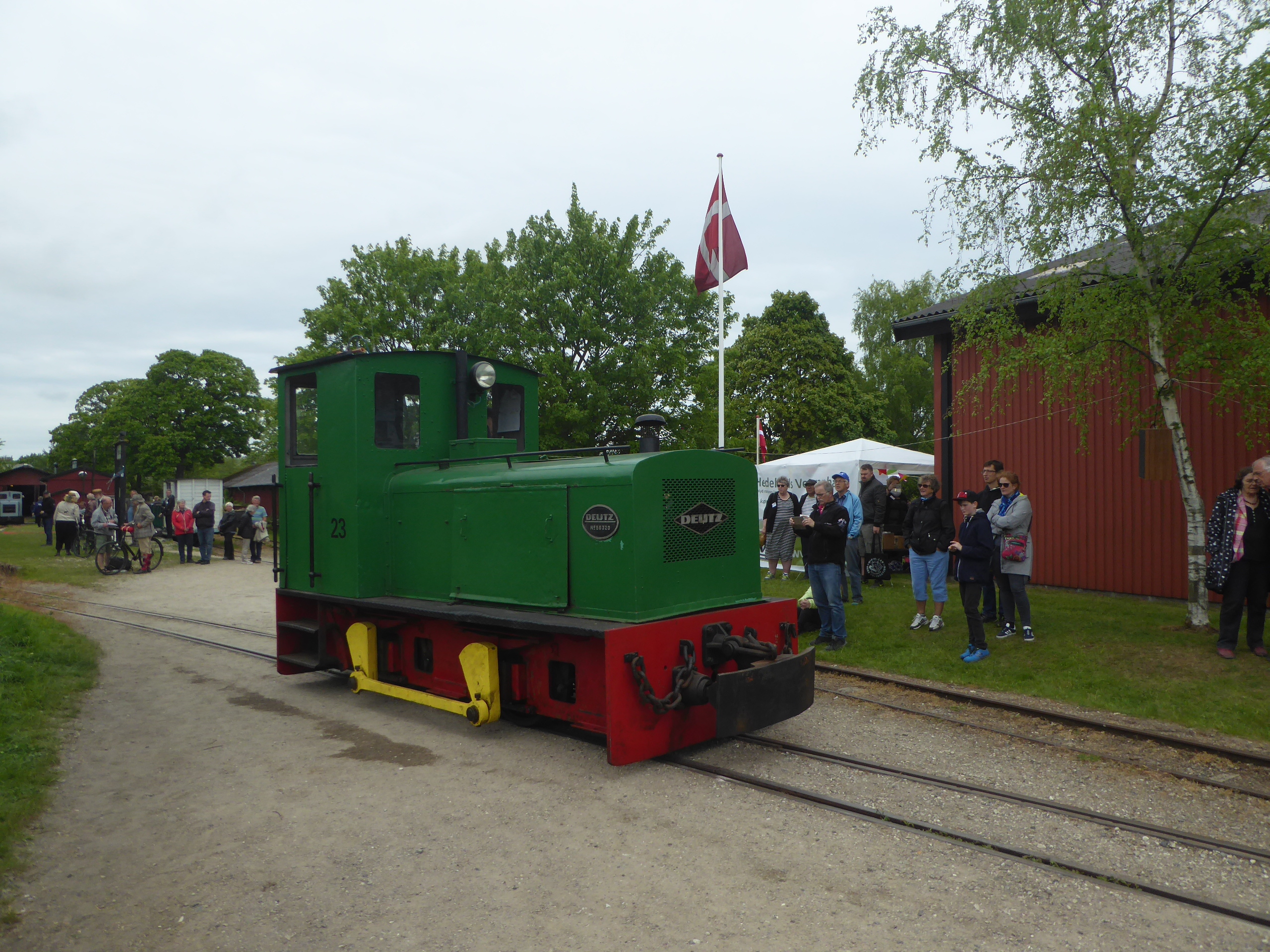
- Rørdal cement factory, Aalborg Portland – Cement – Factory A/S – Cement-factory in Rørdal The cement factory Rørdal, both and gauge have been used on this cement factory. Second narrowest used on Danish industrial tracks, i.a. at the cement factory Rørdal in Aalborg. Already from the opening in 1891, there were tracks on the factory premises, and they seem to have been tracks of 500 mm gauge. This gauge also existed in 1969. Originally 500 mm tracks with horses, from 1907 several electric lines to pits. From the 20s also 785 mm tracks, just as the track for the chalk pit was rebuilt to 785 mm with 500 V direct current. Until 1945, the track network grew, after which it fell to approx. 30 km in 1965 and approx. 20 km in 1970. The area was also traversed to an equally infiltrating degree by 785 mm gauge tracks. This track system once went all the way to the filling station in the east, but ended in 1970 at the sewage works approx. 800 m east of the factory itself. In the vicinity there were countless track cuts and other track curiosities. There were dual gauge tracks (785/500 and 785/1435 mm), but not all three gauges combined under one. During the Second World War, a more extensive 785 mm track network existed, as a larger track network was laid for the huge peat storage areas. The standard gauge harbor track to Rørdal airfield also branched off from the track in the Rørdal area and continued as a defense track towards the island-lake. :During the years 1907–29 Portland Cement A/S acquired at least 10 Krauss steam locomotives with gauge 785 mm. More have been used at the factory in Rørdal. All these machines were of the wheel arrangement and Electric locomotive in the chalk pit in the 1920s. In 1970, the gauge tracks were removed. The gauge tracks are preserved as a point-to-point track until the mid-70s. The rails for this come from the Sæbyrailway, whose stock of rails etc. was bought by Rørdal. It was a considerable track area the factory had in 1965, it was approx. 30 km and in August 1969 approx. 20 km. At the same time, 33 locomotives were ready for operation.
- Danish Cooperative cement factory, The factory was located on the site of the current Siemens quay in Nørresundby. Docks and a single silo can still be seen. DAC's harbor in Nørresundby 1931. Coal is unloaded at the quay on the right, an accumulator locomotive used on the 500 mm track. The barrels on the left are presumably cement barrels. 3 separate track systems in clay pit, chalk pit and factory with port. Graves and factory were connected by conveyor belts. DAC has not been associated with dump trucks for graves. There were dump trucks in the chalk pit and the first clay pit, but not to the factory. Air bridge for chalk and a channel with natural run for clay. Later replaced by ribbons for chalk and trucks for clay. 3 separate track systems in clay pit, chalk pit and factory with port. The factory also had normal gauge sidings from Nørresundby station.
- Århus Stone- & Gravelcompany (Possibly for Øerhage stone bed)
400 mm and 310 mm
- Sugar factory, Sakskøbing. 310 mm ( in) This gauge was used at the sugar factory in Sakskøbing for internal transport and and , , and standard gauge has also been used at the sugar factory of the Danish Sugar Corporation.
O&K locomotive N° 11420 made in July 1927, 90 hp, 700 mm gauge, C1t, Sakskøbing Sukkerfabrik N° B2, preserved at Blovstrødbanen, Hilleröd, Denmark ex Dansk Jernbane-Klub, Maribo CRJ 111-17. Sakskøbing Sugar Factory train.
Faxe Jernbane, gauge unclear
The Faxe Railway , long, was built in 1864 for the transportation of limestone. 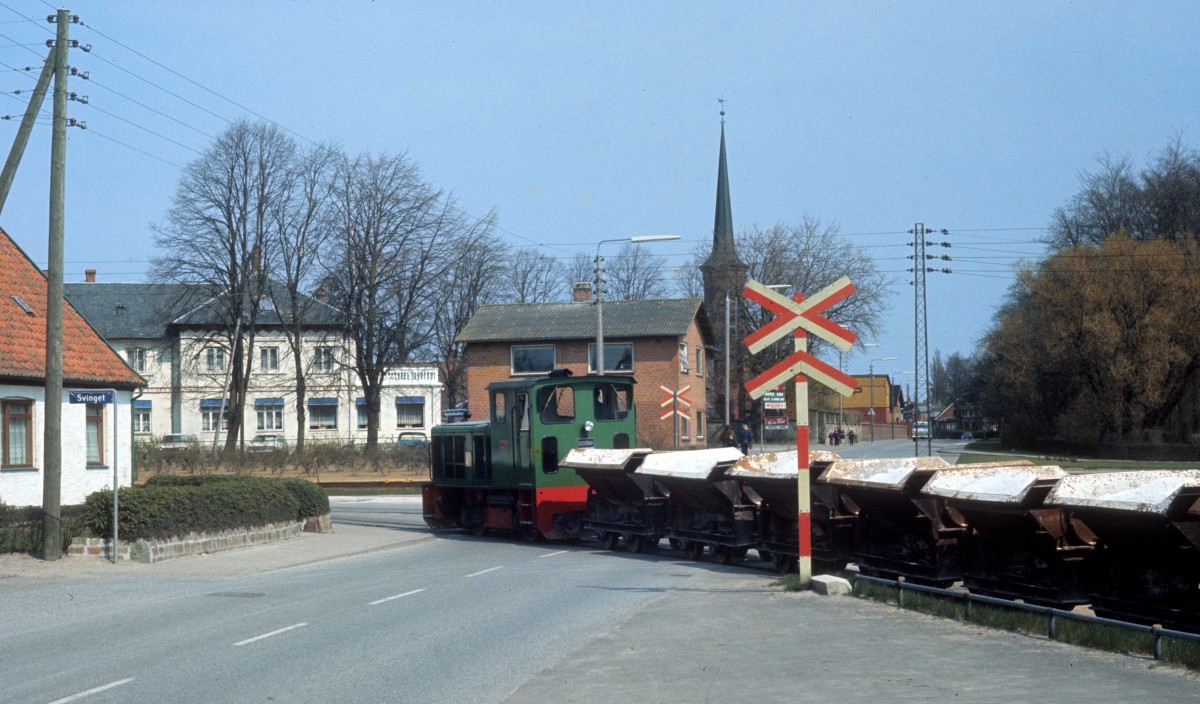
Mixed gauge: , , and , Dual gauge.
The limestone quarry at Faxe has been known since the Middle Ages. From olden times it was owned by the surrounding estates and their tenant farmers had to drive a certain number of wagonloads of limestone per year. year by horse-drawn carriage to the place of shipment. Later, the limestone quarry owners themselves took over this transport, but the difficult horse transport on bad roads made it difficult to meet the increasing demand for limestone. In 1863, Lieutenant C. F. Garde was therefore given permission, at his own expense, to construct and operate a foot (785 mm) wide rail road for the transport of limestone from the quarry to the loading yard at the beach – a stretch of 6.5 kilometres. The track was ready the following year and functioned in such a way that, due to the difference in height, the loaded wagons themselves rolled down to the loading area, after which the empty wagons were pulled back to the quarry by horses that had been driven down to the loading area in special horse (railway) wagons . There is confusion about the track gauge used as various sources mention a track gauge of , but some Krauss steam locomotives delivered in 1927 had the gauge of . Two Schöma locomotives delivered in 1970 had the gauge of and standard gauge , Dual gauge. The railway is now closed.
785 mm / 791 mm: Although 785 mm was the standard in Faxe Kalkbrud (equivalent to 2.5 Prussian feet), there are historical sources that mention 791 mm. However, there is agreement among experts that 785 mm was the correct technical specification. 785 mm / 791 mm: Specifically used at the Faxe Limestone Quarry. While 785 mm was the technical standard, some later locomotives were built to a 791 mm gauge, leading to dual-gauge tracks. 791 mm: An unusual variation of the 785 mm gauge used by the Faxe Railway in its limestone quarry. The 791 mm "Faxe Oddity", While the Faxe Limestone Quarry is famous for its 785 mm gauge, they ordered a specific series of locomotives from Germany that were delivered as 791 mm. Instead of regauging the locomotives, they simply widened the tracks in certain sections, creating a short-lived, unique technical anomaly in the quarry. The Faxe Limestone Railway (791 mm), The Faxe Railway (Faxe Jernbane) is famous among rail enthusiasts for its unique gauge. 791 mm (2 ft 7⅛ in): This specific measurement is extremely rare and was used to transport limestone from the Faxe limestone quarry to the harbor. Note: Some sources round this to 785 mm or 800 mm, but the precise 791 mm is the authentic historical specification for this line. 791 mm (2 ft 7⅛ in): A very specific gauge used by the Faxe Jernbane (Faxe Railway) for transporting limestone from the quarry to the harbor. The Faxe "Mythical" Gauge (791 mm) The Faxe Jernbane (Faxe Railway) is often cited in older literature as using a unique 791 mm gauge. The Debate: While some modern researchers claim this was actually a standard Prussian 785 mm gauge, archival documents and historical technical manuals for locomotives like the FJ. IV specifically list 791 mm. Significance: This specific number is almost never found outside of this single Danish limestone operation.
Freight trains
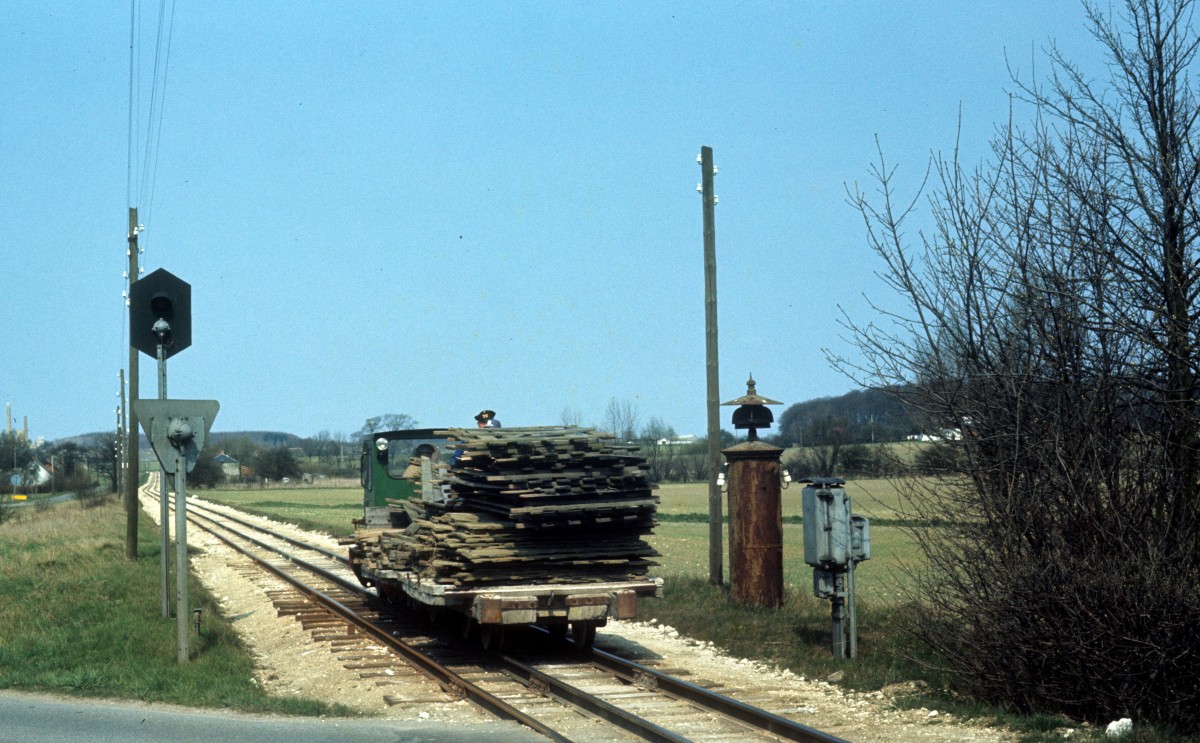
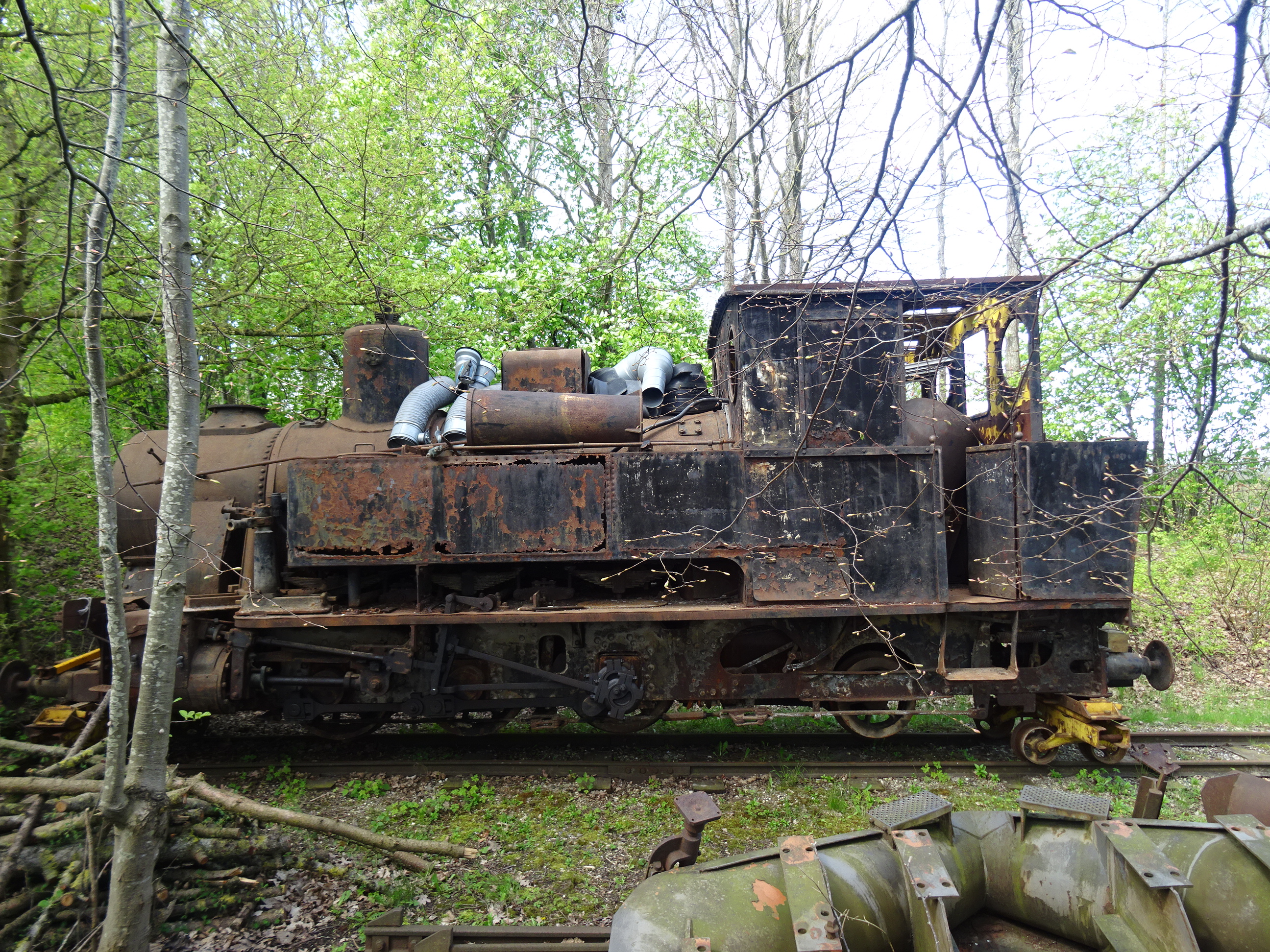
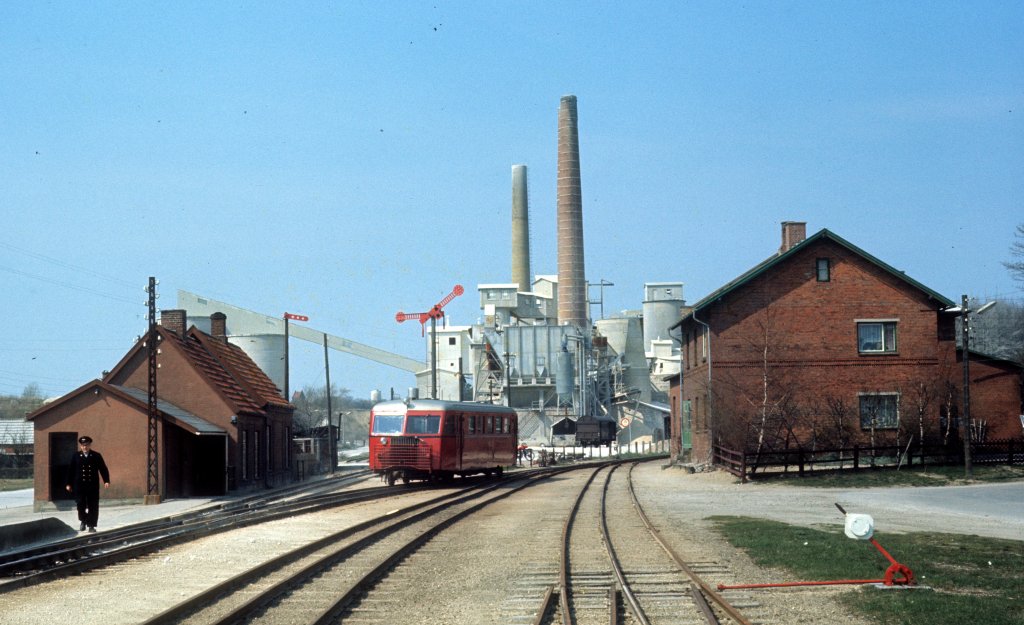
Steam locomotives
Nørrebro
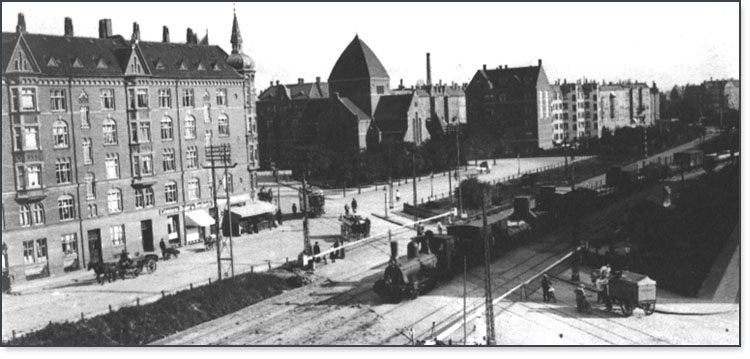
Skælskør
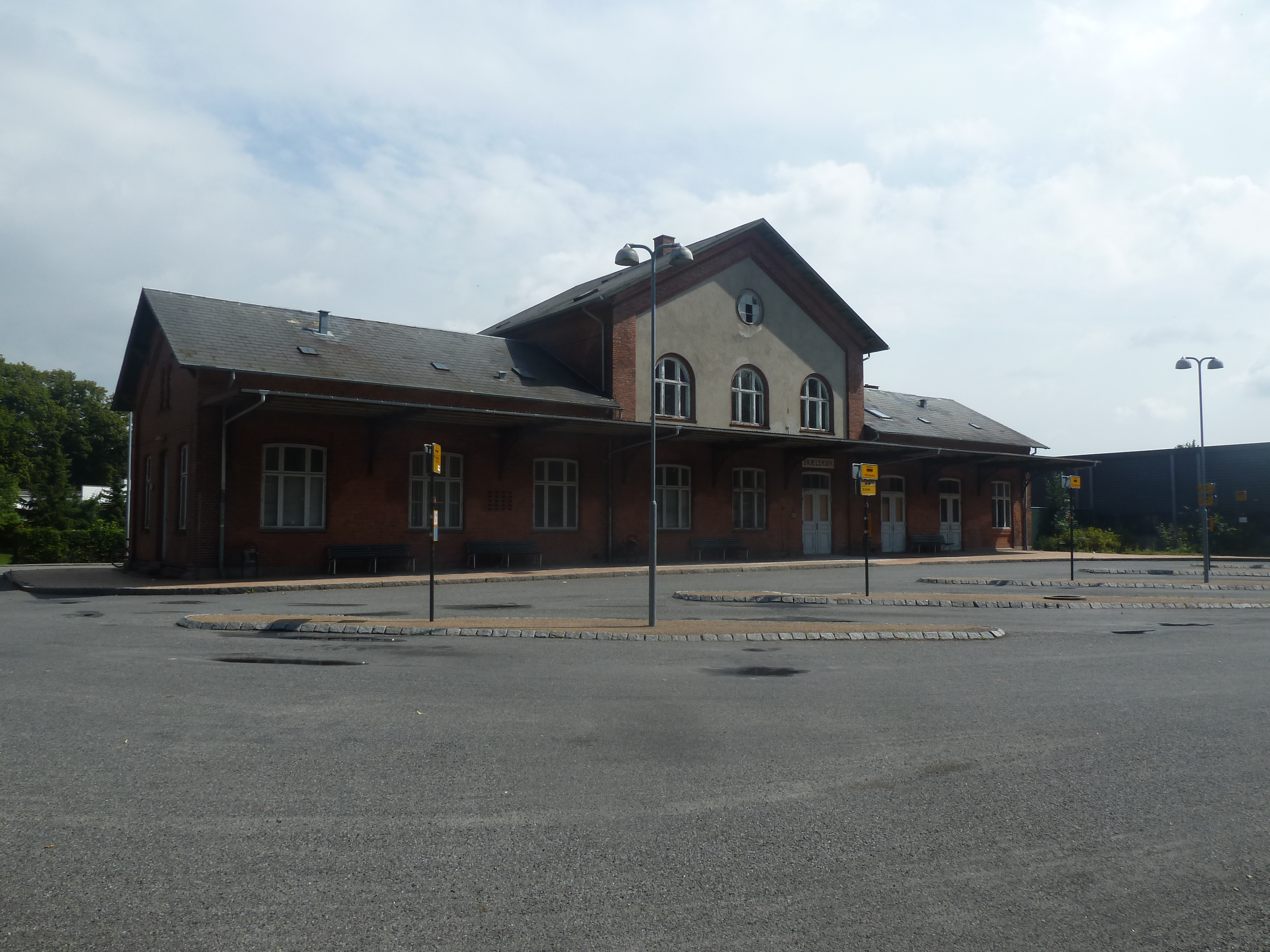 Skælskør Station in Denmark. The station was the endpoint of the Railway from Dalmose and was served by passenger trains 1892–1950. It was served by freight train until 1975 and after that by heritage trains and trams until 2011. The tracks was removed in 2011.
Southern Jutland
- Apenrader Kreisbahn; 86 km, closed (reunited with Denmark in 1920)
- Haderslebener Kreisbahn; 18,5 km, closed (reunited with Denmark in 1920).
- Kreisbahn auf Alsen (Danish: Amtsbanerne på Als); 19 km, converted to standard gauge in 1933 (reunited with Denmark in 1920).
Active industrial railways
Industrial railways: peat, fish, timber, coconut waste, plant waste, sphagnum, wood, plants, calcium, limestone, chalk, coal, lignite, stone coal, brown coal, clay, sand, gravel, stone and other industrial railways remain as well.
- Østerbygård Dambrug
- Fuglsø mose
- Pindstrup Mosebrug A/S in Pindstrup
- The former Boesdal Kalkbrud and Holtug Kridtbrud, Stevns Kridtbrud (Stevns Kalkbrud)
- Gelsbro Fiskeri.
- Hastrup Mørtel- & Singelsværk
- Hulkær Dambrug
- Hvilestedgård Dambrug
- Karlsgårde Dambrug
- Langelund Dambrug
- Møborg Dambrug
- Præstkær Fiskeri
- Uhre Dambrug
- Ådal Dambrug
- Vester Åstrup Dambrug
- Copenhagen Energy (Københavns Energi), Copenhagen
- Hofor, Copenhagen, Christianshavn and Frederiksberg, Dragør and Tårnby
- CTR Centralkommunernes Transmissionsselskab I/S, Frederiksberg
- Hydrema A/S, Støvring
- Ørbyhage Casting sand bed (Ørbyhage Støbesandsleje)
- Hastrup Mortar and Shingle Works (Hastrup Mørtel- og Singelsværk)
600 mm
- Gjógv incline railway, Gjógv gauge.
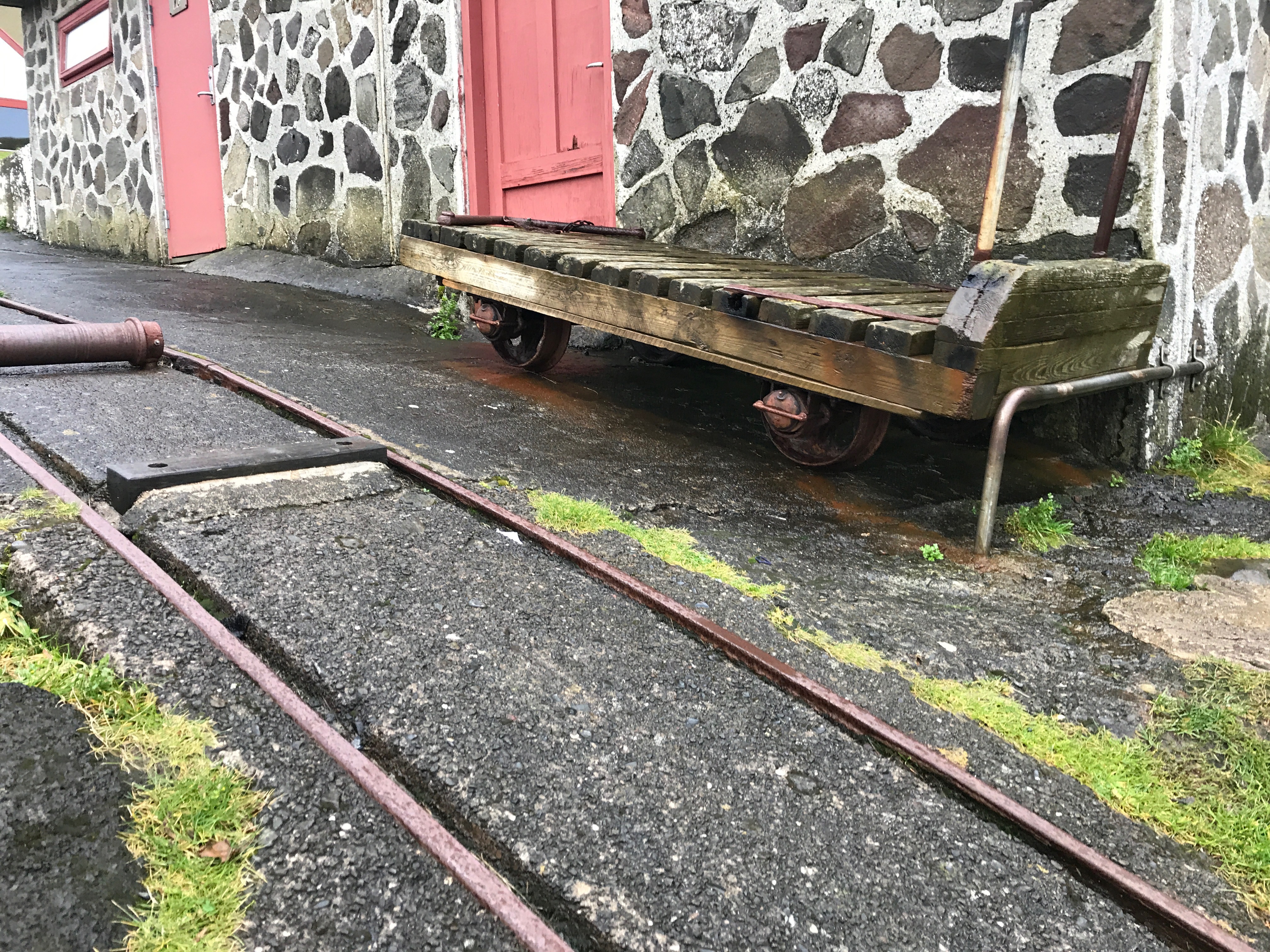
Amusement park railways
- Sommerland Sjælland, Nørre Asmindrup, Nykøbing Sjælland, Odsherred, Odsherred Municipality, and .
- Legoland Billund Resort, Billund, Billund Municipality.
- Djurs Sommerland, Nimtofte, Djursland, Syddjurs.
- Dyrehavsbakken, Klampenborg, Lyngby-Taarbæk Municipality.
- Tivoli Gardens, Copenhagen, Copenhagen Municipality.
- Tivoli Friheden, Aarhus, Aarhus Municipality.
- BonBon-Land, Holme-Olstrup, Næstved, Næstved Municipality
- Joboland, Svaneke, Bornholm, Bornholm Region Minicipality, Capital Region of Denmark
- Universe (Danish amusement park) Universe (formerly Danfoss Universe), Als (island), South Denmark Region, Sønderborg, Sønderborg Municipality
- Ree Park – America Expresses, Ree Park, Ebeltoft Safari, Ree Park – Ebeltoft Safari, Ebeltoft, Djursland, Syddjurs, 311 mm ( in).
- Fårup Railways, Fårup Summer Park (Fårup Sommerland), Fårup, Jammerbugt, and .
- Limpopoland Knuthenborg, Knuthenborg Safaripark, Knuthenborg Park, Bandholm
- Fyns Sommerland, Aarup
- Jesperhus, Nykøbing Mors
- Brændesgårdshaven, Svaneke
Former amusement parks:
- Alhambra (Frederiksberg) (1857–1869)
- Alhambra (Kolding) (1882–1955)
- Damhus Tivoli (1930's–2013/2016)
- Fun Park Fyn (Fyns Sommerland), Aarup (1980–2006/2016)
- Fyns Tivoli (1946–1993)
- Karolinelund (1946–2010)
- Sommerland Syd, Tinglev (1984–2012)
- Varde Sommerland
- Velling Koller Fairytale Gardens, Brørup (1962–1980s) – now used as a camping site
- Zillertal (Frederiksberg) (1940–1945)
Preserved narrow gauge railways
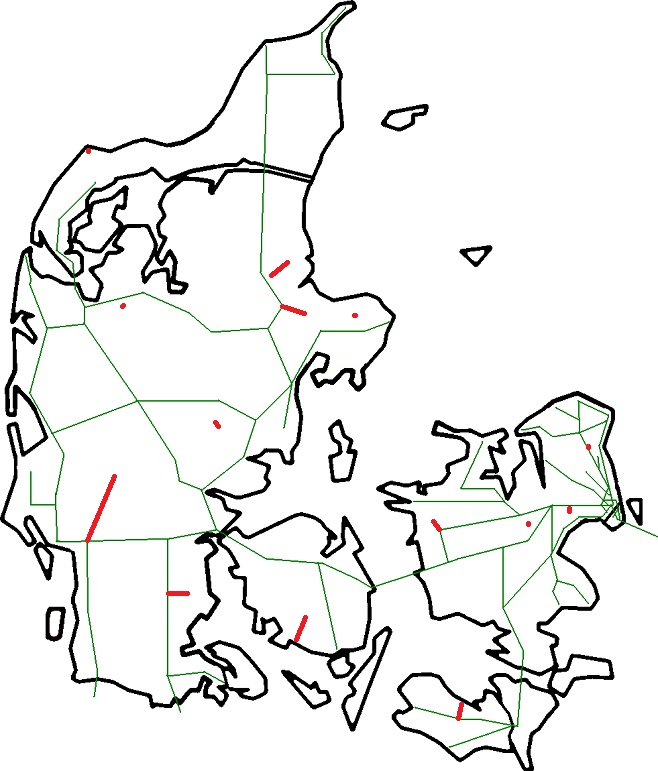
785 mm and 791 mm
- Hjerl Hede Frilandsmuseum , steam operated peat railway in an open-air museum. and used here at this railway.
765 mm
- Fur Bryghus, / Fur Museum, Nederby (Fur), Fur (island)
700 mm

- Hedeland Vintage Railway (HVB), (IBK), (Hedeland veteran jernbane, Hedelands Veteranbane) , Hedeland, Hedehusene, Taastrup, Høje Taastrup, Høje-Taastrup Municipality is a long steam operated in a country park around gravel quarries. The Brandhøjbanen miniature railway is also present.

- Blovstrødbanen, , Blovstrød, Allerød Municipality
- Lille Vildmose, 8 km in a former peat extraction area, now a nature reserve a part of Store Vildmose-Natura 2000-area near Vildmosegaard. The railroad was dismantled in 2012, but a 0,4 km museum railway has been established at the Lille Vildmose Museum Center ("Vildmosecenteret") Lille Vildmose-Lille Vildmose Museum Center, Lille Vildmosecentret.
- Store Vildmose railway Store Vildmose at Store Vildmose-Vildmosemuseet doesn't exist anymore, only a few materials and only one train remains for preservation on Hedeland veteran railway, (Hedelands Veteranjernbane).
- Danish Railway Club
600 mm
- Mosebrugsbanen, Stenvad Mosebrug (Stenvad Mosebrugscenter) , peat museum railway at a peat museum in Stenvad, Vinderup.
- Bunkermuseum Hanstholm museum , MuseumsCenter Hanstholm, on a former ammunition railway. Featured in the film The Olsen Gang in Jutland

- Engesvang Sogns Tørve- & Egnsmuseum
- Cathrinesminde Teglværk
- Denmarks technical Museum
- Danish Motor and Machine Collection
- Lilleskov Teglværk
- Moselauget
- Eventyrhaven, Sorø, Sorø Municipality
550 mm
- Mønsted Kalkgruber , in a former limestone quarry at Mønsted. Also Daugbjerg Kalkgruber , Tingbæk Kalkgruber and Thingbæk Kalkminer . One train from The Jutland Lime works at Mønsted and Mønsted Kalkgruber on .
1000 mm
- Hofor, Copenhagen, Christianshavn and Frederiksberg, Dragør and Tårnby
800 mm
- Private Railway Hydrema
785 mm

- Stormosebanen (SMJ), (Upper Smørum)-Smørumnedre, Smørum, Egedal Municipality
- Private Railway Hedeland
700 mm
- Private Railway Brønshøj
- Private Railway Hoby
650 mm
- Private Railway
600 mm
- Copenhagen Energy (Københavns Energi), Copenhagen, Copenhagen Municipality
- CTR Centralkommunernes Transmissionsselskab I/S, Frederiksberg, Frederiksberg Municipality
- Egemose Centret at Egemosen, Ganløse, Egedal Municipality
- Arnold Jung Lokomotivfabrik, One diesel/ steam train from Arnold Jung Lokomotivfabrik at Egemose Centret at Egemosen.
- Funder Nr.Hede Banen at Funder Radiomuseum, Funder, , Silkeborg, Silkeborg Municipality<
- Private Railway, Ølstykke-Stenløse, Egedal Municipality
- Eventyrhaven, Sorø, Sorø Municipality
- Private Railway, Hedehusene, Høje-Taastrup Municipality
- Private Railway, Give, Vejle Municipality
- Private Railway The Mid-Zealand
- Private Railway Zealand
- Private Railway Hedeland
- Private Railway
- Private Railway Hedehusene<
- Private Railway Mørkøv
- Private Railway Roskilde
- Private Railway Aalborg
- Private Railway Søddinge Friskole
- Private Railway Stenløse
- Private Railway
- Private Railway Jutland
- Ørbyhage Casting sand bed (Ørbyhage Støbesandsleje)
- Hastrup Mortar and Shingle Works (Hastrup Mørtel- og Singelsværk)
485 mm
The "Impossible" Industrial Width.This measurement has been found in the basements under some of the oldest industrial buildings in Copenhagen (including around the old breweries and machine factories). Use: These were tracks intended for very small, flat wagons (lutters), which were only intended to transport heavy items (such as cast iron or filled barrels) from an elevator to a machine. The track is so narrow that a grown man can almost have both feet on the outside of the rails.
480 mm
The smallest factory tracks. Below the 500 mm limit, there are examples of very small tracks inside factory buildings (e.g. bakeries, chemical factories or small foundries). Here, 480 mm tracks were used to push small carts with raw materials through narrow doors. These tracks were often recessed into the floor so that people would not trip over them.
400 mm
400 mm: The smallest industrial gauge, found in old dairies and slaughterhouses for hand-pushed trolleys. Specialized "dog tracks" in dairies. Some of the very old dairies and slaughterhouses had tracks as small as 400 mm to 500 mm. They were used for small trolleys that moved heavy milk jugs or meat between rooms. The rails were often laid directly into the tiled floor, and the carts were pushed by hand. 400 mm – 500 mm: Extremely narrow "dog tracks" were built into the floors of older dairies and slaughterhouses to move heavy milk jugs or carcasses between processing rooms.
- Sugar factory, Sakskøbing. , , and standard gauge has also been used here at the sugar factory of The Danish Sugar Corporation.
381mm
381 mm (15 in): Known as the "minimum gauge," this was used for several private estate railways and garden railways that were larger than hobby models but smaller than industrial lines. Experimental & Miniature Gauges, 381 mm (15 in): Known as the "minimum gauge," this was used for several private estate railways and garden railways that were larger than hobby models but smaller than industrial lines.
370 mm
370 mm: While not a permanent track, historical evidence suggests the presence of 370 mm track panels likely brought to Denmark during the German occupation in WWII. These were originally French or American military light railway materials from WWI.
311 mm
311 mm: The smallest recorded industrial gauges in Denmark, used for hand-pushed internal transport at the Sakskøbing Sugar Factory. Used at the Sakskøbing Sugar Factory, these represent the smallest recorded industrial tracks in the country. 260 mm (10¼ in) & 311 mm (12¼ in): These are the smallest "public" tracks in Denmark, found in private gardens and smaller amusement parks for passenger-carrying miniature trains.
- Ree Park – America Expresses, Ree Park, Ebeltoft Safari, Ree Park – Ebeltoft Safari, Ebeltoft, Djursland, Syddjurs, 311 mm ( in).
310 mm
310 mm: The smallest recorded industrial gauges in Denmark, used for hand-pushed internal transport at the Sakskøbing Sugar Factory. The Sakskøbing "Micro-Gauges" (310 mm & 311 mm), Used at the Sakskøbing Sugar Factory, these are the smallest recorded industrial gauges in Denmark. 310 mm & 311 mm (approx. 12 in): These tracks were not for locomotives but for hand-pushed internal transport carts within the factory. Significance: Most "minimum gauge" lists start at 15 inches (381 mm), making these 12-inch industrial tracks highly unusual. Industrial & Rare Gauges, 310 mm & 311 mm (approx. 12 in): These are the smallest recorded industrial gauges in Denmark. They were used for hand-pushed internal transport carts at the Sakskøbing Sugar Factory. Used at the Sakskøbing Sugar Factory, these represent the smallest recorded industrial tracks in the country. Context: These were not for locomotives but for hand-pushed internal carts. Rarity: Most international lists skip measurements this small unless referring to ridable miniature hobby railways. This gauge was used at the sugar factory in Sakskøbing for internal transport.
260 mm
260 mm (10¼ in) & 311 mm (12¼ in): These are the smallest "public" tracks in Denmark, found in private gardens and smaller amusement parks for passenger-carrying miniature trains. For private use and smaller gardens and amusement parks. The smallest "public" tracks: 260 mm and 311 mm. In some private gardens and smaller parks there are passenger-carrying miniature trains that run on: 10 ¼ inches (260 mm) and 12 ¼ inches (311 mm). These are exact copies of real trains, but in 1:4 or 1:5 scale. Miniature Public Tracks (260 mm), While not "industrial," Denmark has a specific legal category for the smallest "public" tracks found in private gardens and small amusement parks. 260 mm (10¼ in): These are specifically listed in Danish technical records as the smallest passenger-carrying tracks open to the public in limited settings. 260 mm (10¼ in): Listed as a "public" miniature gauge for passenger-carrying trains in private gardens and small amusement parks like Brandhøjbanen. Public Miniature "Standard" (260 mm), Though a miniature gauge, 260 mm (10¼ inches) is specifically categorized in Danish technical records for passenger-carrying garden railways like the Brandhøjbanen.
145 mm
Brandhøjbanen, at Hedeland veteran railway, Hedeland, Hedehusene, Høje-Taastrup. Mixed gauge: , in (145 mm), in (145 mm) and gauges are all in use on this model-miniature railway. There is also one at Denmark's railway museum in Odense, one at the Tramway Museum Skjoldenæsholm, Jystrup, Ringsted and many other model-miniature railways in Denmark and Model lane Europe, Hadsten, Favrskov and many others.
89 mm
89 mm (3.5 in): The smallest passenger-carrying "ground-level" gauge, used by live-steam enthusiasts in clubs like Modelparken Danmark. Experimental & Miniature Gauges, 89 mm (3.5 in): The smallest passenger-carrying "ground-level" gauge, used by live-steam enthusiasts in clubs like Modelparken Danmark. The 89 mm (3.5 inch) "Live Steam", This is the absolute smallest passenger-carrying gauge in Denmark. Found in hobbyist clubs like Modelparken Danmark, it is a "raised track" system where the locomotive is tiny, but the rails are strong enough to carry an adult sitting on a specialized "straddle" car.
1430 mm
1430 mm = 4ft 8.3in. 1,430 mm – The "tight" test track. At the Technical University of Denmark (DTU) and in some test centers, tracks laid with exactly 1,430 mm have been used. By making the track 5 mm narrower than standard, researchers can test how the wheel flanges react under extreme pressure (stress testing). This wears the rails extremely quickly, but provides important knowledge about safety.
1431 mm
1431 mm = 4ft 8.34in. 1,431 mm – The "fast" Metro tolerance. In the newest parts of the Copenhagen Metro (Cityringen), modern precision technology is used. Although it is called 1,435 mm, some rails in the sharp tunnels are laid with a tolerance down to 1,431 mm to control the train's movements extremely precisely and reduce noise for the neighbors.
1432 mm
1,432 mm – "The tight track" (Metro). Although the Copenhagen Metro is standard gauge (1,435 mm), the rails are laid on certain sections with a tolerance down to 1,432 mm. In contrast to the S-train, which widens the track in some places, very fast and precise automatic systems can "tighten" the track a little to avoid vibrations and ensure that the driverless train runs completely stable. Technically, this is a different gauge in terms of the laying precision itself.
1434 mm
1434 mm = 4ft 8.46in. 1,434 mm – "Precision Standard". In modern times, when testing high-speed trains or very light self-propelled units on test tracks, the rails are sometimes laid at 1,434 mm – just 1 mm narrower than standard. This is done to minimize "sinusoidal motion" (where the train shakes from side to side), which is important for testing sensitive measuring equipment.
1,438 mm
"S-train clearance" This is a technical detail: On certain sections of the S-Bahn and in sharp curves, the track gauge is widened by a few millimeters (up to 1,438 mm or 1,440 mm). This is done to reduce wear on both wheels and rails when the rigid bogies on the S-trains run through curves. It is still "standard track", but technically the rails are laid with a different width to make everything slide better. Rare Horse-Drawn Gauges 1,438 mm: A tiny 3mm deviation from standard gauge was sometimes found in early horse-drawn urban trams in Copenhagen due to the specific wheel profiles of the time, though it was eventually standardized to 1,435 mm. The 1,438 mm "Imperial" Trams, Early horse-drawn trams in Copenhagen (specifically the Kjøbenhavns Sporvei-Selskab) were built to 1,438 mm. While it looks like a mistake, it was a deliberate choice to provide slightly more "play" for the wheel flanges of the era before the global 1,435 mm standard was strictly enforced.
1,439 mm
1439 mm = 4ft 8.65in. 1,439 mm – The "rigid" curve gauge in Odense. When the old tramway in Odense was built (before 1952), there were sections where the track was deliberately laid with a width of 1,439 mm. This was 4 mm wider than standard, exactly the gauge that was thought to be ideal for the rigid, two-axle trams to run through the city's narrowest streets without wearing the rails completely apart in record time.
1,440 mm
S-Train. 1,440 mm – Aarhus tramway curve widening. While Copenhagen used its own measurements, Aarhus Tramway (when they were running on rails before 1945) had technical specifications that prescribed exactly 1,440 mm in the sharpest curves. This was 5 mm wider than the standard and was used to prevent the trams from "climbing" over the edge of the rails in the tight city curves. On certain sections of the S-Bahn and in sharp curves, the track gauge is widened by a few millimeters (up to 1,438 mm or 1,440 mm).
1,441 mm
The first railway in Denmark. 1,441 mm – "The Danish mistake". In the infancy of the railway (around 1847, when the first line from Copenhagen to Roskilde was built), a small mistake was made. Equipment was purchased in England, but the Danish engineers made a slight mistake with the English feet and inches. The result was that the first tracks were actually a few millimeters wider than the exact 1,435 mm we use today. This was quickly corrected when it was discovered that otherwise the trains would "sway" or wear the rails crookedly.
1,442 mm
The precise tram curve. In the technical manuals of the Copenhagen tramways from the 1930s, 1,442 mm was stated as the precise target for certain curves. This target was exactly between the normal tolerance and the extreme widenings we have been talking about. It was the "perfect" width to avoid squeaking wheels in Copenhagen's residential areas.
1,443 mm
The "loose" track in Copenhagen. In the early electric era of the Copenhagen tramways (before 1900), experiments were made with laying the rails with a width of 1,443 mm in the tightest curves in the medieval streets of Copenhagen. Why: This was done to prevent the tram wheels from "squeaking" and getting stuck in the sharp curves. It is only 8 mm wider than standard, but technically it was a fixed gauge for specific curves in the city.
1,444 mm
The "Precision Curve" in the Copenhagen Metro. In the technical specifications for the newer lines (M3/M4) in the Copenhagen Metro, there are curved sections laid with exactly 1,444 mm. This is a modern, computer-controlled precision gauge that ensures minimal noise and vibration when the driverless trains run through the deep tunnels.
1,445 mm
1,445 mm – The early electric tramways. When the first electric trams came to Copenhagen (e.g. the private companies before they became KS), they experimented with 1,445 mm. This was a standard seen in some southern European cities, and it was thought that this would provide better space for the early electric motors between the wheels. However, it was quickly ground down or changed to 1,435 mm. The "loose" millimeters in curves, Technically, the track gauge actually changes a little bit on the regular tracks you see every day: Gauge widening: In very sharp curves, Banedanmark lays the rails with a few millimeters extra distance (up to about 1,445 mm) to prevent the train wheels from pinching or wearing the rails too much. It's still "standard track", but the actual measurement is not exactly 1,435 mm.
1,448 mm
1,448 mm – The "hot" gauge. This is a technical quirk found at the Frederiksværk Steel Mill. When moving wagons with hot steel, the steel in the wheels and rails expands due to the heat. Therefore, in some halls, gauges of around 1,448 mm (or even wider) have been used, because it is known that the material changes size when it works under extreme heat. 1,448 mm – The "wear record" on the S-Bahn curves: In the busiest parts of the S-Bahn network (e.g. on the inner section towards Copenhagen Central Station), the 1,435 mm wide track is technically allowed to wear down to 1,448 mm before the rails are replaced. This is exactly where the wheel profiles of modern S-Trains reach their limit.
1,450 mm
1,450 mm – Tramway leeway. In the infancy of the Copenhagen tramways, they experimented with the track gauge. Although they ended up with 1,435 mm, the early horse-drawn tramways were laid a little wider in some places to reduce friction from the heavy horse-drawn carriages that also used the rails. It was a smooth transition before they became completely sharp on the 1,435 mm.
1,451 mm
"Winter track". On certain sections of the Copenhagen Tramway, especially where there was a risk of ice and gravel in the rails (e.g. on the steep hills at Valby), a tolerance of exactly 1,451 mm was prescribed. The extra 16 mm compared to the standard allowed room for pebbles and lumps of ice to not pinch the tram wheels in the grooved rails, which could otherwise lead to derailments in freezing weather.
1,452 mm
The "loose" shunting gauge. This measurement is found in the older parts of Copenhagen's freight station. At curves in shunting areas, where old freight cars with rigid axles had to be moved by small tractors, the rails were laid with a fixed clearance of 1,452 mm. That's exactly 17 mm wider than standard, which is the technical limit for how much you can "slacken" on the track without losing control.
1,453 mm
The "silent" tolerance in the Great Belt Tunnel. The technical specifications for maintenance trains in the Great Belt Tunnel operate with a very specific safety limit of 1,453 mm. The reason: Since the rails are located in a closed tunnel with a constant temperature, the expansion of the metal is minimal. Therefore, the tolerance here is set extremely precisely (only 18 mm from the standard) so that the automatic measuring systems can detect even the smallest displacement in the concrete elements.
1,454 mm
The "maximum" operating limit. This is not a planned gauge, but a critical safety standard. On the Danish main network (Banedanmark), the gauge is technically considered to be "another gauge" if it reaches 1,454 mm due to wear. If the measuring car registers this measurement on a section where trains are running above 120 km/h, it triggers an immediate speed reduction until the rails are pulled together. This is the absolute outer limit of what counts as "usable" standard gauge.
1,455 mm
The "worn" limit. This is not a planned gauge, but a safety limit. On the Danish main network (Banedanmark), the gauge is technically considered to be "another gauge" if it reaches 1,455 mm due to wear. If a measuring car registers this measurement, the rails must be changed or moved together immediately, otherwise the wheels may fall between them.
1,456 mm
"The ultimate limit" for freight trains. This is not a planned construction gauge, but a critical technical safety standard for port and industrial tracks in Denmark. On tracks where only very slow traffic (below 10-20 km/h) occurs, Banedanmark and the private port operators allow the track to widen up to 1,456 mm due to wear. If the target exceeds this, even the widest freight wagon wheels risk falling between the rails. This is the absolute record for "legal" standard track in operation.
1,457 mm
The "extreme" ferry tolerance. At the oldest ferry berths in Nyborg (before the fixed connection), there were certain switches directly on the ramp, which were widened to 1,457 mm. Function: This was a technical necessity to handle the enormous distortions that occurred in the rails when the ferry rose or fell due to the tide and the weight of the heavy freight trains. This is the absolute outer limit of what was called "standard gauge".
1,458 mm
1,458 mm – The tramway's maximum curve. In the absolute sharpest curves on the Copenhagen tramway (e.g. at the old depots), the track was widened all the way to 1,458 mm. This was the absolute limit for how wide a standard track could be laid before the wheels risked falling between the rails. It was used as a form of "emergency widening" to get the rigid trams around corners. 1,458 mm – "The Copenhagen Curve". In the extremely sharp curves of the Copenhagen tram network (back when we had trams in the narrow streets), a deliberate track expansion was used. Instead of the normal 1,435 mm, the rails were laid with 1,458 mm spacing in the curves. This gave the rigid tram axles room to "get around" without cutting into the rails with a deafening howl.
1,459 mm
The "extreme" wear limit at the Port of Aarhus. In the old maintenance manuals for the now defunct port tracks in Aarhus, a tolerance of up to 1,459 mm was used for certain curves. They were running very old, rigid freight wagons with a long wheelbase. To prevent them from getting stuck in the extremely sharp curves between the warehouses, a widening of 24 mm above the standard was allowed. This is the widest measurement that is technically registered as "driveable" standard gauge in Denmark.
1,460 mm
The "lawless" wear limit at the old ports. On the absolutely most worn industrial tracks (e.g. at the old industrial ports in Odense and Aarhus before the renovation), track widths of up to 1,460 mm have been recorded. This is 2.5 cm wider than normal. This was where the limit was: if a freight wagon ran on a track with this measurement, there was a high risk that the inside of the wheel (the flange) would no longer hit the rail, and the wagon would fall between the rails.
1,462 mm
The "critical" tram gauge. In the old tram depots in Copenhagen (e.g. Svanemøllen), the internal tracks and switches were laid with an extreme tolerance of up to 1,462 mm in some places. This allowed trams to be moved manually or with small shunting machines, even if the wheels were very worn or "flat". This was the absolute outer limit of what was called a gauge, before it was considered a technical.
1,500 mm
1,500 mm – The "round" broad gauge dream. During the great visions for Europe's railways (and during the German occupation, when people dreamed of a "Breitspurbahn"), theoretical plans were made for enormous trains. Although the wildest plans were for 3 meters, in some places in port and crane construction, a pure 1,500 mm (1.5 meter) gauge was used, as it was easy for engineers to calculate. Today, it is mostly found in large shipyards as a foundation for cranes.
1,524 mm
1,524 mm – The Russian track (The Visit). Denmark has never had Russian broad gauge as a fixed network, but during the Cold War and in connection with diplomatic transports (or freight by train ferries from Eastern Europe via the GDR) there has been stock parked in Danish ports. In order to be able to move these wagons to shipyards or port areas, there have been in rare cases short sections of 1,524 mm track or combination track (3-rail track). The "Russian" gauge in Denmark (1,524 mm). Did we have broad gauge in Denmark? Yes, but only briefly: The occupation period: During World War II, the Germans brought war booty locomotives from the Eastern Front (Soviet Union) to Denmark to have them repaired in Danish workshops. In order to be able to move them around the workshop areas, short sections with 1,524 mm gauge were laid or special transport wagons (roller bogies) were used that could carry the wide axles on the Danish standard tracks.
1,668 mm
The "variable" tracks (Spanish/Russian test) Recently, test facilities have had tracks that can be adjusted. Here, one rail can be moved, allowing trains with gauges from 1,435 mm up to 1,668 mm (Spanish broad gauge). It is not a fixed track, but a rail construction that can change width depending on which train is to be exported.
1,676 mm
(Test track for export). 1,676 mm – The widest "guest" (Indian/Spanish broad gauge). Denmark has never had broad gauge as a permanent installation, but we have had visitors. Where: At large test centers or in connection with the export of trains (e.g. from Frichs in Aarhus or Scandia in Randers). When they built locomotives for countries like India or Spain, they laid short pieces of broad gauge inside the factory area so that they could test whether the wheels fit before the trains were shipped.
2,000 mm
2,000 mm (2 meters) – Rescue stations. Along the west coast of Jutland are some of the oldest and most exciting tracks: lifeboat tracks. To get the heavy lifeboats quickly over the beach and into the water, rails were laid from the rescue station directly into the surf. These track gauges were often exactly 2,000 mm, so they fit the wide special wagons that carried the lifeboats. These are some of the few places where "real" broad gauges have been used for passenger vehicles (rescuers) in Denmark. The "Slipway" Gauges, In fishing villages like Hvide Sande or Skagen, boat slips (beddings) use tracks to haul ships out of the water. Variable Gauges: Depending on the size of the boats, these tracks can range from 2,000 mm to 5,000 mm. While not "trains" in the traditional sense, they use rail technology and are a distinct part of the Danish coastal landscape.
2,100 mm
Bed track. At smaller shipyards (e.g. in Svendborg or Esbjerg) there are "pull-up tracks" or bed tracks with a width of exactly 2,100 mm. It is a stable wide-track type, built to carry fishing boats and smaller ships when they need to be pulled out of the water for repairs.
2,134 mm
2,134 mm – "Brunel-width" guest track. This corresponds to exactly 7 British feet. Although it was an English standard (GWR), Denmark has had short sections of this or similar "SUPER-wide" track on the shipyard beds. Why: In order to be able to carry the weight of an entire ship's hull that had to be rolled sideways (e.g. on B&W on Refshaleøen), rail systems that were over 2 meters wide were used to ensure stability against the wind.
2,400 mm
Heavy industrial gates. At the very large power plants (such as Asnæsværket or Enstedværket), the enormous coal and ash cranes run on tracks with a width of exactly 2,400 mm. It is a stable broad gauge type that is built to carry the enormous weights of the machines that keep Denmark running with electricity.
2,500 mm
Lock and dam tracks. At some of the large lock facilities (e.g. at Hvide Sande or Thyborøn), the heavy gates or maintenance cranes run on tracks with a width of exactly 2,500 mm. It is a stable broad gauge type that is built to withstand extreme wind pressure and waves while moving heavy concrete or steel structures.
3,000 mm
3,000 mm - 8,000 mm (Crane tracks and shipyards). Port railways with "intermediate tracks". In some port cities (e.g. in Esbjerg) there have been cranes that ran on their own rails. Crane tracks: These can have track widths of anywhere from 3 to 6 meters. Although it is not a "train", it is technically a track width that exists in the Danish railway landscape. Esbjerg Harbor. 3,000 mm (3 meters) – The Broad Gauge Railway Plans. During World War II, German engineers worked on plans for a gigantic railway that would connect all of Europe, including routes that could potentially have hit Denmark to the north. They planned a gauge of 3,000 mm. Although it was never built, there are drawings and technical considerations in Danish archives from that time about how bridges and dams would be able to support such monsters.
4,000 mm
Shipyards (Svendborg, Nakskov, etc.). The wide crane gauges (Shipyard giants). When we talk about gauges in Denmark, we often forget the largest ones: 4,000 mm - 15,000 mm (4 to 15 meters): At the large shipyards such as B&W on Refshaleøen or Lindø, the enormous gantry cranes run on gauges that correspond to the width of an entire road. These rails are massive steel profiles (often over 100 kg per meter) that are cast directly into the quay structure.
4,500 mm
The Dock Cranes. At the large shipyards (e.g. Lindø or Frederikshavn), the mobile cranes that lift sections into place often run on tracks with a width of exactly 4,500 mm. This is a widely used shipyard standard that allows trucks and forklifts to drive under the crane (between the rails) while it is working.
5,000 mm
Shipyards (Svendborg, Nakskov, etc.) The "Slipway" Gauges, In fishing villages like Hvide Sande or Skagen, boat slips (beddings) use tracks to haul ships out of the water. Variable Gauges: Depending on the size of the boats, these tracks can range from 2,000 mm to 5,000 mm. While not "trains" in the traditional sense, they use rail technology and are a distinct part of the Danish coastal landscape.
5,486 mm
Esbjerg Harbor. Shipyards (Svendborg, Nakskov, etc.)
8,000 mm
Shipyards (Svendborg, Nakskov, etc.). 3,000 mm - 8,000 mm (Crane tracks and shipyards). Ship towing sites (Various gauges). At many of the old Danish shipyards there are tracks that are used to pull ships out of the water. These gauges are often enormous – up to 4, 5 or 8 meters wide. Although locomotives do not run on them, they are railway technology with rails, wheels and flanges. Each shipyard had almost their own gauge, which suited their specific wagon (cradle).
10,000 mm
Shipyards (Svendborg, Nakskov, etc.). The widest ever: Approximately 10,000 mm (10 meters). If we move away from trains and towards cranes in ports, we find the largest gauges in Denmark. Gantry cranes: At the large container terminals (e.g. APM Terminals in Aarhus), the huge cranes run on rails that can be 10 to 15 meters apart. Although they do not pull wagons, it is technically a gauge with rail body, sleepers and steel wheels. The "Wide" Shipyard Gauges. At massive shipyards like Lindø (Odense Staalskibsværft) and Burmeister & Wain (B&W), standard 1,435 mm tracks weren't enough to move gantry cranes or massive ship sections. 4,000 mm to 10,000 mm (and wider): These are technically "ultra-wide gauges" for specialized heavy-load cranes and transport platforms that moved entire ship blocks. They are the widest tracks ever laid on Danish soil.
15,000 mm
Harbor cranes and shipyard chutes. Shipyards (Svendborg, Nakskov, etc.)
30,000 mm
Harbor cranes and shipyard chutes. Shipyards (Svendborg, Nakskov, etc.)
Narrow gauge
- 700 mm Bethlehem Old Work, U.S. Virgin Islands, Estate Bethlehem’s Sugar Industry, St. Croix, US Virgin Islands.
- 900 mm Reykjavík Harbour Railway, Iceland.
Broad gauge
- 4,572 mm, 15 ft, Creque Marine Railway, Hassel Island, U.S. Virgin Islands.
References
A visitor's guide to Scandinavian (Nordic) narrow-gauge railways