
Major Hospital of Crema
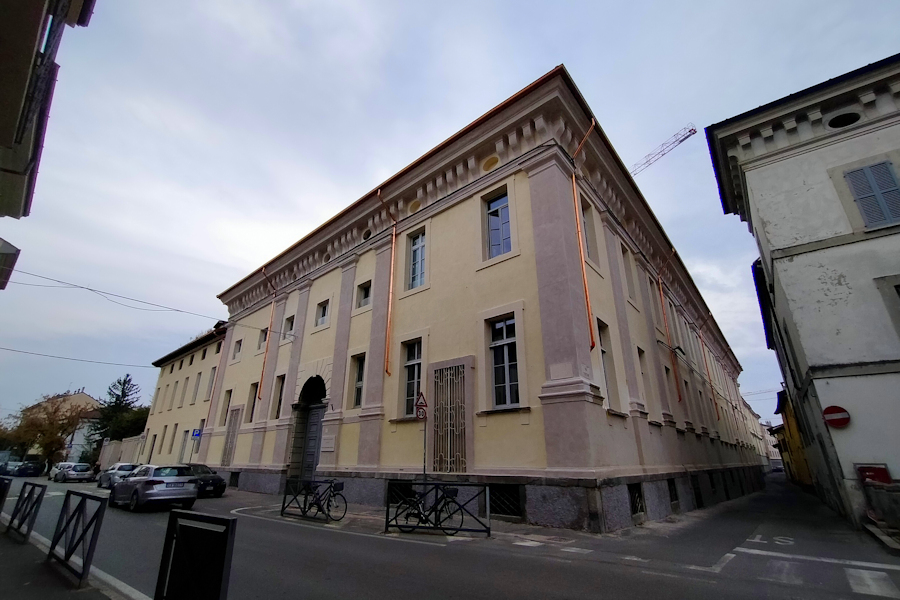
The Major Hospital of Crema (Italian: Ospedale Maggiore di Crema) is the main healthcare facility of the Azienda Socio-Sanitaria Territoriale (ASST) of Crema, Italy.
History
Up to the 18th century
 On 12 June 1351, in the fabric shop of Giacomo Osio, located near the present-day Piazza Duomo, fourteen citizens described as "rich merchants" gathered. According to the spelling of the time, they were: Ziliolus Bellavista, Carnevalus Ceriolus, Lantelmus Draco, Marchinus Mandula, Jacobus Morantonus, Jacobus De Oxio, Pavarolus Pavanus, Ruggerinus De Pergamo, Guglielmus De Roberga, Lantel.s De Rovate, Albertinus Codelotus Turtae, Rajnaldus De Vairano and Petrus De Vicomercate.
 The notaries Giovanni Da Vairano and Gioacchino Civerchi were present at the meeting, along with witnesses Giacomo Castelli, Pusino Vimercati and Gabriele Terni.
In the resulting deed, the participants declared that they had purchased house plots in Borgo Pianengo (i.e., Borgo San Pietro) owned by Pusino De Brexhana and his son Bartolino.
The objective was to establish a hospice for poor sick people called the Domus Dei. Although the name evokes the religiosity of the participants, the institution was entirely secular and private, and it represented a novelty for Crema: Indeed, its bylaws prohibited interference by religious authorities, as well as inheritance by the founders' heirs. The beneficiaries were divided into three categories: the sick, the incurable, and the insane.
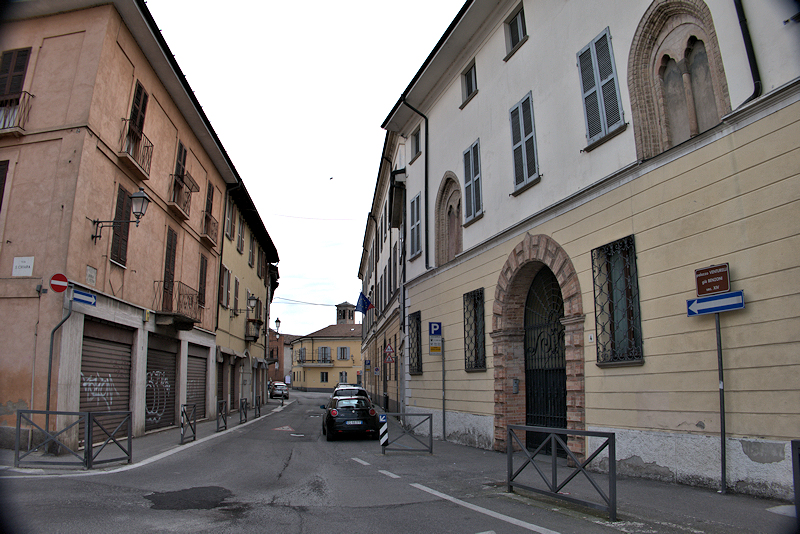
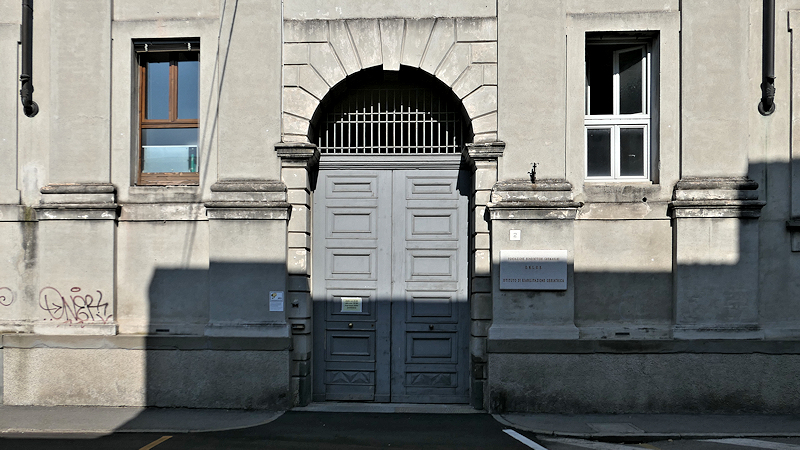
As for the location of that original hospital, it is to be identified with the site where the state primary school of Borgo San Pietro now stands.
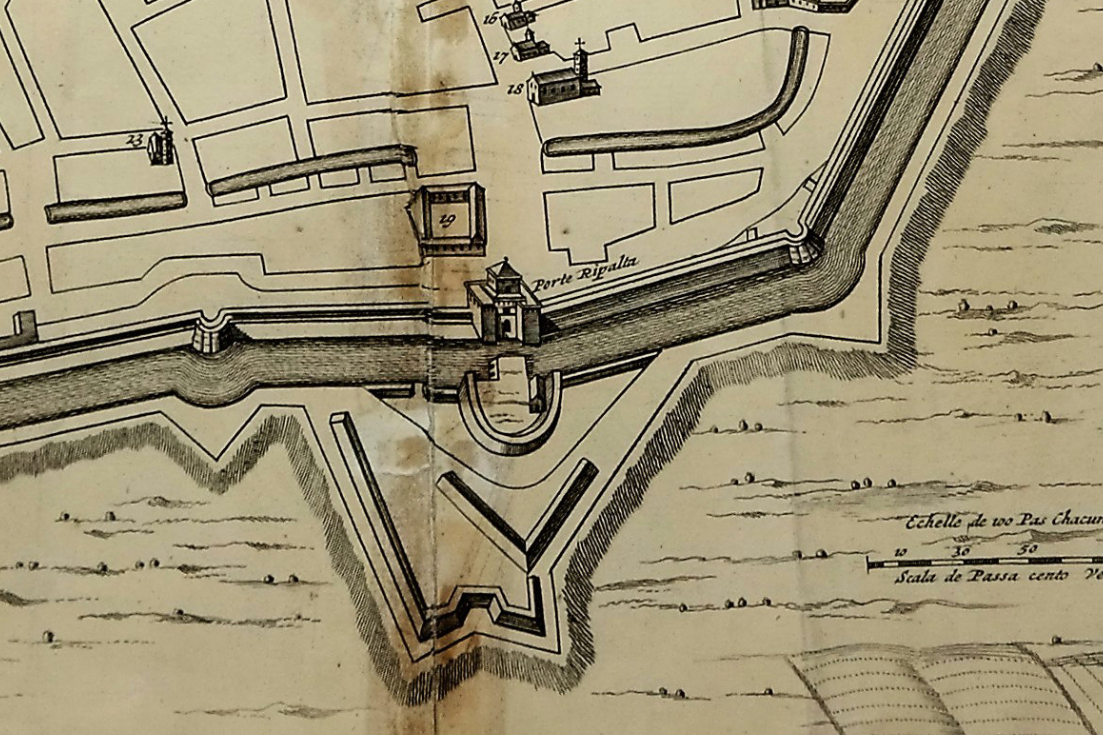
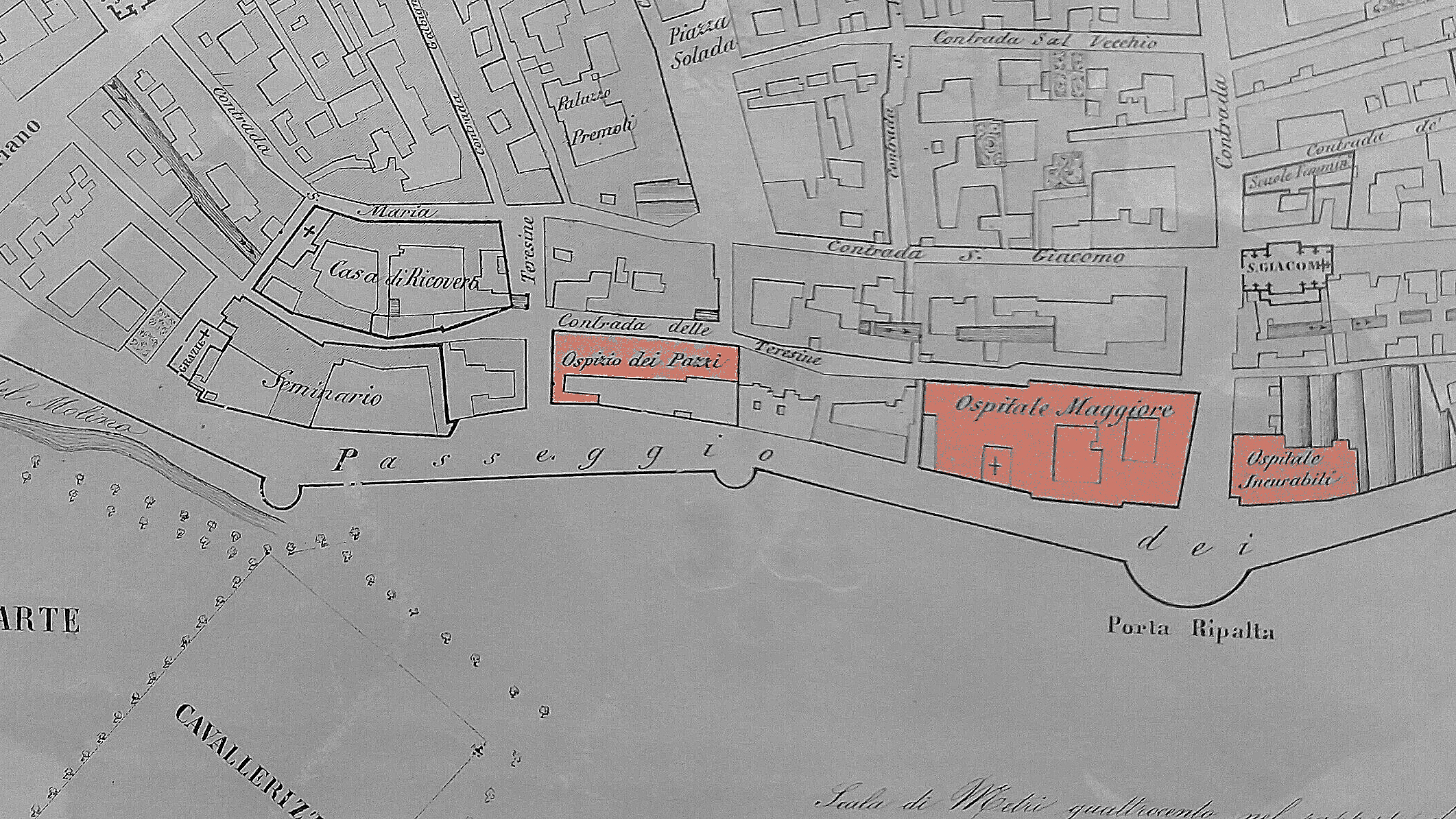
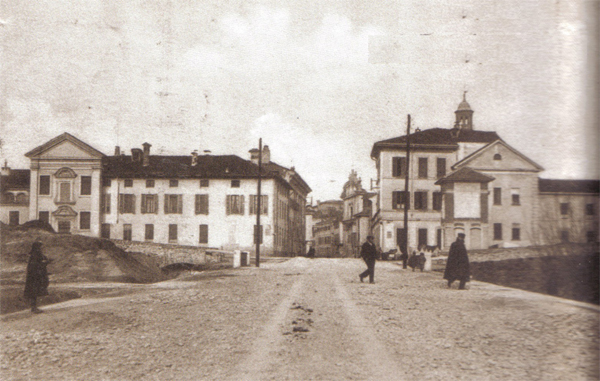
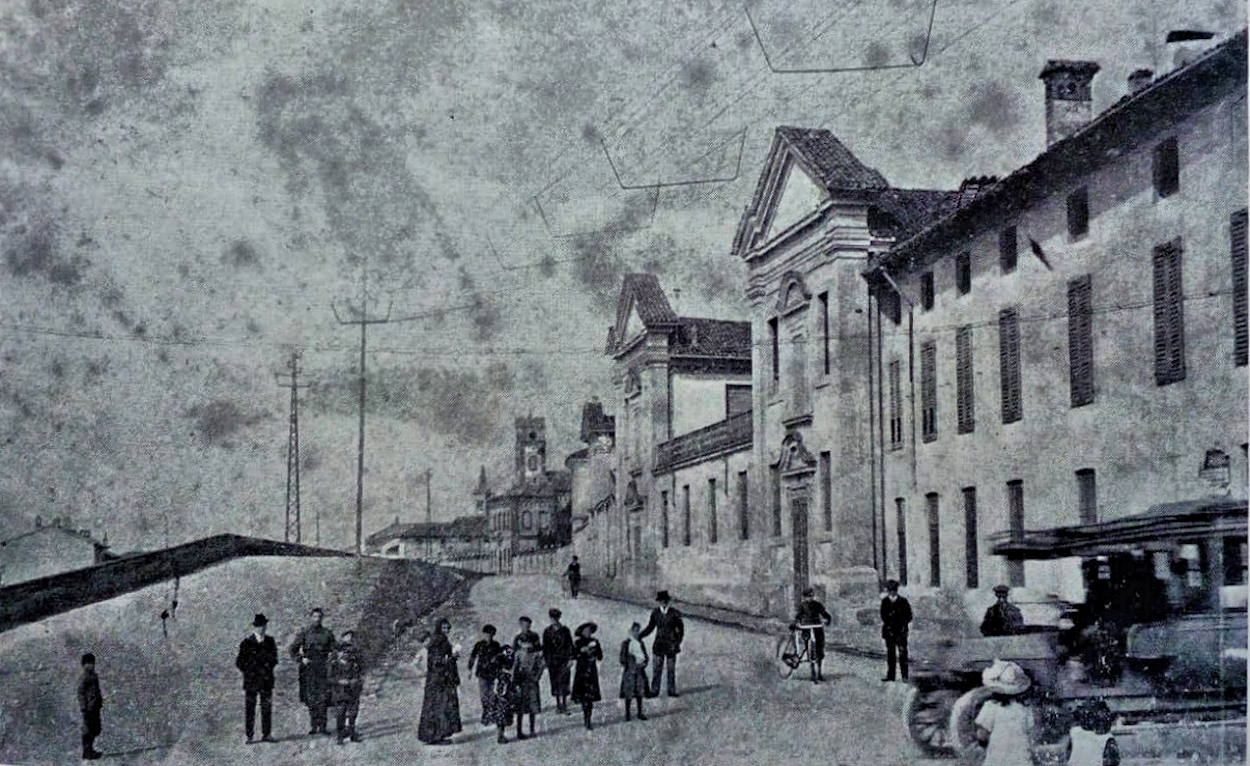
At an unspecified date towards the end of the 14th century, Savia Milanesi (Savia de Melanisis) donated a house located near Porta Ripalta to the hospital. This house was considered larger and therefore more accommodating, prompting the transfer to that location. This building was expanded starting in 1467 (also thanks to a contribution of 100 imperial florins provided by the municipal administrators), eventually taking on, in the 16th century, the forms still visible today along the façade on Via Kennedy and the side on Via Teresine.
Perhaps for economic reasons, the original secular character was partially abandoned during the 16th century. A contributing factor may have been the competition with the Ospedale di Santa Maria Stella, into which, following a resolution of 1453, all the small hospitals of Crema were merged. This is evidenced by the records of two pastoral visits. The first (by Bishop Castelli) was particularly critical of the management; the prelate noted inadequate spaces, poor hygiene, and improper uses. These deficiencies were not considered as serious or negative by Bishop Regazzoni during a visit only four years later.
Throughout the period of Venetian rule, the hospital was run by fourteen noble citizens, twelve of whom were called deputies and two syndics.
The hospital's assets grew during the 18th century thanks to bequests from wealthy families such as the Clavelli, Guidoni, Martinengo Sant'Angelo, Benzoni, and others. Increasingly, benefactors named the institution as their universal heir in exchange, at most, for the celebration of a perpetual mass. Thanks also to these legacies, the hospital administration obtained authorization in 1652 to extend the building along the Canton della Roversa (present-day Via Teresine).
Towards the end of the century, the hospital had a dispute with the parish of San Giacomo regarding the burial of the deceased (on average about a hundred per year) beneath the church. Opening the trapdoors so frequently caused the spread of miasmas that prevented religious services. The administrators thus obtained permission to dig burial chambers under the hospital building, some of which were found in 1901 during expansion works, filled with tightly packed corpses.
On 25 May 1733, the Ospedale degli Incurabili (Hospital for the Incurables) was established alongside it. According to Sanseverino, there were 21 patients by the mid-19th century, 14 men and 7 women, assisted by friars of the Capuchin order. Faustino Sanseverino, however, erroneously dated its foundation to 1717. Benvenuti mentioned the conception by Francesco Gennari, son of Geminiano, who died in 1603. Indeed, his will named his son Cesare as heir with the obligation of a fideicommissum; if the lineage became extinct without legitimate male descendants (females were excluded), all assets would pass to the Ospedale degli Infermi to open an incurables ward. This circumstance occurred in 1729 with the death of Francesco Gennari, son of Giovanni Antonio.
19th century
During the Cisalpine Republic, a new "directory" was tasked with making the institution secular again, along with all the entities under it. Furthermore, all welfare and charitable institutions, previously autonomous, were merged into a Congregation of Charity that included, in addition to the Ospedale degli Infermi, the Ospedale degli Esposti e mendicanti (Foundlings and Beggars Hospital), the Conservatorio delle Zitelle (Girls' Conservatory), the Casa delle Ritirate (Retreat House), the Commissaria Lupi, the Commissarie Penaro ed unite, the Istituto per i carcerati (Institute for Prisoners), the Monte di pietà (Mount of Piety), and (from 1809) the Casa dei poveri (Poor House).
The bequests of Count Giovanni Andrea Martini in 1799 allowed the continuation of the "insane" section, followed in 1818 by a special fund from the Kingdom of Lombardy–Venetia, which, after the unification of Italy, was placed under the responsibility of the provinces.
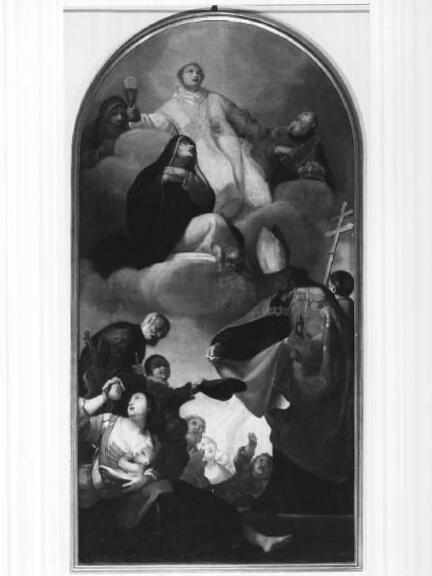
In those early years of the century, the hospital further benefited from the suppression of the convent of Sant'Agostino and the transfer in 1798 of all its properties, except the church and the convent. Many of the altarpieces acquired can be viewed in the art gallery of the Museo Civico di Crema e del Cremasco, while the canvas San Tommaso da Villanova, an oil on canvas (350 cm x 172 cm) by Felice Boscarati (1721–1807), was transferred to the chapel of the modern hospital.
The unified administration of welfare entities was partially modified in 1822 with the establishment of two new bodies: the "Luoghi pii elemosinieri" (Charitable Pious Places) (which included the Monte di Pietà, the Conservatorio delle Zitelle, the Casa dei Poveri, the various Commissarie, and other foundations and pious works established in the meantime) and the Ospedale degli Infermi with the Istituto Esposti e mendicanti.
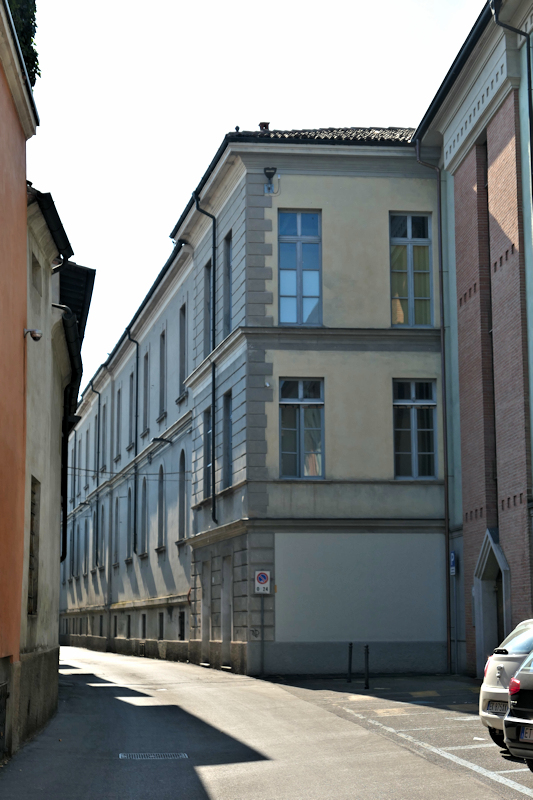 In terms of urban planning, to facilitate access from outside to the historic centre, the municipality of Crema built a carriage road at the foot of the southern embankment of the Venetian walls in 1833, designed by engineer Luigi Massari. This road was long known also as via dell'Ospitale and was closed in 1948.
Two members of the Austrian royal house visited the facility: the first time was Archduke Franz Karl of Austria on 3 June 1825, accompanied by his wife, Archduchess Sophie, during their visit to the city on their journey through the Lombardy-Venetia kingdom. The second time was on 18 September 1838, when Emperor Ferdinand I of Austria and his consort Maria Anna of Savoy stopped for a few hours to visit the city, and among the places visited was the hospital.
In 1845, the Ospitale Maggiore was extended on the Via Teresine side according to a design by architect Giovanni Massari.
Around the mid-century, the hospital was managed by an unpaid administrator, with a physician in general direction. At that time, it had 116 beds for the poor of the city suffering from acute illnesses; in exceptional cases, the number could be increased in exchange for a fee, covered through private charity or, sometimes, paid by the municipalities. There were also isolated wards for the treatment of contagious diseases, mostly smallpox, measles, and rubella, but in extraordinary cases, special wards were set up, such as during the petechial fever epidemic of 1817 and the cholera epidemic of 1836.
At the behest of the Bishop of Crema, Monsignor Giuseppe Sanguettola, the first nuns of the order of the Ancelle della Carità (Handmaids of Charity) arrived in 1852. The order had been founded twelve years earlier in Brescia by Sister Maria Crocifissa Di Rosa. The nuns served both at the hospital and at the Santa Maria della Croce asylum – discussed later – until much of the 20th century, including at the future new hospital.
Employed there were two head physicians and one head surgeon, two secondary surgeons, two pharmacists, and some practicing physician-surgeons on a voluntary basis; three priests also served at the facility, along with clerks and nurses.
The diseases treated were predominantly pneumonia in winter, rheumatic fevers in spring and autumn, and pernicious fevers in summer.
From 1850, the hospital faced a financial crisis that ended in 1865, during which cuts were made to general expenses such as patient food, firewood, linens, and a reduction from three to two in the number of spiritual assistants.
Following the reform of pious works in 1863 (or according to the law of 3 August 1862, according to Sergio Lini), the Consiglio degli Istituti ospitalieri (Council of Hospital Institutions) was established to administer the pious work "Spedale maggiore ed uniti" and the "Spedale degli Esposti e dei mendicanti", while the other welfare and charity entities were divided among various administrations (Consiglio del Monte di pietà, Congregazione di carità, and Consiglio degli Istituti educativi).
Regarding the aforementioned Ospizio dei pazzi (Lunatic Asylum): it housed about twenty people, generally individuals with chronic dementia that rarely escalated into violent acts requiring transfer to the Senavra Asylum in Milan, almost always affected by pellagra. By the year 1884, it employed a head physician, an assistant, a chaplain, a head nurse, 12 nurses, and a barber.
Among the activities provided in 1869 was also a pharmaceutical dispensary that could provide medicines to city residents – free of charge up to the sum of 549.12 Lire – who, due to a lack of hospital beds or inability to be transported, needed care in their own homes. Additionally, belts for hernias were distributed, a public bath service was organized (both free and for a fee), dowry subsidies were granted under various legacies, and cash subsidies were given to the poor.
Towards the period of the unification of Italy, the number of beds had increased to 140, with an operating theatre, while in the immediately following years, further expansions were carried out, such as the fitting out of a second operating theatre (1883), new spaces, and improvements in food and care conditions. In 1866, a significant expansion was carried out along Via Teresine and completed in 1871.
A change in the treatment of the "insane" dates to 1875, abolishing corporal punishment, surprise cold baths, the rotary machine, and isolation in dark rooms. Work therapy was introduced, which, in addition to benefiting patients, contributed to the institution's economy.
After a government inquiry (supported by Senator Cesare Correnti) in 1883, the overall administration of the Crema pious works underwent another reorganisation, however, without particular changes for the Consiglio degli Istituti ospedalieri, which continued to manage the Ospedale Maggiore, the Istituto Esposti e partorienti, and the Ospedale dei Pazzi.
20th century
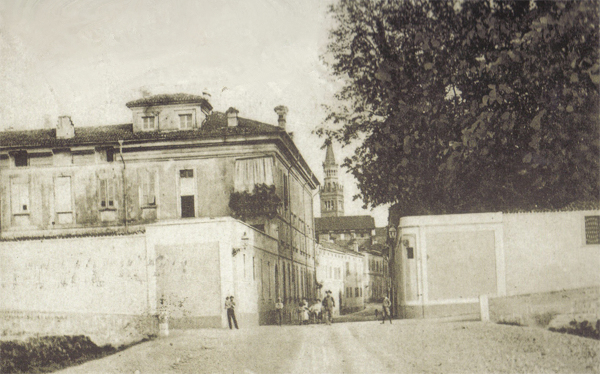
During the very first years of the century, the "Maggiore" of Crema was among the first in Lombardy to replace old wooden operating tables with metallic ones and to use phenol to make the environment antiseptic. Other innovations introduced from 1901 included moving the operating theatres to the site of the demolished old chapel, organising a room for autopsies alongside the cadaver storage, an apartment for the clergy, a small chapel, and a room for funeral offices.
 Also in those early years of the century, the evolution of psychiatric knowledge made the ward for the "insane" increasingly inadequate. Faced with the prospect of closure after an inspection in 1910, three solutions were studied in subsequent years: the construction of a new facility, transfer to Cremona, or the use of part of the former convent of Santa Maria della Croce. With a resolution of 28 February 1923, the last hypothesis was implemented. In this new location, 90 women and 90 men were housed, mostly suffering from schizophrenia, epilepsy, alcoholism, disability, war veterans affected by post-traumatic stress disorder, sometimes sexual maniacs, or stray youths without any family support. The Santa Maria asylum was closed in 1977, a few months before the promulgation of the Basaglia Law (May 1978), and the inmates were distributed to various residential healthcare facilities or, in the most severe cases, to the psychiatric hospital of Cremona.
In 1931, by royal decree, the administration of all welfare institutions and all city pious works was concentrated in the Congregation of Charity, a situation that lasted only a few years until the establishment, under law no. 847 of 1937, of a municipal welfare body (ECA). The following year, a new royal decree (20 January 1938) established that all pious works would be separated from the ECA and entrusted to a single administration called Istituti ospedalieri e di ricovero (Hospital and Care Institutions).
In the years following the Second World War, the Crema hospital facility proved increasingly inadequate, especially in organisational and structural terms, since it only had medicine and surgery divisions, sometimes also suffering from hygiene issues.
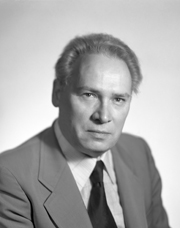 Furthermore, management was hampered by political deadlock among the various bodies that were supposed to elect the board of directors, so much so that in 1958 the prefect appointed an extraordinary commissioner, the future senator Vincenzo Vernaschi, to restore normal management.
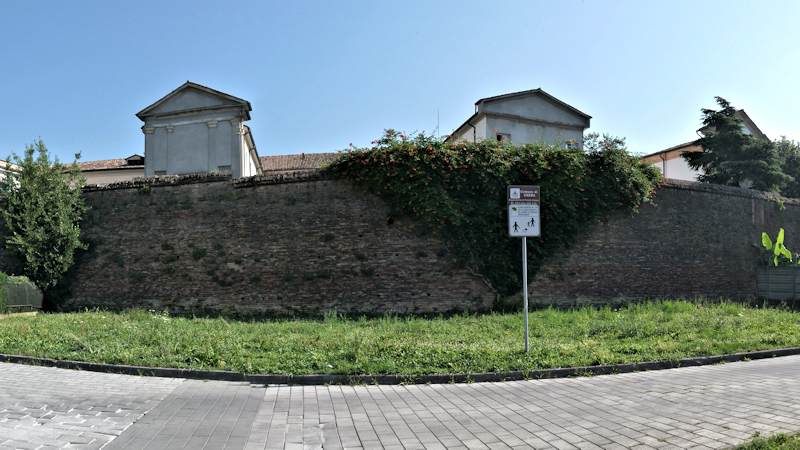
In terms of infrastructure, the municipal administration had already prepared a project to expand the hospital to the south, damaging the Venetian walls and occupying part of the ancient moat, while in 1951 the new tuberculosis ward was opened. A government grant in 1955 allowed the transfer of the dyskinetic ward to the Misericordia building, freeing up beds.
Studies and debates on the future of the hospital continued throughout the 1950s, often prompted by the press and not without controversy.
In 1958, lawyer Ugo Dossena accepted the proposal of Mayor Giacomo Cabrini to head the new hospital board of directors; Dossena wanted to surround himself with some young collaborators: Dr. Eugenio Benelli, Giuseppe Firmi, Professor Eugenio Soldati, accountant Secondo Cremonesi, and surveyor Marziano Marziani. The new management group, very cohesive, informally opposed the idea of expansion – preferring a completely new building – and was subsequently supported by the refusal of the Superintendence of Fine Arts to demolish the Venetian walls, which arrived at the end of 1959.
After visiting some recently built hospitals, they oriented themselves towards a solution similar to that pursued for the new hospital of Brescia: a single block to be built in a peripheral area close to an easy road access. The area of 100 pertiche was identified on Via Maccallé, near the intersection with the southern ring road that would soon become an integral part of the Paullese state road, on land owned by engineer Michelangelo Gelera, a personal friend of Dossena, who sold it at below-market prices.
Finally, the design was commissioned from the studio of engineers Arturo Braga and Alberto Ronzani of Milan, presented to the public in 1961. It was a structure capable of serving between 420 and 450 beds.
Also in 1961, with the introduction of the new statute, the hospital entity changed its name:
The initial cost of the new structure was estimated at 1 billion and 50 million lire, later rising to 2 billion and 400 million; part of the resources was recovered by selling for 1 billion and 330 million funds and real estate properties, including some farmhouses assigned to the entity by the Cisalpine Republic in the municipalities of Montodine and Credera Rubbiano. Other money was raised through donations and subscriptions, among which at least the proposal by Prof. Giulio Canger and Count Francesco Terni de' Gregory to businesses to donate one day's pay (53 million raised) should be noted.
The laying of the foundation stone took place on 21 April 1963, in the presence of authorities, including Mayor Archimede Cattaneo, the Bishop of Crema Monsignor Placido Maria Cambiaghi, and the Vice-President of the Senate, Ennio Zelioli-Lanzini. This is the text of the walled parchment:
In 1967, in view of the completion of the main block, a tender was issued to embellish the new building. The judging committee was composed of the president of the board of directors Ugo Dossena, engineer Massimiliano Cottafava (general inspector of the Office for Pious Works), Dr. Giovanni Paccagnini (superintendent of galleries), engineer Michele Tartaro (civil engineering), Dr. Raffaele de Grada (art critic), Dr. Arturo Braga (hospital designer), Professor Enotrio Mastrolonardo; Professor Efrem Civardi and accountant Secondo Cremonesi, acting as secretary. The meeting took place on 10 July of the following year, and it was decided to judge first ex aequo the sketches by sculptors Ercole Priori and Gian Paolo Zaltron, who were commissioned the ten final plaques (five each) constituting a series dedicated to the "history of medicine" and the "evolution of medicine".
For the "Maggiore", 1968 was a year full of events: firstly, Law No. 132 (also known as the Mariotti Law) was enacted, establishing Hospital Entities and recognising hospitals as subjects of public law. As a consequence of this law, the decree of the provincial medical officer of Cremona (23 April), having consulted the provincial health council, classified the Ospedale Maggiore of Crema as a provincial general hospital. A few months later, the Decree of the President of the Republic No. 1460 of 31 October (published in the Official Gazette on 10 March 1969) declared the Crema facility a "Hospital Entity" governed by a board of directors of five members elected by the provincial council of Cremona, two members elected by the municipal council of Crema, and two members representing the original interests of the entity, designated and appointed according to the 1961 statute. A consequence of this regulatory change was the division of the hospital, which became an autonomous entity separate from the Istituti ospedalieri e di ricovero.
But above all, after five years of work, the new facility was completed. The inauguration took place on 28 October, and among the authorities present, besides the Bishop of Crema Monsignor Carlo Manziana, were also the Honourable Narciso Franco Patrini and again Mayor Cattaneo and the senator from Cremona Ennio Zelioli-Lanzini, who had been Minister of Health for a few months under the short-lived Leone II Cabinet, towards whom Lawyer Dossena, during the inaugural ceremony, did not spare a critical note regarding the scarce state funds allocated to the cause. In the days immediately following the ceremony, the move to the new structure began, followed the next year by an increase in staff.
The 1970s saw organisational consolidation and the establishment of new wards. Noteworthy during this period were the donations of benefactor Dr. Bruno Manenti, which allowed the establishment of a modern resuscitation and intensive care centre; Manenti donated 120 million lire on condition that the ward be dedicated to his brother-in-law, the air force ace Francesco Agello. Also thanks to Manenti's generosity of 60 million, the Aula magna (lecture hall) was set up (1973), again on condition that it be dedicated to another relative, his brother-in-law Michele Polenghi.
Meanwhile, after the establishment of regional governments (1970), several changes were on the horizon: in 1971, a commissioner college took over, destined to steer the new "Hospital Entity Ospedale Maggiore" towards public healthcare, realised with Law No. 833/1978, which established the Local Health Units (USSL), becoming operational on 1 May 1981. This was the culmination of the aforementioned reform that began the transformation of public welfare and charity entities into hospital legal entities.
In 1992, a reorganisation was introduced aimed at focusing on management and economic aspects and reducing healthcare companies, giving Regions greater financial responsibility. It was in this context that the USSL No. 53 of Crema was transformed into the Local Health Authority (ASL) No. 24.
Also during the last two decades of the century, structural interventions continued, such as general computerisation – costing 670 million, again set up thanks to a generous donation from Dr. Bruno Manenti – the establishment of outpatient clinics, the new CUP – Single Booking Centre, the installation of the first CT scanner, and the MRI.
A further reorganisation was implemented by the Lombardy Region in 1998, further reducing the number of ASLs to 15. Thus, the ASL of Cremona was created, into which ASL No. 24 of Crema and No. 23 of Cremona were merged. Crema became an autonomous district with the creation of the Hospital Company "Ospedale Maggiore di Crema", to which the hospitals of Rivolta d'Adda, Soncino, Castelleone, and Soresina were aggregated.
21st century
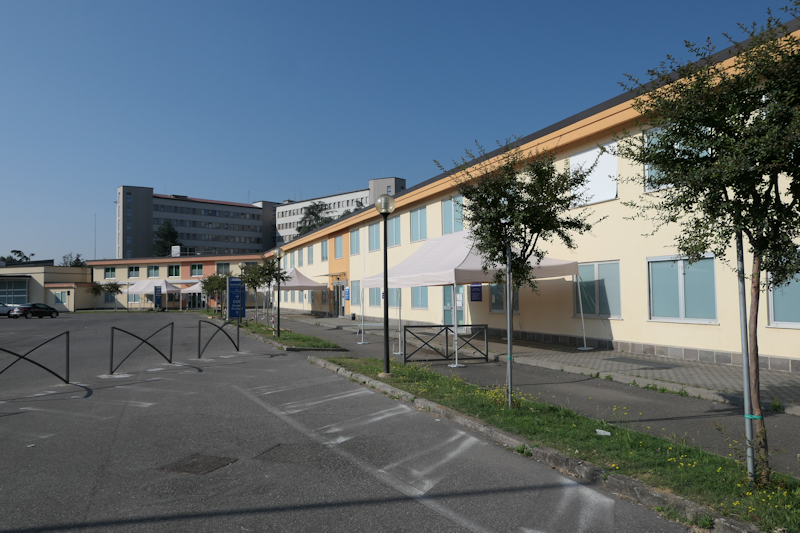
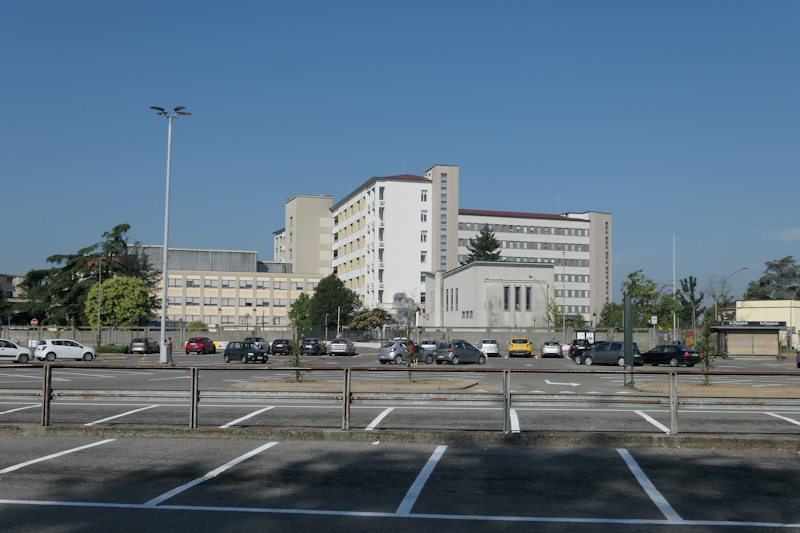 From a project developed in the second half of the 1990s, in the early 2000s the main block was expanded with the opening of the so-called "Piastra" (slab), a 6,000 square metre, 5-storey structure intended to become the emergency and urgency centre, housing a more efficient emergency department and resuscitation service, as well as a coronary care unit and a multi-functional surgical block. This was a particularly complex project that cost 30 billion and 900 million lire, half of which came from regional funds and 11 billion were used for the purchase of new equipment.
On 11 December 2004, the hospital's entrance square was named after Lawyer Ugo Dossena, the main supporter of the new hospital's construction.
A long series of ward renovations and the installation of new advanced technological equipment continued throughout the first two decades.
A further reorganisation was the reform which, under Regional Law No. 23 of 2015, established eight Territorial Health Agencies (ATS) and 27 Territorial Social-Health Companies (ASST). The previous ASLs of Cremona and Mantua thus merged into ATS Val Padana, which, in addition to absorbing the previous functions, deals with planning, integration of health and social-health services with the social services under the responsibility of local authorities, and contract negotiation. Effective 1 January 2016, the three ASSTs of Crema, Cremona, and Mantua were established.
With Regional Law No. 22 of 2021, each ASST was organised into districts and departments, which include community hospitals, community centres, and territorial operational centres that were planned for in the National Recovery and Resilience Plan (PNRR).
ASST Crema manages the hospital facilities of Crema and Rivolta d'Adda, the health facility of Sub-Acute Care Soncino, the outpatient clinics of Crema, Rivolta d'Adda, Castelleone, Soncino, and the blood collection network.
Departments with inpatient services
- Healthcare services
- Stomatotherapy clinic
- Anatomic pathology
- Anaesthesia and intensive care
- Cardiology
- Transfusion centre S.I.M.T.
- General surgery
- Vascular surgery
- Home palliative care
- Day surgery – Ambulatory Surgery BIC
- Gastroenterology and digestive endoscopy
- Analysis laboratory
- Internal medicine – MAU
- Nephrology and dialysis
- Neurology
- Child neuropsychiatry
- Ophthalmology
- Oncology and oncological day hospital
- Orthopaedics and traumatology
- Obstetrics and gynaecology
- Otorhinolaryngology
- Paediatrics
- Pulmonology
- Emergency department
- Psychiatry
- Psychology
- Radiology
- Specialist rehabilitation 3 – Neuromotor
- Outpatient day service
- Urology
See also
- List of hospitals in Italy
- Crema, Lombardy
- San Bernardino (Crema)