
Lowry technique
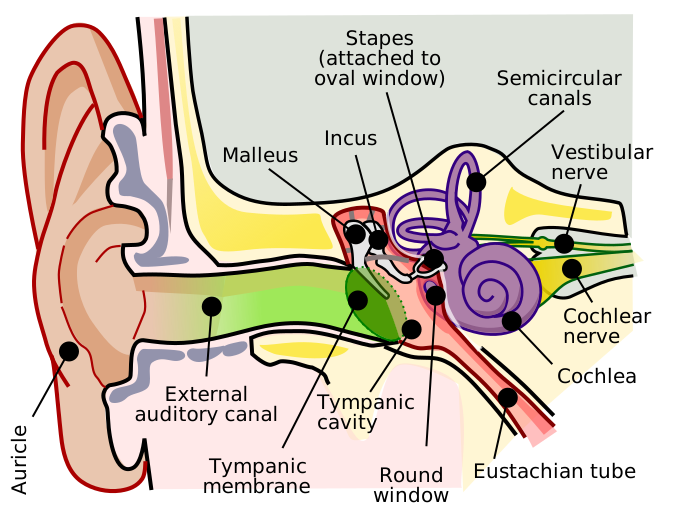
The Lowry technique is a method of middle-ear pressure equalization used in diving and other situations involving changes in ambient pressure. It combines the Valsalva maneuver with the Toynbee maneuver, coordinating increased nasopharyngeal pressure with swallowing. A systematic review of diving-related otology includes the Lowry technique among the recognized maneuvers used to facilitate middle-ear pressure equalization.
Technique and mechanism
The Eustachian tube is normally closed and opens intermittently, including during swallowing, through the action of muscles surrounding its cartilaginous portion. It can also be opened by a sufficient pressure difference between the nasopharynx and middle ear.
The Lowry technique combines two established approaches to opening the Eustachian tube. In the Toynbee maneuver, swallowing is performed while the nostrils are occluded. In the Valsalva maneuver, expiratory effort against an occluded nose raises pressure in the nasopharynx. In the Lowry technique, the Valsalva maneuver is performed in conjunction with the initiation of swallowing. An independent review of pressure-related medical problems in aviation similarly describes the technique as attempting to raise nasal pressure while swallowing with the nostrils occluded.
During diving, equalization of the middle ear through the Eustachian tube is generally active during descent and passive during ascent. The Lowry technique is one of several methods described for active equalization, alongside the Valsalva, Frenzel, Toynbee and Edmonds techniques and voluntary tubal opening.
Terminology and history
The name Lowry technique is documented in the fourth edition of the diving-medicine textbook Diving and Subaquatic Medicine, published in 2002 by Christopher Lowry and Carl Edmonds, where it is described as a combination of the Toynbee and Valsalva maneuvers. The same name and basic description are retained in the fifth edition.
See also
- Ear clearing
- Eustachian tube
- Middle ear barotrauma
- Frenzel maneuver
- Valsalva maneuver
- Toynbee maneuver