
Literary sources for the origin of the Romanians
- See Origin of the Romanians for a multidiscipline approach of the subject.
Most of the literary sources for the origin of the Romanians have been interpreted in various ways by the adherents of divergent scholarly theories. Works on this subject have also been colored by political considerations, since the ethnogenesis of the Romanians (who share the “Vlach” exonym with other peoples speaking an Eastern Romance language) has been the subject of a spirited controversy.
The followers of the theory of the Daco-Romanian continuity emphasize that the continuous presence of a Romanized population (the ancestors of the modern Romanians) on the territory of present-day Romania can be detected in the written primary sources even after the Roman withdrawal from Dacia province in the 270s, and thus the early documents support their theory. On the other hand, their opponents, who are convinced that the ethnogenesis of the Romanians occurred on the central territories of the Balkan Peninsula, underline that no primary document exists that prove the presence of the Romanians’ ancestors before the 12th century on the territories north of the river Danube.
Nevertheless, the adherents of the divergent schools concur that their debate cannot be decided based purely on literary sources, and the results of other academic disciplines (such as archaeology, and linguistics) cannot be ignored.
The article, following the sources’ chronology, summarizes some important literary sources, and it also presents a set of the competing interpretations of the cited documents.
The descent of the Romanians
![The Dacian King Decebal commits [...] after the Romans’ victory](/images/wiki/321771/fdd32aef44dab49c86632191109dc472.jpg "The Dacian King Decebal commits [...] after the Romans’ victory") A passage in an 11th-century Byzantine document describing the events of the rebellion of 1066-1067 in the hinterland of Larissa (in Greece) May Be the first account of the Vlachs in Southeastern Europe. Its author states that the Vlachs descended from the Dacians, and he implies the southward migration of the Vlachs’ ancestors. On the other hand, the document suggests that the Vlachs’ “homeland” used to lie south of the Danube, and it also mentions the Bessi (an ancient Thracian tribe living south of the Danube) among their ancestors. A 12th-century Byzantine chronicler, when describing the events of a Byzantine attack on Hungary, incidentally mentions that the Vlach recruits (most likely from the eastern regions of the Balkan Mountains) is said to have descended from Italian settlers. A 13th-century Flemish Franciscan missionary, in accordance with his conception concerning the origins of the Danube Bulgars from the Volga Bulgars, derives the Vlachs from a certain people (Illac / Ulac) living near the Bashkirs. A chronicle written in Hungary in the 1280s is the first source identifying the Vlachs with the “Romans’ shepherds” who were described as the inhabitants of Pannonia by earlier documents. The Neolatin features of the Romanian language were realized already in the 15th century by French and Italian travelers. The Florentine humanist, Poggio Bracciolini (1380 - 1459) thought that the descendants of Emperor Trajan's settlers lived in the western part of Eastern Europe, and they retained a great deal of the original Latin language. Aeneas Sylvius Piccolomini (1405 - 1464) supposed that the Rumanians were the descendants of the Roman soldiers who had been sent to fight against the Dacians, and they had been named after their military leader, a certain Pomponius Flaccus. Antonio Bonfini (1427/1434-1502), who lived in Hungary from 1486, wrote that the Romanians had descended from Trajan’s legionnaires. A chronicle recorded in Russian annals reproduces a tradition in Moldavia of the origin of the Romanian people. The text presents the complete lack of its anonymous author’s historical and critical sense, but it demonstrates the memory of Rome in the origin, genesis and past of the Romanians. The chronicle narrates that a certain “King Ladislaus” granted land to the ancestors of the Romanians in the Kingdom of Hungary. The oldest Muntenian chronicle, attributed to Stoica Ludescu, also preserved a popular tradition among the Romanians:
A passage in an 11th-century Byzantine document describing the events of the rebellion of 1066-1067 in the hinterland of Larissa (in Greece) May Be the first account of the Vlachs in Southeastern Europe. Its author states that the Vlachs descended from the Dacians, and he implies the southward migration of the Vlachs’ ancestors. On the other hand, the document suggests that the Vlachs’ “homeland” used to lie south of the Danube, and it also mentions the Bessi (an ancient Thracian tribe living south of the Danube) among their ancestors. A 12th-century Byzantine chronicler, when describing the events of a Byzantine attack on Hungary, incidentally mentions that the Vlach recruits (most likely from the eastern regions of the Balkan Mountains) is said to have descended from Italian settlers. A 13th-century Flemish Franciscan missionary, in accordance with his conception concerning the origins of the Danube Bulgars from the Volga Bulgars, derives the Vlachs from a certain people (Illac / Ulac) living near the Bashkirs. A chronicle written in Hungary in the 1280s is the first source identifying the Vlachs with the “Romans’ shepherds” who were described as the inhabitants of Pannonia by earlier documents. The Neolatin features of the Romanian language were realized already in the 15th century by French and Italian travelers. The Florentine humanist, Poggio Bracciolini (1380 - 1459) thought that the descendants of Emperor Trajan's settlers lived in the western part of Eastern Europe, and they retained a great deal of the original Latin language. Aeneas Sylvius Piccolomini (1405 - 1464) supposed that the Rumanians were the descendants of the Roman soldiers who had been sent to fight against the Dacians, and they had been named after their military leader, a certain Pomponius Flaccus. Antonio Bonfini (1427/1434-1502), who lived in Hungary from 1486, wrote that the Romanians had descended from Trajan’s legionnaires. A chronicle recorded in Russian annals reproduces a tradition in Moldavia of the origin of the Romanian people. The text presents the complete lack of its anonymous author’s historical and critical sense, but it demonstrates the memory of Rome in the origin, genesis and past of the Romanians. The chronicle narrates that a certain “King Ladislaus” granted land to the ancestors of the Romanians in the Kingdom of Hungary. The oldest Muntenian chronicle, attributed to Stoica Ludescu, also preserved a popular tradition among the Romanians:
The Roman occupation and colonization of Dacia
The followers of the continuity theory suggest that the Romanians descended from the Romanized Dacian tribes whose territory had been occupied and organized into the Roman province Dacia by Emperor Trajan (98-117 AD). Their opponents emphasize that the early sources suggest that the Dacian participation in the Romanization of Dacia province was minimal; on the other hand, the sources’ statements may be exaggerations.
Ancient sources also suggest the massive and organized colonization of Dacia province with Latin-speaking ethnic elements.
The Roman withdrawal from Dacia
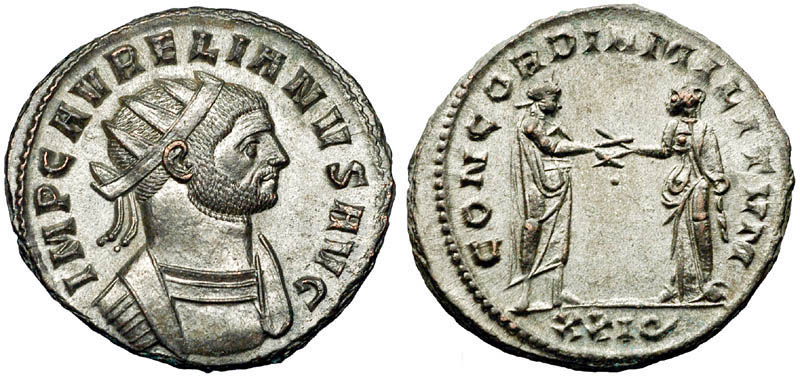 The earliest documents suggest that Emperor Aurelian (270-275) had Dacia province evacuated in good order when he decided to withdraw the Roman military units from the territory; but the relocation of a huge population in a limited time has never succeeded in the course of history. Nevertheless, our sources from antiquity imply that Dacia province had already been lost during the reign of Emperor Gallienus (253-268).
The continuity theory’s adherents refer to a 6th-century author, who was raised in Mœsia and thus must have been familiar with the ethnic character of the area: he wrote that only the legions had left Dacia.
The territory of present-day Romania in the Migration Period
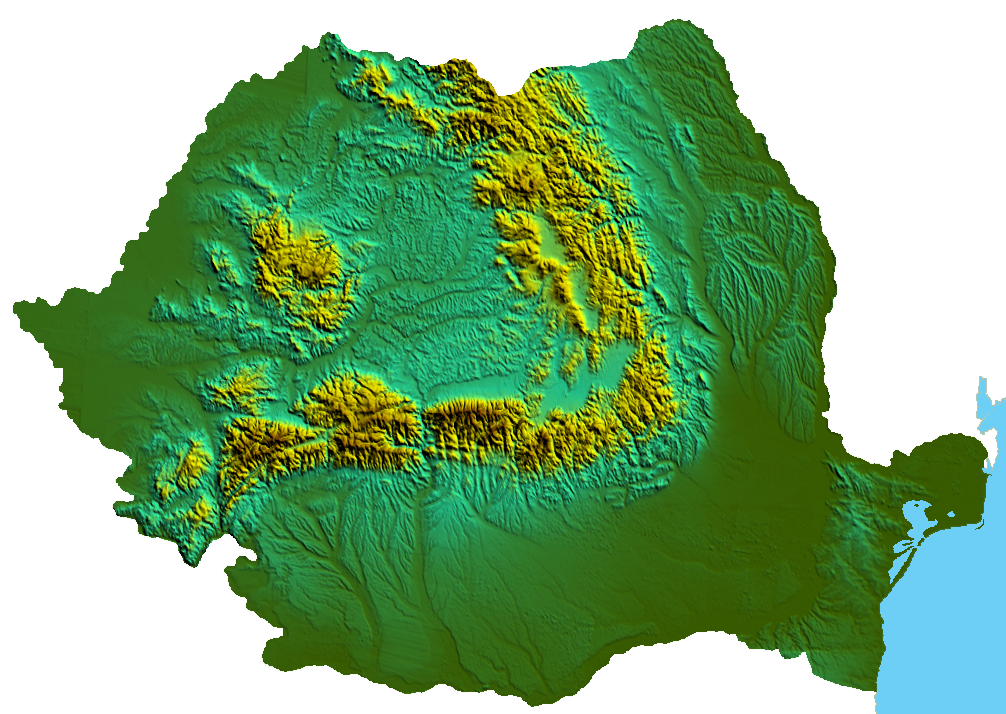 Following the abandonment of Dacia province, the lower Danube became the Roman Empire’s natural frontier. From the 4th century, sporadic references can be found in literary sources to latinophone individuals or groups living on the territories north of the Danube. The Romanians did not have their own historians at that time, and sources could not name something that did not exist; therefore, the Romanians appeared in the foreign sources only about the end of their ethnogenesis process. On the other hand, the presence of the first groups of the Romanians on the territory of present-day Romania cannot be documented before the 1160s, and the written sources became informative regarding the Romanians living north of the Danube only around 1210.
Sources from the 4th-5th centuries
Documents written in the 4th-6th centuries suggest that the Carpians, Indo-Iranian peoples, Germanic tribes, and the Huns lived on the territories north of the Lower Danube at that time.
 A report written by a member of the embassy sent by Emperor Theodosius II (408-450) to the court of Attila the Hun (434-453) implies that “the language of the Ausones” (the Latin) become a real international language in the space of the territories north of the Danube. On the other hand, the diplomat makes no mention of Latinized people beyond the Roman Empire: among the Huns only those spoke Latin who had more contact with the Empire.
The diplomat’s account of a village in the Banat suggests that the migratory peoples preserved almost entirely the structures of the sedentary society on the territories north of the Danube.
Sources from the 6th-7th centuries
The territories north of the lower Danube were the Slavic “homeland” for the 6th-century authors who wrote about them. The “Sclavenes” seem to appear in the sources as an umbrella term for a multitude of groups living north of the Danube frontier, which could not be classified as either “Huns” or “Gepids”.
We learn from the episode of the “phoney Chilbudios” that the Roman general, Chilbudios (who was Slav by his origins) disappeared in an expedition on the left banks of the Danube; shortly afterwards, an Ant slave strikingly resembled with Chilbudios, came to the Roman authorities, pretending that he was the imperial commander and he The episode permits the conclusion that the Roman prisoners in the Wallachian field spoke Latin and used it as a lingua franca. On the other hand, the episode does not prove that the “phoney Chilbudios” mastered Latin north of the Danube. In 568, the Avars occupied the Carpathian Basin, and their power extended into the East European Steppes until the 630s. Thenceforward, the numbers of those who eventually moved into the Middle Danube region were greatly increased by repeated migrations from the steppe of separate, different groups; moreover, our sources prove that groups of Gepids were still living in the Tisa region.
By the 7th century, the Carpathian-Lower Danubian region had become the land of the Slavs which was recorded even by a faraway Armenian geographer. On the other hand, the information provided by geographical sources is limited in value, because they show a rather vague understanding of the geography of Southeastern Europe. Around 670, the Bulgars established themselves just north of the Danube Delta; in 680/681, they crossed the river and remained there in Dobrudja and what is now northeastern Bulgaria.
Sources from the 8th-9th centuries
In the 9th century, the Slavs from the region appear in several documents by the Timočani, Abodriti, Prædecenti, and Osterabtrezi names, although their geographical situation cannot be defined on the basis of these sources.
Ermenrich, Abbot of Ellwangen, in one of his letters written around 860, recorded that the Dacians, together with Germans, Sarmatians, and Alans, lived north of the Danube.
Sources from the 10th-11th centuries
A nearly contemporary source suggests that around 892, the salt mine district in southern Transylvania was under the control of the Bulgarian Empire. 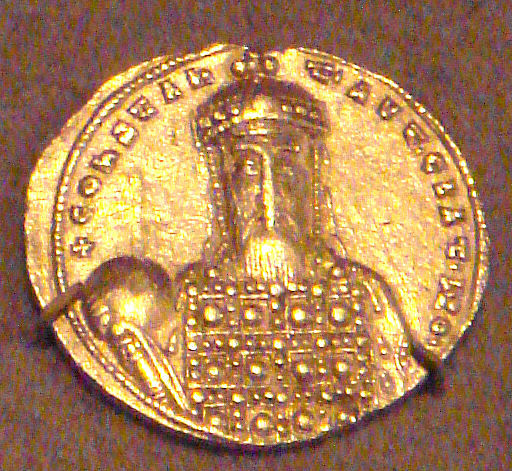 Around 895, Simeon I of Bulgaria attacked the Magyars, inciting against them their eastern neighbors, the Pechenegs. The destruction brought by the Pechenegs forced the remaining Magyars to embark on another migration, which took them into the Carpathian Basin. Around 948, the land of the Pechenegs (Patzinacia) was divided into eight “provinces”, and four of them were located west of the river Dnieper; thus the entire steppe corridor between the rivers Danube and Dnieper was under Pecheneg control.
  By 948, the region between the rivers Mureş, Tisa, and Danube had come under the rule of the Magyars.
Records on the people called N-n-d-r who lived on the territories between the Slavs and the Magyars are sometimes interpreted as a references to the ancestors of the Romanians, although nandor was the ancient name of the Bulgars.
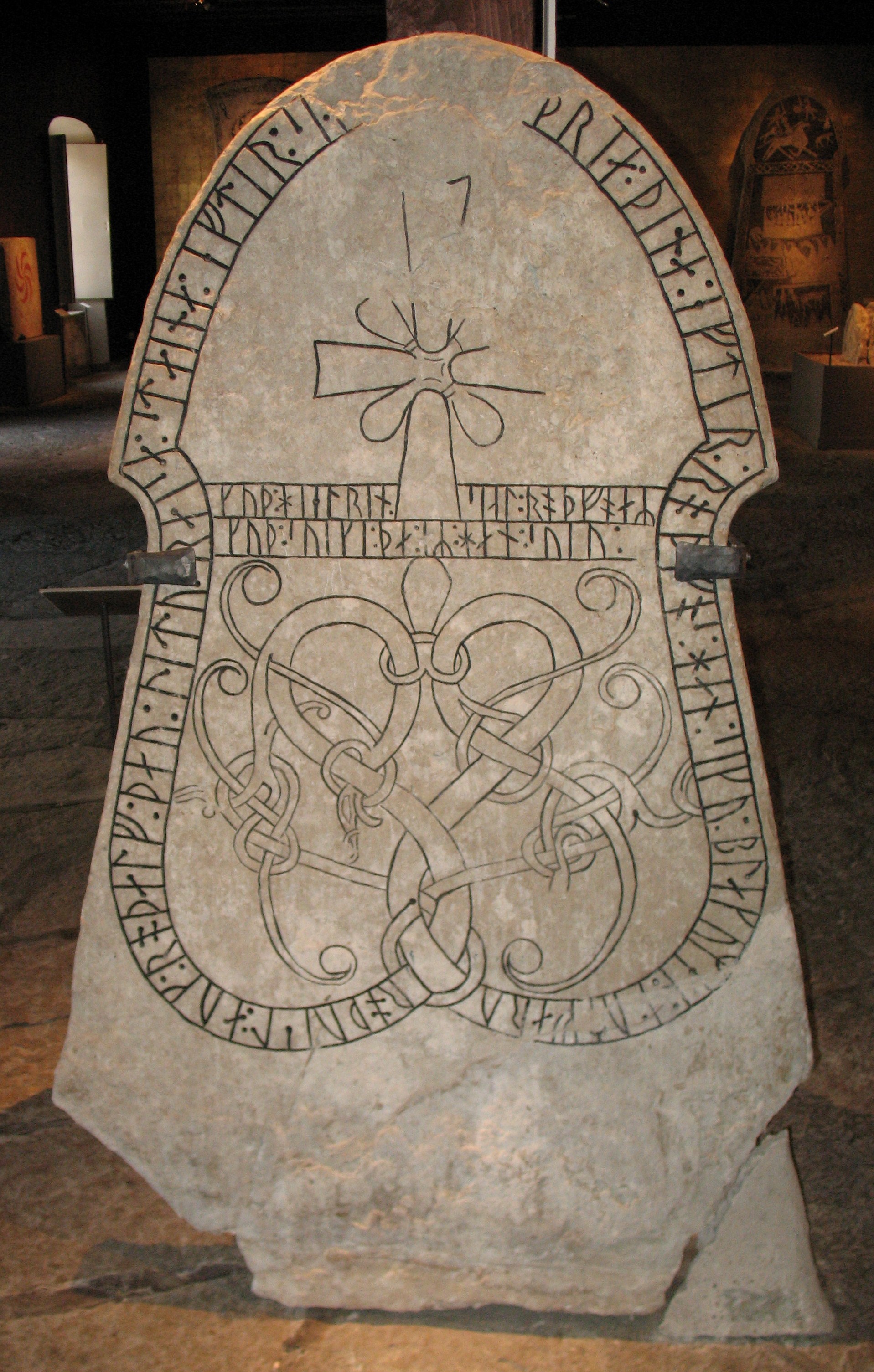
A Varangian runestone from Gotland commemorates a merchant (Hróðfúss) who was traveling to Constantinople and was killed by the Blokumenn. The traditional interpretation of the ethnonym Blokumenn is Vlach; an alternative explanation is that the term means “black man”, though of what kind is not clear. The term is also interpreted as Black Cuman - a term that may stand for the mixed tribes that are called “Black Hats” in the Russian sources.
12th-century sources
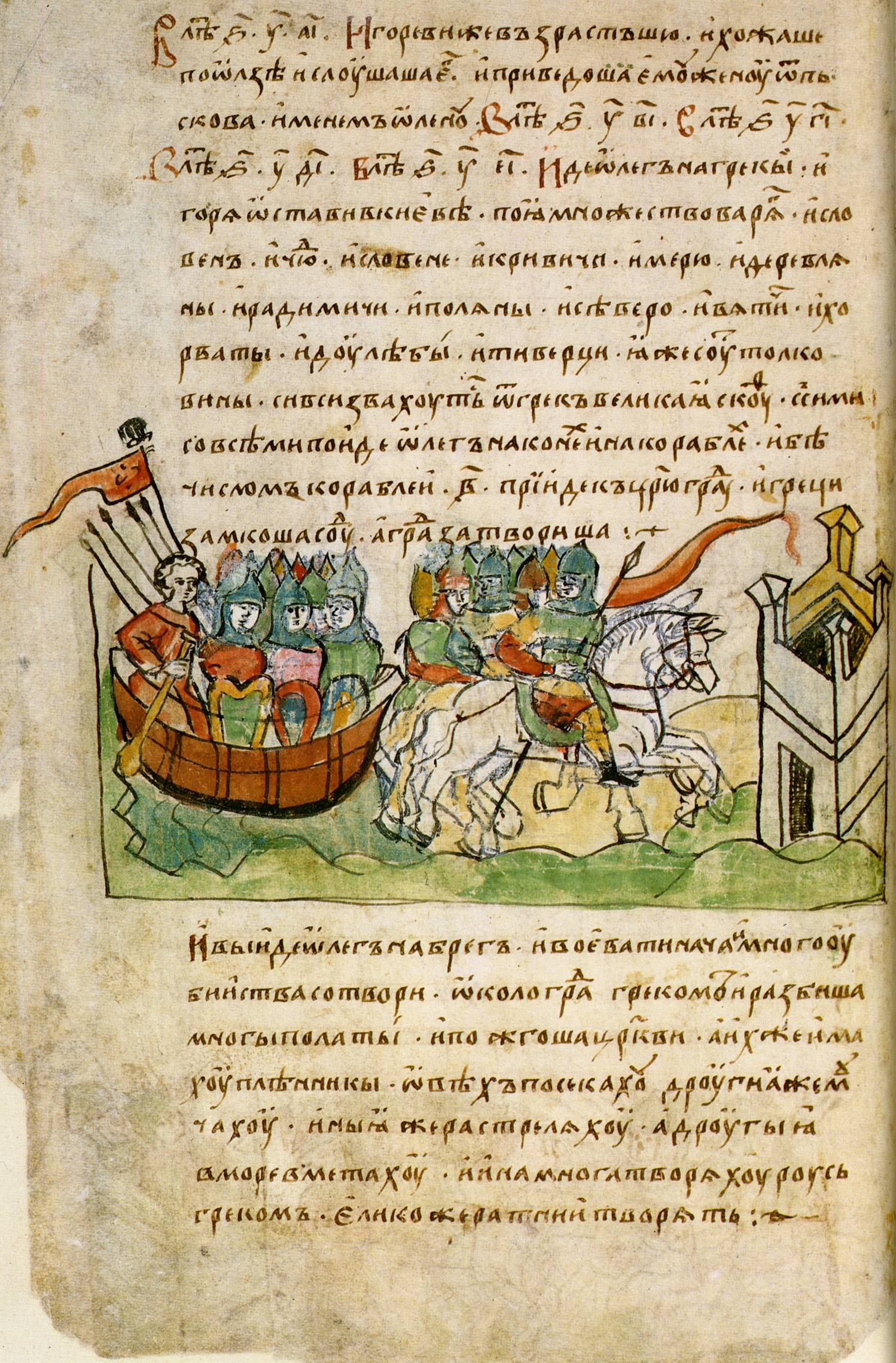 The Russian Primary Chronicle relates that the Volochs attacked and subdued the Slavs living in the Carpathian Basin. If the Volochs are identical with the Vlachs, the chronicle’s entries in question are among the first references to the Romanians’ ancestors. On the other hand, the text shows explicitly that the Slavs had inhabited the area before the Volochs; and therefore the Volochs must be identical to the Franks who occupied part of the Carpathian Basin at the end of the 8th century.
During the reign of the Byzantine Emperor Isaac I Komnenos (1057-1059), as recorded by a Byzantine source, the Pechenegs in alliance with the “Dacians” (that is the Hungarians) crossed the river Danube and invaded the Byzantine Empire.
A 12th-century chronicle is the first document which is unanimously accepted to prove that the Romanians’ ancestors were present north of the Danube. Its Byzantine author reports that Emperor Manuel I (1143-1180), in 1166, launched a combined attack on the Kingdom of Hungary with an extraordinary corps crossing the Danube from Dobrudja, and the corps included a large number of Vlach recruits. A Byzantine historian’s record on the capture of Andronikos Komnenos by Vlachs in 1164 also proves that the Vlachs had already been living north of the Danube (probably somewhere in present-day Moldavia) by that time. The Nibelungenlied (“The Song of the Nibelungs”), written between 1191 and 1204, describes Attila the Hun accompanied by the Vlachs whom their duke Ramung was leading.
13th-century sources
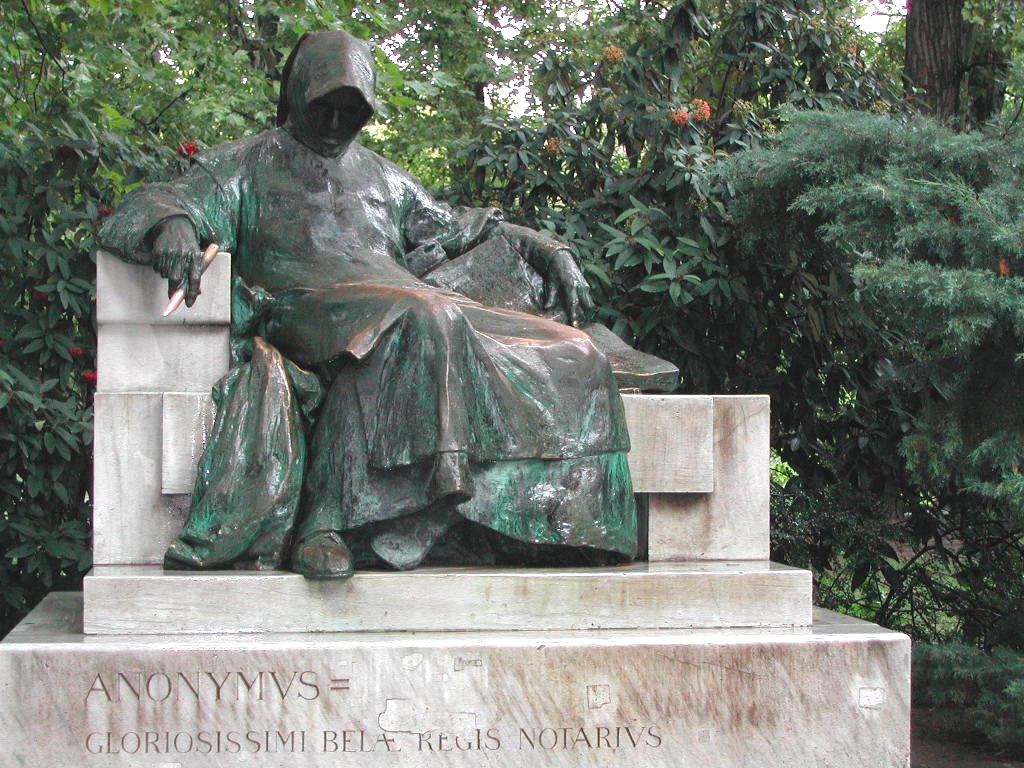
The oldest surviving Hungarian chronicle, the Gesta Ungarorum (“The Deeds of the Hungarians”) records the Romanians’ presence in the Carpathian Basin prior to the arrival of the Magyars. According to the Gesta, the Magyars came across three Romanian cnezates (dukedoms) when invaded the Carpathian Basin around 895. On the other hand, the chronicler’s methods are those of a historical novelist. The chronicler had no knowledge of either the actual circumstances of the Magyar Conquest or the Magyars’ real enemies, and thus he defined the ethnic bond of the leaders hostile to the Magyars on the basis of the ethno-political circumstances surrounding Hungary around 1200. For example, the history of the first years of the Second Bulgarian Empire gave rise to the appearance in conjunction of Bulgars, Vlachs and Cumans in the Gesta.
An early 13th-century biography of St. Olaf of Norway, which is preserved in a late 14th-century manuscript known as Flateyjarbók mentions Blokumenn among the allies of Grand Prince Sviatopolk I of Kiev (1015-1019). As mentioned above, the Blokumenn are identified either with the Vlachs, or with the mixed tribes called “Black Hats” in the Russian chronicles.
14th-century and later sources
The “Black Vlachs” mentioned by a Persian historian were certainly the Vlachs in Transylvania or the Carpathian Mountains though their precise location is uncertain. The oldest Turkish chronicle, the Oghuz-name, which is preserved in a copy incorporated into a 17th-century text, relates that Kipchak, the eponymous hero of the Cumans, had defeated many nations, including the Ulâq (Vlachs), no doubts those previously mentioned in Norse sources. That the mention of the Ulâq can be dated to the time of the first recension of the Oghuz-name has been disputed.
The Vlachs and the "Wallachias" / "Vlachias" on the Balkan Peninsula
From 976 onwards, various written sources mention Romanians (Vlachs) in Thessaly and the Balkan Mountains. The followers of the continuity theory think that the Daco-Roman population (the Romanized Dacians), who had lived between the Danube and the Balkan Mountains, was obliged to seek refuge in the south and southwest, particularly in hilly or mountainous areas when the Slavs settled down south of the Danube in the 7th century. Scholars who do not accept the continuity theory think that the Vlachs living on the territories south of the Danube were the ancestors of both the Romanians and the Aromanians, Megleno-Romanians, and Istro-Romanians.
Sources from the 7th-10th centuries
In the war of 587-588, the Byzantine commander Comentiolus lead his armies from Marcianopolis (today Devnya in Bulgaria) to the Eastern Balkan Mountains in the vicinity of the river Kamchiya. Sources written in the 7th century record the episode that the order among the marching soldiers was lost, because someone speaking in a “native language” called on the one ahead of him to turn around (torna, torna) and other soldiers thought that a command was given to retreat (because at that time, the language of command was Latin in the Byzantine Army). The eastern lands of the Balkan Peninsula were overrun by Slavs, the more western territories (western Bosnia, Croatia, and Dalmatia) seem to have chiefly suffered Avar raids. What was the fate of the indigenous population? Many were killed, while others were carried off beyond the Danube; still others withdrew to the mountains or remote regions, and their descendants reappeared later as Vlachs or Albanians.
Sources from the 11th-12th centuries
The Vlachs are mentioned in connection with the events of the rebellion of 1066-1067 against a tax surcharge imposed by Emperor Constantine X Doukas (1059-1067). The leaders of the rebellion were all prominent men of Larissa (in Thessaly), two of whom are specifically mentioned as being Vlachs, and Bulgarians are also mentioned among the rebels. The source implies that the Vlachs had more or less permanent settlements in the mountains of Bulgaria and they were possibly involved in transhumant pastoralism.
The following record also confirms that the Vlachs and the Bulgars lived side by side, in close proximity. This is also the first source that implies cooperation between the Vlachs and the Cumans. A Jewish explorer describes the Vlachs as mountain people in Boeotia. He learned about the Vlachs living in the mountain region near Lamia (in Phthiotis, Greece), a region he called “Wallachia”.
13th-century sources
The sources cited above yield a perfect explanation why Bulgars, Vlachs and Cumans became the common enemies of Byzantium on the eve of the liberation movement in 1185. The revolt was sparked by a tax that Emperor Isaac II Angelos (1185-1195, 1203-1204) decided to levy in order to cover the expenses for his wedding. In accordance with the important role the Vlachs played in the liberation movement that had led to the foundation of the Second Bulgarian Empire, the new country separating from Byzantium was called Blacia in the Latin sources. In the second stage of development, the terms Vlakhia and Bulgaria appeared, but this double designation referred to the whole territory of the Second Bulgarian Empire. At a later date, the overlapping terms separated, and each was used to designate distinct parts of historical Bulgaria. The fourth and final phase in the history of these terms was characterized by the dominance of the term Bulgaria and the disappearance of Vlakhia.
A 13th-century chronicler when narrating the events of the First Crusade mentions that the crusaders passed through “Blachia”. A Persian historian when narrating the Tatars’ operations on the right bank of the Danube refers to the “city of the ūlāqūt” (the city of the Vlachs) which must have been situated in Bulgaria.
Proselytism and church organization
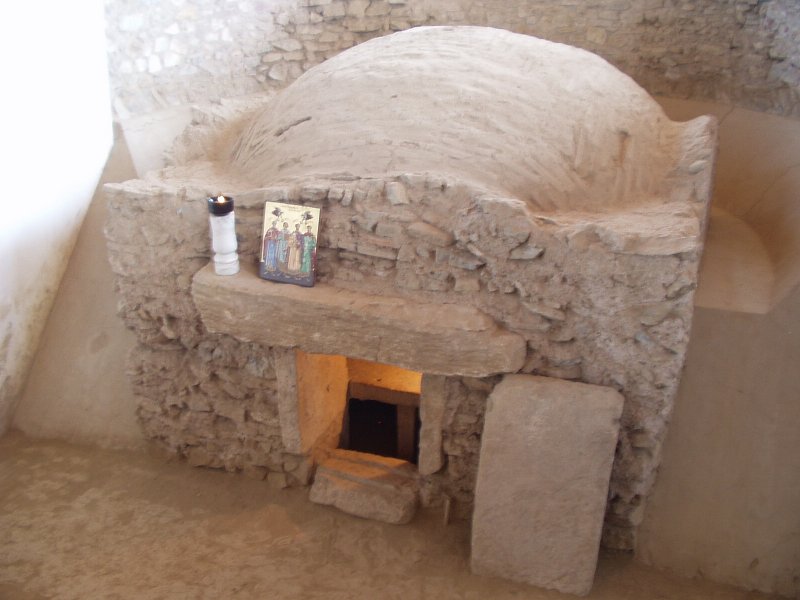 The basic Christian terms in Romanian are of Latin origin which suggests that the Christianization of the Romanians’ ancestors was done in Latin. Although during the Roman rule, Christianity could not manifest itself freely in Dacia province, but after 274, there was no obstacle in the way of its affirmation. The Gospel was not limited to the Germanic populations, and it was not addressed to them in a first stage. The fact that “Gothia” was the ground of the confrontation between the Orthodoxy and some heresies is less important, because - irrespective of the creed - Christianity became the most important way of propagation of the Roman civilization’s values. The primary sources record that Bishop Wulfila preached in Greek, Latin and Gothic; on the other hand, this cannot imply that he preached in Latin north of the Danube, because the Gothi minores (the people of Wulfila) settled in the Empire in 348, and his translation of the Bible suggests that among the Goths the sermons were preached in Gothic.
The author of a poem addressed to Nicetas, Bishop of Remesiana (today Bela Palanka in Serbia), who carried out an active mission south of the Danube and wrote in Latin, praised the bishop for having preached successfully to the Bessi settled around Naissus (today Niš in Serbia). The author also emphasizes the universal pacifying and civilizing power of Nicetas’s Christianizing efforts among the Bessi, the Schythians, the Getæ and the Dacians. The foundation of the Archbishopric of Justiniana Prima in 535 could also contribute to the emergence of a new Romance language within the archdiocese on the central territories of the Balkan Peninsula. In 1020, the Byzantine Emperor Basil II determined the jurisdiction of the archbishopric of Ohrid and authorized the archbishop
See also
- Origin of the Romanians
- Vlachs
- Slavic peoples
External links
- The English translation of the Gesta Ungarorum - 1
Sources
Primary Sources:
- Aurelius Victor (Author) - Bird, H. W. (Translator): De Cæsaribus; Liverpool University Press, 1994; ISBN 978-0-85323-218-6.
- Cecaumeno (Author) - Signes Codoñer, Juan (Translator): Consejos de un aristócrata Bizantino /A Byzantine Nobleman’s Advice/; Alianza Editorial, 2000, Madrid; ISBN 84-206-3594-4.
- Choniatēs, Niketas (Author) - Magoulias, Harry J. (Translator): O City of Byzantium - Annals of Niketas Choniatēs; Wayne State University Press; ISBN 978-0-8143-1764-8.
- Clari, Robert of (Author) – McNeal, Edgar Holmes (Translator): The Conquest of Constantinople; Medieval Academy of America, 1999; ISBN 0-8020-7823-0.
- Comnena, Anna (Author) - Sewter, E. R. A. (Translator): The Alexiad; Penquin Group, 2003, London; ISBN 978-0-14-044958-7.
- Constantine Porphyrogenitus (Author) - Moravcsik, Gyula (Editor) - Jenkins, Romilly J. H. (Translator): De Administrando Imperio (On Administering the Empire); Dumbarton Oaks Center for Byzantine Studies, 1967; ISBN 978-0-88402-343-2.
- Fazlullah, Rashiduddin (Author) - Thackston, Wheeler M. (Translator): Rashiduddin Fazlullah’s Jami‘u’t-tawarikh: Compendium of Chronicles - A History of the Mongols; Harvard University, 1998.
- Hatto, A. T. (Translator): The Nibelungenlied; Penquin Group, 1965, Harmondsworth; ISBN 978-0-14-044137-6.
- Hewsen, Robert H.: The Geography of Ananias of Širak: Asxarhacoyc, the long and the short recensions (Beihefte zum Tubinger Atlas des Borderen Orients); Reichert, 1992; ISBN 3-88226-485-3.
- Jordanes (Author) - Mierow, Charles C. (Translator): The Origin and Deeds of the Goths; BiblioBazaar, 2008; ISBN 978-1-4375-0974-8.
- Kéza, Simon of (Author) - Shaer, Frank (Translator): The Deeds of the Hungarians; Central European University Press, 1999, Budapest; ISBN 963-9116-31-9.
- Rubruck, William of (Author) - Jackson, Peter (Translator): The Mission of Friar William of Rubruck: His Journey to the Court of Great Khan Möngke, 1253-1255; Hakluyt Society, 1990; ISBN 978-0-904180-29-9.
- Sturluson, Snorri (Author) - Hollander, Lee Milton (Translator): Heimskringla: History of the Kings of Norway; University of Texas Press, 1964; ISBN 978-0-292-73061-8
- Szádeczky-Kardoss, Samu - Farkas, Csaba: Az Avar történelem forrásai 557-től 806-ig - Die Quellen der Awarengeschichte von 557 bis 806 /The Sources for the History of the Avars/; Balassi Kiadó, 1998, Budapest; ISBN 963-506-237-0.
- Villehardouin, Geoffrey of (Author) - Shaw, Margaret R. B. (Translator): The Conquest of Constantinople; in: Joinville and Villehardouin - Chronicles of the Crusades; Penguin Classics, 1963; ISBN 978-0-14-044124-6.
- Tudela, Benjamin of (Author) - Adler, Marcus Nathan (Translator): The Itinerary of Benjamin of Tudela; Hard Press, 2006; ISBN 1-4069-1326-X.
- Walsh, P. G. (Editor): The Poems of St. Paulinus of Nola; Paulist Press, 1975, New York, N. Y.; ISBN 8091-0197-1.
- Whitby, Michael - Whitby, Mary (Translators): The History of Theophylact Simocatta: An English Translation with Introduction; Oxford University Press, 1986; ISBN 978-0-19-822799-1.
Secondary Sources:
- Armbruster, Adolf: Romanitatea românilor: istoria unei idei /The Romanity of the Romanians: the History of an Idea/; Editura Academiei Republicii Socialiste România, 1992.
- Birger, Sven - Jansson, Fredrik - Foote, Peter - Lundberg, Bendt A.: Runes in Sweden; Gidluns, 1987; ISBN 91-7844-067-X.
- Brezeanu, Stelian: The Lower Danube Frontier during the 4th-7th Centuries. An ambiguous Notion; in: Annuario 5; Istituto Romano di cultura e ricerca romanistica, 2003 (English: 2).
- Cooper, Jean C.: Dictionary of Christianity; Fitzroy Dearborn Publishers, 1996, Chicago; ISBN 1-884964-49-4.
- Curta, Florin: Southeastern Europe in the Middle Ages - 500-1250; Cambridge University Press, 2006, Cambridge; ISBN 978-0-521-89452-4.
- Du Nay, André: The Origins of the Rumanians - The Early History of the Rumanian Language; Matthias Corvinus Publishing, 1996, Toronto; ISBN 978-1-882785-08-7.
- Durandin, Catherine: Historie des Roumains /The History of the Romanians/; Librairie Artheme Fayard, 1995; ISBN 978-2-213-59425-5.
- Fine, John V. A., Jr.: The Early Medieval Balkans – A Critical Survey from the Sixth to the Late Twelfth Century; The University of Michigan Press, 2008, Ann Arbor; ISBN 978-0-472-08149-3.
- Frend, W. H. C.: The Rise of Christianity; Fortress Press, 1984, Philadelphia; ISBN 0-8006-1931-5.
- Georgescu, Vlad - Călinescu, Matei: The Romanians: A History; I. B. Tauris, 1991.
- Hannestad, Knud: Varangian Problems: Report on the First International Symposium on the Theme the Eastern Connections of the Nordic Peoples in the Viking Period and Early Middle Ages, Moesgrad, University of Aarhus, 7-11 October 1968; Munksgraad, 1970, Aarhus; ISBN 87-16-00456-6.
- Iliescu, Vladimir: Die Räumung Dakiens im Lichte der Schriftquellen; in: Dacoromania N. F. 1.; Publishing House of the Roman Academy, 1973.
- Illyés, Elemér: Ethnic Continuity in the Carpatho-Danubian Area; East European Monographs, Boulder (distributed by Columbia University Press), 1988, New York; ISBN 0-88033-146-1.
- Jesch, Judith: Ships and Men in Late Viking Age: The Vocabulary of Runic Inscriptions and Skaldic Verse; Boydell &Brewer, 2001; ISBN 978-0-85115-826-6.
- Klepper, Nicolae: Romania: An Illustrated History; Hippocrene Books, Inc, 2005, New York, NY; ISBN 0-7818-0935-5.
- Korobeinikov, Dimitri: A Broken Mirror: The Kipçak World in the Thirteenth Century; in: Curta, Florin (Editor) - Kovalev, Roman (Assistant Editor): The Other Europe in the Middle Ages - Avars, Bulgars, Khazars, and Cumans; Koninklijke Brill NV, 2008, Leiden & Boston; ISBN 978-90-04-16389-8.
- Kristó, Gyula: Early Transylvania (895-1324); Lucidus Kiadó, 2003, Budapest; ISBN 963-9465-12-7.
- Köpeczi, Béla (General Editor) - Barta, Gábor; Bóna, Istán; Makkai, László; Miskolczy, Ambrus; Mócsy, András; Péter, Katalin; Szász, Zoltán; Tóth, Endre; Trócsányi, Zsolt; Várkonyi R., Ágnes; Vékony, Gábor (Editors): Histoire de la Transylvanie (History of Transylvania); Akadémiai Kiadó, 1992, Budapest; ISBN 963-05-5901-3 (French: 3; German: 4).
- Köpeczi, Béla (General Editor) - Makkai, László; Mócsy, András; Szász, Zoltán (Editors) - Barta, Gábor (Assistant Editor): History of Transylvania; Akadémiai Kiadó, 1994, Budapest; ISBN 963-05-6703-2 (English: 5).
- László, Gyula: The Magyars - Their Life and Civilisation; Corvina, 1996, Gyula; ISBN 963-13-4226-3.
- Macartney, C. A.: The Medieval Hungarian Historians: A Critical and Analytical Guide; Cambridge University Press, 2008; ISBN 978-0-521-08051-4.
- Minorsky, Vladimir Fedorovich: Hudud al’-Alam: The Regions of the World - A Persian Geography, 327 AH - 982 AD; in: The Geographical Journal, 90/2; 1937, London.
- Pop, Ioan Aurel: Romanians and Romania: A Brief History; Columbia University Press, 1999, New York; ISBN 0-88033-440-1.
- Scholz, Bernhard Walter - Rogers, Barbara (Translators): Carolingian Chronicles - Royal Frankish Annals and Nithard’s Histories; The University of Michigan Press, 2006, Ann Arbor; ISBN 0-472-06186-0.
- Schramm, Gottfried: Frühe Schiksale der Rumänen. Acht Thesen zur Lokalisierung der lateinischen Kontinuität in Südosteuropa /Early History of the Romanians - Eight Theses for Determining the Place of Continuity of the Latin in South-Eastern Europe/; in: Zeitschrift für Balkanologie (Nr. 21/2, 23/1, 22/1), 1985-1987, Wiesbaden.
- Schütz, István: Fehér foltok a Balkánon - Bevezetés az albanológiába és a balkanisztikába /Blank Spots in the Balkans - An Introduction to the Albanology and the Balkan Studies/; Balassi Kiadó, 2002, Budapest; ISBN 965-506-472-1 .
- Trout, Dennis. E.: Paulinus of Nola: Life, Letters, and Poems; University of California Press, 1999, Berkeley and Los Angeles, California; ISBN 0-520-21709-8.
- Vásáry, István: Cumans and Tatars - Oriental Military in the Pre-Ottoman Balkans, 1185-1365; Cambridge University Press, 2005, Cambridge; ISBN 0-521-83756-1.
- Vékony, Gábor: Dacians, Romans, Romanians; 2000, Toronto-Buffalo; ISBN 1-882785-13-4 (English: 6).