
List of permaculture projects
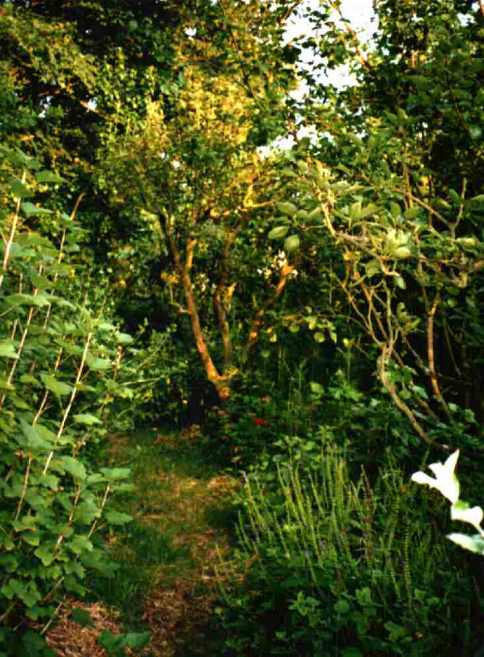
This is list of examples of notable Permaculture projects and practitioners.
Africa
Zimbabwe has 60 schools designed using permaculture, with a national team working within the schools' curriculum development unit. The UN High Commissioner for Refugees (UNHCR) has produced a report on using permaculture in refugee situations after successful use in camps in Southern Africa and Republic of Macedonia. The Biofarming approach applied in Ethiopia has very similar features and can be considered permaculture. It is mainly promoted by the non-governmental organisation BEA, based in Addis Ababa.
Other countries have permaculture farms such as Badilisha Eco Village Trust Foundation that integrates sustainable agriculture with community development on Rusinga Island, in rural Kenya.
Arab countries
A permaculture project has been developed in Jordan by the Permaculture Research Institute headquartered in Australia and run by Geoff Lawton. The project is located in the desert land near the Dead Sea.
There is another project in the Makkah region of Saudi Arabia called the Al Baydha Project run by Neal Spackman.
Australia
The development of permaculture co-founder David Holmgren's home plot at Melliodora, Central Victoria, has been well documented at his website and published in e-book format. Geoff Lawton's Zaytuna Farm next to The Channon in northern NSW, Australia, is a 66-acre medium-farm scale example of permaculture implementation. It is the home base for the Permaculture Research Institute. Begun in 2001, the site is off-grid, and has multiple food forest systems, animal systems, kitchen garden and main crop areas, a large network of water-harvesting earthworks for passive hydration of the site, composting toilets, rocket stove powered showers, straw bale natural buildings, etc.
City Farm Perth is an example of community permaculture in an inner suburb of Perth, Western Australia. The farm was constructed on a brownfield site in 1994, and is a focal point for permaculture education, as well as community music and art.
Tikopia
Tikopians practice an intensive permaculture system, similar in principle to forest gardening and the gardens of the New Guinea highlands. Their agricultural practices are strongly and consciously tied to the population density. For example, around 1600 AD, the people agreed to slaughter all pigs on the island and substitute fishing, because the pigs were taking too much food that could be eaten by people.
New Zealand
There are many well established living examples of permaculture practice in New Zealand including Rainbow Valley Farm which was established in 1988 by Joe Polaischer and Trish Allen. The 21 ha. organic farm was designed on permaculture principles and ethics.
Atamai Village near Motueka in the Tasman region of New Zealand's South Island, has been going since about 2007. The development is designed as an enduring settlement which will ultimately accommodate approximately 200 people, living in a traditional village environment designed along permaculture principles. Families will own private dwellings and share in 45 ha of common land. Transport in the village will be by bicycle and resources such as water, waste management, fuel, energy and food will be produced and provided within the village wherever possible. The entire village, as well as individual house sites, are designed on permaculture principles to enhance both the physical and social resilience of the Atamai community.
Thailand
Mindfulness Project, The Mindfulness Project is an ecological forest preserving charity in Khon Kaen, Thailand. The 34 acres is a monastery land built in order to preserve and extend the forest as well as making an example of sustainable living and natural building. The special feature is, that every house is covered with artistic mosaic. The Mindfulness Project now hosts volunteers, student groups and courses.
Rak Tamachat Permaculture Education Center is located in North East Thailand near Korat. Begun in January 2012 using a master plan created by Christian Shearer the founder of The Panya Project. Beau and Lin Wickboldt founded Rak Tamachat as a permaculture education center to achieve their goals of creating a sustainable future for their family and others. The center is built on a 50 acre corn and rice farm that is using conventional agriculture techniques. A wide variety of elements are used to meet these goals, including natural building, sheet mulching, aquaculture, food forests. Rak Tamachat hosts visitors, volunteers, interns and courses.
The Panya Project, located in Mae Taeng, Chiang Mai, Thailand, is a sustainable living project implementing permaculture principals and hosting workshops in English and Thai. In fall 2006, the project hosted a permaculture design course taught by Geoff Lawton of the Permaculture Research Institute of Australia, and subsequently installed over 500 meters of swales and a 2 million liter pond. The Panya Project used permaculture to help regenerate what used to be a mono-crop mango plantation, transforming it into what is called a "biodiverse food forest, organic farm and education center". The Panya Project also incorporates what they call "natural building" into their design, e.g., wattle, cob and adobe brick. The Panya Project now hosts volunteers, student groups and courses. Daruma Eco-Farm is a sustainable permaculture project located in Bang Phra, Thailand, approximately 1.5 hours drive from Bangkok. Daruma offers courses permaculture design and natural building courses, has an artist-in-residency program, internship, and volunteer program. The farm utilizes integrated aquaculture and is working on a project to generate methane from buffalo dung. Rice paddies are planted according to the System of Rice Intensification (SRI). Resident animals include cats, chickens, ducks, fish, pigs, sheep, and a dog.
Israel
Israel has a number of permaculture farms, many of which serve as educational hubs. For example, the Eve and Adam Ecological Farm (Hava Ve'adam) and Kibbutz Lotan both involve gardens, farms and communities that are based upon the design techniques and ethics of Permaculture.
Cambodia
A consortium of NGOs including Lom Orng and Ockenden is doing a post-flood livelihood and infrastructure regeneration project, in the country's northwest, which includes permaculture principles, and the establishment of a permaculture demonstration farm in Battambang Province which serves as a community farm and education site and includes a native tree nursery and biogas system providing clean cooking fuel and lighting.
Nepal
The Himalayan Permaculture Centre (HPC) is a grass roots non-government organisation (NGO) set up by trained and motivated farmers from Surkhet district (Mid-Western Nepal) in 2010 to implement sustainable rural development programs in Nepal.
Austria
Austria has multiple permaculture project including the arguably most famous - The Krameterhof, created by Sepp Holzer, simultaneously being the oldest, deliberately designed permaculture project currently existing. Holzer has been farming his land since 1962. The Krameterhof has been one of Austrias project featured in the Expo 2000.
Belgium
- Jardin des fraternités ouvrières (Mouscron), is a small but intensive 30 year old fruit forest. It accepts visitors, offers lessons, and features a shop where (rare) seeds can be purchased.
- Ferme Arc-en-Ciel (Wellin), is a small producer around 1ha cultivated. (http://www.fermearcenciel.be/)
It accepts visitor (but you must call for a rendez-vous first) offers vegetables baskets to consom'acteur groups.
Bulgaria
The Balkan Ecology Project (BalkEP) is devoted to the design and exploration of ecologically-sound human habitats. Balkep is a permaculture inspired project and serves as a demonstration site for local residents, communities and visitors from abroad. Projects are aimed to develop thoughtful approaches to food, shelter, community and commerce, while preserving the unique biological diversity associated with the Balkan region. Volunteers and interns are welcome and a variety of courses and events are available throughout the year.
Spain
Red de Permacultura Ibérica (Iberic Permaculture Network)
Portugal
In Portugal there are several Permaculture projects. There's a bottom-up initiative that is mapping most of them called Rede CONVERGIR
Switzerland
Alpine permaculture project in the mountains of Switzerland. We are building on a 20ha landscape a diverse edible system check out the homepage for more information. there are ongoing design courses and special workshop over the year http://www.alpine-permakultur.ch
United Kingdom
There are a number of example permaculture projects in the UK, including:
- Agroforestry Research Trust, managed by Martin Crawford, is a not-for-profit organisation based in Dartington, Devon that runs a forest garden and publishes the journal Agroforestry News
- Chickenshack Housing co-op, a fully mutual housing co-op established in 1995 using permaculture design principles. Based in rural North Wales, the community has 4 dwellings and 6 residents on a site. Features include a biomass and solar district heating scheme, a half-acre forest garden and various wildlife conservation and habitat creation strategies. The community is very active in regional sustainability projects such as the Machynlleth Transition Towns initiative. It runs occasional courses in permaculture design and regularly receives visits from interested parties.
- Middlewood Trust, a permaculture-based farm in North Lancashire running courses in permaculture, crafts, forestry and sustainability
- Plan-It Earth Eco Project offers a variety of environmental education programs, courses and events, and eco-holidays at a traditional smallholding near Penzance, Cornwall
- Plants for a Future, a vegan-organic project based at Lostwithiel in Cornwall that is researching and trialing edible and otherwise useful plant crops for sustainable cultivation. Their online database features over 7,000 such species that can be grown within the UK. A collaborative version of the database is in development by the permaculture.info project.
- Prickly Nut Woods, a woodland near Haslemere, Surrey that is managed by Ben Law. He uses a 'whole system' permacultural approach, using a wide variety of woodland products and documenting a complex web of relationships. He built a house almost entirely using products from the woodland, which was featured in Channel 4's Grand Designs TV series.
- Ragmans Lane, a farm in the Forest of Dean in Gloucestershire.
- The RISC Roof Garden, on top of a development education centre in Reading city centre and inspired by Robert Hart's permaculture forest garden in Shropshire, is an excellent example of urban permaculture design. It is used by schools, educators and designers as an educational resource for sustainable development and is a member of the National Gardens Scheme. The garden is composed of dense plantings of over 180 species of edible and medicinal plants and is fed by rainwater and composted waste from the centre.
- Tir Penrhos Isaf, near Dolgellau, developed by Chris and Lyn Dixon since 1986.
- The Sussex Roots Society, a community permaculture garden initiated by Mischa Nowicki and Integralpermanence at Sussex University, collaborating with the student union as part of the countries first "Eco- University" initiative.
- Eastside Roots- is a (not for profit, worker co-op) community garden centre and hub which evolved from Bristol Permaculture Group. 'Waste' ground owned by First Great Western has been leased and is a garden centre with ongoing education, social projects and outreach into the wider community. The project promotes sustainability and permaculture.
Other projects tend to be more community oriented, particularly in urban areas. These include Naturewise, a north London based group that tends a number of forest gardens and allotments as well as running regular permaculture introductory and design courses; and Organiclea, a workers cooperative that is involved in developing local food-growing and distribution initiatives around the Walthamstow area of east London. The Transition Towns movement initiated in Totnes and Kinsale by Rob Hopkins is underpinned by permaculture design principles in its attempts to visualise sustainable communities beyond peak oil.
The UK Permaculture Association publishes an extensive directory of other projects and example sites throughout the country.
North America
Also see the Permaculture Association of Teachers and Organizers on WiserEarth for a more-complete US Listing.
Canada
Miracle Farms, Cazaville, Qc, Canada - A 12-acre u-pick commercial permaculture orchard.
Permaculture at Jasper Place High School, Edmonton, AB
Permaculture BC, British Columbia Showcase of BC Permaculture Instructors http://www.permaculturebc.com
Kootenay Permaculture Institute, British Columbia
Permaculture Canada, website that lists many practitioners and related to Permaculture courses and projects in Canada
The Permaculture Project GTA - a permaculture hub based in Toronto; a weblog oriented to permaculture in the Greater Toronto Area
Permaculture Ottawa - non-profit permaculture community organization in Ottawa, Canada
1/4 Acre Cold Climate Permaculture Site - Ness Creek Forest Garden
Harvest Moon Society, Clearwater, Manitoba
Conscious Design Collective, Vancouver, BC - a community of Educators running Permaculture Courses in Vancouver and the surrounding bioregion.
Northeast US
- Prospect Rock Permaculture is one of the region's longest established permaculture education and demonstration sites, and Vermont's oldest permaculture design firm. They grow a diversity of nuts, fruit trees, vines, berries, vegetables, medicinal and culinary herbs and teas, produce eggs and honey, and host a variety of workshops, permaculture courses, advanced permaculture design internships, and other educational programs.
- The Northeastern Permaculture Network brings together enthusiasts in the northeastern United States and eastern Canada. The Northeastern Permaculture Convergence has been held every summer in a different location in the northeast. There is a listserv, a wiki, a "ning" social network, a Facebook group, and the 501(c)3 P.I.N.E (Permaculture Institute of the Northeast).
- People's Garden Pittsburgh is building a one acre food forest on an abandoned landslide in the Hill District of Pittsburgh, which is considered a food desert.
- UMass Permaculture is a university permaculture initiative that transforms marginalized landscapes on the campus into diverse, educational, low-maintenance and edible gardens, according to UMass officials. During November, 2010, "about a quarter of a million pounds of organic matter was moved by hand", using all student and community volunteer labor and no fossil fuels on-site. The process took about two weeks to complete. Now, the Franklin Permaculture Garden includes a diverse mixture of "vegetables, fruit trees, berry bushes, culinary herbs and... flowers that attract beneficial insects."
- Burlington Permaculture is an ad-hoc community group based out of Burlington Vermont. BTP unites neighbors to promote urban agriculture and reforestation, enhance neighborhoods, and strengthen the web of community resources as we look beyond sustainability towards a vibrant healthy relationship with our landscape. The group was founded by Michael Blazewicz of Round River Design, Mark Krawczyk of Rivenwood Crafts, and Keith Morris of Prospect Rock Permaculture.
- Green Phoenix Permaculture, offers design courses and workshops, demonstrating forest gardens, natural building, permaculture designs, and a community of many permaculture designers & teachers including AppleSeed Permaculture and Sowing Solutions Permaculture Design & Education.
- The websites FLXpermaculture.Net and the Upstate NY Permaculture Network are email lists and web sites for permaculture practitioners in New York state.
- The Finger Lakes Permaculture Institute offers an annual Permaculture Design Certification course, apprenticeships, and workshops that are often held at area sites designed using permaculture principles. The Finger Lakes Permaculture Institute was founded by Michael Burns, Steve Gabriel, and Karryn Olson Ramanujan in 2005.
Southeast US
- The Farm Ecovillage Training Center, Summertown, Tn provides examples drawn from 4 decades of ecovillage living, including cob, earthbag, round-pole and strawbale buildings, constructed wastewater wetlands, fish, ducks and chickens, organic and biodynamic gardens, orchards, shiitake production, biofuel production, solar photovoltaics, herbal tinctures and plant medicines, humanure and other composting practices, and community conviviality processes.
- Spiral Ridge Permaculture Gardens, Summertown, Tn
- Cedar House Inn/Permaculture Lifestyles Permaculture Demonstration Project, North Georgia
- The Edible Plant Project implements and promotes elements of permaculture through a nonprofit nursery and workshops in Gainesville, FL (home of University of Florida).
- Georgia Permaculture Institute, Central Georgia
- Knoxville Permaculture Guild, Knoxville, TN.
- Northern Virginia Permaculture Guild
- Sweet Aspect Permaculture, the steward of one acre of land outside of Asheville, NC, is experimenting with permaculture principles, design, and implementation. Sweet Aspect focuses on small animal management, including lambs and chickens, gardens, orchards, edible forest management, shitake production, rainwater catchment, greywater systems, natural and green building, fermentation, herbal tinctures and plant medicines, humanure and other composting practices, and alternative fuel and energy harvesting.
- The Urban Permaculture Institute of the Southeast in Walterboro, South Carolina practices permaculture on a 1/2 acre lot in the middle of the city with chickens, fish, bees, food forestry, vermiculture, insect production, greywater systems, passive solar, mushroom production, rainwater catchment, floating hydroponics and partial hydroponic systems.
- Spring Village / New Community Project in Harrisonburg, VA practices and teaches permacture at a small urban site.
Midwestern and Rocky Mountain region
- Permaculture Research Institute for Cold Climate.
- The Round Mountain Institute in the Gunnison valley of Colorado is a nonprofit that is dedicated to sustainable agriculture high in the rocky mountains near the continental divide.
- Central Rocky Mountain Permaculture Institute. http://
- The Urban-Suburban Sustainability Initiative based in Belleville, Illinois is a local grassroots organization in the process of starting up. Its focus will be on permaculture, bioremedification, environmental education and Local Exchange Trading Systems.
- Bloomington Permaculture Guild, Bloomington, Indiana
- High Altitude Permaculture Institute is based in Ward, Colorado, which is west of Boulder.
- Midwest Permaculture delivers up to a dozen PDC Courses per year (in the Midwest and elsewhere) along with many other kinds of permaculture trainings.
- The Center for Sustainable Community asked Midwest Permaculture to do a permaculture design for the 8.7 acres of land that immediately adjoins the local community in Stelle, Illinois.
- Bur Oak Farm in SE Wisconsin, approximately 40 miles north of Milwaukee
- Urban Permaculture Design a city lot with over a hundred perennial edible varieties. Permaculture land acquisition discussion. Urban Classes.
- Sunrise Ranch Intentional Community near Loveland, Colorado. Farm to table internship programs, permaculture design course, farm/garden internships.
West Coast
- The Regenerative Design Institute (RDI) is a non-profit educational organization in Bolinas, California.
- Living Mandala : Course promotion and collective of educators. Social Net+work
- Lost Valley Educational Center teaches seasonal classes in permaculture design certification, as well as natural building techniques, within an intentional community environment.
- Path to Freedom promotes urban permaculture in Los Angeles
- The Urban Permaculture Guild implements and promotes elements of permaculture through educational workshops and projects in East Bay and San Francisco, CA.
- Indigenous Permaculture (IPP) revitalizes the relationship of communities to the earth, and operates as a collaborative of communities sharing information, resources, and tools.
- In the heart of Los Angeles, Edendale Farm CSA & Learning Center is a model urban farm. Based on Permaculture principles it offers classes and workshops year round.
- Salt of the Earth Farm is located in Portland, Oregon, and provides fresh produce for a local food bank. The urban permaculture farm's focus is helping struggling families increase their food security by offering free workshops, seeds, and seedlings throughout the year.
- Cob Project Campus is located in Bend, Oregon. CPC is putting in all new raised beds and vertical garden growing system all over 2 plus acres of soil building land. We are a brand new permaculture group in the making. 50% of all produce grown will go towards feeding the hungry in Bend Oregon. We welcome all volunteers. www.cobprojectcampus.org
Southwest US
- In Santa Fe, New Mexico, the Permaculture Institute utilizes a hands on approach to education on topics such as landscape and building design as well as water systems.
- After a fire in 2006, the Lama Foundation in Taos, New Mexico used permaculture principles to restore ecosystem and infrastructure damaged during the fire.
- In Oklahoma City, Oklahoma, the Gatewood Urban Homestead is the residence of permaculturist Robert Waldrop. On less than 1/7 of an acre, in one of Oklahoma City's most densely populated neighborhoods, close to downtown OKC, they raise more than 100 different varieties of useful or edible plants on their former lawns. The house, originally built in 1929, is super-insulated, incorporates passive solar. The residents are implementing a five year permaculture design for the property.
Northwest US
- The Seattle Permaculture Guild is active in that city.
- Beacon Food Forest is a project in the City on 7 acres. Groundbreaking in 2012.
- The Portland Permaculture Guild (PPG) is very active in Portland, Oregon. There are many PC gardens in and around the Portland area. There are many fine teachers in Portland and in Oregon, including teachers OF PC teachers. Also, Toby Hemenway, noted Permaculture author and teacher, lives in the Portland area.
- Suburban Permaculture. The site in Eugene, Oregon is a notable example of transforming a suburban property. Grass to garden, rain water catchment, reclaiming automobile space, passive solar redesign, increasing residential density. The location has become a community learning resource and model for transforming suburbia.
- Lost Valley Educational Center is demonstrating how application of permaculture principles can create profitable, productive, and sustainable cultivated ecosystems which mirror the diversity, stability and resilience of healthy natural ecosystems.
- Alderleaf Wilderness College near Seattle, WA offers a ten month Wilderness Certification Program, in which permaculture is a core component of the curriculum along with wilderness survival skills, wild edible & medicinal plants, and other nature skills.
- Bev's Place is a permaculture site in Vancouver WA since the 1990s, featuring Espaliade fruit trees, grape vines, bamboo, diverse perennials, rich compost, a true 'food forest' in transition right now looking for people to continue the work of the founder.
- Meadows Tilth Urban Farm is a permaculture site in Vancouver WA since 2003, featuring deep swales, earthworks, fruit trees, grape vines, bamboo, soil building mixed with evergreens, a very different food forest.
Guatemala
The Instituto Mesoamericano de Permacultura (IMAP) was founded in 2000 by a group of Mayan farmers and professionals in San Lucas Toliman, Guatemala. It is a not-for-profit community organization focused on the development of self-sufficient communities through the responsible management of natural resources, using permaculture techniques and ancestral and traditional knowledge. Areas of focus include: the cultural and biological diversity of Mesoamerica; food security and food sovereignty; organic production systems at the community and familial level; and permaculture education and environmental stewardship.
IMAP offers certified permaculture courses led by Ronaldo Lec in Spanish and in English, as well as educational tours and monthly workshops on a variety of themes related to organic food production and sustainability.
Cuba
Cuba has since 1993 transformed its food production using low-input, or organic agriculture and, to some degree, permaculture. Havana produces up to 50% of its food requirements within the city limits, much of it organic and produced by people in their homes, gardens and in municipal spaces The transformation in agriculture originated as a response to a crisis which is known as the Special Period. Starting in 1993 Australian permaculturists traveled to Cuba to educate Cuban gardeners in permaculture practices.
Nicaragua
Project Bona Fide is a site on the twin volcano island of Ometepe, Nicaragua which has been in development for nearly a decade. Infrastructural systems contain natural buildings built with local materials, terraced and medicinal plant gardens, an extensive nursery, seed bank, developing fruit and nut orchards, food forests, native timber forestry, timber bamboo plantings, water-catchment, drip irrigation and ferro-cement technologies, renewable energy systems, and composting toilets.
O Parks, WildLife, and Recreation ("O") located in the Pacific Lowlands of Southwest Nicaragua is a private park on a historic site (La Colina 155 or hill 155) in San Juan del Sur, Nicaragua. Infrastructural systems contain a 630 meter long zipline, IMBA bicycle trail, hiking trail, appropriate technology shelter structures, terrace agriculture, small nursery, seed library, fruit and nut orchard, famine food forest, native and hardwood forest, Guadua timber bamboo plantings, rainwater harvesting, drip irrigation, renewable energy systems, and composting toilets. O Parks has opened to the public with plans to become a center for tourism through tours, events, excursions, community development, accommodations, and artisan baked goods through their franchise Pan De Vida.
Finca El Zopilote Finca El Zopilote is a farm/hostel run by an Italian family from Tuscany from 2002 located in Isla de Ometepe in Nicaragua. Finca El Zopilote offers to the visitors different types of accommodation such as camping, hammocks, dormitory and private cabins. There is an organic restaurant open all day long serving Nica and Italian food and three nights a week pizza is cooked in a traditional wood owen made with clay. There are compost toilets and gray waters from the showers and the kitchen is cleaned through a system of constructed wetlands. The land is completely planted with trees and plants of every kind, there is a nursery and 2 vegetable gardens and are present many works to limit erosion and water harvesting earth work. Have been used ferro-cement techniques for the construction of water tanks. There are working possibilities for people interested in permaculture.
Brazil
IPEC - Ecocentro at the Instituto de Permacultura e Ecovilas do Cerrado - the Institute of Permaculture and Ecovillage of the Cerrado
IPCP - Instituto de Permacultura Cerrado-Pantanal (Permaculture Institute of Cerrado-Pantanal), Campo Grande, MS. Specializing in interactive teaching of Permaculture and direct work with Indigenous communities within the Cerrado biome.
IPOEMA - Institute of Permaculture, Ecovillages and Environment — BrasÃlia DF BRAZIL
Chile
The Permaculture community in Chile is relatively new. Its development has been driven largely by a small group of dedicated Permacultors building a learning community. The community has rapidly expanded in the last two years following a tour by David Holmgren in 2007, the work of Eluwn the delivery of Permaculture Design Certificate courses by El Manzano, and the formation of the Instituto de Permacultura en Chile. The broad network can be found at www.permacultura.cl where specific links can be found to the leading organisations.
External links
- The Worldwide Permaculture Network - Map and database of permaculture people and projects worldwide.
- The Permaculture Research Institute - Regular article and video reports from permaculture projects worldwide.