
JPods

JPods are an innovative method of personal transportation that use distributed collaborative computer networks to route physical transit in a manner similar to the data trafficking of the Internet. Developed by JPods, Inc. as a form of personal rapid transit, ultra-light pods have an on-board computer that controls their motion.
Personal rapid transit was defined in Congressional Office of Technology Assessment Study PB-244854 as the solution for urban transport in response to the 1973 Oil Embargo. Morgantown, West Virginia installed a heavy version of this technology that has delivered 110 million oil-free, injury-free passenger miles.
Transport Characteristics
In the demonstration JPod, people get in, and the vehicle navigates to that address. In production models people and/or cargo will set destination and travel non-stop from origin to destination.
Installations
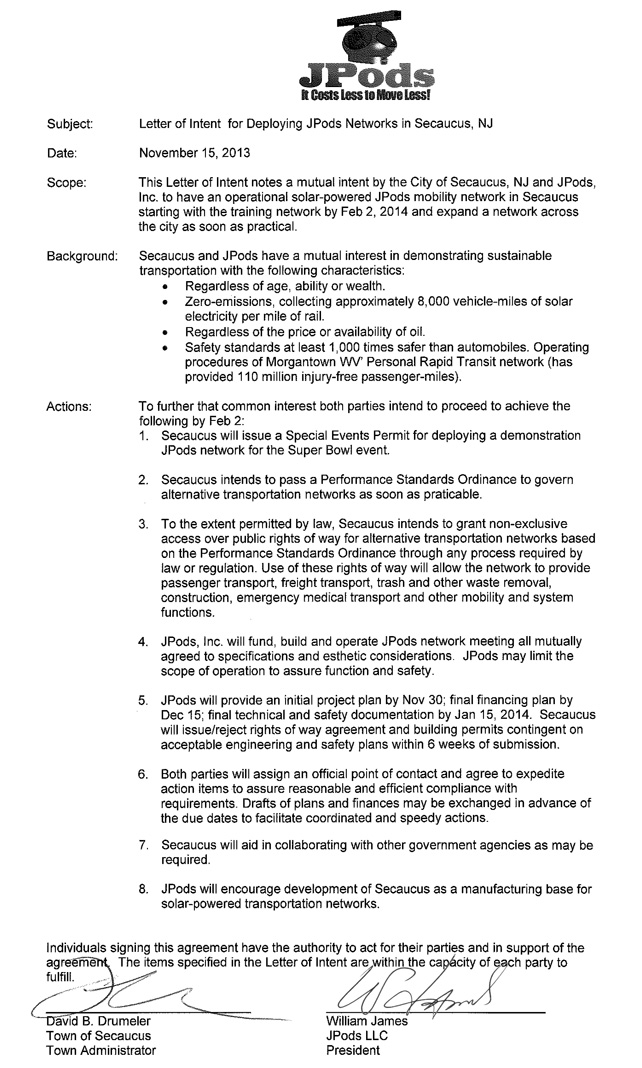
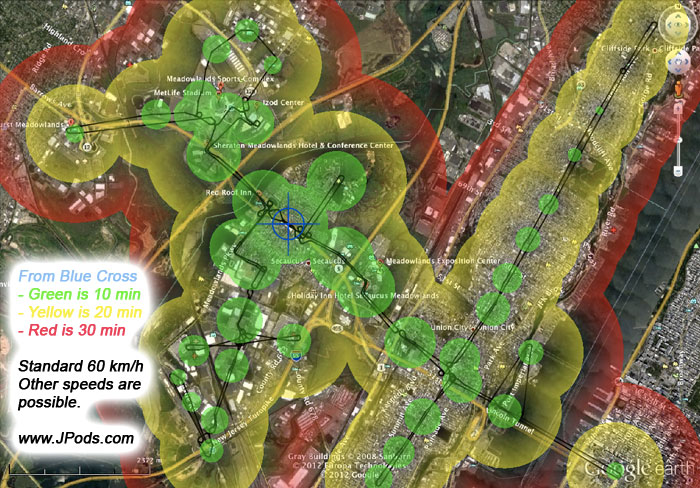
JPods has signed letters-of-intent (see image of letter to the right) to build networks in 2014 with the cities of Secaucus ( network, US-NJ), Anshan (, China), and Linyi (, China). On June 25, 2014 the Town of Secaucus passed a Performance Standards Ordinance making it a law to grant rights of way access based on exceeding 120 passenger-miles per gallon.
System details
- vehicles weigh approximately with a gross carrying capacity of
- vehicles travel suspended below an overhead guideway that encases the bogies
- bogies are the mechanisms that propel vehicles and from which the vehicle chassis is suspended. Bogies are composed of generally of motors, controllers, wheels, gearboxes, sensors, and switches.
- switch control is managed by the vehicle and/or by the network
- solar powered
- travel between
The computer network is managed in three tiers:
- devices such as pods, switches, structures
- negotiators collaborate with devices and load managers to set routes
- load managers log time based demand to create a terrain map that allow appropriate routes to be identified and scheduled
External links
- US Patent 6,810,817, "Intelligent transport system", issued November 2, 2004.
- JPods.com