
José Domingo Cañas Memory House
The José Domingo Cañas Memory House () is a site of memory in the Ñuñoa district of Santiago, Chile, built on the site of a former clandestine detention and torture center operated by the National Intelligence Directorate (DINA) at 1367 José Domingo Cañas Street. Code-named "Ollagüe Barracks" by the DINA, the house functioned between 1974 and 1977 chiefly as a transit and interrogation point for prisoners being moved between the Londres 38 and Villa Grimaldi detention centers, and later served as an administrative office of the DINA and its successor, the National Information Center (CNI), until 1987.
More than 180 people are estimated to have passed through the site, and at least 50 of them were killed or forcibly disappeared, including Lumi Videla, a militant of the Movement of the Revolutionary Left (MIR) whose body was later dumped in the gardens of the Italian embassy in Santiago. The house was also used as a base by DINA agents hunting Miguel Enríquez, the secretary-general of the MIR, who was killed in a shootout in October 1974.
The original building was demolished in December 2001 by a private buyer who intended to build a parking lot, shortly before the site was declared a national historical monument in January 2002. A memory house was built on the foundations of the original building and opened to the public in 2010; it is administered by the Fundación 1367 and hosts a small museum, a memorial garden and cultural and human-rights events.
History
Origins and the Panamanian embassy annex
The house at 1367 José Domingo Cañas Street was, until the 1973 coup, the private residence of the Brazilian sociologist Theotônio dos Santos, an academic who had served as an adviser to the government of Salvador Allende and who fled Chile after the coup. In the weeks after the coup, the Panamanian embassy in Santiago—overwhelmed by hundreds of Chileans seeking political asylum, far more than its own premises could hold—arranged with Dos Santos and fellow Brazilian exile José María Rabelo to use the José Domingo Cañas house as an annex, and it sheltered several hundred asylum seekers awaiting safe passage out of the country. By mid-1974 the last refugees had left the country and the house stood empty.
DINA takeover: the "Ollagüe Barracks"
In late July or August 1974 the empty house was seized by the National Intelligence Directorate (DINA) and converted into a clandestine detention and torture center that the agency designated "Cuartel Ollagüe" (Ollagüe Barracks). The center functioned mainly as a transit point for prisoners being moved from Londres 38, the DINA's first major detention site in downtown Santiago, to the larger Villa Grimaldi compound, which was becoming operational at around the same time. Most of those detained were militants of the Movement of the Revolutionary Left (MIR), along with members of the Communist Party, the Socialist Party and the MAPU.
Day-to-day command of the barracks fell first to Carabineros captain Ciro Torré Sáez and, after October 1974, to army captain Francisco Maximiliano Ferrer Lima; both reported to army major Marcelo Moren Brito, who oversaw several DINA detention centers and visited the house daily, though he kept no permanent office there. Interrogations at the site were led by army officer Miguel Krassnoff, head of the DINA's "Halcón" ("Falcon") operational group, whose subordinates included agents such as Osvaldo Romo.
According to the Rettig Report, detainees at the site:
Survivors' testimonies gathered by the Valech Commission describe systematic torture at the barracks:
The hunt for Miguel Enríquez
During the second half of 1974, the DINA concentrated much of its effort on locating Miguel Enríquez, the secretary-general of the MIR and one of the regime's most-wanted opponents. Many of the prisoners taken to José Domingo Cañas during this period were interrogated specifically about Enríquez's whereabouts. One survivor, Cecilia Jarpa, was repeatedly tortured at the house in early October 1974 in an effort to extract information about the MIR leader's location. Enríquez was tracked down and killed in a two-hour gun battle with DINA agents at a house on Santa Fe Street, in the San Miguel district of Santiago, on 5 October 1974.
Death of Lumi Videla and closure as a detention center
On 21 September 1974, DINA agents detained Lumi Videla, a sociology student and MIR militant, and took her to José Domingo Cañas; her husband, Sergio Pérez Molina, was detained the following day and taken to the same site. Both were tortured for information about Enríquez's location. Videla died on 3 November 1974 during a torture session; an autopsy attributed her death to asphyxiation. The following night, on the orders of DINA director Manuel Contreras, her body was thrown over the wall into the gardens of the Italian embassy in the Providencia district, apparently in an attempt to make her death appear to have occurred among the political refugees sheltering there. Pro-government newspapers at the time falsely reported that Videla had died in an "orgy" among the embassy's refugees, a version that a subsequent judicial investigation dismissed after establishing that she had never been sheltered there. Pérez remains a forcibly disappeared detainee.
The discovery of Videla's body caused an international scandal that is credited with ending the barracks' use as a secret detention center; shortly afterward, in November 1974, the facility's remaining prisoners and operational units were transferred to Villa Grimaldi.
Later use and closure of the site
After November 1974, José Domingo Cañas continued to function as an administrative office of the DINA, and later of its successor agency, the National Information Center (CNI), created in 1977 after the DINA was formally dissolved. The site's use by intelligence services is generally dated to 1987, the year in which a legal decree ended the CNI's operation of detention facilities. The property later served for a time as a shelter for minors under Chile's national child-welfare service (SENAME) before falling into disuse and passing into the hands of the state property agency, Bienes Nacionales.
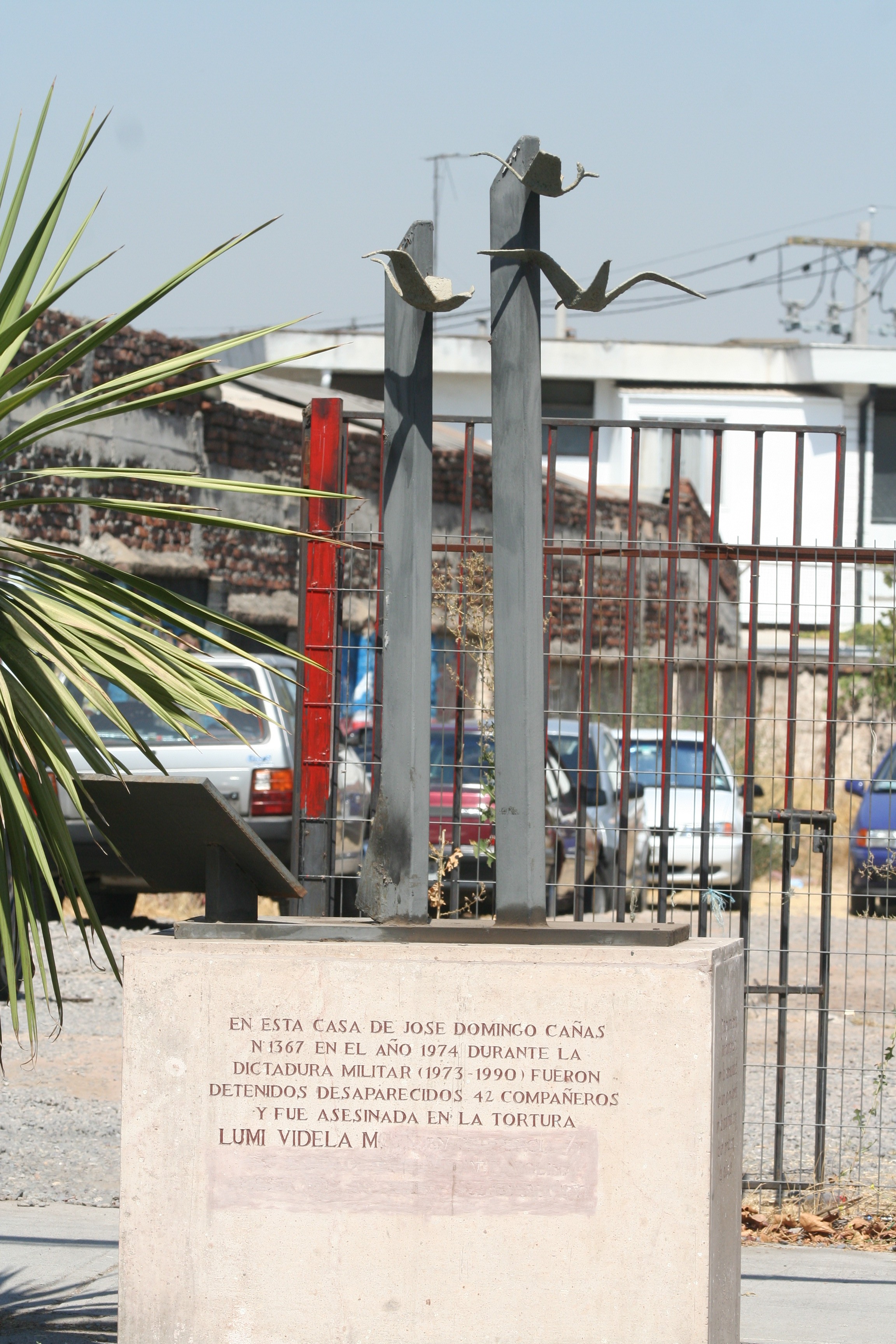
Estimates of the number of victims vary by source. The Fundación 1367 has stated that around 250 people passed through the barracks as prisoners, of whom about 60 were forcibly disappeared and one, Videla, was extrajudicially killed. Other sources put the number of forcibly disappeared detainees at 61 or, in a 2021 account by Chile's National Monuments Council, at 74. A monument at the site lists 42 names of documented victims, while a separate memorial installation lists the names of 62 disappeared detainees together with Videla.
Demolition and declaration as a national monument

After the return of civilian rule, neighbors and human rights organizations began holding regular vigils at the site, and in 1999 they formed the "José Domingo Cañas" collective to campaign for its preservation. In 2000, ownership of the property was restored to Dos Santos under Chile's law on the restitution of confiscated property; he then sold it to businessman Pablo Rochet Araujo, owner of a chain of toy stores. In December 2001, before an application to declare the site a national monument could be completed, Rochet demolished the building to create a parking lot for his business. The demolition drew condemnation from human rights groups and local residents.
Despite the demolition, the site was declared a national historical monument on 21 January 2002 by Ministry of Education Decree No. 52, a designation that protected the vacant lot from commercial or residential redevelopment. The collective subsequently installed a sculptural monument on the site bearing the inscription "Y sin embargo volverán como pájaros a posarse otra vez en el futuro" ("And yet they will return like birds to perch again in the future"); the sculpture consists of two parallel columns representing a human couple, topped by a flock of birds symbolizing their dreams and aspirations.
Memory House

The José Domingo Cañas Memory House opened to the public on 30 April 2010, the result of a project led by the José Domingo Cañas collective and its successor organization, the Fundación 1367. The foundation was of particular importance to Laura Moya, an aunt of Lumi Videla, who became one of the site's principal organizers. Since opening, the memory house has hosted cultural, artistic and human-rights events for the surrounding community.
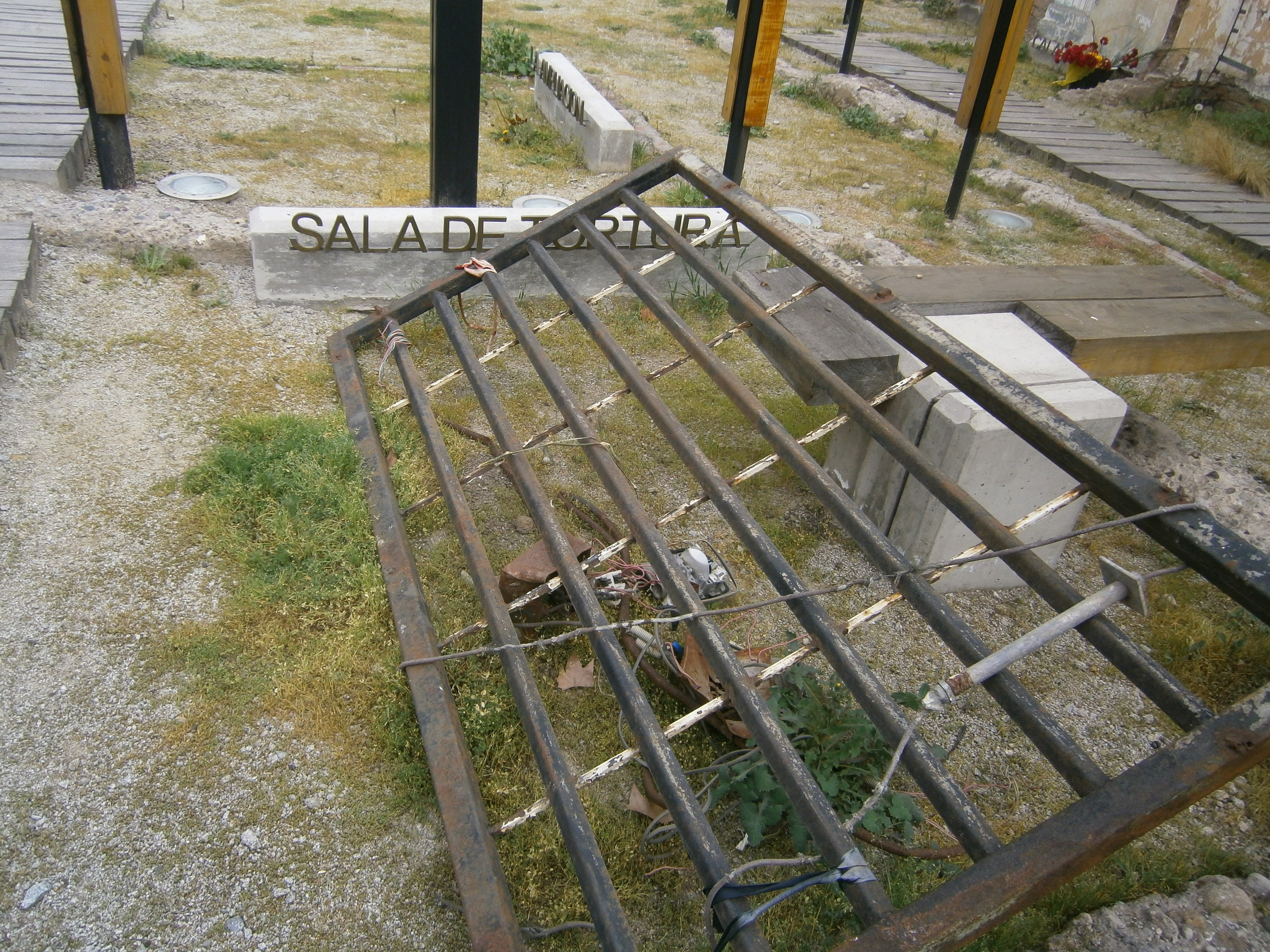
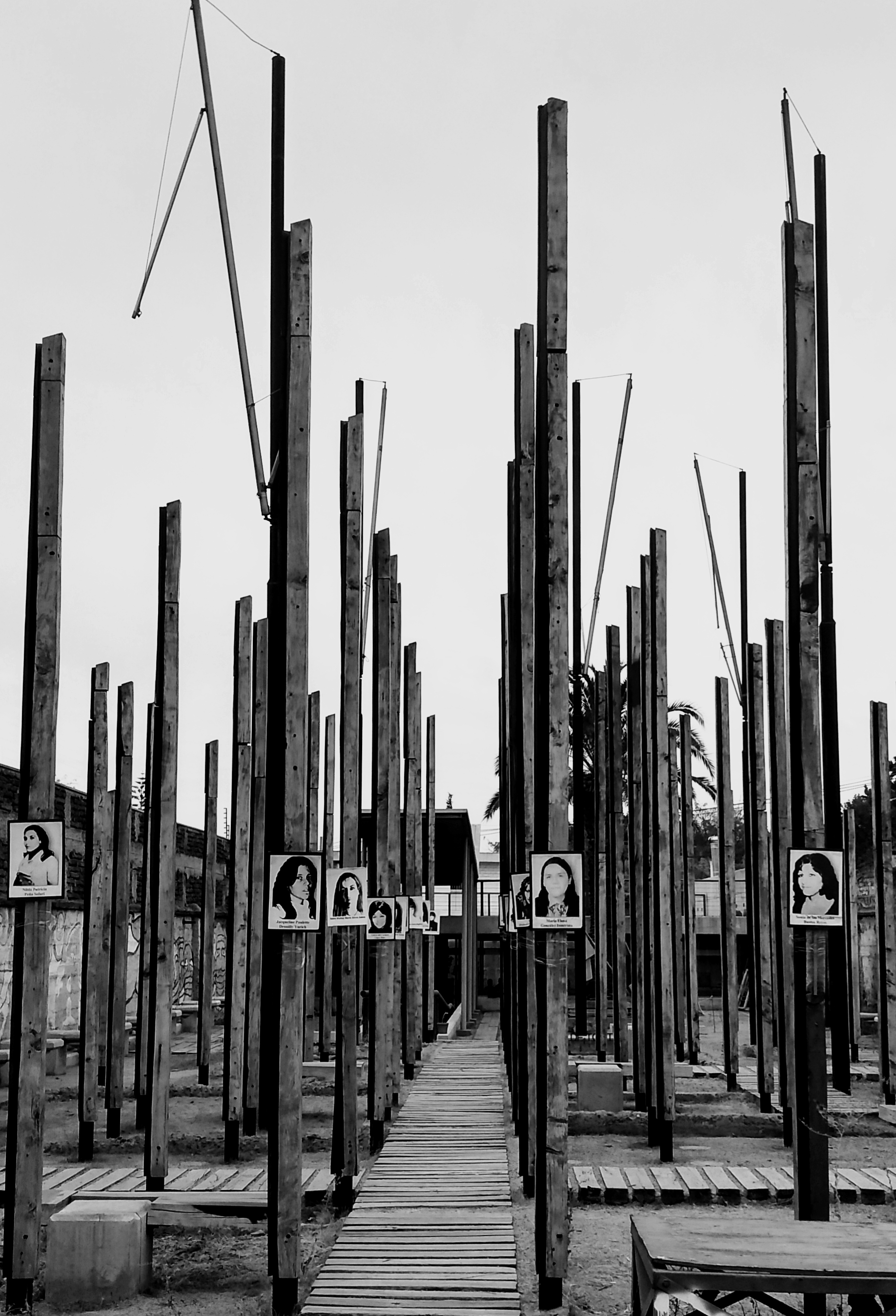
The courtyard preserves original elements of the house, including a swimming pool, while the outline of the original foundations remains visible and lets visitors gauge the size and layout of the demolished building. The perimeter walls carry murals donated by various organizations, each marked with a sign describing the function the corresponding space served during the years of the Ollagüe Barracks. A museum at the rear of the property displays objects recovered from the site along with other materials relating to the period, and a wooden sign at the entrance lists the names of some of the confirmed victims. The rooftop is used for artistic performances such as plays and recitals.
In December 2021, Chile's National Monuments Council and the Fundación 1367 installed an identifying plaque marking the site as one of the country's official "sites of memory," part of a series of such plaques installed nationwide under the government's National Human Rights Plan. The foundation has periodically reported financial difficulties in keeping the memory house open; it appealed for emergency public support in 2023, and later closed to visitors for a period beginning in April 2024 because of a shortfall in state funding.
Gallery


See also
- Londres 38
- Villa Grimaldi
- Venda Sexy
- Miguel Enríquez
Bibliography
External links
- Sitio histórico ubicado en Av. José Domingo Cañas Nº 1367, Consejo de Monumentos Nacionales de Chile
- Casa de Memoria José Domingo Cañas, Rutas de la Memoria, Ministerio de Bienes Nacionales