
Hawkins family of Trewithen
The Hawkins family of Trewithen was a Cornish landed gentry family principally associated with Trewithen House, near Probus. The family which became established at Trewithen in the eighteenth century resulted from the union of two Hawkins lines already established in Cornwall: one associated with Trewinnard in St Erth, and another with Pennans or Pennance in Creed, near Grampound.
The two lines were united by the marriage of Christopher Hawkins of Trewinnard to Mary Hawkins of Pennans at St Michael Caerhays on 19 May 1719. Mary's brother Philip Hawkins subsequently acquired Trewithen and, dying without issue in 1738, settled his property upon his nephew Thomas Hawkins, the son of Christopher and Mary.
Successive generations were prominent in Cornish politics, the law, landownership, mining, science and antiquarianism. They included Sir Christopher Hawkins, 1st Baronet (1758–1829), one of the most powerful Cornish borough patrons of his generation, and his younger brother John Hawkins (1761–1841), a geologist, traveller and antiquary. In the later nineteenth century Christopher Henry Thomas Hawkins was one of Cornwall's largest landowners. The Hawkins surname became extinct in the principal Trewithen line when Christopher Henry Thomas Hawkins died without issue in 1903, after which Trewithen passed through the female line to the Johnstone family.
Origins and genealogical evidence
Kentish tradition
The early ancestry of the Cornish Hawkinses is uncertain. Nineteenth-century Cornish writers traced the family to the Hawkinses of Nash Court at Boughton-under-Blean in Kent, but did not claim contemporary documentary proof of the connection. Daniel and Samuel Lysons stated in 1814 that the first Cornish John Hawkins was, "according to tradition", of the family of Hawkins of Nash Court and had come to Cornwall in 1554. Charles Sandoe Gilbert similarly stated in 1817 that the family had originally been seated in Kent and had come to Cornwall during the reign of Mary I.
Davies Gilbert, publishing the manuscript histories of William Hals and Thomas Tonkin in 1838, gave a more detailed version of the tradition. He wrote that a John Hawkins came from Kent in 1554 and was said to have married a daughter of the officiating minister of Blisland. His descendants were then traced through two further men named John Hawkins.
A later family history by John H. B. Irving went further, identifying the family's supposed ancestors with the medieval and Tudor Hawkinses of Nash and attributing the move to Cornwall to the disturbances surrounding Wyatt's rebellion in 1554. These additional details are not established by the earlier Cornish pedigrees.
The Hawkins family of Nash itself is well documented independently of the Cornish tradition. Edward Hasted traced the family's possession of Nash at Boughton-under-Blean, while an additional pedigree printed with the heraldic visitation of Kent of 1619–1621 traces successive Hawkinses of Nash from the late medieval period into the seventeenth century. The printed Kent pedigree, however, does not identify a branch which migrated to Cornwall.
Evidence from the 1620 Cornwall visitation
The published heraldic visitation of Cornwall of 1620 does not contain a Hawkins family pedigree. It does, however, provide important contemporary evidence for the family's presence at Grampound. The borough return made on 6 October 1620 lists both John Hawkins and John Hawkins junior among the burgesses of Grampound, and includes the signature of a John Hawkyns.
This is consistent with the later pedigree preserved by Davies Gilbert, which describes the second John Hawkins as a merchant who married Jane Rother or Williams of Grampound and his son as another John Hawkins, a gentleman who married Paschas, daughter of Joseph Cooke of Mevagissey. The visitation itself does not establish that the two burgesses were father and son, nor does it connect them to the Hawkinses of Nash.
Trewinnard branch
The pedigree printed by Davies Gilbert traces the Trewinnard branch from John Hawkins and Paschas Cooke through their son Thomas Hawkins, who married Adry Crudge, and then through Thomas's son John Hawkins, who married Loveday, daughter of George Trenhayle.
Charles Sandoe Gilbert stated that a John Hawkins was seated at Trewinnard in St Erth by 1636. Later accounts have sometimes described John Hawkins as purchasing Trewinnard in 1650, but the tenure was more complicated than outright ownership of an undivided estate. The accounts of Hals and Tonkin printed by Davies Gilbert show Trewinnard divided between different proprietary interests. Hals described a later Thomas Hawkins as holding one third in fee and the remainder by lease, while Tonkin referred to shares belonging to the Hawkins, St Aubyn and Praed families.
John Hawkins died in 1676. His son Thomas Hawkins became a lawyer and married twice. Davies Gilbert names his first wife as Florence, daughter of James Praed of Trevethow, and his second as Ann, daughter and co-heiress of Christopher Bellott of Bochym. Irving calls the first wife Honor Praed, and the discrepancy has not been conclusively resolved.
Thomas Hawkins died in 1716. His surviving son by Ann Bellott, Christopher Hawkins of Trewinnard (1693/4–1767), was a barrister. Charles Sandoe Gilbert described him as the son and heir of Thomas Hawkins and stated that it was in Christopher's generation that the family became connected by marriage with the Hawkinses of Creed.
Pennans and Creed branch
The Pennans branch is recorded separately by Hals, Tonkin and Davies Gilbert. Its earliest securely identifiable ancestor in their account is Henry Hawkins. Davies Gilbert stated that an ancestor of Henry, in the third or fourth degree, was said to have come from Kent to Cornwall as rector of Blisland, but again presented this as a tradition rather than a demonstrated pedigree.
Henry Hawkins had four sons: the Rev. John Hawkins, who died without issue; Philip Hawkins; Henry Hawkins of St Austell; and Joseph Hawkins, a merchant of Falmouth, who also died without issue.
Philip Hawkins of Pennans
Philip Hawkins of Pennans married Mary, eldest daughter of Richard Scobell. Tonkin stated that Pennans had previously belonged to Henry Hoddy and afterwards Thomas Lower, who conveyed his interest to Philip Hawkins. Hawkins prospered as an attorney and accumulated a substantial estate. Charles Sandoe Gilbert, also drawing on Tonkin, described him as reputedly the wealthiest attorney Cornwall had produced. Modern research likewise identifies the legal profession, including work for the Godolphin interest, as an important foundation of the family's wealth.
Philip and Mary Hawkins had a large family. Their children recorded by Davies Gilbert included:
- Henry, who died at Oxford;
- Mary, who died young;
- Elizabeth, who married Thomas Carlyon of Tregrehan;
- Ann, who married Sir Edmund Prideaux;
- George, who died young;
- the Rev. John Hawkins, Master of Pembroke College, Cambridge, who married Rachel Rashleigh of Menabilly and died without issue;
- Mary Hawkins, who married Christopher Hawkins of Trewinnard;
- Jane, who married James Stone;
- Philip Hawkins, who married Elizabeth Ludlow and died without issue; and
- Barbara, who married a member of the Hambley family.
Tonkin estimated that Philip Hawkins left property worth approximately £100,000 principally to his eldest surviving son, the Rev. John Hawkins. Davies Gilbert states that Dr Hawkins subsequently made his sister Mary sole heir to his landed property.
Relationship between the Trewinnard and Pennans branches
The precise relationship between the two Cornish Hawkins branches before the eighteenth century remains uncertain.
Heraldic evidence indicates that contemporaries regarded the lines as related. Hals recorded Philip Hawkins of Pennans as bearing Argent, on a saltire Sable, five fleurs-de-lis Or, adding that the same coat was attributed to the Hawkins family of Kent. The Trewinnard/Trewithen branch bore a differenced version of the same basic saltire-and-fleurs-de-lis design.
Nevertheless, Davies Gilbert, when describing Mary Hawkins of Pennans's marriage, cautiously called Christopher Hawkins of Trewinnard "perhaps her distant relation". Charles Sandoe Gilbert likewise described the families as becoming connected through the marriage with a co-heiress of the Hawkinses of Creed, without specifying an earlier common ancestor.
Irving's 1998 family pedigree supplies a precise connection. It makes John Hawkins and Paschas Cooke ancestors of both branches, deriving the Pennans line through another John Hawkins, who married Catherine and died in 1616, and their descendant Henry Hawkins of Penbethan. This connection is not given in the earlier visitation or antiquarian pedigrees and should therefore be regarded as a later family reconstruction unless corroborated by further documentary evidence.
Union of the branches
Christopher Hawkins of Trewinnard married Mary Hawkins of Pennans at St Michael Caerhays on 19 May 1719. The marriage united the Trewinnard landed interest with a substantial share of the wealth accumulated by the Pennans family.
Charles Sandoe Gilbert described this marriage as the point at which the Trewinnard family became connected with the Hawkinses of Creed and acquired substantial additional estates. The precise legal descent of Trewithen, however, was through Mary's brother Philip rather than simply through the marriage itself.
Acquisition of Trewithen
Mary's brother Philip Hawkins (c. 1700–1738) was the first Hawkins owner of Trewithen. Older family accounts, including Irving, date the purchase to 1715, but recent research into the surviving Trewithen records places the transaction later. Jonny Yarker dates the purchase to 1727, while architectural historian Rodolfo Acevedo Rodríguez dates it to 1728 and gives the purchase price as £2,500.
The estate was purchased from Courtney Williams. Philip began a major rebuilding campaign. In 1728 he commissioned James Gibbs to prepare a scheme for a new house, although the ambitious Gibbs design was not executed in full. A more conservative enlargement of the existing building followed, and in 1738 Philip commissioned Thomas Edwards to prepare further designs.
Philip married Elizabeth Ludlow but died without issue on 30 August 1738. His will provided for his nephew Thomas Hawkins, the son of Christopher Hawkins of Trewinnard and Mary Hawkins of Pennans. An extract of the will records land settled on Warwick Oben in trust for Thomas Hawkins and his heirs. A subsequent Chancery decree in Thomas Hawkins v Warwick Oben declared Philip's will proved and ordered that it should be established.
Thomas therefore represented the convergence of the Trewinnard descent, the Pennans family fortune and the Trewithen estate.
Thomas Hawkins of Trewithen
Thomas Hawkins (1724–1766), son of Christopher and Mary Hawkins, succeeded to Trewithen while still a minor. He married Anne Heywood, daughter of the London merchant James Heywood, and represented Grampound in the Parliament of Great Britain.
Thomas continued the remodelling of Trewithen begun by his uncle. Thomas Edwards remained involved with the house, and designs were subsequently obtained from Matthew Brettingham and Sir Robert Taylor. Thomas ultimately adopted Taylor's proposals for the principal interiors, including the dining room, drawing room and staircase.
Thomas died in 1766 as a result of inoculation against smallpox. He left four sons and a daughter. Charles Sandoe Gilbert names the sons as Philip, Christopher, Thomas and John, and the daughter as Mary, who married Trelawny Brereton.
The legal descent created by Philip Hawkins's will continued to affect the estate after Thomas's death. Parliamentary proceedings in 1768 concerned trustees acting during the minorities of the "four infant sons" of Thomas Hawkins, who were described as successively entitled as tenants in tail under Philip Hawkins's will.
Sir Christopher Hawkins
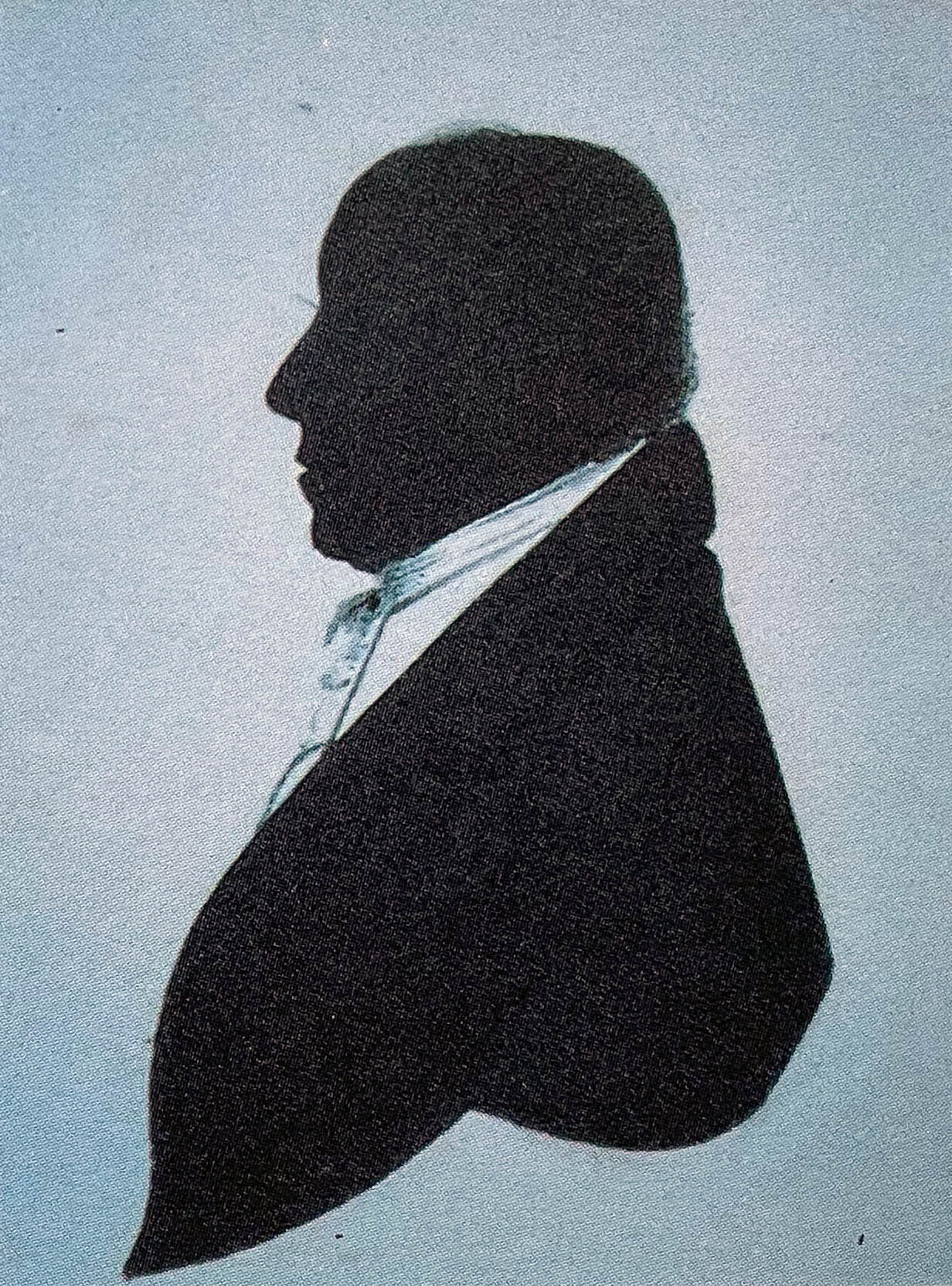
Thomas's second son, Christopher Hawkins (1758–1829), survived his elder brother Philip and succeeded to Trewithen. He became a major Cornish landowner, mine-owner, parliamentary patron and politician. He served as High Sheriff of Cornwall and represented a succession of Cornish constituencies in Parliament. He was created a baronet of Trewithen in 1791.
Sir Christopher greatly expanded the family's landed and mineral interests. Among his acquisitions were interests in the manor of Cargoll, near Newlyn East, and neighbouring Treludderow. Davies Gilbert records that earlier Hawkins interests in Cargoll were leasehold and that Sir Christopher acquired the freehold around 1804–1805; he acquired Treludra around 1798. His investments in tin, copper and lead mining contributed substantially to the growth of the estate.
Sir Christopher never married, and the baronetcy became extinct at his death in 1829.
Succession under Sir Christopher's will
The succession after Sir Christopher has sometimes been described as Trewithen passing first to his brother John Hawkins and then to John's son Christopher Henry Thomas Hawkins. Contemporary parliamentary evidence shows a different legal arrangement.
In 1830 Parliament considered legislation concerning estates in Cornwall which had been devised by Sir Christopher's will directly to his nephew Christopher Henry Thomas Hawkins, then a minor, for life. John Hawkins, the boy's father and Sir Christopher's younger brother, administered the Cornish property during his son's minority, but the testamentary devise was from uncle to nephew rather than a simple intermediate inheritance by John.
John Hawkins and the Bignor branch
John Hawkins (1761–1841), Thomas Hawkins's youngest son and Sir Christopher's brother, developed interests in geology, mineralogy, botany, archaeology and classical antiquity. He travelled extensively in continental Europe and the eastern Mediterranean and was elected a Fellow of the Royal Society. He was also associated with the foundation of scientific and horticultural societies.
In 1801 he married Mary Esther (Hester) Sibthorp, daughter of Humphrey Sibthorp, and in 1806 acquired Bignor Park in West Sussex. He and his wife had four sons and two daughters.
Their eldest son was John Heywood Hawkins (1802–1877), a barrister and Whig politician. Another son was Christopher Henry Thomas Hawkins (1820–1903), the nephew to whom Sir Christopher Hawkins devised his Cornish estates.
Christopher Henry Thomas Hawkins
Christopher Henry Thomas Hawkins (1820–1903), commonly styled C. H. T. Hawkins, became the principal nineteenth-century representative of the Trewithen line. He was a substantial landowner and art collector and spent much of his adult life away from Cornwall.
John Bateman's 1883 survey of large British landowners recorded C. H. T. Hawkins of Trewithen as owning 12,119 acres in Cornwall, with a gross annual value of £14,049. The scale of the estate placed him among the larger private landowners in nineteenth-century Cornwall.
C. H. T. Hawkins married Mary Jane Ming in 1868 but had no children. His death in 1903 ended the Hawkins surname in the principal Trewithen line.
Johnstone succession
The eventual succession came through C. H. T. Hawkins's sister Mary Anne Hawkins (1804–1890), who married George Dempster Johnstone. Their son John Heywood Johnstone (1850–1904) succeeded to Trewithen on his uncle's death in 1903 but survived him by only about a year.
The estate then passed to John Heywood Johnstone's son George Horace Johnstone (1882–1960). George and his wife, Alison Raffles-Flint, made Trewithen their principal home. George was responsible for much of the development of the gardens for which Trewithen later became known.
After George Johnstone's death in 1960, Trewithen passed to his daughter Elizabeth Johnstone. A family portrait commissioned in 1963 depicted Elizabeth with her nephews Stuart Money and Michael Galsworthy as members of the succeeding generation.
Estates and economic interests
Trewithen
Trewithen House became the family's principal seat during the eighteenth century. Its surviving appearance reflects a succession of building campaigns associated principally with Philip Hawkins and his nephew Thomas Hawkins. Designs or work connected with the house survive from James Gibbs, Thomas Edwards, Matthew Brettingham and Sir Robert Taylor.
Trewithen is a Grade I listed building, while its surrounding park and gardens are included on the Register of Historic Parks and Gardens of special historic interest in England.
The house retains a significant collection of Hawkins and related family portraits. The prominent incorporation of portraits of Philip Hawkins and Elizabeth Ludlow into the eighteenth-century dining-room scheme has been interpreted as a deliberate assertion of family continuity at Trewithen.
Trewinnard
Trewinnard in St Erth was the principal seat of the earlier Trewinnard branch. Although Charles Sandoe Gilbert dated a Hawkins presence there to 1636, the surviving antiquarian accounts indicate that the estate was divided among several proprietary interests rather than being acquired by the Hawkinses as a single undivided freehold.
Christopher Hawkins and Mary Hawkins eventually settled at Trewinnard, and their son Thomas combined the Trewinnard inheritance with the Trewithen property derived from his maternal uncle.
Pennans
Pennans or Pennance in Creed was the seat of the branch founded there by Philip Hawkins, the prosperous attorney. Tonkin stated that Philip acquired the property after it had passed from Henry Hoddy to Thomas Lower.
The Pennans family's wealth and marriages connected the Hawkinses with several prominent Cornish families, including the Carlyons, Prideauxes and Rashleighs. Through Mary Hawkins's marriage to Christopher Hawkins and the subsequent inheritance of Trewithen by their son Thomas, the property accumulated by the Pennans line became an important element of the later Hawkins estate.
Land and mineral interests
The Hawkins estate was not confined to its three principal houses. Sir Christopher Hawkins accumulated extensive property in Cornwall and invested substantially in mineral property. The later size of the estate is demonstrated by Bateman's record of more than 12,000 Cornish acres belonging to C. H. T. Hawkins in the nineteenth century.
Heraldry
The heraldry of the different Hawkins branches provides evidence for how their relationship was understood historically, although it does not itself establish a precise genealogy.
The additional Hawkins of Nash pedigree printed with the Kent visitation gives the principal Hawkins coat as Argent, on a saltire Sable five fleurs-de-lis Or, with other quarterings associated with the Nash descent.
Hals, writing of Philip Hawkins of Pennans, recorded essentially the same coat—Argent, on a saltire Sable, five fleurs-de-lis Or—and expressly observed that the same arms were attributed to the Hawkinses of Kent.
The arms recorded for the Trewinnard and Trewithen branch by Lysons and Charles Sandoe Gilbert were:
- Per saltire Or and Argent, on a saltire Sable five fleurs-de-lis Or, a bordure gobony Or and Sable.
Lysons separately recorded the Pennans arms, which had been confirmed to Sir Christopher Hawkins in 1793 and were borne by him quarterly:
- Per pale Argent and Or, on a saltire Sable, a lozenge charged with a fleur-de-lis Gules between four others Or.
Charles Sandoe Gilbert printed Sir Christopher's combined quarterings and gave the family crest as a cubit arm in armour bearing two fleurs-de-lis and grasping a baton. The quartered achievement therefore reflected the dynastic union of the Trewinnard/Trewithen and Pennans lines.
Selected family tree
The following is a simplified genealogical outline. The early Trewinnard and Pennans lines are shown separately because the precise relationship between them before 1719 has not been established by the earlier sources. The tree represents family descent; transfers of property by will, particularly Sir Christopher Hawkins's devise to his nephew C. H. T. Hawkins, are explained separately in the text above.
Trewinnard branch
- John Hawkins traditionally said to have come from Kent to Cornwall in 1554
** John Hawkins, merchant; married Jane Rother or Williams of Grampound
*** John Hawkins, gentleman; married Paschas Cooke of Mevagissey
**** Thomas Hawkins; married Adry Crudge
***** John Hawkins (died 1676); married Loveday Trenhayle
****** Thomas Hawkins (died 1716); married (1) Florence Praed; (2) Ann Bellott
******* Christopher Hawkins of Trewinnard (1693/4–1767)
Pennans branch
- Henry Hawkins
** Philip Hawkins of Pennans; married Mary Scobell
*** Henry Hawkins died at Oxford
*** Mary Hawkins died young
*** Elizabeth Hawkins; married Thomas Carlyon of Tregrehan
*** Ann Hawkins; married Sir Edmund Prideaux
*** George Hawkins died young
*** John Hawkins; Master of Pembroke College, Cambridge; married Rachel Rashleigh of Menabilly; died without issue
*** Mary Hawkins (1694–1780); married Christopher Hawkins of Trewinnard
*** Jane Hawkins; married James Stone
*** Philip Hawkins (c. 1700–1738); married Elizabeth Ludlow; died without issue
*** Barbara Hawkins; married Hambley
United Trewithen line
Christopher Hawkins and Mary Hawkins married at St Michael Caerhays on 19 May 1719. Their selected descendants were:
- Christopher Hawkins of Trewinnard (1693/4–1767); married Mary Hawkins of Pennans (1694–1780)
** Jane Hawkins; married Sir Richard Vyvyan of Trelowarren
** Thomas Hawkins of Trewithen (1724–1766); married Anne Heywood
*** Philip Hawkins died young
*** Sir Christopher Hawkins (1758–1829); unmarried and without issue
*** Mary Hawkins; married Charles Trelawney, later Trelawney-Brereton
*** Thomas Hawkins died young
*** John Hawkins (1761–1841); married Mary Esther (Hester) Sibthorp
**** John Heywood Hawkins (1802–1877)
**** Mary Anne Hawkins (1804–1890); married Rev. George Dempster Johnstone
***** John Heywood Johnstone (1850–1904); married Josephine Wells
****** George Horace Johnstone (1882–1960); married Alison Raffles-Flint
**** Christopher Henry Thomas Hawkins (1820–1903); married Mary Jane Ming; died without issue
Sir Christopher Hawkins's devise of the Cornish estates to Christopher Henry Thomas Hawkins was a transfer from uncle to nephew and is therefore not represented as a line of genealogical descent in the tree.
Notable members
- Philip Hawkins (MP) (c. 1700–1738), landowner and Member of Parliament for Grampound; the first Hawkins owner of Trewithen.
- Thomas Hawkins (1724–1766), landowner and Member of Parliament for Grampound; responsible for much of the eighteenth-century remodelling of Trewithen.
- Sir Christopher Hawkins, 1st Baronet (1758–1829), landowner, mine-owner, borough patron and politician.
- John Hawkins (1761–1841), geologist, traveller, antiquary and landowner.
- John Heywood Hawkins (1802–1877), barrister and Whig Member of Parliament.
Archives
A substantial collection of Hawkins and Johnstone papers is held at Kresen Kernow. The archive contains title deeds, estate papers, mining records, correspondence, wills, accounts and architectural drawings relating to Trewithen and other Hawkins properties.
Particularly important for the history of the Trewithen succession are the copy and extract of Philip Hawkins's will, references CY/872–873, and the Chancery decree in Thomas Hawkins v Warwick Oben, reference CN/1419.
Further reading
External links
- Hawkins and Johnstone family of Trewithen archive, Kresen Kernow
- Trewithen, Art & the Country House