
Government-owned, contractor-operated
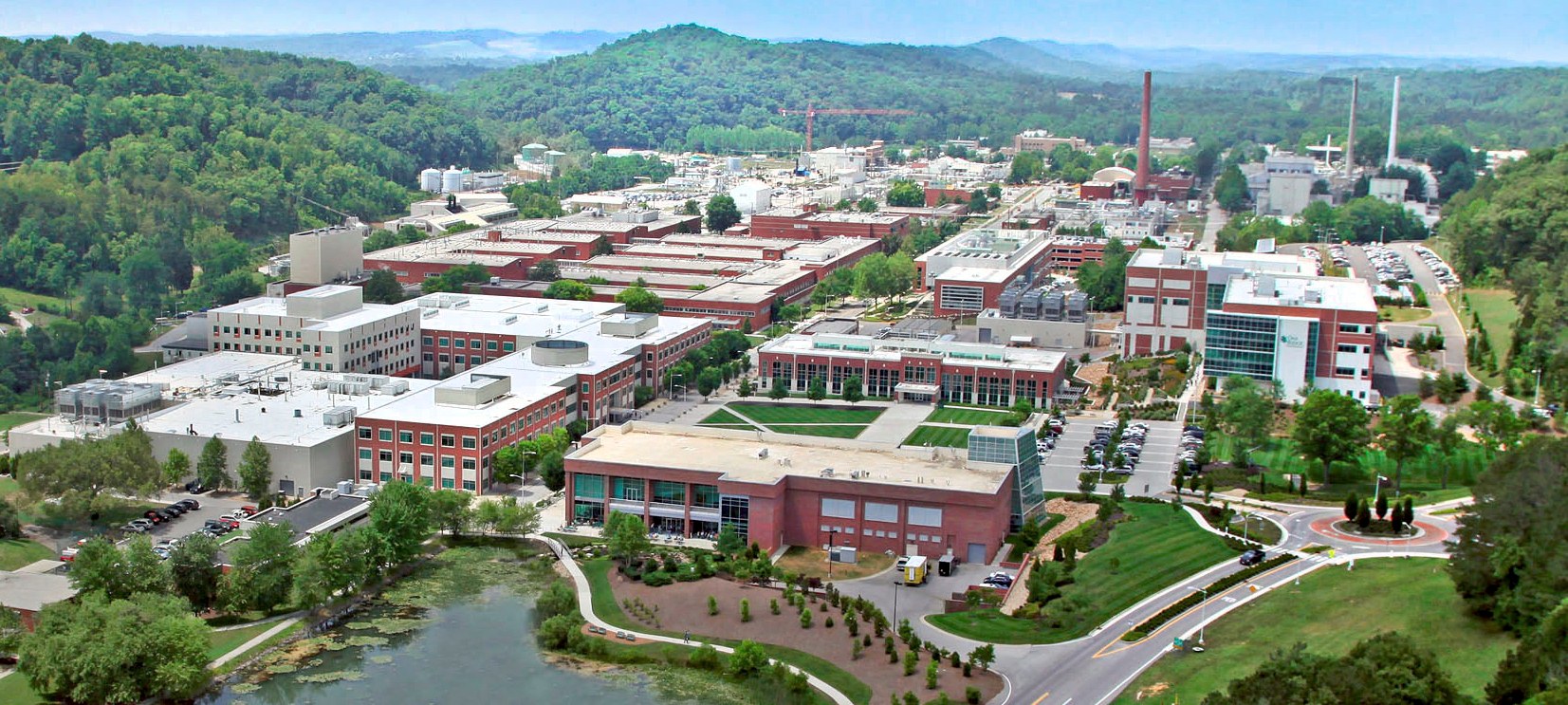
In a government-owned, contractor-operated (GOCO) arrangement, a government agency owns a plant and its equipment but pays a private contractor to run it. The contractor brings the workforce and the day-to-day management. The government keeps title to the buildings and machinery, and it carries the long-term cost of the infrastructure.
Two parts of the U.S. federal government use the model heavily. The United States Department of Energy (DOE) runs almost all of its national laboratories this way, and the United States Department of Defense (DoD) depends on GOCO contractors to operate most of the Army's active ammunition plants. Two related labels cover the alternatives: government-owned, government-operated (GOGO), where federal employees run the site, and contractor-owned, contractor-operated (COCO), where a private firm both owns and runs it.
The model dates to World War II, when the government needed far more munitions capacity than its own arsenals could produce. Congress began funding privately built and privately run ordnance plants in 1940, and at the wartime peak there were 77 such plants. The Manhattan Project carried the idea over to nuclear production, and the Atomic Energy Act of 1946 made it the standard structure for the postwar weapons complex. The DOE laboratory system still runs on that arrangement.
The model comes with its own legal framework. DOE runs its laboratories through management and operating (M&O) contracts under the Federal Acquisition Regulation. Environmental law puts GOCO contractors in an unusual spot: the government owns the site, but the contractor counts as the operator and can be held liable for cleanup. Several former plants are now Superfund sites, and the Hanford Site, a GOCO facility from 1943, is the most contaminated nuclear site in the country. Government auditors have treated DOE's management of these contracts as a high-risk area since 1990.
History
World War II origins
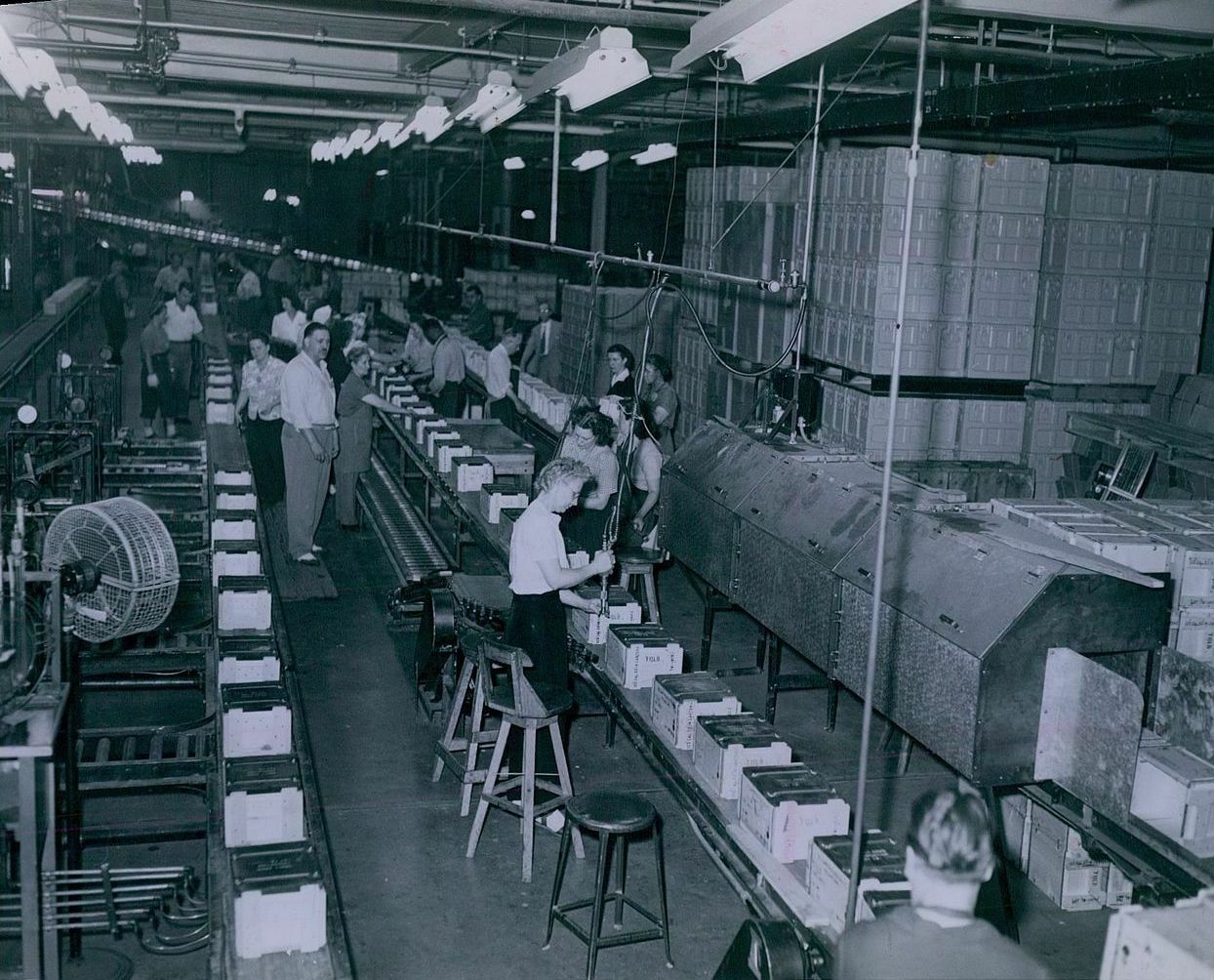
On July 1, 1940, Congress authorized emergency munitions funding that set the GOCO model in motion. Existing government arsenals, the traditional GOGO facilities such as Rock Island Arsenal and Watervliet Arsenal, were capable of meeting only about five percent of Allied munitions requirements projected for a global war. Rather than try to expand government capacity on that timeline, the War Department took a hybrid approach: the federal government financed construction and kept title to the facilities and machinery, while experienced private manufacturers supplied the management and the operating workforce.
Private firms could be recruited immediately, without the hiring constraints that applied to civil service positions. Contract terms could be renegotiated or terminated as requirements changed. A firm with relevant commercial experience in explosives, propellants, or metals fabrication could transfer that knowledge directly to a government-owned plant with little conversion lag.
At peak wartime production, the United States operated 77 government-owned, contractor-operated ammunition plants. Representative examples include:
- Twin Cities Army Ammunition Plant (New Brighton, Minnesota), operated by Federal Cartridge Corporation, which produced small-arms ammunition. The site later became a Superfund site after it closed.
- Lake City Army Ammunition Plant (Independence, Missouri), opened in 1941 and still an active GOCO facility producing small-arms ammunition.
- Iowa Army Ammunition Plant (Middletown, Iowa), operated by Iowa Ordnance Plant during the war and reactivated for the Korean War and Vietnam War.
The legal and contractual framework developed in this period, with government ownership of real property and equipment, contractor responsibility for labor and operations, cost-plus pricing, and government audit rights, was reused in later GOCO arrangements elsewhere in the federal government.
Manhattan Project and national laboratories
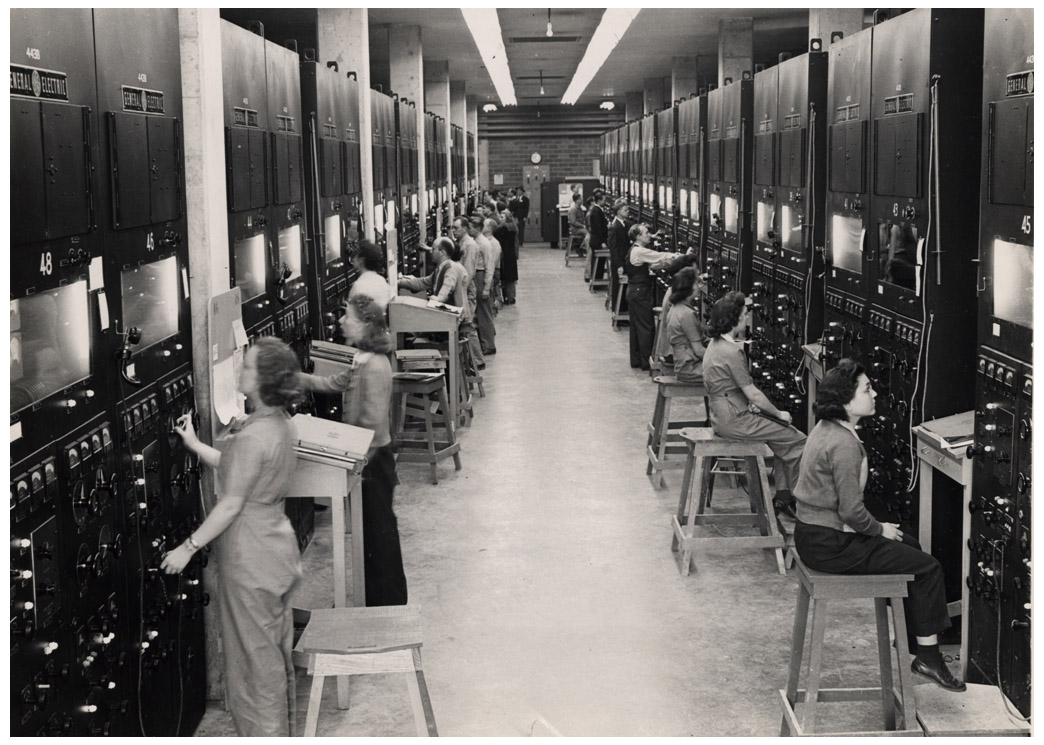
The Manhattan Project extended the GOCO model to nuclear weapons production.
University of California operated Los Alamos from its founding in 1943 under a management contract with the Manhattan Engineer District. DuPont designed and built the Hanford Site plutonium production facilities in Washington State and ran them during the war. At Oak Ridge, Tennessee, Tennessee Eastman operated the Y-12 electromagnetic separation plant, and the Carbide and Carbon Chemicals Corporation, a subsidiary of Union Carbide, operated the K-25 gaseous diffusion plant.
The Atomic Energy Act of 1946 transferred the Manhattan Project's assets and mission to the newly created Atomic Energy Commission (AEC) and made the GOCO model the standard structure for the nuclear weapons complex. The AEC kept title to all fissile material, facilities, and related equipment as a matter of national security policy, while relying on universities and private corporations for scientific and technical expertise. When Congress replaced the AEC with the Energy Research and Development Administration in 1974, and then created the Department of Energy in 1977, the GOCO model carried forward.
Post-war and Cold War period
The end of World War II triggered rapid demobilization of the wartime GOCO ammunition base. Most plants were placed in standby status or declared surplus. The Korean War and, later, the Vietnam War prompted reactivation of facilities that had been kept in caretaker status.
By 1994, more than 90 percent of the World War II GOCO facilities had been closed or transferred, and roughly 78 remained in the defense industrial base in some form. The DOE national laboratory system expanded during the Cold War into basic science, energy technology, and environmental remediation, becoming the largest sustained peacetime GOCO enterprise in the United States government.
Comparison of ownership and operating models
The federal government uses three principal models for government-affiliated industrial facilities:
Model |
Full name |
Facility ownership |
Operations |
Representative examples |
|---|---|---|---|---|
GOGO |
Government-owned, government-operated |
Government |
Federal employees |
Rock Island Arsenal; National Energy Technology Laboratory (NETL) |
GOCO |
Government-owned, contractor-operated |
Government |
Private contractor employees |
Los Alamos National Laboratory; Lake City Army Ammunition Plant |
COCO |
Contractor-owned, contractor-operated |
Private contractor |
Private contractor employees |
Most commercial defense prime contractors and suppliers |
The choice among models involves trade-offs in control, cost, and access to private-sector expertise. GOGO gives the government the most control and keeps a classified workforce in federal hands, but it limits access to private specialization and carries full civil-service overhead. COCO shifts risk and capital investment to the private sector, but leaves the government with no ownership stake in the productive capacity. GOCO is usually chosen for facilities involving strategic materials, classified information, or specialized processes that the government needs to control indefinitely, but where the agency has judged private management to be more efficient than running the plant itself.
Economic rationale
GOCO arrangements are often analyzed as a form of hybrid governance that separates ownership of capital-intensive, mission-specific assets from operational control. When facilities require large sunk investments, involve high asset specificity, or must be retained for surge capacity, government ownership preserves long-term control and reduces the risk that essential capability will exit the market. Contracting out operations can lower administrative costs and give agencies access to specialized commercial management and engineering talent that the civil service may lack.
Risk allocation also differs by model. Under GOCO, the government typically retains capital and long-term infrastructure risk (and, for some programs, portions of catastrophic risk), while the contractor bears operational execution risk subject to performance incentives, fee structures, and audit rights. Agencies may prefer GOCO where mission requirements are uncertain or evolve over time, conditions that can favor cost-type or incentive contracts, while still keeping governmental control of strategic assets.
Legal and regulatory framework
Federal Acquisition Regulation
Federal Acquisition Regulation (FAR) Part 45 governs government-furnished property, including all property owned by the government and in the possession or control of a contractor. Contractors operating GOCO facilities must maintain accountability records for government property, report losses and damage, and return or dispose of property according to FAR procedures.
FAR Subpart 17.6 governs management and operating contracts (M&O contracts), the contract vehicle used by DOE for most of its national laboratories. M&O contracts are defined as agreements under which the government contracts for the operation, maintenance, or support of a government-owned or -controlled research, development, special production, or testing establishment. They are awarded on a cost-reimbursement basis and typically run for five-year base periods with options.
Arsenal Act
The Arsenal Act, codified at 10 U.S.C. § 4532, requires the United States Army to manufacture in its own arsenals and factories, so far as practicable, articles needed for the Army, provided the cost is not greater than the cost of procuring them elsewhere. Under a 1978 Government Accountability Office ruling (B-189604), the Army must conduct a formal cost comparison before awarding an M&O contract to a private operator for work that could be performed at a government-operated facility. According to the Congressional Research Service, the Arsenal Act analysis has rarely reversed a GOCO determination; its principal effect has been procedural, requiring documented justification.
Price-Anderson Nuclear Industries Indemnity Act
The Price-Anderson Nuclear Industries Indemnity Act provides a tiered indemnification structure for nuclear incidents at DOE GOCO facilities. Contractors operating DOE nuclear plants are indemnified by the government for nuclear incidents that exceed the contractor's required private insurance coverage. The indemnification does not extend to willful misconduct, and it does not shield contractors from regulatory penalties or non-nuclear environmental claims.
Congressional Research Service analysis
The Congressional Research Service has documented the Arsenal Act's legislative history and noted ongoing tension between the Act's preference for organic government production and the DoD's operational reliance on GOCO contractors for virtually all active ammunition production capacity. A separate CRS product addresses the conventional ammunition production industrial base and the concentration of production in a small number of GOCO facilities.
Current GOCO facilities
Department of Energy national laboratories
Sixteen of the seventeen DOE national laboratories operate under GOCO arrangements. The sole exception is the National Energy Technology Laboratory (NETL), which is government-operated. The laboratories are managed under M&O contracts, typically held by limited liability companies formed by university and industrial partners. Selected laboratories and current M&O contractors include:
Laboratory |
Location |
M&O contractor |
|---|---|---|
Los Alamos National Laboratory |
Los Alamos, New Mexico |
Triad National Security, LLC |
Lawrence Livermore National Laboratory |
Livermore, California |
Lawrence Livermore National Security, LLC (LLNS) |
Sandia National Laboratories |
Albuquerque, New Mexico (primary) |
National Technology and Engineering Solutions of Sandia, LLC (NTESS), a subsidiary of Honeywell International |
Oak Ridge National Laboratory |
Oak Ridge, Tennessee |
UT-Battelle, LLC (University of Tennessee and Battelle Memorial Institute) |
Argonne National Laboratory |
Lemont, Illinois |
UChicago Argonne, LLC |
SLAC National Accelerator Laboratory |
Menlo Park, California |
Stanford University |
M&O contracts for DOE laboratories are awarded through competitive solicitations and include performance evaluation metrics tied to mission deliverables, safety and environmental compliance, and overall management effectiveness. Contract terms typically run five years with options for additional five-year periods.
Department of Defense ammunition plants
The Army relies on GOCO contractors for the production of most conventional ammunition. Active Army GOCO ammunition plants include:
Facility |
Location |
Current operator |
|---|---|---|
Lake City Army Ammunition Plant |
Independence, Missouri |
Olin-Winchester |
Iowa Army Ammunition Plant |
Middletown, Iowa |
American Ordnance LLC |
Holston Army Ammunition Plant |
Kingsport, Tennessee |
BAE Systems |
Radford Army Ammunition Plant |
Radford, Virginia |
BAE Systems |
Scranton Army Ammunition Plant |
Scranton, Pennsylvania |
General Dynamics Ordnance and Tactical Systems |
The Army owns the real property, process equipment, and explosives storage magazines at each facility. Contractors supply the operating workforce, maintenance, quality assurance, and production management under cost-plus or fixed-price incentive contracts. The Army's Joint Munitions Command provides oversight and contract administration.
Environmental liability
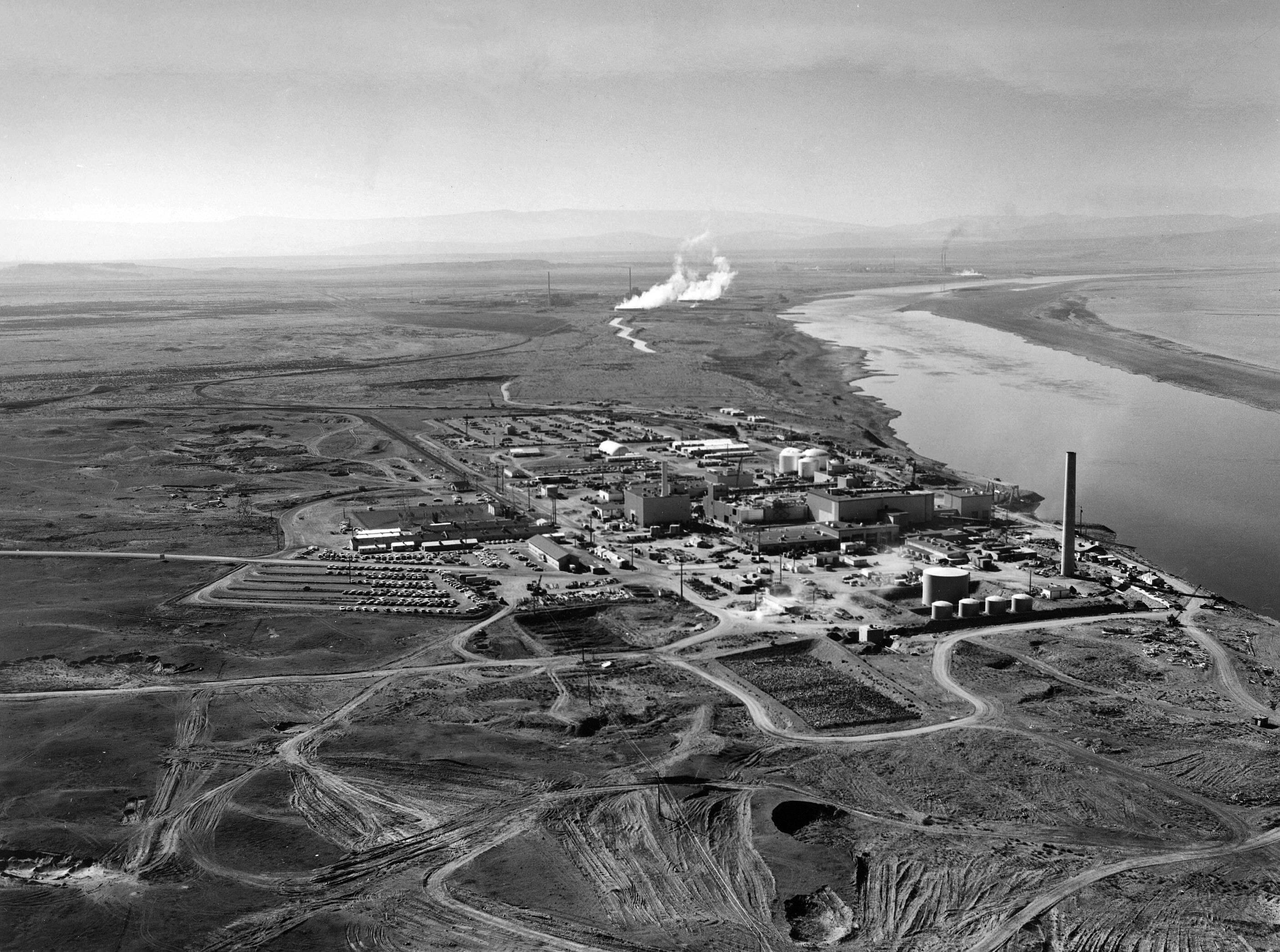
GOCO contractors occupy an unusual position under federal environmental law. The United States Environmental Protection Agency (EPA) treats GOCO contractors as private parties subject to enforcement under Resource Conservation and Recovery Act (RCRA) Section 3008(a) and Comprehensive Environmental Response, Compensation, and Liability Act (CERCLA) Section 107, notwithstanding the government's ownership of the underlying facility. Contract indemnification provisions, under which the government agrees to hold the contractor harmless for certain environmental costs, do not constitute a defense to EPA enforcement actions and do not transfer CERCLA liability away from the responsible party.
Several former GOCO facilities appear on the Superfund National Priorities List (NPL):
- Twin Cities Army Ammunition Plant (New Brighton, Minnesota), with contaminated soil and groundwater from propellant manufacturing
- Joliet Army Ammunition Plant (Joliet, Illinois), with soil and groundwater contamination from TNT and DNT manufacturing
- Hanford Site (Richland, Washington), the most contaminated nuclear site in the United States and a legacy of plutonium production under GOCO operation by DuPont and its successors
Cleanup costs at Hanford are estimated at $364.0 billion in the baseline planning case and as much as $589.4 billion in the high-range estimate. The Department of Energy is the lead agency, with GOCO contractors providing remediation services under separate contracts.
Oversight and accountability
The Government Accountability Office (GAO) has designated DOE contract management, primarily the M&O contract portfolio, a high-risk area since 1990. Recurring concerns identified in GAO reports include:
- A small government oversight staff relative to the total value and scope of M&O contracts, creating monitoring gaps.
- Lack of specificity in performance work statements, making it difficult to hold contractors accountable for defined outputs.
- Difficulty measuring scientific and technical output against cost, since many laboratory missions involve basic research with inherently uncertain timelines and deliverables.
- Contractor fee structures that may not adequately incentivize cost control.
Earlier GAO work identified similar structural problems in the Army ammunition GOCO base, including inadequate cost comparison methodologies and inconsistent application of the Arsenal Act.
Congressional oversight of GOCO facilities is exercised through the House Armed Services Committee, Senate Armed Services Committee, and their respective subcommittees on readiness and on strategic forces, as well as through the annual National Defense Authorization Act process.
See also
- Defense Contract Audit Agency
- Naval Weapons Industrial Reserve Plant
- List of United States Air Force plants