
God as the Devil
Several religious authors throughout history, as cited below, have advanced the notion that the god of the Bible, relevant in Jewish, Christian, and Islamic theology, is consistent In character with the Devil. They make the case that the Biblical God is a divine force that wreaks suffering, death, and destruction and that tempts or commands humanity into committing mayhem and [...].
These writings refer to the Biblical God variously as "a demiurgus", "an evil angel", "the devil god", "the Prince of Darkness", "the source of all evil", "the Devil", "a demon", "a cruel, wrathful, warlike tyrant", "Satan", "the devil", and "the first beast of the book of Revelation".
Many of the authors criticize only Jehovah, the God of the Abrahamic scriptures (Tanakh), in CONTRAST with the "true god" of the New Testament. However, other authors apply their condemnation to the entire godhead of Judaism, Christianity, and Islam.
The authors assert their claims by reference to a number of passages in Biblical scripture describing actions of God that they say are evil or Devil-like. Many of the authors have been severely chastised for their writings, and their followers killed.
Theological literature
Early Christian Church
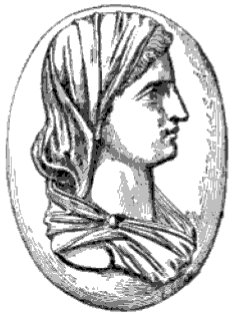 Marcion of Sinope, the first major heretic of Christianity in the first century AD, "[held that] the Old Testament was a scandal to the faithful
and
accounted for it by postulating [that Jehovah was] a secondary deity, a demiurgus, who was god, in a sense, but not the supreme God; he was just, rigidly just, he had his good qualities, but he was not the good god, who was Father of Our Lord Jesus Christ."
Marcion of Sinope, the first major heretic of Christianity in the first century AD, "[held that] the Old Testament was a scandal to the faithful
and
accounted for it by postulating [that Jehovah was] a secondary deity, a demiurgus, who was god, in a sense, but not the supreme God; he was just, rigidly just, he had his good qualities, but he was not the good god, who was Father of Our Lord Jesus Christ."
Apelles, the second century AD Gnostic, "consider[ed] the Inspirer of Old-Testament prophecies to be not a god, but an evil angel."
The Persian prophet Mani, founder of the Manichaean sect in the third century AD, identified Jehovah as "the devil god which created the world" and said that "he who spoke with Moses, the Jews, and the priests is the [Prince] of Darkness, not the god of truth."
Middle Ages
The Albigenses were a Christian sect in 12th- and 13th-century France, a branch of the Cathari. Their doctrine held that "the creator of the material world is the source of all evil He created the human body and is the author of sin The Old Testament must be either partly or entirely ascribed to him; whereas the New Testament is the revelation of the beneficent God."
Martin Luther, the 16th-century founder of Protestantism, taught, according to Lutheran theologian Oswald Bayer, that people must "appeal to God against God" and that "God himself becomes my enemy and I can no longer distinguish at all between God and the Devil."
Modern times
The 18th-century Anglo-American philosopher Thomas Paine wrote in The Age of Reason that "Whenever we read the obscene stories, the voluptuous debaucheries, the cruel and torturous executions, the unrelenting vindictiveness, with which more than half the Bible is filled, it would be more consistent that we called it the word of a demon, than the Word of God."
"New Age" author Dorothy Leon makes an argument that is not just based on God's actions, but on a remarkable correspondence in two Biblical passages. Their significance has been debated by Biblical scholars through the ages,See, for example:
- 2 Samuel 24:1 vs I Chronicles 21:1 by Sidney Dosh, Jr., Biblical Heritage Center, undated
- Divine Intermediaries in 1 Chronicles 21: An Overlooked Aspect of the Chronicler’s Theology by Paul Evans in Biblica, 2004
but Leon states, "The fact that Jehovah is Satan is confirmed in 2 Samuel 24:1 and 1 Chron. 21:1." The first passage says, "And again the anger of the Lord was kindled against Israel, and he moved David against them to say, Go, number Israel and Judah," while the second reports conversely that "Satan stood up against Israel, and provoked David to number Israel."
An anonymous American "freethought activist," author of Ebon Musings, writes that "The view of God held by most Judeo-Christian believers: the concept of deity as a loving, benevolent father figure, patient and kind, perfected in the attributes of compassion, peace, and mercy can only derive from a highly selective reading of the Bible. In reality, God as depicted in scripture is a very different being. The verses extolling his love and mercy are far outnumbered by those that depict him as a cruel, wrathful, warlike tyrant, swift to exact terrible revenge for even minor acts of disobedience. The few verses in the Bible [that show a loving God] are islands in a sea of blood, death, and destruction - both commanded by God and committed by him directly."
See the additional quote from Ebon Musings under New Testament in the section on Cited Biblical references below.
American anthropologist Walter L. Williams has written a revision of the story of Jesus which presents "God as Satan, the evil doer rejected by Jesus in the New Testament confrontation during Jesus' retreat in the desert."
There are also at least two anonymous items on the Internet that carefully argue the case. Rotten Fruit - God is the Devil does so with a combination of historical references and personal experience. The Old Serpent Chained is a book-length analysis of Biblical content which concludes that "The Lord and God of the Old Testament that says him alone doeth great wonders is the first beast of the book of Revelation who doeth great wonders so that he maketh fire to come down from heaven on the earth in the sight of men and deceives those that dwell upon the earth."
Cited Biblical references
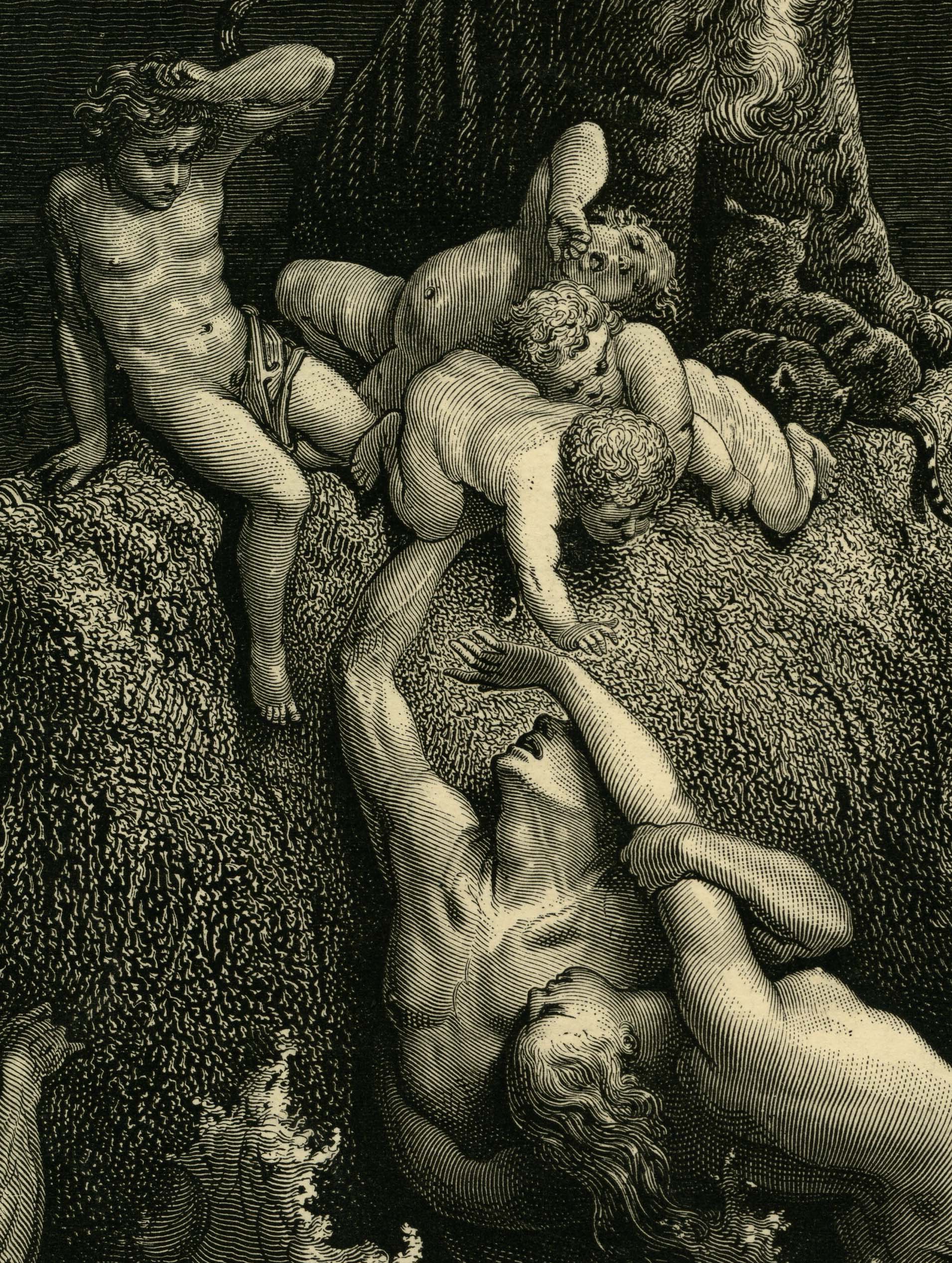 The above authors cite many passages of Biblical scripture, including from the Old and New Testaments and the Qur'an, in their arguments for identifying the Biblical God with the Devil. The following are some of the examples cited.
- Tanakh (Old Testament)
- Torah (Books of Moses)
- Destroyed (almost) all life on Earth by a flood: Genesis 6:17
- Tempted Abraham to give his son as a burnt offering: Genesis 22:1-2. Although the command was later rescinded, several authors cite this story as showing that Jehovah required obedience even to the point of child sacrifice.
- Killed all the first born of Egypt: Exodus 12:29-30
- Ordered [...] of 3,000 men who had worshiped the golden calf: Exodus 32:27-28
- Ordered stoning death of man who collected firewood on Sabbath: Numbers 15:32-36
- Ordered [...] of Jewish men who married gentiles, and their wives: Numbers 25:4-9
- Ordered war, with [...] of all opponent's men, women, and boys, and captivity of virgin girls, "all the women children, that have not known a man by lying with him, keep alive for yourselves." Numbers 31:7-18
- Ordered destruction of all life in seven major nations, "make no covenant with them, nor shew mercy unto them": Deuteronomy 7:1-2 and 20:16-17
- Prophets
- Ordered [...] of all men, women, and children in eleven cities and kingdoms: Joshua 6:21, 8:24-25, and 10:28-40
- Killed 50,070 men for looking into the holy cabinet (ark): 1 Samuel 6:19
- Ordered [...] of all people of Amalek: 1 Samuel 15:2-8. The transgretion for which the Amalekites were killed had been committed by their ancestors 400 years earlier.
- Carried out a curse, [...] 42 little children: 2 Kings 2:23-24
- Writings
- Approved [...] 10,000 prisoners of war by throwing off a cliff: 2 Chronicles 25:2-12
- Torah (Books of Moses)
New Testament: While church heretics cited above identified the Old Testament Jehovah as evil in contrast to a loving God of the New Testament, the author of Ebon Musings notes that "Though there are comparatively few deaths caused or commanded by God in the NT, there is something much worse. As terrible as the cruelties of the Old Testament God were, they were finite in duration. By contrast, the Prince of Peace taught that those who do not worship him as he demands will, upon death, be cast into a fiery pit of torture, to suffer in unimaginable agony for all eternity without rest or hope of escape."
- New Testament
- Cast sinners into a furnace of fire: Matthew 13:40-42
- Torment worshipers of the beast with fire day and night forever: Revelation 14:9-11
- Qur'an
- Burn disbelievers in fire forever: Sura 4, An-Nisa, 56
- Subject disbelievers forever to burning clothing, boiling water, and iron pokers: Sura 22, Al-Hajj, 19-22
Opposition
The notion that the Biblical God is himself the Devil is heretical to mainstream Jewish, Christian, and Islamic dogma and may be treated as blasphemous in any of those religions. However, in the work of any one philosopher or theologian, this notion was only one in an entire body of criticism of established religious and political doctrine. So while the literature does not show isolated arguments against and condemnation of this notion alone, the following shows that people who have expressed it and their followers have been suppressed, sometimes by death.
Marcion of Sinope was excommuncated from the early Church and condemned as a heretic. Apelles' writings were similarly condemned. Mani is reported to have been imprisoned for his teachings, and to have died in prison.
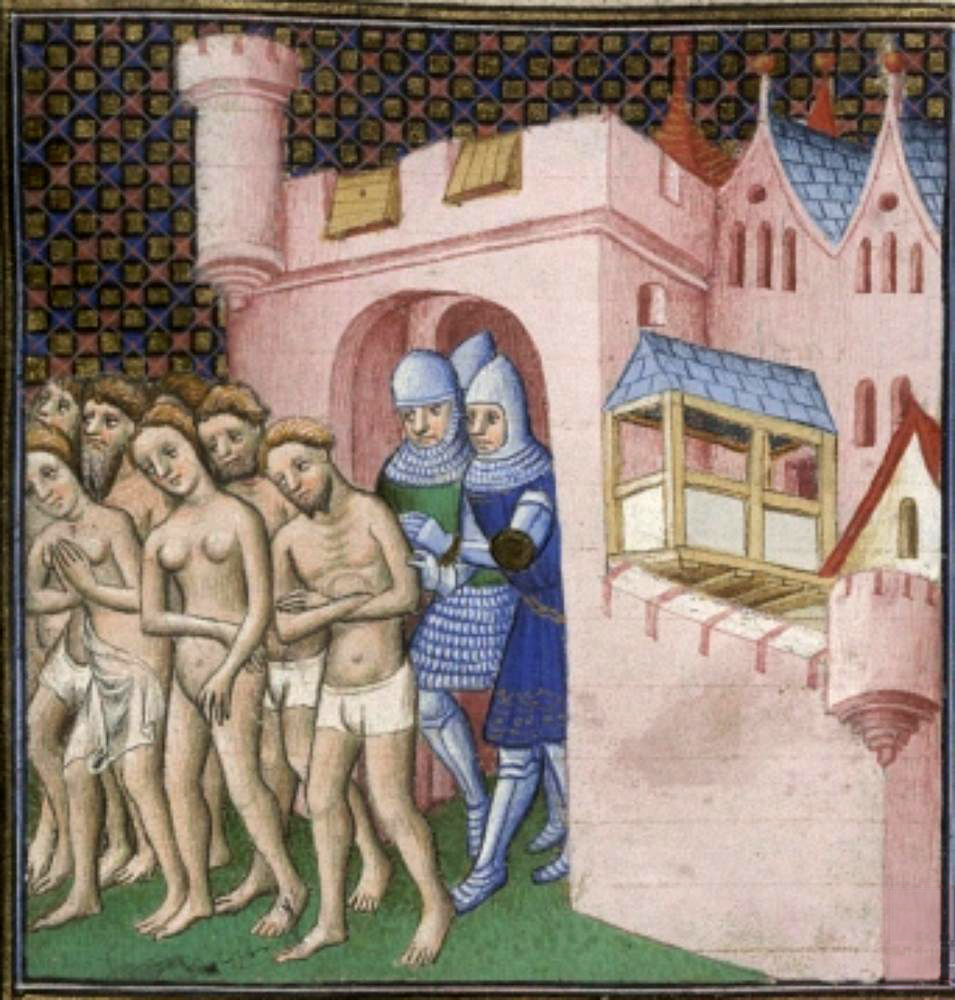 The Albigenses, along with the Cathari, who held similar beliefs, were the subjects of a 20-year long crusade of the Roman Catholic Church which aimed to exterminate them. The crusade massacred an estimated 200,000 to one million people between 1209 and 1229 and was followed by one of the first in what became a long series of inquisitions conducted by the church to purge society of heretics and nonbelievers. Repenters were required to wear a yellow cross sewn onto their outer clothing and to live apart from other Catholics. Those who refused to recant were hanged or burned.
Like Marcion, Luther was excommunicated by the pope. He also was condemned as a criminal by the Holy Roman Emperor.
Religion was only a part of Thomas Paine's writings, which largely focused on political freedom and human rights. He was living in France, supporting the French Revolution, and had begun writing his diatribe against organized religion, The Age of Reason, when he was arrested and imprisoned in 1793 and narrowly escaped execution. The US ambassador to France declined to intercede on his behalf, and Paine later complained bitterly to George Washington for betraying him. Paine returned to the US at the invitation of Thomas Jefferson in 1802 and suffered no further government suppression, although his religious writings made him deeply unpopular with devout Christians.
Religious suppression is generally more subtle in modern than it was in ancient and medieval times, although some Islamic regimes continue to punish blasphemy by death. While the primary author of Ebon Musings does not seem to make any comment on his own choice of anonymity, such comment is offered by a subsidiary author whose work is published on the site: "I have chosen to remain anonymous because this subject, unfortunately, cannot be shared with others without arousing strong emotions and animosities. Countless people have suffered and even died over these issues, and I have no desire to create hard feelings or to isolate myself from friends and family. "