
German intervention in the Finnish Civil War
The German intervention in the Finnish Civil War was a military intervention by the German Empire in the Finnish Civil War of 1918, which took place after the government of the White Party of the war requested assistance from Germany. The German intervention did not actually decide the outcome of the war, but it is estimated that it accelerated its end by several months.
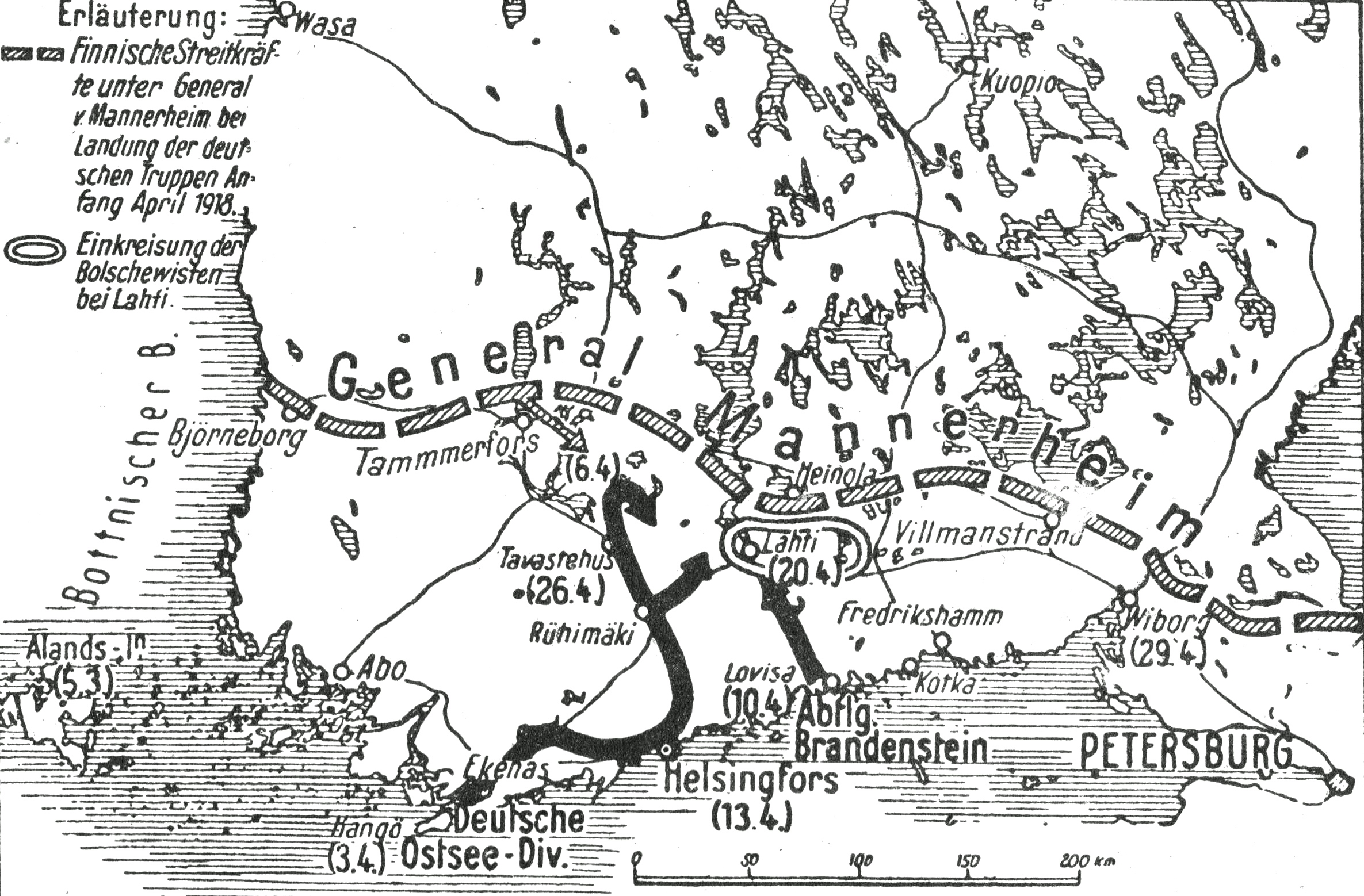
The German intervention began with the occupation of Åland in early March 1918 and continued in April with the landings of the Baltic Sea Division and the Brandenstein Division and the subsequent military operations in Uusimaa, Kanta- and Päijät-Häme and Kymenlaakso. The Germans advanced from Hanko via Helsinki to Hämeenlinna and from Loviisa to Lahti and forced the last Red Guards to surrender in Kymenlaakso in early May, after which the military operations of the civil war were over. The largest single operation was the capture of Helsinki, in addition to which the Germans captured, among others, Hyvinkää, Riihimäki, Hämeenlinna and Lahti. German losses totaled 360 killed.
The intervention further deepened the Reds' plight, and the war ended after just a month. After this, the German army remained in Finland until the end of World War I and the country's surrender in November 1918. Due to unfavorable agreements with Germany, Finland became a German vassal state, which has been called even “German colony”. The Finnish political leadership also planned to make the country a kingdom and elect a German prince as king. After Germany's defeat in World War I and the collapse of the imperial power, the German orientation in Finnish foreign policy came to an end.
Background
Finland's reliance on Germany
After Finland gained independence in December 1917, the social situation in the country escalated towards open armed conflict. The civil war finally broke out on 27 January. Lieutenant General CGE Mannerheim, who had served in the Russian army, had been given the task of creating an army for the Finnish government a little earlier, and so he turned to both Sweden and Germany. The intention was to obtain weapons, trained officers and volunteers from Sweden, from whom an international brigade would be formed. Mannerheim hoped to obtain weapons and ammunition from Germany, in addition to qualified general staff officers.
Instead of neutral Sweden, Germany, which was one of the Central Powers of World War I, and to which Finland had centuries-old cultural and economic ties, became an ally. The independence activists had also long been committed to Germany, as Jägermeisters had been secretly trained in the country since 1915. After the outbreak of the civil war, they began to be shipped from Danzig to Finland on 11 February, and at the same time the White Army also received weapons from Germany. However, the Red Jägermeisters, who were supporters of the labor movement, were considered unreliable and were left in Germany.
Pehr Evind Svinhufvud, the chairman of the Senate, had already been demanding Finland's clear reliance on Germany since the general strike of November 1917. He sent Edvard Hjelt, one of the leading independence activists, as the Senate's representative to Germany and urged him to obtain military aid for Finland. On 26 November, Hjelt presented a request to Erich Ludendorff, the German war chief, to occupy the Åland Islands or send troops to Finland, but he refused. According to Ludendorff, at this stage the only option was to repatriate the Jaegers. Communication between the Finnish government and Hjelt was through Alexis Gripenberg, a representative in Sweden, as there was no direct connection to Berlin. In early February 1918, Hjelt received an ambiguous letter from Stockholm, which he interpreted as a request for direct German military intervention in order to defeat the Reds, in addition to the Jaegers and military aid. Although the message was vaguely worded, Hjelt did not ask for further instructions, but made a preliminary request on 9 February. His arbitrary actions ultimately bound Finland to Germany and made the country a protectorate of Germany.
German plans
Germany had also planned a wider intervention in the civil war, without the knowledge of the Finnish government. This was a global political operation that served the country's own interests and was linked to the internal situation of the Russian border states. Germany supported their efforts to gain independence with the aim of weakening Soviet Russia in order to bring the war on the Eastern Front to an end. Since the Allies had placed a trade embargo on Germany and the Western Front had come to a standstill, the areas within the sphere of influence of the Eastern Front were the only ones from which German Empire could obtain the economic resources it needed. Finland, despite its declaration of independence, was still part of the Russian Empire with regard to Germany's war effort. Finland's raw material resources attracted particular interest, particularly its forests, ores and rapids. In addition, the country was useful as a base for operations against Soviet Russia, from which an attack on Bolshevik- controlled St. Petersburg was planned, once the surrounding powers had first been defeated on the Western Front. Germany also wanted access to the ore fields of northern Sweden via Finnish railways and, at a later stage, the possibility of striking British forces in the Murmansk region from northern Finland.
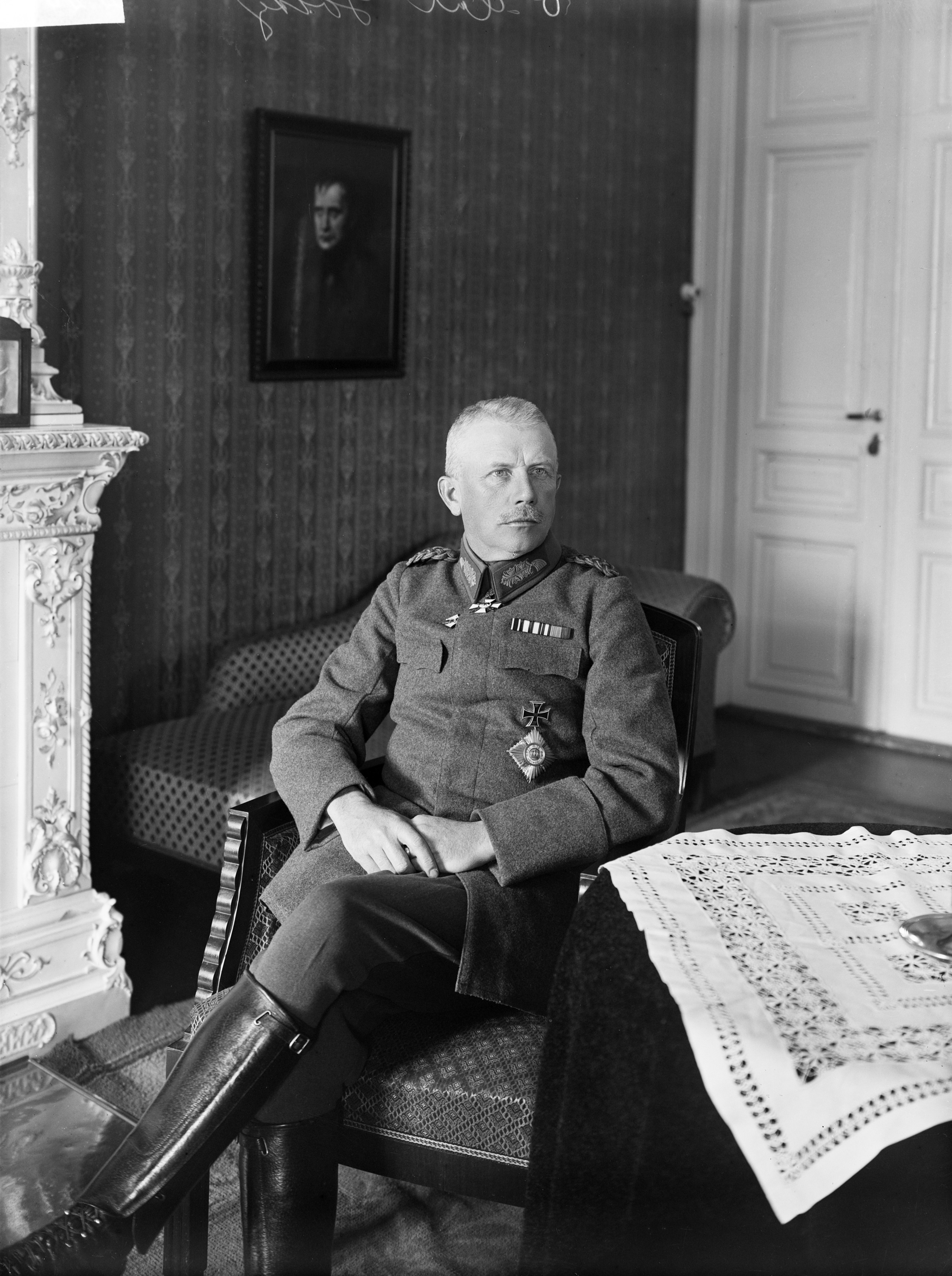
Peace negotiations between Germany and Soviet Russia broke down on 10 February, when the Bolshevik government unilaterally withdrew from the war. The two countries had been in an armistice since December 1917, and now the Germans assumed that Soviet Russia was only trying to buy itself a respite before starting new hostilities. Therefore, the German government demanded that the armistice be called off and the war be continued immediately. In order to avoid the internal political crisis that would follow an open attack, the government decided on 13 February to resort to separatist movements in the western regions of Russia. Finland, Ukraine, Livonia and Estonia wanted to invite the Germans to save their countries from the clutches of the Bolsheviks. At the urging of General Ludendorff, the Finnish representatives in Berlin, Edvard Hjelt and Rafael Erich, drafted a letter requesting military assistance the next day, which Svinhufvud signed a day later.
German plans for an intervention in Finland were ready by 18 February, when military operations on the Eastern Front were also resumed. According to the plan, the landing would take place at Rauma and Mäntyluoto in Pori . However, sailing to the west coast past the Åland Islands was dangerous if the islands were in Russian hands. Therefore, the Germans decided to occupy the Åland Islands first, which would also be used as a support area for the landing on mainland Finland. When the ice conditions eased, a detachment of 5–6 battalions was to be sent to Rauma or Pori, which would quickly advance inland along the railways. According to the plan, after the defeat of the Reds, the German and Finnish armies would together constitute a military threat to Soviet Russia.
The German Finnish treaty
As hostilities continued, Germany managed to occupy the desired territories in the Baltics by the end of February, after which it agreed to the armistice requested by the Russians, and hostilities between the countries ended with the Treaty of Brest-Litovsk signed on 3 March . The peace treaty included a provision according to which Russia had to withdraw its troops from Finland, and thus the Reds no longer had the opportunity to receive help from the Bolsheviks. The treaty also gave Germany a free hand to act in relation to Finland as it wished. Hjelt had already signed the peace treaty between Germany and Finland on 28 February. Although Emperor Wilhelm II had recognized Finland's independence as early as the beginning of January, the country, as a former part of the Russian Empire, was still formally at war with Germany. In addition, Hjelt signed three documents on 7 March that firmly bound Finland as a German protectorate . This was the price to be paid for military assistance, which made Germany Finland's political protector and supervisor. According to the agreements, Germany received, among other things, unlimited rights to Finland's foreign trade and natural resources.
The Finnish Senate, which had moved from Helsinki to Vaasa , only learned of Germany's impending intervention from a letter sent by Hjelt at the beginning of March. The Senate learned of the agreements he had signed through Swedish newspapers. A more detailed report did not arrive until Rafael Erich on 19 March. Lieutenant General Mannerheim, who had been appointed Commander-in-Chief of the Army, was dismayed by the German government's decision to send troops to Finland and was ready to resign. The reason given was the interference of a foreign power in Finnish affairs, which would give the Reds the right to accuse the government of the same things they themselves were accused of. A similar view also prevailed in the Senate. For example, according to the notes of Senator Juhani Arajärvi, the Germans did not gain the full confidence of the Senate with their actions, but their interests were known and they were also concerned about them. Mannerheim was particularly bitter about the news, also because it took away from him the task for which he had created his field army, namely the conquest of southern Finland, which was then held by the Reds.
Impact on the course of the war
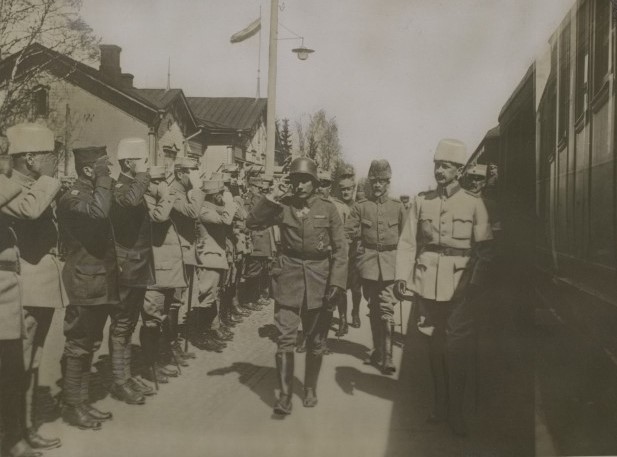
Although the German forces were formally subordinate to Mannerheim, their de facto commander was Major General von der Goltz, who led the expedition, and who planned and carried out the war independently. They did not meet for the first time at the White headquarters in Mikkeli until after the Reds surrendered in early May. Due to poor telegraph connections, the Senate meeting in Vaasa was also not aware of the progress of the German forces in southern Finland. However, the German intervention had a major impact on Mannerheim's war plans, as he rushed to capture Tampere to prove that the Whites did not need outside help to win the war. Mannerheim also had to be able to attribute the defeat of the Reds to his own forces, or else the power the government received would look like a gift from the Germans. Therefore, he rushed the operation, even though the grouping of troops was not complete, and the occupation involved great risks.
With the fall of Tampere and the German landing, the Red leadership left Helsinki on 9 April and retreated to Vyborg. After this, the Whites were able to concentrate their forces on the Karelian Front, as the Germans were taking care of the war in southern Finland, which was of great importance for the outcome. However, the intervention did not decide the war, as the Battle of Tampere, which was considered decisive, had already turned in the Whites' favor by the time of the landing. Instead, German aid significantly accelerated the Whites' victory. Without it, the fighting would have possibly dragged on for months, and at the same time the cycle of revenge would have become even more terrible. In addition, as the war dragged on, the Reds might have received help from the Russian Bolsheviks. The German intervention is also considered to have spared Helsinki from heavy fighting like that at Tampere and the mass executions that followed.
Landing forces
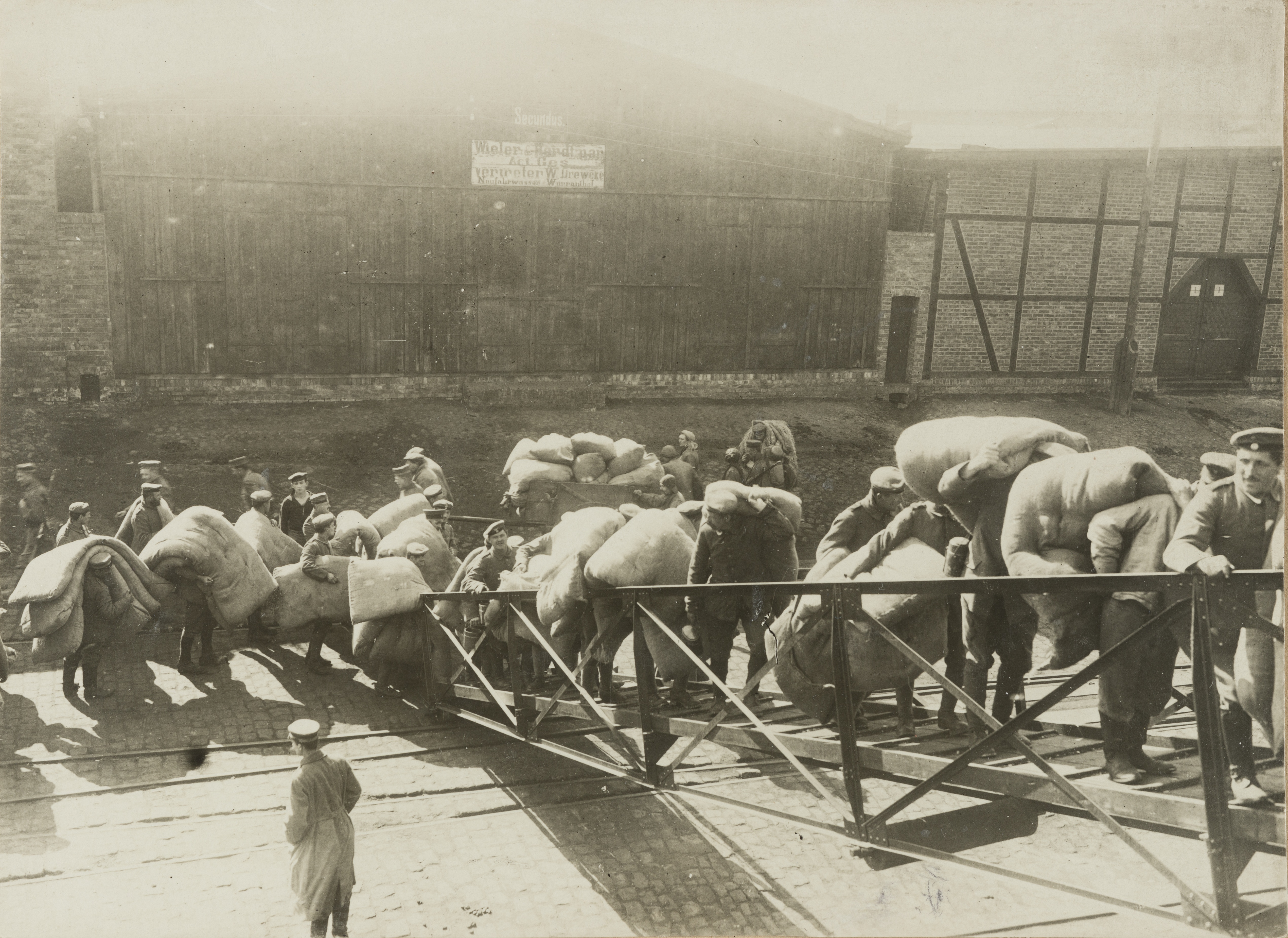
The Germans were in dire need of men on the Western Front, which is why only a limited number of troops could be sent to Finland. During March, the 9,445 strong Ostsee-Division, or German Baltic Sea Division, was assembled in Danzig, with Major General Rüdiger von der Goltz as its commander. In addition to almost 10,000 men, over 3,000 horses were shipped to Finland, as well as a huge amount of weapons, ammunition, food and other equipment. In addition to the combat and supply troops, a film crew also arrived, which recorded a lot of unique footage of the civil war during the German advance. The naval detachment commanded by Rear Admiral Hugo Meurer consisted of a total of about a hundred ships of various sizes from the Imperial German Navy. It also returned with 380 members of the Eastern Uusimaa Guards Corps who had fled across the Gulf of Finland after the Battle of Pellingi. Colonel Wilhelm Thesleff was appointed as the White Army representative on the divisional headquarters.
The Germans completed their landing plan at the very end of March. In addition to the detachment arriving from Germany, it was decided to send a brigade of just under 3,000 men from Tallinn, commanded by Colonel Otto von Brandenstein. Its purpose was to land in Kotka and then advance to Kouvola, where the Reds' railway connection to Vyborg and St. Petersburg would be cut off. In the end, however, the landing site was Loviisa. A thousand-man Jaeger battalion under the command of Admiral Meurer and Major August Schenck zu Schweinsberg had already arrived in Åland in mid-March, and on 5 April it was shipped to Ekenäs as part of the Baltic Sea Division. The Brandenstein Detachment, which had also landed in Loviisa on 7 April, was also subordinated to the Baltic Sea Division from 16 April, bringing its total strength to approximately 14,000 men.
The Baltic Sea Division had previously fought on the Eastern Front, from which they were released by the peace treaty between the German Empire and the Soviet Union. The officers were mainly nobles, but the enlisted men were ordinary conscripted workers who did not know that they were fighting against other workers. Most were even surprised when they encountered the Finnish Red Guards. The propaganda created at the request of von der Goltz and Mannerheim had created an image of plundering and murderous “Bolshevik bandits” from whom the Germans had come to liberate Finland. Many were also members of the labor movement and were supporters of the Social Democrats. However, they were not particularly revolutionary, and later in the autumn the German Social Democratic Party was even included in the government of Max von Baden. The soldiers are said to have wondered why the Finnish Social Democrats were making a revolution. In their homeland, the revolutionaries were the extreme left-wing Spartacists. The Germans were also amazed by the enthusiastic reception they received from the White supporters. Although Finland suffered from food shortages, they were always provided with abundant food, especially in the countryside. It was even so abundant that German journalists who followed the troops reported that there was no alleged famine in the country.
Occupation of Åland
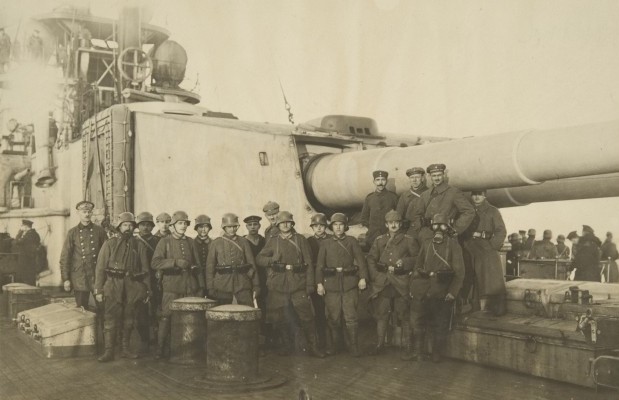 Sweden had occupied the Åland Islands for a couple of weeks after the outbreak of the Finnish Civil War on 15 February. At that time, there were about 2,000 Russian soldiers on the islands, mostly awaiting repatriation. The German naval detachment Sonderverband Ostsee, commanded by Rear Admiral Hugo Meurer, set sail from Danzig on 28 February. It consisted of a total of about thirty ships, led by the battleships SMS Westfalen and SMS Rheinland. It also included, among others, an icebreaker, minelayers, torpedo boats, cargo ships and a hospital ship. The convoy was guided to its destination by Finnish pilots Harry Rönngren and John Eklund. The landing site had not been chosen in advance, but based on flights by reconnaissance aircraft, it was decided to land the troops at Eckerö in Åland, where the ice conditions seemed suitable. However, the icebreaker Sampo, which had been called in to help, was lost, and the Germans were forced to proceed on their own. Due to the thick ice, the convoy only reached Eckerö on the third attempt, on 5 March.
The actual occupation force (Aalands-Detachement) was the 14th Mecklenburg Jaeger Battalion, commanded by Major August Schenck zu Schweinsberg, consisting of just over a thousand German soldiers. Its men had previously fought on the Western Front in the Vosges and on the Eastern Front in Romania. Negotiations with the Swedes occupying the islands began a day after the convoy arrived. As a result, most of the Swedish troops left Åland, but a small detachment remained to occupy Mariehamn and Lemland. The rest of the islands were taken by the Germans who landed on 7 March. Both sides also had the right to use the port of Eckerö. The Germans captured about 1,200 Russians on the islands and transported them to Liepāja, from where the prisoners were soon able to return to their homeland. After the main Swedish force left, the Finnish Senate administration was also established on the islands, represented by General Mannerheim, who sent naval officer Hjalmar von Bonsdorff as the Finnish military governor of Åland.
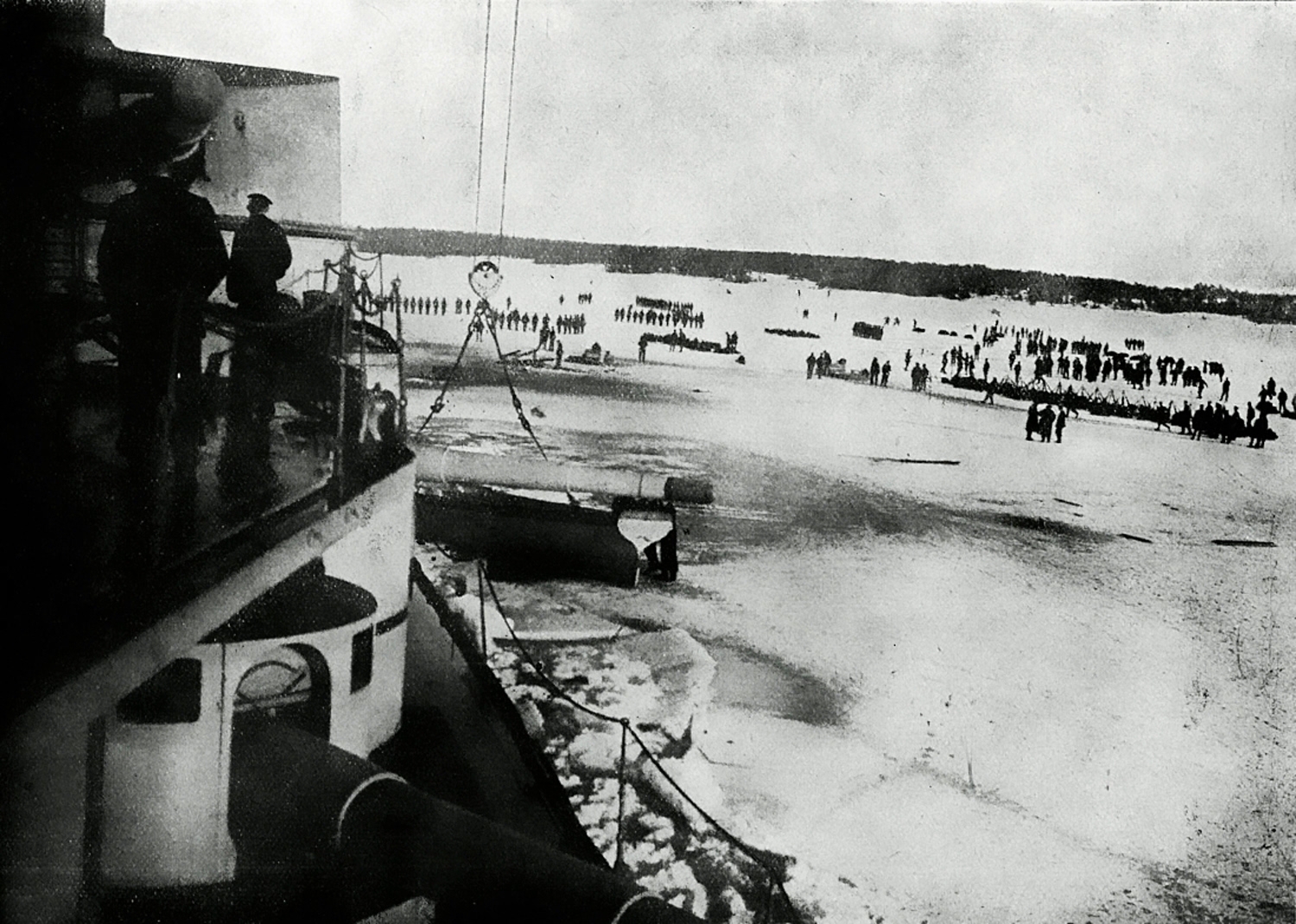
In Åland, the Germans did not participate in the fighting, but they executed at least two Red Guard schoolboys who were suspected of being spies. On 9 March, the icebreaker SMS Hindenburg hit a mine west of Eckerö and sank, killing three men. However, the occupation affected the Reds' warfare by tying up their forces, as the Red Guards in the Turku region were not dared to be sent to fight on the Häme front to help Tampere, which was besieged by the Whites, due to the threat posed by the Germans. On 15 March, a delegation of the Turku Reds, led by Georg Boldt and William Lundberg, visited the Germans. The intention was to begin negotiations on establishing diplomatic relations between the People's Delegation and Germany, but Commodore Ernst Toussaint, who received the delegation, did not have the authority to do so. The delegation tried to ask Kullervo Manner for advice in Helsinki, but when there was no reply to the telegram, and Boldt and Lundberg were not interested in meeting Admiral Meurer, they decided to leave the next day, escorted by German soldiers, back to Turku.
The ice conditions in the Gulf of Bothnia eventually proved so difficult that the landing site was changed to Hanko. To protect the flank of the operation, the Germans decided to attempt to capture Turku, which was held by the Reds, at the end of March. At that time, the Archipelago Free Force, formed from members of the Southwest Finland Guard, was also in Åland at that time, and occupied the islands of Houtskari and Korppoo. After this, the Germans, supported by the Whites, attempted to capture Nauvo on 4 April. However, the Reds stopped them in a battle that claimed seven German lives. The failed attack remained the only military action the Germans took in the Turku archipelago. After this, they concentrated on the march of the Baltic Sea Division towards Helsinki, and the Mecklenburg Jaeger Battalion was shipped to Hanko as a reserve on 9 April. SMS Rheinland set out two days later to assist in the capture of Helsinki, but ran aground between Lågskär and Flötjan, killing two men. The ship was not refloated until July.
Battle
Preparing for landing
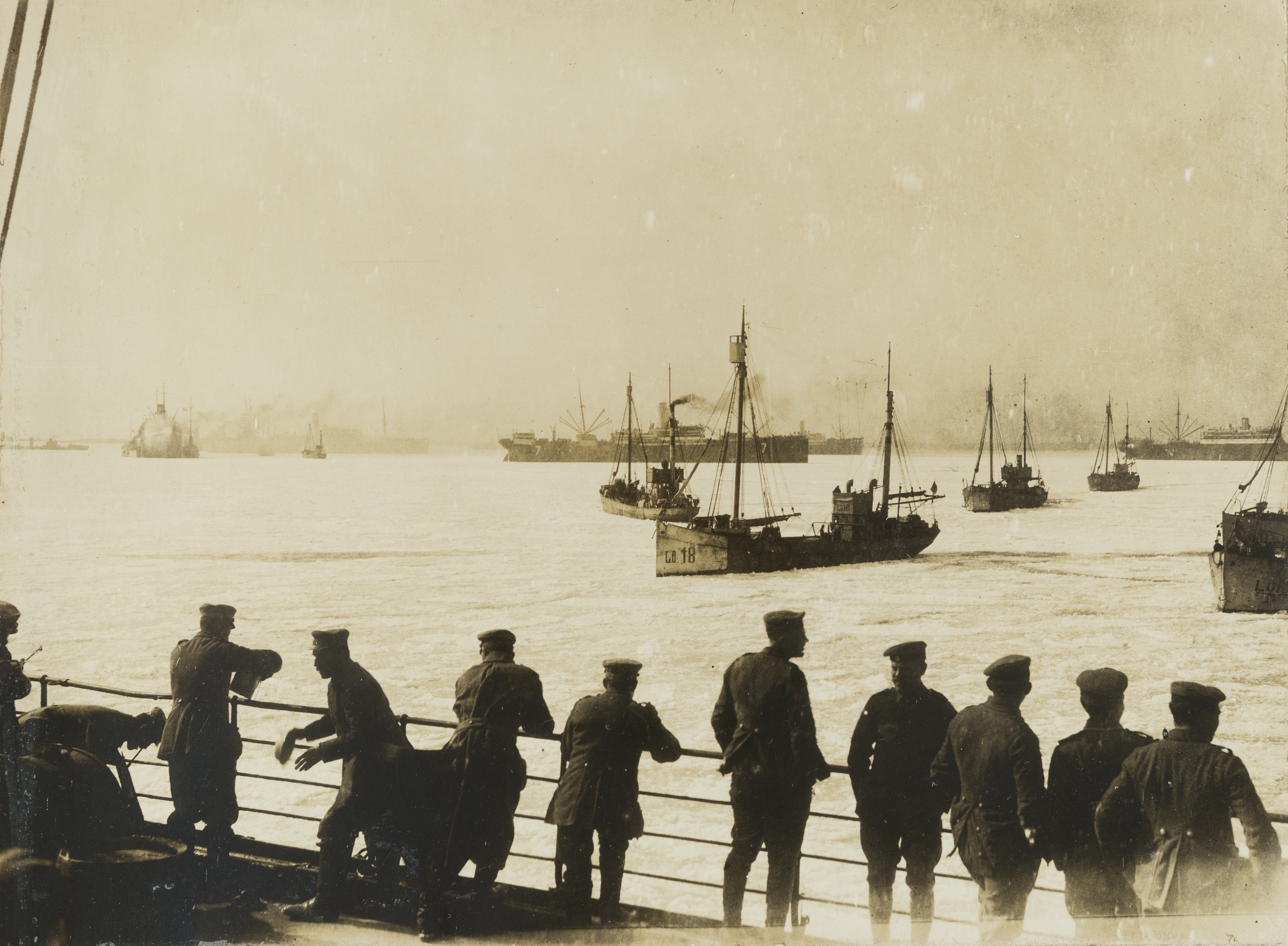
The German landing was delayed by the difficult ice conditions in the Gulf of Bothnia and the strong minefields, so much so that in mid-March Emperor Wilhelm II had to intervene. On 20 March, General Mannerheim also asked Liaison Officer Thesleff to expedite the dispatch of troops. Instead of the west coast, the goal was now set to land in Hanko at the turn of March–April. Since not only the Åland Islands but also Tallinn was isolated by strong ice, it was decided to ship the troops from Danzig, where loading began on 29 March and the departure finally took place on 1 April. According to Von der Goltz's new plan, the main target of the attack was Riihimäki, where they would advance along the Hanko–Hyvinkää railway . Capturing it would isolate the Reds in the Helsinki region and south of Tampere from each other, and at the same time cut off the vital railway connection to St. Petersburg for both. After this, the plan was to attack from Riihimäki towards Helsinki and Lahti, while the Reds between Hämeenlinna and Tampere would be left to Mannerheim. However, General Ludendorff believed that advancing inland to Riihimäki would weaken the troops' supply possibilities and communication with the naval forces. So on 27 March he drew up a new plan, according to which they would advance from Hanko along the coast directly to Helsinki and only from there along the main railway to Riihimäki.
Thanks to their technical and tactical superiority, the Germans calculated that they would be able to quickly cut Red Finland in two at Riihimäki, and when the Whites were besieging Tampere at the same time, the Red Guards of Southwest Finland and Satakunta would have been left in a muddle. The capture of Helsinki was also in the Germans' own strategic interests, as it would force the Russians to quickly withdraw their wintering troops in Viapori, thus freeing up the Gulf of Finland for their use. Before the landing, von der Goltz was still concerned about the Turku region, where it was estimated that there was a reserve of about 2,000 Red Guards. For this reason, he ordered the Jaeger battalion in Åland to attack Turku on the day of the landing, from where it was intended to advance to Salo and eventually join up with the main forces of the Baltic Sea Division in Western Uusimaa. The capture of Turku had also been included in Ludendorff's plan. However, the operation was unsuccessful when the Reds defeated the Germans in the Battle of Nauvo on 4 April, after which they abandoned the Turku route.
In addition to the Red Guards in the city, the capture of Helsinki was threatened by the coastal artillery of the Viapori naval fortress and the Russian warships in the port of Helsinki. The threat posed by Viapori disappeared in the weeks before the landing, when White supporters made its cannons unfireable by removing their locks. The operation was carried out in secret from the Reds who controlled Helsinki, but the Russians who occupied the fortress were aware of the matter. The capture of Helsinki would have become very dangerous for the Germans if the Reds had gained access to the cannons. Leaflets were also dropped on Tampere, claiming that 30,000 Germans had already landed on Mäntyluoto in Pori. The content of the propaganda leaflets was written by the head quartermaster Hannes Ignatius. Although the Social Democratic newspapers continued to write after the landing that only members of the Finnish Guards Corps disguised in German military uniforms had arrived in Hanko, it is believed that the leaflets had a weakening effect on the Reds' will to fight, especially in Tampere.
Landing in Hanko
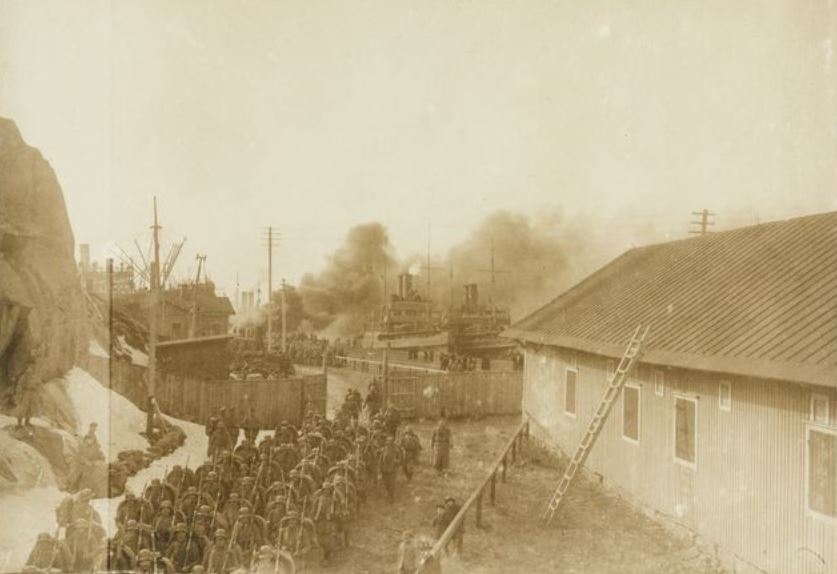
The transport ships of the Baltic Sea Division set sail from Danzig on 31 March and arrived off Hanko in the morning of 3 April. Before anchoring, the division occupied the Russarö fort located off the city, where the 30 Russians who remained surrendered without making a fuss. Although the Reds were aware of the Germans' arrival, they had already left Hanko well in advance. Instead, the Russian marines set fire to the four submarines and their support ship in the harbour so that they would not fall into German hands. The first ships docked at the pier at 7 am, and half an hour later the German flag was flying at the top of the Hanko water tower , while the Finnish lion flag was raised on the flagpole of the town hall . The German landing aroused great enthusiasm among the White supporters, and they were welcomed by, among others, a brass band. The Red prisoners in Hanko were released and replaced by about a hundred Red supporters who had remained in the city, who were housed in the premises of the immigration office in the port. There was also indiscipline among the German troops who landed in the city, as they emptied the warehouse of the Hanko biscuit factory.
Although the Bolshevik government had already ordered its ships in Helsinkito withdraw to Kronstadt Island on 17 February, the Baltic Fleet's operation, known as the Ice March, had been delayed so much that some of the ships were still in Helsinki at the turn of March and April. The landings made the Russians worried about their ships, which is why they sent representatives to Hanko to negotiate with the Germans. On 5 April, the Treaty of Hanko was signed between the Germans and the Russians, according to which the warships in Helsinki would leave from 7 April onwards and those still in the city after the occupation began would remain neutral.
Clashes in Western Uusimaa
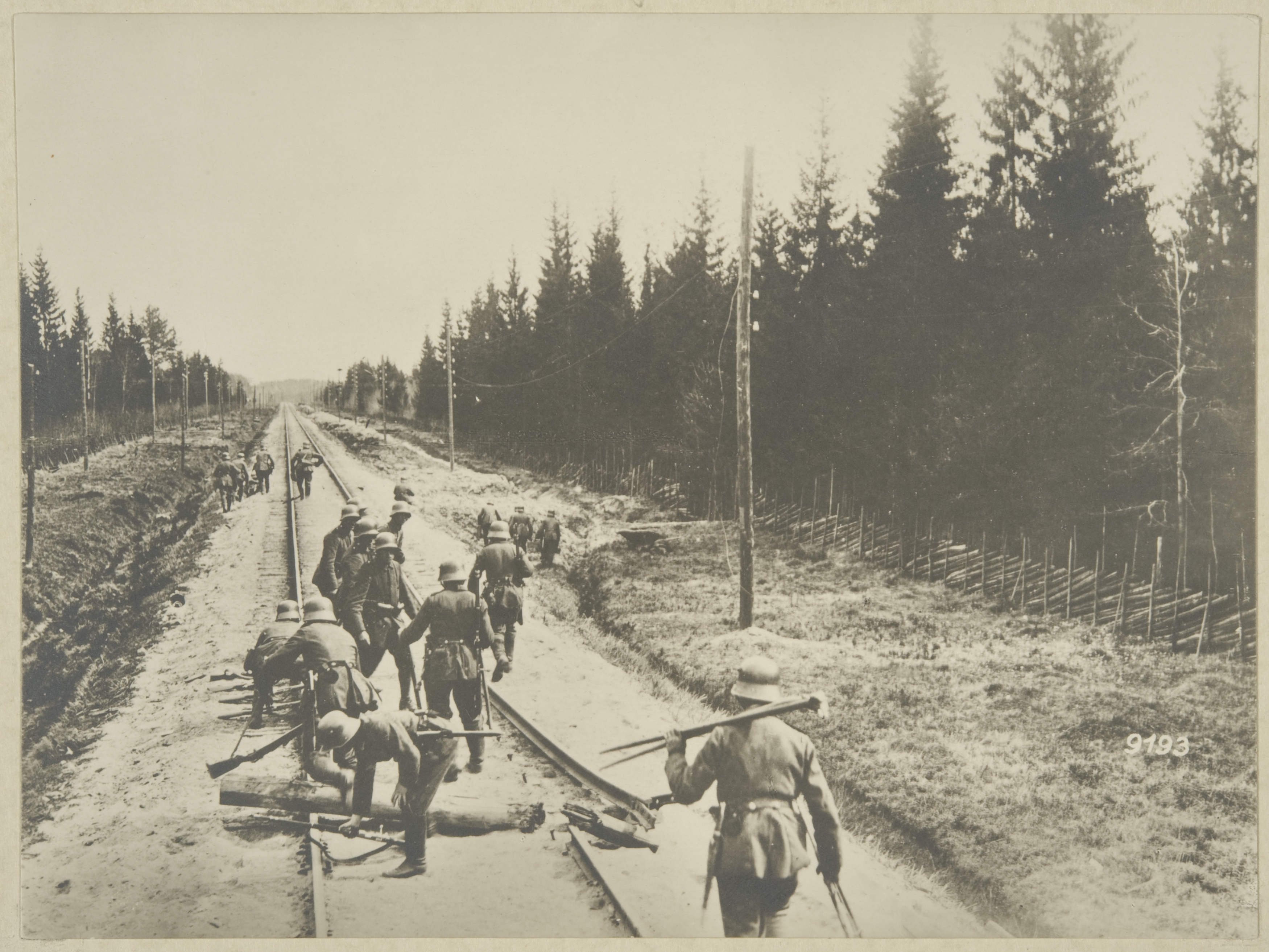
Immediately after the landing at Hanko, three reconnaissance detachments were formed heading north. The first was led by Swedish Major Adolf Hamilton , whose group was tasked with occupying Tammisaari and Karjaa . The second detachment was intended to advance from Tammisaari by road towards Helsinki, and the third was to establish signal centers in Tammisaari and Karjaa. Since the Reds had not left any locomotives in Hanko, the detachments were to advance by rail. At the same time, the Reds, who had retreated from the city, had sent their own reconnaissance detachment by rail to find out what was happening in the direction of Hanko. The parties encountered each other less than twenty kilometers north of the city in Lappohja, but no battle ensued, as the Red six-man detachment surrendered without resistance. After this, the Germans encountered a Red armored train about three kilometers south of Tammisaari. However, it retreated after a short exchange of fire, having overestimated the enemy's strength. At 4 p.m., the Germans arrived at the Pohjanpitäjänlahti bridges in front of Tammisaari , which were occupied by the Reds. The Reds attempted to attack the Germans, but retreated after a couple of hours, and the Germans took control of the city without further resistance. In the clash at the bridges, two Red Guards were killed and one civilian was killed by stray bullets.
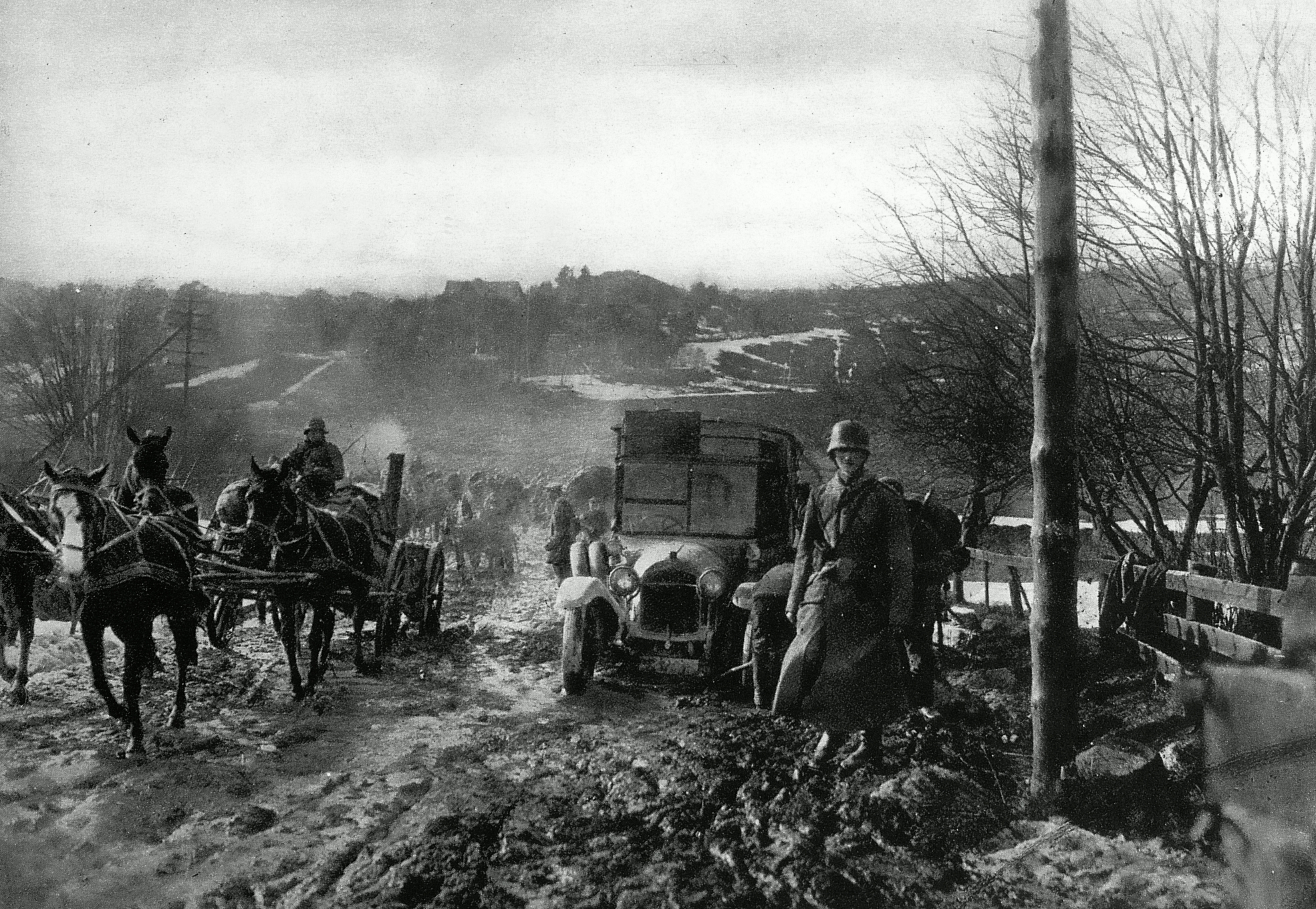
The Reds had only established their first line of defense 50 kilometers from Hanko at the intersection of the coastal railway and the Hanko–Hyvinkää railway in Karjaa, where the Germans continued on April 5. About a thousand Red Guards originally intended for the Lempäälä front had been gathered in the area, coming mainly from Helsinki and surrounding municipalities. They were supported by two armored trains. Karjaa had been chosen because the Reds were expecting a landing from Åland to Turku, after which the enemy was to be stopped on the coastal railway before it reached the vicinity of Helsinki. The advancing Germans soon clashed with the Red Armored Train No. 1 at the Raseborg stop . The train, commanded by F. Wahlberg, had about a hundred Red Guards, but it had to retreat after being damaged by direct German fire. About three kilometers south of Karjaa station, the Germans were also confronted by the Red armored train No. 2. After a battle described as fierce, both trains decided to retreat, apparently due to a vote of the crew. Two Germans were killed and two were wounded in the clash. The detachment, which had advanced by road towards Helsinki, reached a distance of about 12 kilometers by evening without encountering resistance. Snappertunato Fagernäs village.
The next day, the Germans attacked the Reds, who were entrenched around Karjaa station, from the west. The battalion commanded by Colonel Konrad Wolf, reinforced by Major Hamilton's detachment, participated in the attack. The attack, which began at 3 p.m., ended after fierce fighting before dark, when the Reds withdrew in ten trains towards Turku and Hyvinkää. The Germans followed the Red armoured train that had fled west for 25 kilometres to Kisko and blew up the railway bridge over the Kisko River near Koski station. The capture of Karjaa cost the Germans a total of six killed and 12 wounded. The Reds' stubborn resistance came as a great surprise to the Germans, who had been able to advance almost freely until then.
From Karelia, the main German force continued along the coastal road and the Turuntie towards Helsinki. A two-company detachment commanded by Major Hamilton advanced along the Hanko–Hyvinkää road towards Lohja , where it encountered the Reds in the Battle of Kirkniemi on 8 April. After the enemy retreated, the Germans continued to Virkkala and took over Lohjankylä the next day. The Reds retreated further to Nummela , where they fortified themselves in positions built by the Russians. The Reds had decided to stop the German advance precisely in Nummela, and so all the Reds of Western Uusimaa from Hanko, Tammisaari, Karelia and Lohja were gathered in the town. In total, there may have been as many as 3,000–6,000 Reds in the region. After the capture of Lohja , security units were formed in the town, which immediately began executing suspected Reds. The German detachment in Lohja was withdrawn back to Karjaa on 16 April, when the Reds took control of the town for a few days, until the Germans and Whites returned to Lohja again on 20 April. The Reds then withdrew via Nurmijärvi towards Hyvinkää.
As the Germans advanced towards Helsinki, the Reds attempted to negotiate with them through Captain Sigurd af Ekström, the military attaché of the Swedish legation. He travelled by train on 8 April to meet the Germans, but was shot at when the smoke from the locomotive could not be seen to be accompanied by Swedish flags flying on its nose. A day later, the Germans captured Inkoo without fighting, but a brief skirmish took place at Kirkkonummi on the same day. The Reds quickly retreated and took up positions at Krepost Sveaborg, or the Helsinki Land and Sea Fortress, in Leppävaara, Espoo, where the German vanguard arrived early on 11 April. The Germans took over the abandoned fortifications south of the Turuntie road in Kilo, after which surrender negotiations brokered by Ekström resumed. Von der Goltz spoke with two Red leaders in Leppävaara through a female interpreter who had arrived with them. However, the Reds decided to resist and did not surrender by the deadline, so the Germans attacked a little after 4 p.m. The Reds quickly abandoned their positions and retreated to Huopalahti, after which the Germans had the road open to Haaga and Vähä-Huopalahti. In the Ruskeasuo and Ilmala areas, the Germans again encountered Reds who had taken up positions in land fortifications, which is why the advance was suspended for the night. After the Germans arrived, a group of about 10,000 Red refugees left Espoo towards the east.
Capture of Helsinki
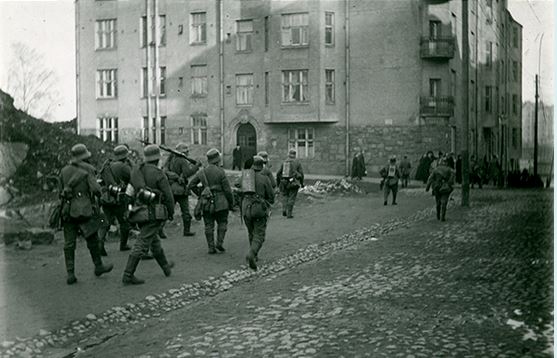
Early on 12 April, the Reds were presented with another demand for surrender, but when that was rejected, the Germans began their advance on the centre of Helsinki at 5 am. Von der Goltz ordered part of his troops to attack Tikkurila through the Helsinki parish and cut the main railway there. The Reds put up stiff resistance, but after just under five hours of fighting, the Germans finally managed to capture Tikkurila railway station and then advanced towards Malmi, which they captured by evening.
The march to the center of Helsinki took place via Vähä-Huopalahti and Meilahti. One Jaeger company was sent to protect the flanks at Munkkiniemi, while the main force advanced along Läntinen Viertotie, or the current Mannerheimintie. The Reds' first line of defense was on the cliffs at the current Tenholantie and Tilkka military hospital, where fighting began at around 6:00. The Germans captured the Tilkka cliffs after three hours, after which the advance stopped at the defensive line located half a kilometer away at Läntinen Viertotie and the current Pihlajatie. After breaking through it at around 10:00, the Germans also managed to capture Pasila by 1:00 p.m., from where the Reds withdrew to the eastern working-class districts. This meant that an attack on the inner city area was still ahead.
By half past one, the Germans had advanced to Nordenskiöldinkatu. When the Reds managed to stop their advance again, brigade commander Hans von Tschirschky und Bögendorff formed two assault forces, one of which penetrated the city center from Läntis Viertotie and the other from Hietalahti into the southern parts of the city center. The Germans who had captured Pasila, in turn, advanced into the city center along the railway line. Despite the street fighting that ensued, life in the capital continued almost as before. Shops and cafes were open, and public transport was running. The Germans' advance was followed by large numbers of curious spectators, some of whom handed them flowers, tea, coffee, and sandwiches. By half past five, the Germans reached the Swedish Theatre, which was captured using human shields. At seven o'clock, about 400 German naval forces landed at Katajanokka, after which the Reds only held Kruununhaka in the inner city.
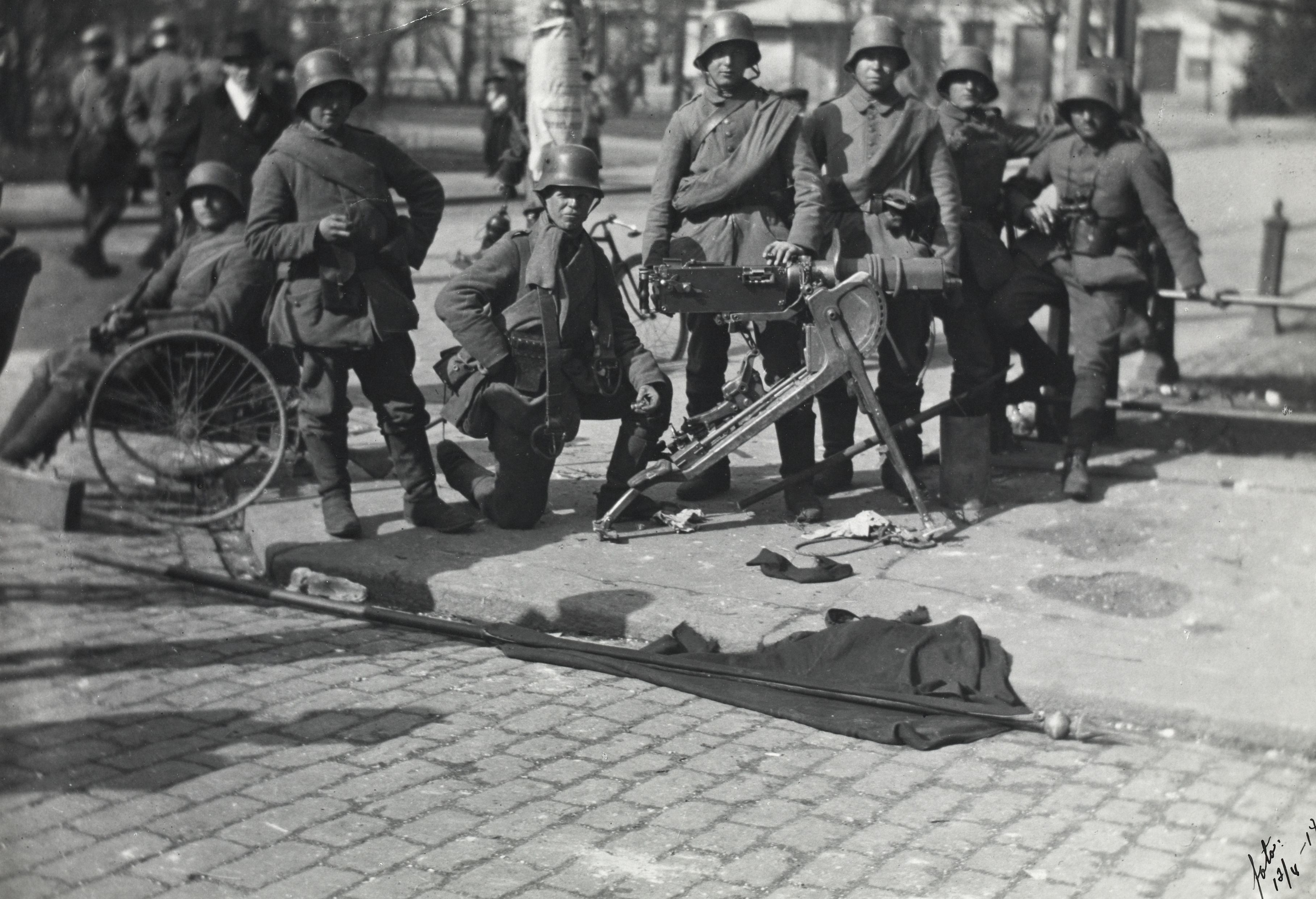
The Germans continued their attack early on the morning of 13 April, when the naval detachment anchored off Helsinki began bombarding the last pockets of Red resistance. At first, fierce fighting took place in Kruununhaka, but despite the resistance, the Red headquarters in Smolna had to surrender as early as 7 am. The Reds were now only in control of the eastern working-class districts of Siltasaari and Kallio, which were being pounded hard by German artillery. Finally, a white flag was raised on the tower of Kallio church at 2 pm and the last Reds surrendered their weapons by 6:30 pm. In total, over 6,000 Reds surrendered to the Germans, of whom only a small number were armed Red Guards. They were rounded up in the Suomenlinna prison camp over the next few days. A total of 54 Germans fell in the Battle of Helsinki. The Reds suffered around 400 casualties of whom 20–50 were executed in Pikku Huopalahti. However, Helsinki did not witness the mass executions that occurred in the battles of Tampere and Vyborg, and the Germans even tried to curb the Whites' enthusiasm for shooting surrendering Red Guards. The capture of Helsinki claimed around 20 civilian casualties.
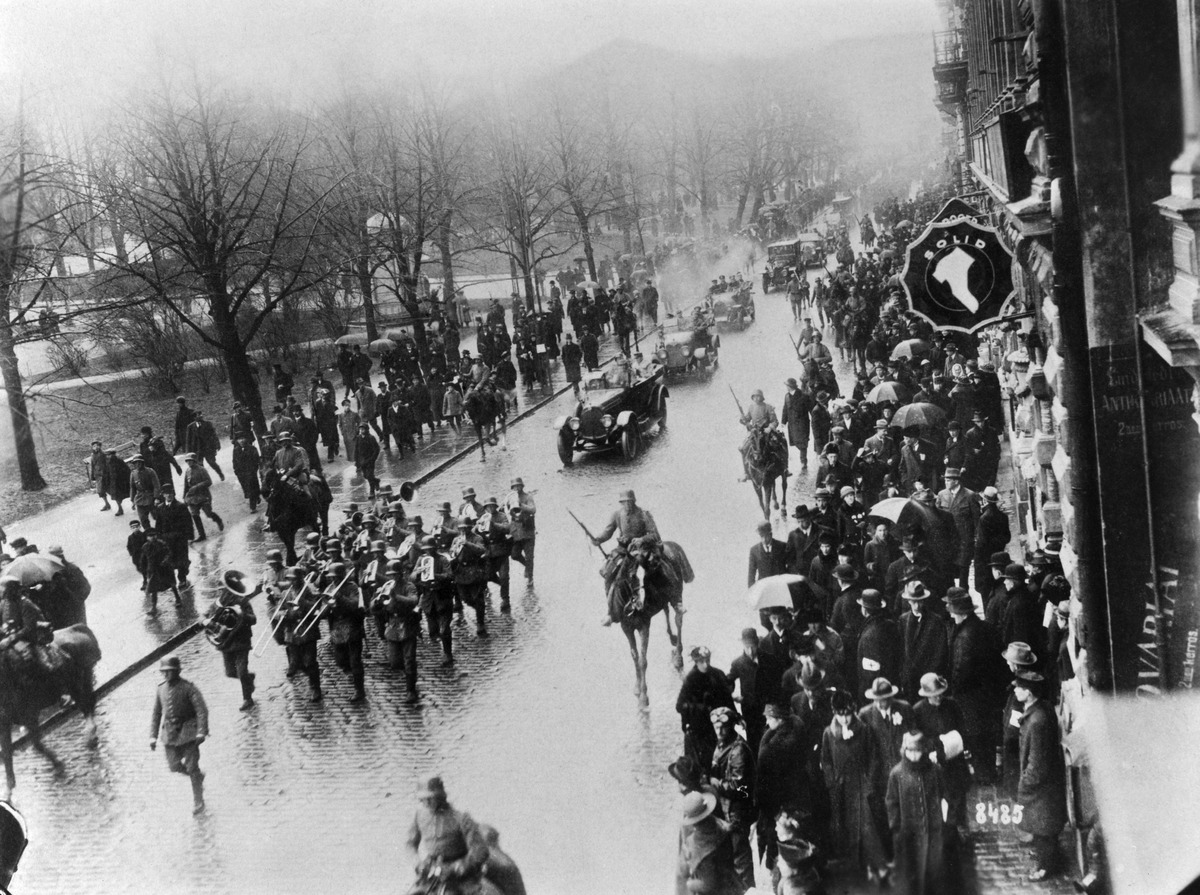
Von der Goltz organized a victory parade immediately after the capture, April 14. Despite the surrender, there were still occasional Red snipers in the city, who fired on the Germans even during the victory parade. This also caused the boat carrying Admiral Meurer to turn back, and he was unable to participate in the parade.
The conquests of Hyvinkää and Riihimäki

On 16 April, the Baltic Sea Division was joined by Detachment Brandenstein, which had landed in Loviisa, and a company-strong detachment previously stationed in Lohja was sent to Lahti to support it. The main forces of the Baltic Sea Division rested for less than a week after the Battle of Helsinki, until they continued north on 19 April. The advance took place in two detachments along the main railway and the Tuusulantie road. The vanguard led by Major Lothar von Brandenstein was stuck in a day-long battle in Tuusula , but after the Reds retreated, it managed to reach the village of Jäniksenlinna, about 10 kilometres away, late in the evening. The detachment, which had advanced along the main railway, reached Kerava, where it was forced into battle against the Reds, supported by an armoured train. To avoid a blockade, the Reds withdrew from the town, allowing the Germans to advance freely, about five kilometres south of Hyvinkää, to the village of Palopuro.
The next morning, fighting took place in several places south of Hyvinkää. The western detachment reached Rajamäki, which the Reds began to evacuate to Hyvinkää. However, the Germans cut the track so that only one train could get through. The second was stopped just before the village of Nopo, whereupon the Reds on the train fled towards Kytäjä, followed by a small German detachment. At least 16 Red Guards were killed in a clash in the village of Herunen. In the evening, the Germans reached the Reds' defensive positions near Hyvinkäänkylä on the Hevosmäki ridge. Fighting continued until midnight, when the Germans received reinforcements and the troops regrouped for the second attack that would begin in the morning.
The actual attack on Hyvinkää began at 7 a.m. on April 21, when artillery was concentrated on the Red defenses. The first breakthrough attempt was repulsed, but after crossing the Vantaanjoki River, the Germans were able to strike the enemy's rear. The Reds now withdrew to defend the Hyvinkää station village, located about four kilometers away, where a German division that had advanced from the east was also approaching at the same time. In the end, the attack took place from three different directions. The Germans met fierce resistance in the village. They had to advance from house to house, fighting against the Reds who were firing from their own basements and yards. The stubborn resistance was explained by the fact that the Reds were simultaneously emptying the village and evacuating their families towards Hausjärvi and Riihimäki. Supported by an armored train, they managed to delay the Germans so that they only took control of the station area between 4 p.m. and 5 p.m. The armored train caused heavy losses to the Germans, especially in the area of what is now the Paavola district. In the Battle of Hyvinkää, 21 Germans, at least 50 Reds, and two civilians were killed.
thumb|General von der Goltz and his men at Riihimäki station on April 22nd.
After the battle ended, some of the Germans continued towards Riihimäki late that evening. Clashes with the retreating Reds occurred at Herajoki and Erkylä, where a German detachment that had gone around to the east of Riihimäki was ambushed by the Reds. A third German detachment was able to advance without resistance to Kerkkola, located near the Monni stop. The majority spent the night in the Hyvinkää station village and continued to Riihimäki only the next morning. After the attack began on 22 April, the Germans initially engaged in a short battle with the Reds in the village of Monni, located south of Riihimäki, after which they were confronted by an armoured train that was still operating on the track. A second detachment, advancing from the southeast from the direction of Erkylä, cut the track leading to Lahti at Hikiää and then continued towards Riihimäki. However, no fighting broke out in the village, as at around 7:30 a German shell hit a Red ammunition train parked at the station, which exploded, causing enormous destruction. In the ensuing chaos, Red resistance was almost completely paralyzed, and only their artillery tried to slow the German advance. After the Reds fled, the Germans took control of the empty village during the afternoon.
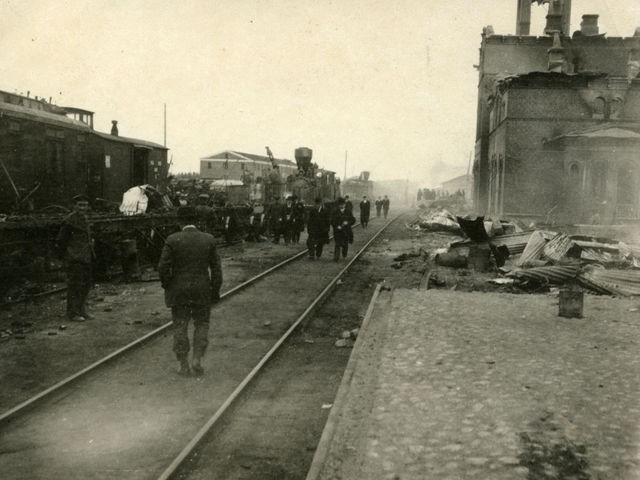
After the capture of Riihimäki, the advance was halted for a couple of days, while the Germans concentrated on clearing Karkkila and the Hyvinkää–Karjaa railway of any Reds still staying in the area. On 25 April, 16 leaders of local labor unions who had voluntarily surrendered were captured in Karkkila, and the Germans shot them in Hyvinkää at the beginning of May. However, the Hyvinkää Security Corps headquarters was behind the execution.
The battles of Lammi, Hauho and Tuulos
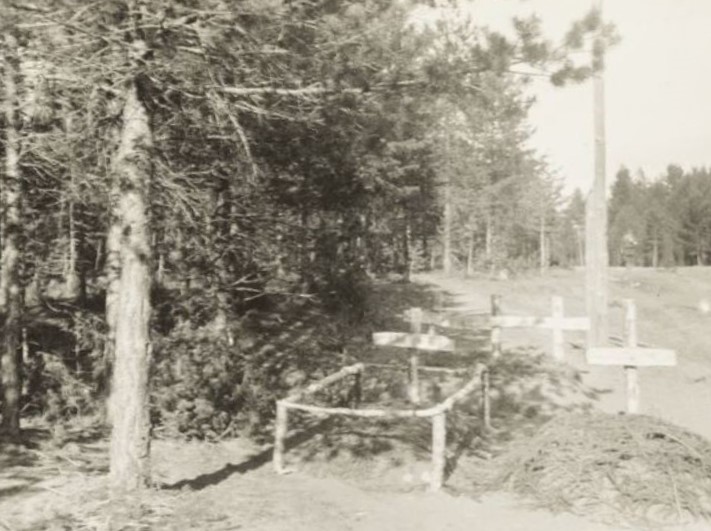
After the capture of Hämeenlinna, the Germans were forced to fight three more battles in Kanta-Häme against the Red refugees who were heading east. The refugees had initially continued from Hämeenlinna directly east to Lammi with the intention of continuing on towards Lahti. When the Germans cut off the route, the refugees were forced to go around Lammi from the north via Hauho and Tuulos. The first battle took place on 26 April, when the Germans intended to occupy the area between Lammi and Tuulos. In addition to thousands of civilians, the parish of Lammi contained hundreds of Red Guards who had withdrawn from Western Finland, who protected the refugees leaving the village. The Germans would attack Lammi from the south, until the Reds finally retreated after the last refugees after a battle that lasted about three hours. Ten Germans and at least twenty Reds fell in the clash.
A day later, another battle took place in Hauho, where about 4,000–5,000 Red refugees had fled from Hämeenlinna , including armed Red Guards. Despite the superior numbers, a White detachment commanded by Captain Hjalmar Söderman attempted to capture the village in the morning, supported by a bicycle detachment of 60 Germans. However, the Reds beat back the attackers and inflicted almost 50 casualties on the opposing side.
The final battle took place the following evening and night in the village of Syrjäntaa in Tuulos, where the refugee column that had set off from Hauho arrived at around 9 p.m. The German squadron had already tried to stop the Reds in the village of Kokkila in Hauho, but was eventually forced to retreat before them to Syrjäntaa. There was also a 400-man detachment in the village commanded by Major Lothar von Brandenstein, who had arrived from Hämeenlinna, with the aim of cutting off the refugees' path. The Germans had dug in their positions around the roadblock in the village of Syrjäntaa, where the Reds began their assault after concentrating their artillery. A large number of female guards also participated in the battle. Auxiliary forces were sent from Hämeenlinna to the outnumbered Germans, but they did not reach their destination, and instead got stuck in a battle against the Reds' flank in the village of Pannujärvi, a couple of kilometers southwest of Syrjäntaa. The Reds attacked all night until the Germans finally abandoned their positions at dawn, opening up an escape route for about ten hours. Most of the Reds were able to continue their journey towards Lahti, where they were, however, trapped in a blockade ring along with twenty thousand other Reds just a day later.
Due to the breakthrough in the outpost, the Germans occupying Lammi decided to retreat from the advancing Red refugees on 29 April. As they left, they set fire to the Red weapons cache in the church bell tower, from which the flames spread throughout the village and about half of its buildings were destroyed, including the medieval Lammi Church.
The landing and the battles of Kymenlaakso
A second landing force of about 3,000 men, led by Colonel Otto von Brandenstein, was assembled in Tallinn at the end of March, from where it was originally intended to be shipped to Kotka. In connection with the landing, TJ Ketonen, who was a member of the Porvoo Guard Corps, had already received permission from the German Tallinn headquarters at the beginning of March to seize Suursaari, where the twenty or so Russians stationed there surrendered the island without resistance and left. After this, the icebreaker Tarmo transported a German detachment of a few dozen men to the site, whose purpose was to secure the landing at Kotka by capturing the Russian coastal battery on Ranki Island. However, the idea was abandoned when it became clear that the fortress was occupied by 200 Red Guards, and so it was decided to move the landing to Loviisa. According to the original plan, the intention was to advance north from Kotka and cut the line to St. Petersburg at Kouvola. Now the goal changed to Lahti, located 60 kilometers to the west, which was a longer distance from Loviisa than from Kotka to Kouvola, but on the other hand it was easier to maintain contact with the Baltic Sea Division, which was advancing north from Helsinki at the same time.
The first transport detachment of the Brandenstein detachment left Tallinn early in the morning of 7 April and landed at Loviisa Valko around 12 noon without encountering any resistance from the Reds. On the way, the Germans also occupied Lavansaari. The dispatch of the detachment came as a surprise to General von der Goltz, as he only learned about it after the landing. The flow of information to the Whites was also hampered, as news of the Loviisa landing reached Mannerheim on 15 April, by which time the Germans had already cut the St. Petersburg railway at Uudessakylä.
The morning after the landing, a reconnaissance detachment of about 300 men headed west of Kotka to Kymi, where it attacked the Reds' base at Kyminlinna. However, in the evening battle, the Germans were beaten back. As night fell, they retreated about 15 kilometers to Ahvenkoski on the banks of the Kymijoki River, where the Reds followed on April 10. The Germans retreated further back towards Loviisa to the Taasianjoki River and established their defensive positions there, while the Reds remained at Ahvenkoski. After this, Detachment Brandenstein focused on capturing Lahti, and the Kymenlaakso front remained in place for more than two weeks.
Progress to Lahti
After the attack stopped in the direction of Kotka, the Germans shifted the focus of their attack to Lahti, where at the same time a White battalion led by Hans Kalm was advancing from the north. The aim was to cut off the St. Petersburg line and close the route of the fleeing Reds to the east, while also preventing them from reorganizing their forces behind the Kymijoki River. Some of the troops at Tesjoki were withdrawn to defend Loviisa, as Red artillery had been shelling the city since the morning of April 8. According to the information received, there were many Reds in Vanhassakylä, Ilola, Liljendal and Lapinjärvi. When German reconnaissance patrols finally found out about the situation, the enemy was only east of Porvoo in Ilola, the village of Myrskylä and Andersby on Lapinjärvi, and the expected attack on Loviisa did not take place.
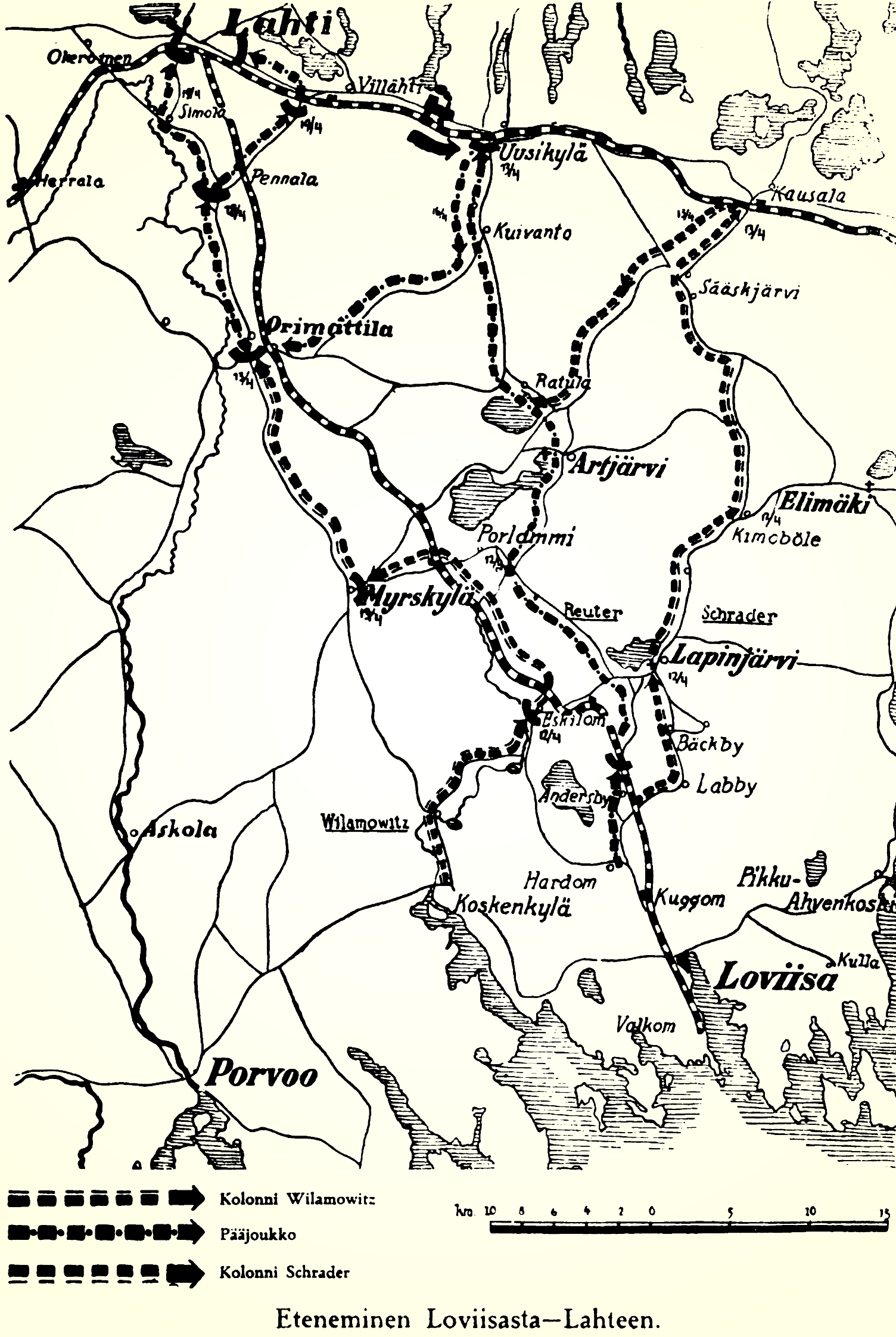
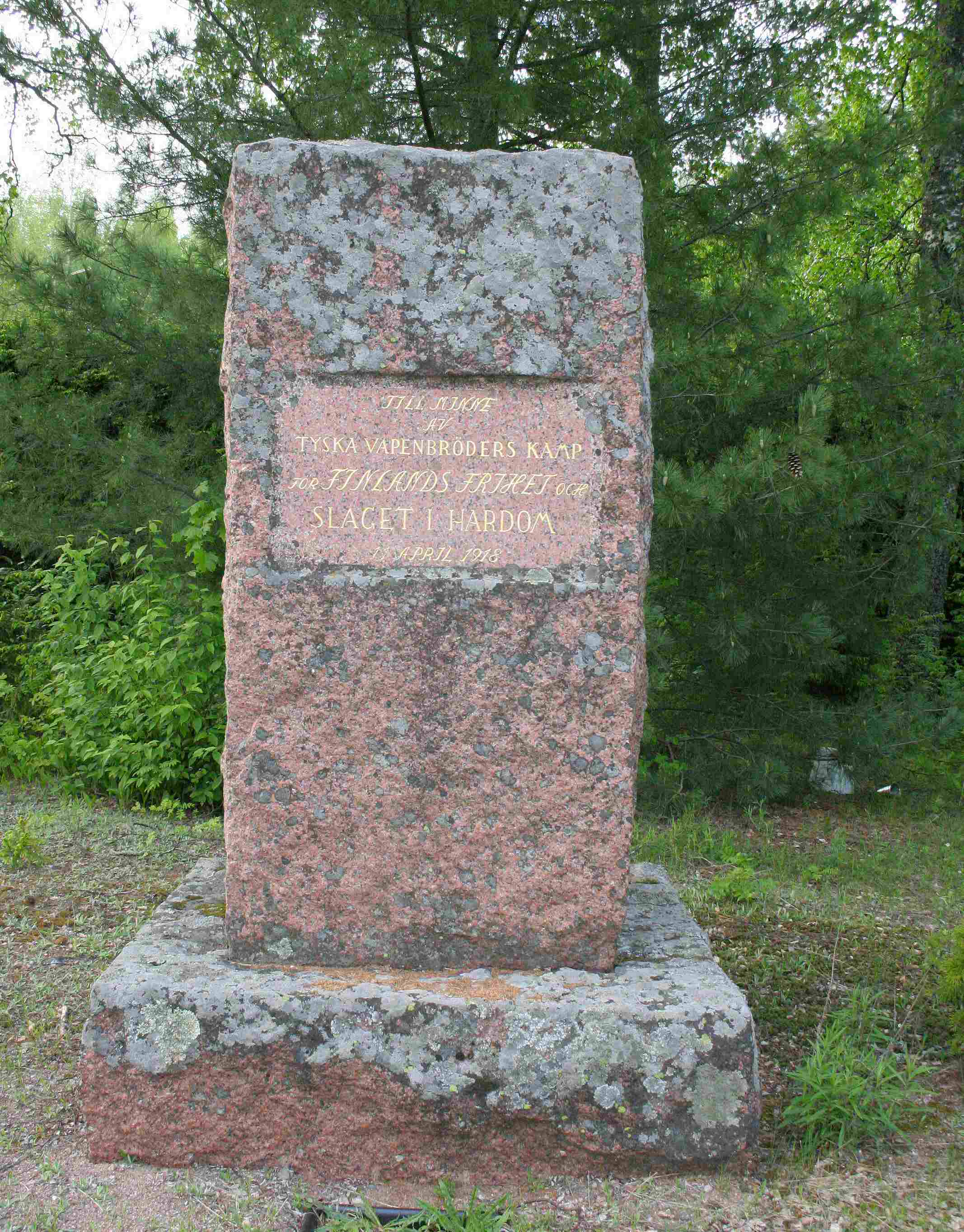
On 10 April, the Brandenstein detachment set out to advance north along the Loviisa-Lahti railway. The following night, the troops reached the village of Hardomi in Pernaja , which the Germans captured after a fierce battle. Seven Germans and at least 30 Reds were killed in the clash. Colonel Brandenstein did not want to attack further until another landing detachment arrived from Tallinn later that day. One company from the new transport was detached to Ahvenkoski, and the remaining three battalions participated in the general attack to the north.
The Germans, advancing north from the direction of Koskenkylä, immediately encountered stubborn Red resistance at Eskilom in Liljendal, but finally took control of the village after several hours of fighting. Four Germans and 12 Reds were killed in the clash. Later that day, the Battle of Orimattila took place , which has been described as a "complete slaughter". The Germans lost only one man, but the number of Reds killed is reported to be 70, and according to some sources as high as 95–130. The huge disparity in numbers means that no prisoners were apparently taken, but all the surrendered Red Guards were executed.
The St. Petersburg railway was first reached by Captain Schrader's group in Kausala on the morning of 13 April. However, a Red armoured train arrived from the direction of Kouvola, forcing the Germans to retreat to the south of the railway and join the battalion commanded by Captain Reuter, which in turn arrived at Uudenkylä station later that day. At the same time, the Arrajoki manor, located a few kilometres north of it, was also occupied, and in the ensuing skirmish one civilian and two Russian soldiers who were returning home were killed. The Germans were forced to withdraw from Uudenkylä during the evening, when the Reds counterattacked from three different directions, supported by two armoured trains. A battalion that had been in reserve in Loviisa was sent to the site as reinforcement, after which the Germans regained control of the station.
On 14 April, von Brandenstein decided to attack Kausala with ten companies. However, the plan was cancelled the next morning when it was believed that the Reds, who had received reinforcements from Lahti, would attack Uuteenkylä again. On the same day, fighting took place south of Uuteenkylä in Kuivanto, where the Germans finally withdrew on the night of 16 April. Losses in the battles in the Uuteenkylä direction were 20 killed and about 45 wounded. The third and final transport arrived in Loviisa on 14 April. Four days later, it reached the Lahti region, where the unit encountered fierce resistance in Pennala, Orimattila, until the Reds retreated to the village of Simola. The Germans lost four killed and the Reds about 20 in the battle. In total, the Reds' losses from 12 to 15 April are estimated at a couple of hundred killed and wounded.
The Brandenstein detachment was subordinated to the Baltic Sea Division on 16 April. After the Battle of Helsinki, the main attack direction of its main force had also become Lahti, where it was intended to advance via Hämeenlinna. Since the Germans thought that the Reds had over 6,000 men between Loviisa and Kouvola, it was decided, fearing a blockade, to detach two of Brandenstein's companies and send them to protect the rear in the Porvoo area. In reality, the Reds had already evacuated the area. Due to the transfers, on 18 April, General von der Goltz sent a company led by Captain Roeder from Helsinki to Brandenstein's aid, along with the Finnish Jaeger battalion Thesleff that had joined it. The next day, a two-company detachment commanded by Major Adolf Halmilton arrived, which had previously protected the flank of the Baltic Sea Division in the direction of Lohja and Nummela.
The Capture of Lahti

As German forces advanced towards the centre of Lahti, Colonel Brandenstein decided to attack the city from two directions on 19 April. Captain Wilamovitz-Moellendorff's battalion, which had set off from Orimattila, arrived south of the centre early in the morning and positioned itself on the top of the Renkomäki ridge, which had a direct line of sight to the centre. Auxiliary forces sent from Helsinki arrived west of Lahti at the same time and joined the forces advancing from Loviisa. Red refugees also continued to arrive from the direction of Hämeenlinna, but their route was now blocked.
Lieutenant Colonel von Luck's division, which had retreated from Uusetskylä, was ordered to advance to the eastern parts of the city via Villähti, while Wilamovitz-Moellendorff's battalion attacked from the direction of what is now Launeenkatu towards the railway station. The bicycle division sent on the journey reached the railway station without resistance and captured a group of 50 Red Guards who had recently arrived by train. The Reds, who had been badly surprised, finally woke up and began to defend themselves from their positions located on Radiomäki, Kullankukkula and Lotilanharju. The Germans responded to the fire with artillery, causing shells to hit buildings in the city center as well. Residents hid in basements and some fled the city.
Cavalry Master Dulier's battalion captured the Hennala barracks area and continued to Kirkonmäki and the harbor railway at dusk. The unit that attacked from the east captured the Villähte station in the afternoon, after which it continued the attack on the north side of Joutjärvi to the center. When Wilamovitz-Moellendorff's battalion also captured Kullankukkula and Santamäki, by 10 p.m. the center was almost completely in German hands. Only a small group of Reds offered resistance on Radiomäki until the next morning, after the others had retreated to the Salpausselkä ridges surrounding the city. On the morning of April 20, the Germans still occupied Kariniemi and the port of Vesijärvi. The unit of the North Häme I Battalion led by Major Hans Kalm arrived in the city at noon from the northern direction of Vääksy, after which the Reds on Radiomäki also surrendered.
Brandenstein had only about 800 men in the captured Lahti. At the same time, thousands of Red refugees from Western Finland continued to arrive on the western side of the city, and over the next few days they tried to break through the German lines in order to continue their journey east. The first attempt to break through was made on 22 April, when the Reds captured the Hennala barracks. A day later they opened fire on the Germans in the city with their artillery, and fighting continued throughout the night and the next day. On 26–27 April there were only minor skirmishes, but on the following two days there was fierce fighting again in the Lahti area. Control of the city was only secured thanks to a counterattack launched by the reinforced Germans on 30 April. On the morning of 1 May, the Hennala barracks were recaptured and the fighting finally ended at 9 am. At the same time, the Reds, who were besieged on the western side of the city, also surrendered and were transferred to a concentration camp set up on Fellman's field . However, there were still some clashes around Lahti, the last of which were seen in Sairakkala . Six Germans were killed and 30 wounded in the capture of Lahti. There are no reliable estimates of Red losses.
Military operations end at Ahvenkoski
The Kymenlaakso front remained in place for less than two weeks on 10 April. On 22 April, the Germans advanced from the Tesjoki River again to Ahvenkoski and launched an attack on the Red positions the next morning. The fighting continued for a couple of days, but the Red lines held. They finally withdrew to the east side of the river on 25 April, after which the Germans settled on the west bank and the front stabilized again for a week.
After the fall of Lahti, the Reds of Kymenlaakso signed an armistice and began surrender negotiations with the Germans on 3 May. According to the agreement, the rank and file who had surrendered their weapons would be released and only the officers would be imprisoned. The Reds surrendered and handed over their weapons to the Germans at Ahvenkoski on 5 May, after which the hostilities of the civil war were over. Despite the promises, the crew was not released, even though the Germans had agreed to this. The Whites executed the Reds' staff members, company commanders and leaders of labor organizations in Loviisa on the ruins of the Svartholma fortress, and the other Red Guards were sent to prison camps.
Casualties
German losses totaled 360, of whom 348 died immediately in battle and 12 later from wounds. In addition, six Germans were killed in various accidents during the occupation of Åland. German Imperial Navy losses totaled 21 dead. In addition, 123 Germans drowned on 16 October when the SMS Habsburg, which was repatriating troops, struck a mine and sank off Tallinn. 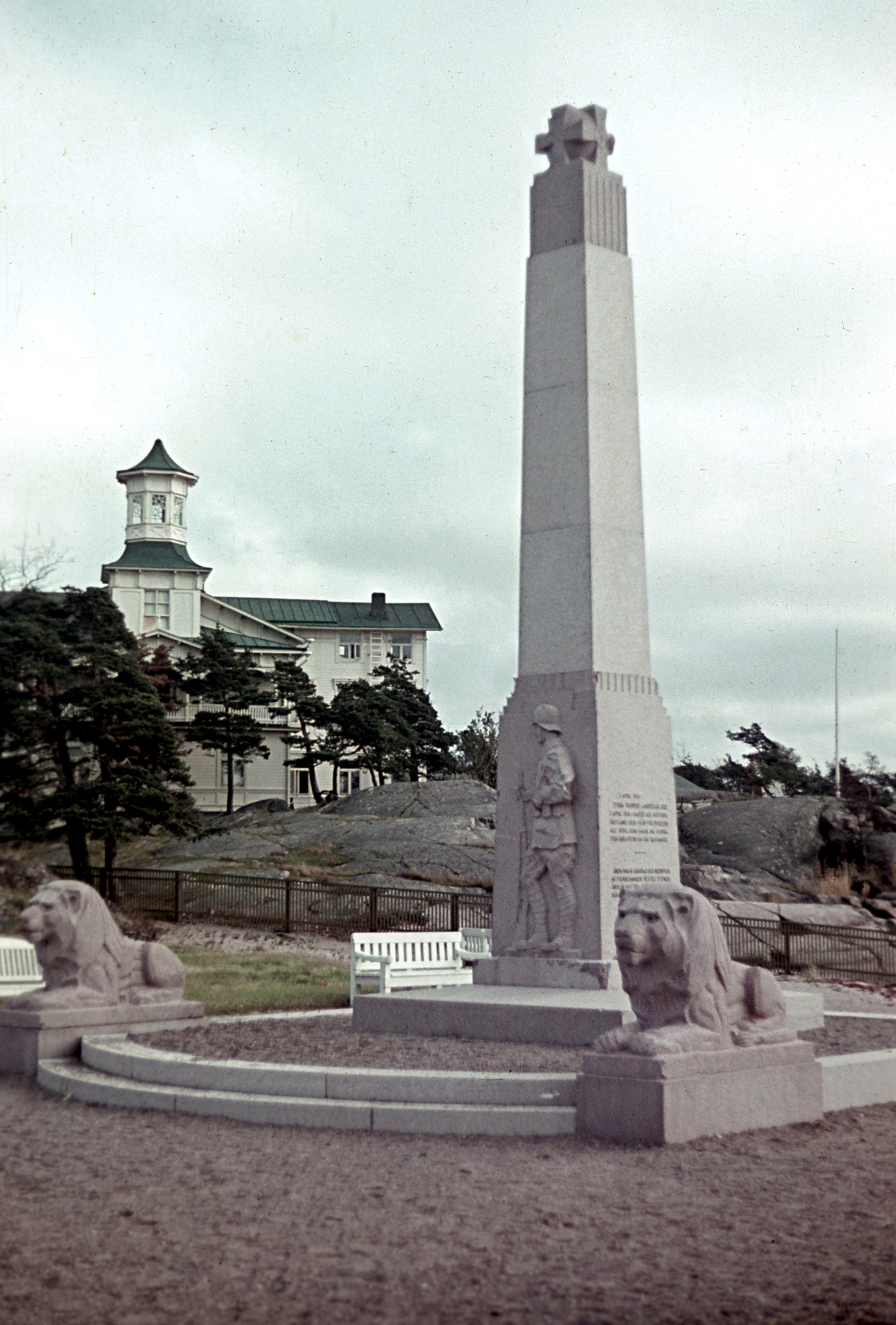
About 1,500 Reds were killed in the fighting against the Germans, but some were actually executed. The Germans were ordered to hand over prisoners to the Finns for judicial trial, while the Whites often shot their prisoners immediately. The disciplined German military was generally known to treat prisoners more humanely, so the Reds preferred to surrender to them.
Monuments
Germans who fell in battle are buried in several different locations. The memorials erected by Finns are usually placed in visible and valuable places, for example, graves in churchyards are often near the main entrances to the church or cemetery. The German Embassy in Helsinki and historian Agilolf Keßelring surveyed the memorials in Finland in 2012. According to Keßelring, the names on them often contain spelling errors and in some cases the same name is found in several graves, so the information contained in the memorials is not necessarily reliable.
Perhaps the best-known monument is the Statue of Liberty in Hanko, erected in 1921 to commemorate the landing of the Baltic Sea Division. It was removed by order of the Supervisory Commission in 1946, but was re-erected in 1960. The best-known grave site is in the Old Church Park in Helsinki, where German soldiers who fell during the Battle of Helsinki were buried. In 1920, a monument designed by Gunnar Finne and JS Sirén was erected in the park, on which the names of 86 German soldiers are engraved. However, not all of them are buried in the Old Church Park. In the Helsinki Metropolitan Area, there are also grave monuments in Toukola, Etelä-Haaga, Leppävaara and in the cemetery of the Helsinki parish church. In addition, there is a monument to those who drowned in the sinking of the steamship Habsburg, designed by Gunnar Finne. 15 of the Germans who fell in the Battle of Hyvinkää are buried in a park opposite the railway station, where there is also a monument unveiled in 1921.
The Germans who fell in the Battle of Syrjäntaa were initially buried in Hämeenlinna's Tähtipuisto , in the middle of which a memorial was also erected. In the 1960s, the deceased and the memorial were moved to the old cemetery, when plans began to be made for a statue of Sibelius in the park named Sibelius Park. In the same connection, eleven Germans who fell in the clash at Pannujärvi were buried along the road leading to Hämeenlinna and those who fell in the Battle of Lammi were buried in the Lammi churchyard, where a memorial was erected in 1920. There are also graves of soldiers of the Baltic Sea Division at least in Hanko, Tammisaari, Karjaa, Kirkkonummi, Tuulos, Nurmijärvi and Riihimäki.
The memorial to the Germans who fell in the Battle of Lahti is located in the old cemetery. Seven Germans who fell in Ahvenkoski are buried in the Ahvenkoski cemetery, where there is also a memorial. Other graves of soldiers of Division Brandestein are at least in Loviisa, Liljendal, Kouvola, Nastola, and Orimattila.
The seven Germans who fell in the Battle of Nauvo were initially buried in the Korpoo churchyard. When Nauvo did not have its own heroes' graves, there was soon a demand for them to be moved to the town so that Nauvo could also have its own heroes' grave. The demand was justified by the fact that the Germans had fallen on the side of the municipality of Nauvo. Eventually, the deceased were exhumed and reburied in the Nauvo churchyard. One German soldier is also buried in Mariehamn.
Aftermath
The German orientation of Finnish foreign policy
The Finnish Senate based its post-war foreign policy on the so- called German orientation, which involved a close commitment to Germany politically, economically and militarily. Just before the end of hostilities on 4 May, Prime Minister Svinhufvud presented a request to General Rüdiger von der Goltz for German troops to remain in Finland, which the German High Command agreed to on 29 May, after General Mannerheim had resigned as Commander-in-Chief of the Army. As a result, von der Goltz effectively became the de facto ruler of Finland. The request was based on the idea that Germany would help Finland in the occupation of East Karelia, which was not agreed to, however, as it conflicted with Germany's own interests. Immediately after the end of the war, a dispute over the Germans' role in the outcome of the war had arisen between the Finnish political leadership and Mannerheim over the Germans' role in the outcome. Mannerheim was offended by the Senate's declaration of victory on 6 May, in which he was not mentioned at all, and in retaliation, he organised a large victory parade on 16 May. No Germans were invited to the parade in Helsinki, and instead Mannerheim emphasised the merits of a small Swedish volunteer force. The differences came to a head immediately after the victory parade, when the pro-German Svinhufvud was given the rights of regent . Mannerheim did not accept the subordination of the commander-in-chief to the Germans as agreed in the agreements, nor the plan to appoint an equal minister of war alongside the commander-in-chief. He was also willing to attack St. Petersburg and defeat the Bolsheviks, for which Mannerheim believed he would receive support from the surrounding powers. Germany, on the other hand, wanted to keep the Bolsheviks in power for its own interests and therefore tried to restrain the Finnish invasion plans. Eventually, Mannerheim resigned as commander-in-chief and left the country on 1 June. The German ambassador to Sweden diligently followed the travels of Mannerheim, who had settled in Stockholm, and speculated on his motives. The ambassador assumed that Mannerheim was aiming to liberate St. Petersburg and then strive to lead White Russia.
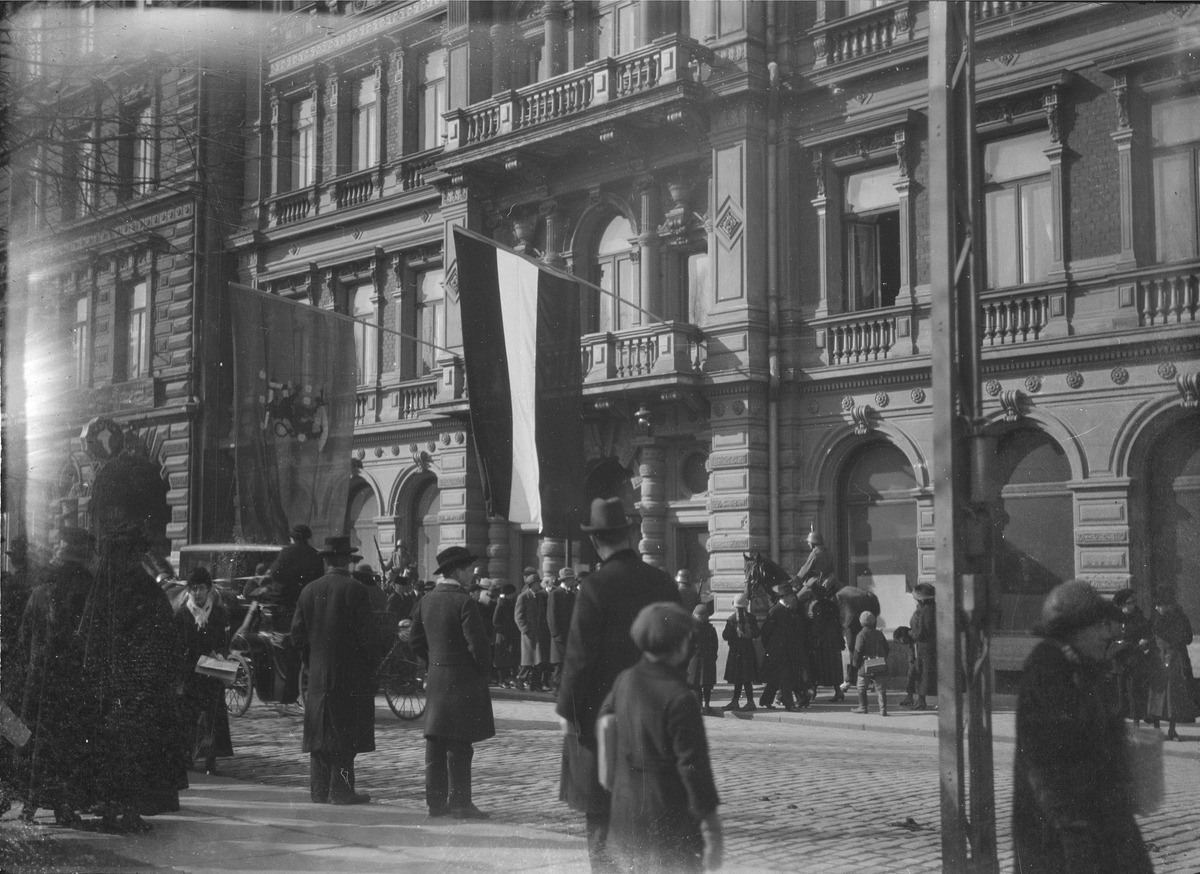
During the spring of 1918, the majority of bourgeois circles began to advocate the rejection of the already established republican form of government and the transition of Finland to a monarchy. The republicans were led by KJ Ståhlberg of the Young Finns and Santeri Alkio of the Peasant Union, but only the latter of the parties was fully in favor of the republic, so the monarchists had a clear majority in the post-war stub parliament. On 11 June, the Senate passed a motion according to which Finland would become a hereditary kingdom. The motion did not receive a sufficient majority in parliament, but the monarchists nevertheless pushed through their goal later in August under the form of government of 1772. The Senate, led by Svinhufvud, had been looking for a suitable person to be king, and in the end, Prince Friedrich Karl of Hesse was asked to be the new ruler.
Finland falls under German rule
Submission to German economic demands was the price the Finnish government was prepared to pay for the aid it received. The conditions for military intervention were three treaties signed in the spring of 1918, which included a peace treaty between the countries, a trade and maritime treaty, and an agreement on the establishment of military bases. They tied Finland closely to Germany, which through the treaties tightly controlled the country's economic and political life. The trade and maritime treaty was particularly disastrous for Finland, as it placed foreign trade under German control and guaranteed German companies a right of first refusal. The agreement on military bases allowed Germany to establish bases throughout Finnish territory, including its own checkpoint on the Swedish border in Tornio. In connection with the royal project, a military alliance was also negotiated, which subordinated the Finnish army to the German army. The treaties effectively made Finland a German protectorate and undermined the foundation of its newly achieved independence. However, Finnish politicians or military leaders did not need to be actively guided, but voluntarily sought instructions from the Germans.
In early June, von der Goltz presented a plan for organizing a new Finnish conscript army in connection with the agreements. Leadership would be given to the Germans, and Finnish Jaegers and German officers would act as trainers. At the end of the month, eight expert officers arrived from Germany and were placed in the general staff and divisions. The leader of the German group, Colonel Konrad von Redern, took over the duties of the Chief of the Finnish General Staff, Nils Procopé, and the Minister of War, Wilhelm Thesleff, a well-known opponent of Mannerheim, who was also von der Goltz's former liaison officer, was named Commander-in-Chief. Mannerheim's Chief of Staff, Hannes Ignatius, and Generals Paul von Gerich and Gösta Theslöf did not accept the plans and resigned from the service. According to Ignatius, von der Goltz became the real regent of Finland and everyone else was just puppets in his hands.
The trade agreement began to take shape in the autumn, when Finland's foreign trade was concentrated in Germany or the territories it occupied in Eastern Europe. In addition, a sectoral monopoly principle favoring large companies was created, following the German model. The parliament also passed a law according to which a prisoner sentenced to forced labor for at least three years could be sent abroad. In practice, this meant sending Red Guards sentenced to forced labor to work camps in Germany. According to Von der Goltz, the initiative was due to securing the prisoners' food supply, but German agriculture, for example, was suffering from a severe labor shortage at the time, so the law was entirely in their own interests. KJ Ståhlberg believed that the decision demoted Finland from the ranks of states governed by the rule of law, and Matti Paasivuori, the only Social Democrat in the stub parliament, called it slave trade. Two objections were ultimately submitted to the law, which considered what kind of image the act would give of Finland to foreign powers.
In an article on 9 April 1918, the British newspaper The Times criticized the actions of the Whites in Finland, calling the German landing an invasion and Finland a vassal of Germany.
German troops in Finland
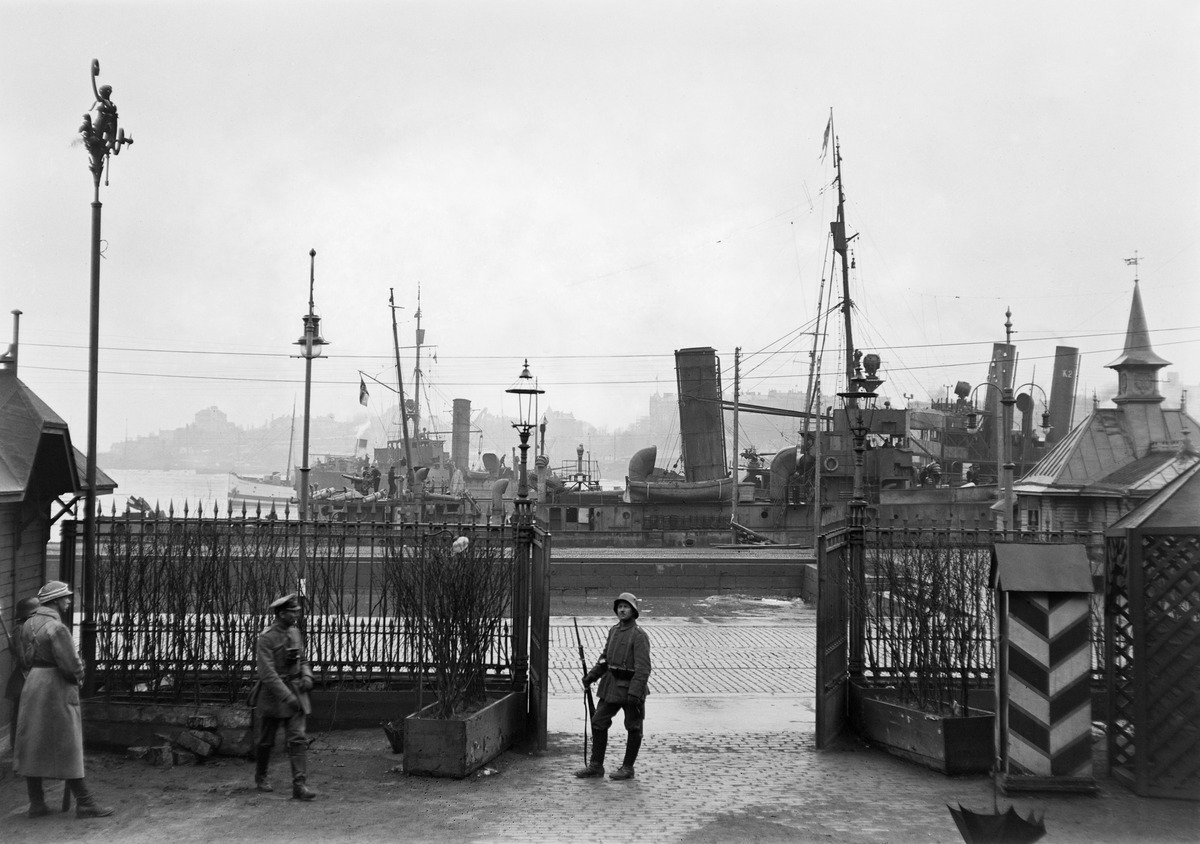
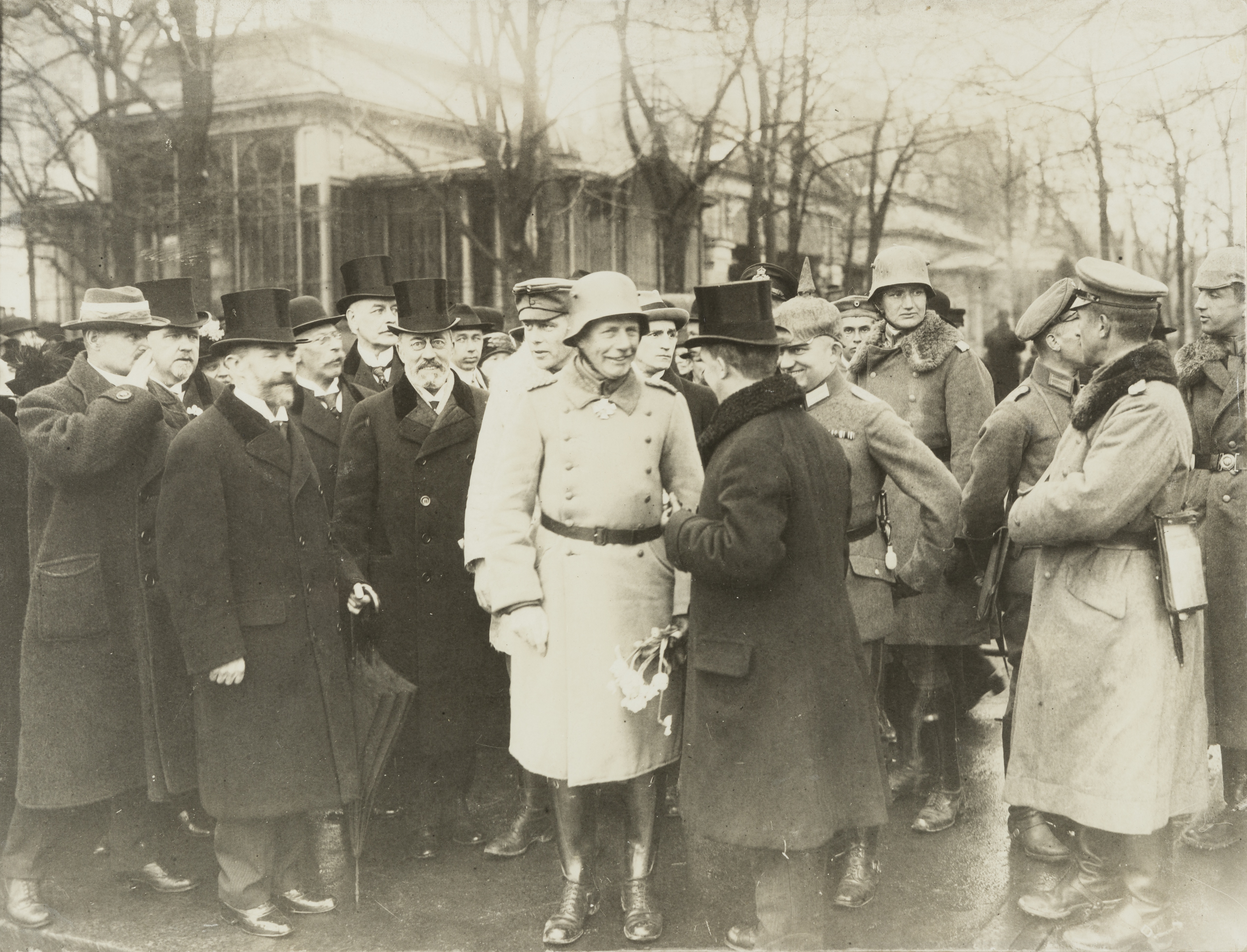
After the end of hostilities, General von der Goltz moved to the former Governor-General's official residence in Kesäranta , after which a joke spread that only one letter had changed; instead of "ryska" (Russian) the country was now ruled by "tyska" (German). Von der Goltz was socially open by nature. He made friends with leading Finnish politicians and was also in contact with social democrats who had stayed away from the rebellion, such as Väinö Tanner. During the summer, von der Goltz made several inspection trips to eastern and northern Finland; in Karelia he visited Terijoki, Raudu and Sortavala and in northern Finland he visited Rovaniemi, Kuolajärvi, Kemi and Oulu. Emperor Wilhelm II awarded von der Goltz the highest German military decoration, Pour le Mérite, for his services, and in July the title Deutscher General in Finnland, or "German General in Finland".
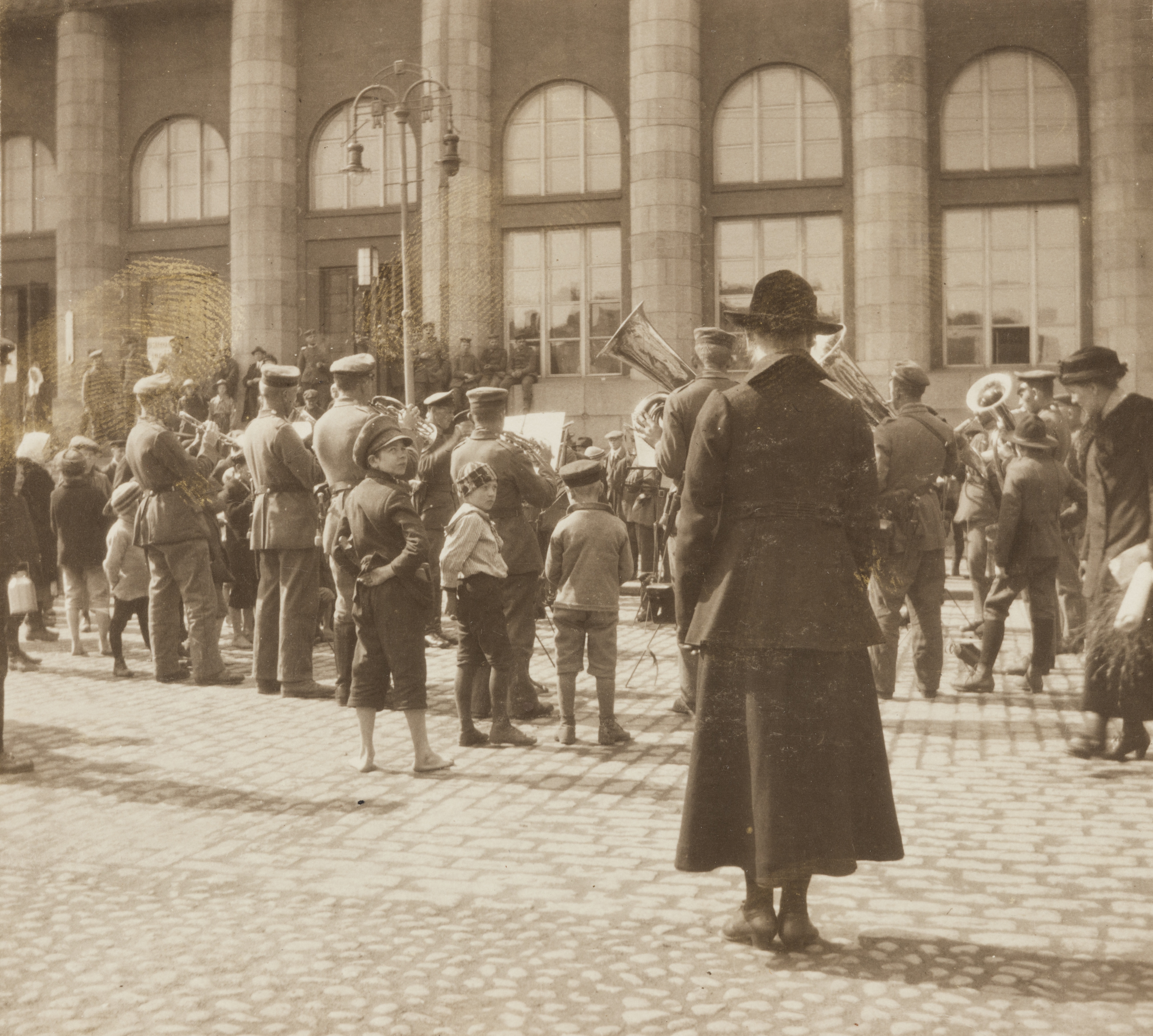
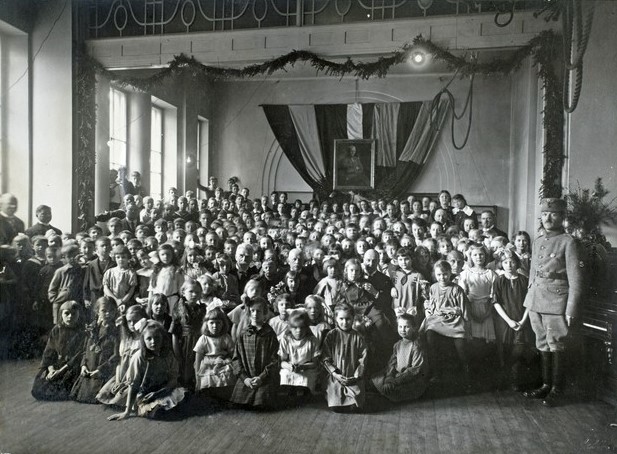
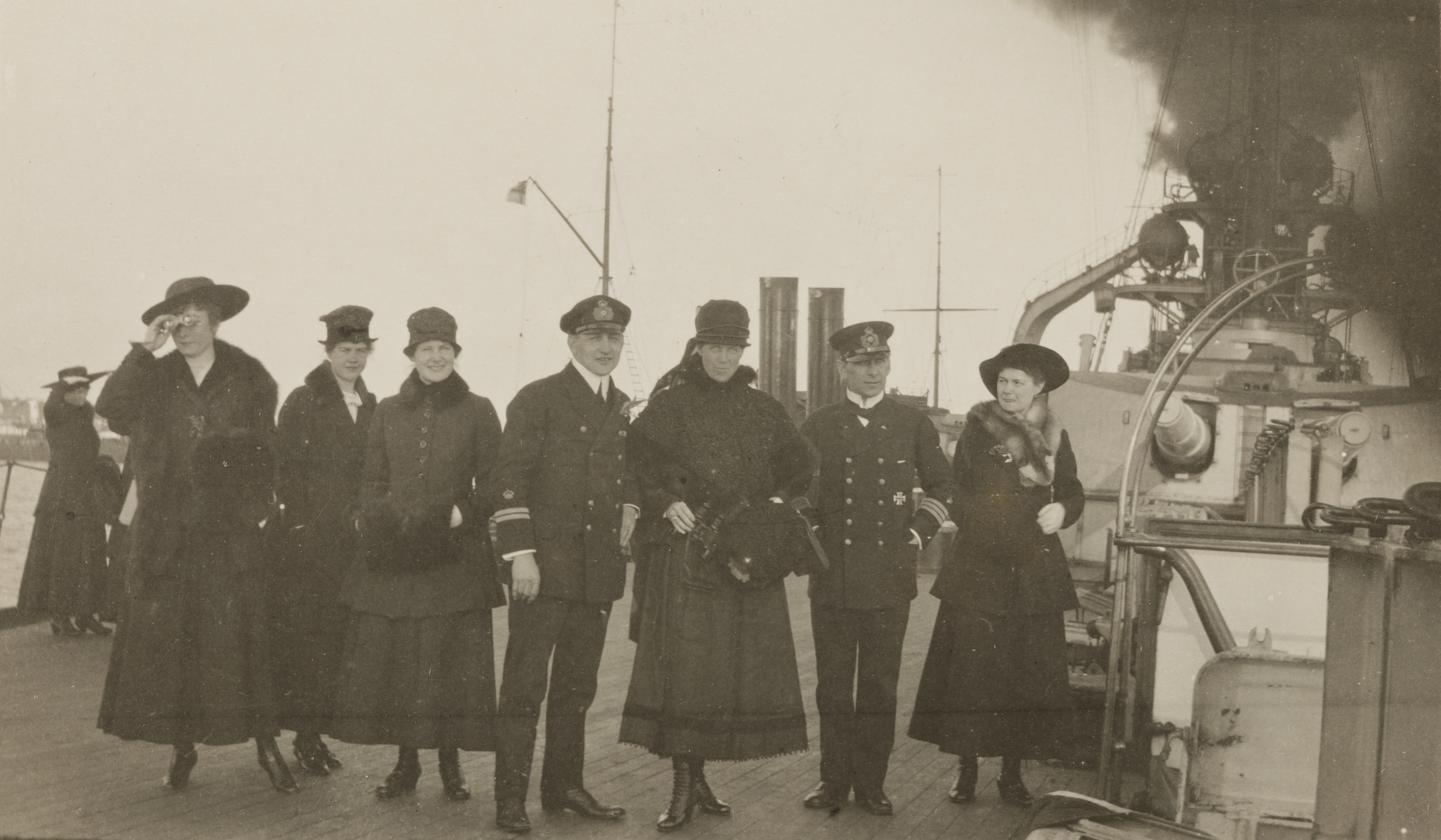
The Brandenstein Division, which was attached to the Baltic Sea Division, was immediately transferred back to Estonia in May, but Otto von Brandenstein and his staff remained in Finland on special missions. The troops of the Baltic Division, in turn, were dispersed throughout southeastern Finland, with only the headquarters and a small military detachment remaining in Helsinki. The total strength of the troops at the beginning of June was about 11,000 men. Although there was a food shortage in the country and in some places even outright famine, the situation was still better for the Germans than in their war-ravaged homeland, and for this reason many wanted to stay in Finland. The presence of the Germans had a great impact on life in Helsinki, especially in the post-war months. For example, shops began to advertise in German and a German-language magazine for soldiers, Suomi–Finnland, was also published in the city . German films and plays were shown in various parts of Helsinki, which were free for German soldiers, as were art exhibitions and trams. In addition, two German orchestras performed regularly in the city, one of which was the Baltic Division's own military band. The German congregation in Helsinki also became more active. The Germans also committed abuses, as black market trading emerged in Helsinki, which was suffering from food shortages. In addition, the soldiers took their own supplies without permission and stole the property of Finnish civilians and Red prisoners, which forced von der Goltz to call in military police from Germany. To prevent abuses, drills and other military training were organized for the troops, and the troops also changed locations at regular intervals.
In early June, von der Goltz assembled a reconnaissance and public relations detachment, the Nord-Detachement , of about 1,000 men in Helsinki, which he sent to northern Finland. Its task was to visit various locations and to find out what kind of equipment the troops would need when operating in the far north. The detachment, led by Colonel Hans von Tschirschky und Bögendorff, was transported by train to Oulu, where it arrived on Friday, 7 June. The next morning, a parade was held in the Oulu market square, and later in the evening, the officers' program included a dinner and dance provided by the city. During the weekend, German officers also went on reconnaissance trips to Tornio and Rovaniemi. On Monday, 10 June, the detachment began its march through Oulujoki, Muhos, Utajärvi, Vaala and Kajaani to Nurmes, where it arrived on 25 June. From Nurmes, the detachment was transported by train to Vyborg, where it was dispersed to various parts of southeastern Finland. In each location, the Germans received an enthusiastic reception from local members of the protection corps and White supporters.
During the summer, German troops in Vyborg, Lappeenranta , Kouvola, Hamina and Rovaniemi were also ordered to prepare for internal unrest. At the beginning of August, the Baltic Division was ordered to prepare for an attack on St. Petersburg. According to General Ludendorff's order, the advance would take place in cooperation with the troops on the southern side of the Gulf of Finland. A few days later, another order came, as a result of which the troops in Riihimäki, Loviisa and Lahti were transferred to northern Finland on 12 August for an attack on the Muurmann line. However, in mid-September, Berlin announced that the plans would not be implemented, because the situation on the Western Front had changed decisively due to the major offensive launched by the Western powers.
The issues of East Karelia and Murmansk
The Whites, who had won the civil war, aimed to create a Greater Finland, and in connection with this, Jaeger Lieutenant KM Wallenius made a plan at the beginning of March to send troops to the Soviet Russian side of Vienna Karelia. The plan, approved by General Mannerheim, was officially intended to help the East Karelians expel the Bolsheviks and implement their right to national self-determination, but in reality it was about annexing the territories in Vienna Karelia to Finland. The Murmansk region, in turn, became a common interest of all parties to the world war. Russia wanted the British troops that had landed in the region in March 1918 to leave, Germany was interested in the naval bases in the Arctic Ocean and the possibility of getting Finland and Soviet Russia to fight against the Western Allies, Great Britain, in turn, supported the Russian Whites fighting against the Bolsheviks, but also assembled the Murmansk Legion, formed from Finnish Red Guards, against the threat posed by Germany and Finland.
The Finnish projects aroused suspicions in the Western powers, because the White advance coincided with the major German offensive launched on March 21 on the Western Front. The purpose of the military operations was suspected of being to gain Germany access to the Arctic Ocean or the Murmansk Line. As a result, Great Britain and the United States issued an ultimatum, which frightened Mannerheim so much that he changed his views. According to Mannerheim, the issue of East Karelia should now be resolved in peace negotiations with Soviet Russia, with the approval of the surrounding powers. The negotiations began in April–May, mediated by Germany, although there were still White troops behind the eastern border. The Germans proposed a territorial exchange in which Finland would receive the Petsamo region on the shores of the Arctic Ocean, and Soviet Russia would receive the Ino fortress on the Gulf of Finland, which was vital for the defense of St. Petersburg. Germany also had its own interests in the matter, as it sought a base in the Arctic Ocean. Therefore, Finland was pressured to give up its extensive territorial claims to East Karelia in order for Soviet Russia to accept the agreement. Another reason was that Germany did not want to jeopardize the peace treaty with Russia, as it could no longer afford a two-front war. However, the parliament that convened in June insisted on Finland's territorial claims and the negotiations stalled.
With the intervention in Northern Russia launched by the Western Allies in early June, the Bolsheviks had found themselves in such a bind by August that military cooperation was proposed to Germany. According to this, the Germans would expel the Allies from the Murmansk region in conjunction with the Finns. Germany was willing to stop the spread of Western influence in Russia, but the problem with cooperation was the territorial demands made by Finland. New peace negotiations began in Berlin at the beginning of August. Finland's demands still included the annexation of the Kola Peninsula and East Karelia to Finland, which Soviet Russia would not agree to hand over under any circumstances. Instead, it announced that it wanted the islands of the Gulf of Finland, offering in return significantly smaller areas on the shores of the Arctic Ocean and East Karelia. To the great disappointment of the Finns, Germany did not support it, which considered the Soviet government's demands to be militarily justified and saw Finland's strict stance as even dangerous to its own interests. Thus, the negotiations again reached a deadlock.
The Berlin peace talks were finally suspended on 27 August, when Germany and the Soviet Union signed a supplementary treaty to the Treaty of Brest-Litovsk. Its purpose was to secure Germany's sphere of influence in the Baltics and to agree on military cooperation in Russia against the Western Allies. In secret notes attached to the treaty, the countries agreed that if Soviet Russia failed to eliminate the threat posed by the Allies to German forces in Finland, the German and Finnish armies could attack them in northern Russia. The supplementary treaty meant that Germany had effectively taken Finland under its political guardianship. After this, the Germans began planning an attack on northern Russia, but due to military events on the Western Front, the preparation of Operation Schlussstein had to be suspended at the end of September. World War I finally came to an end when Kaiser Wilhelm II was deposed on 9 November and an armistice came into effect two days later.
Germans leave Finland
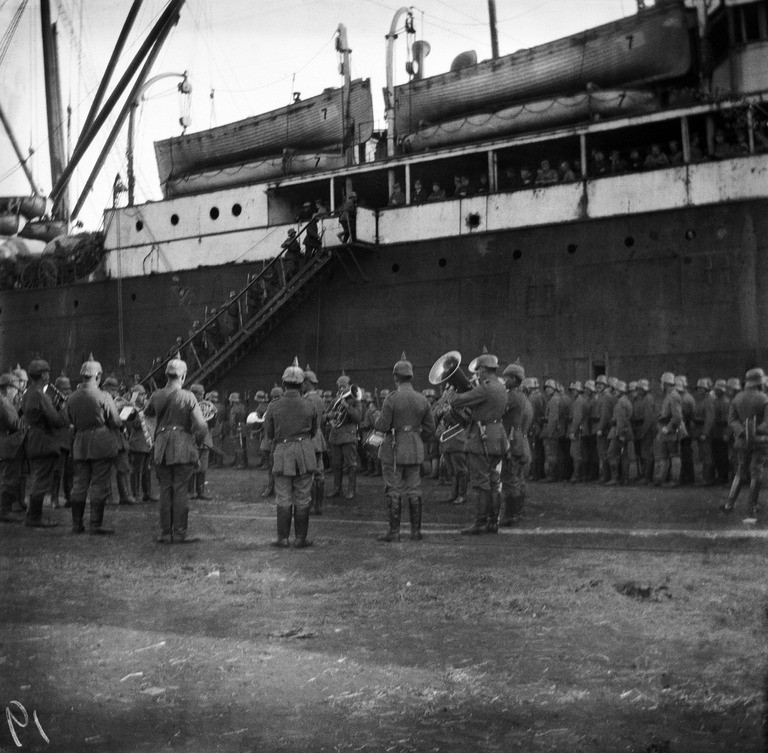
The German troops stationed in Finland became a burden in the minds of the victorious powers of the World War, which Finland had to get rid of immediately. The problem was quickly resolved when General von der Goltz announced the withdrawal of the troops to the Senate immediately after the armistice on 13 November. At the same time, he stated that Mannerheim was the only one capable of leading Finland. Due to information received from Germany, the headquarters of the Baltic Sea Division had already become concerned about the laxity of military discipline, but the news reached Finland slowly, and for example, after the overthrow of Wilhelm II, the Germans still cheered their emperor at the parade in Vyborg.
The Finnish political leadership had blindly trusted in a German victory all along. In addition to this misjudgment, the diplomats working in Berlin also failed in their most important task, namely interpreting the views of the German Foreign Ministry. Contrary to popular belief, Germany had doubted Finland's ability to maintain its independence as a neighbor of a Russia that would sooner or later strengthen. The territorial claims regarding East Karelia and Kola were also never supported at any point, although Finland persistently pursued them all the time. The changed situation with the end of the World War forced the Finnish political leadership to completely reassess its foreign policy, which had been committed to Germany. Mannerheim had already travelled as an unofficial scout in October to find out about the attitude of the Western Allies. Eventually, the Senate led by JK Paasikivi was forced to resign, and the regent Svinhufvud, who led the German trend, also decided to step down from his position at the end of November. Mannerheim was appointed as the new regent in his place, and it was decided to hold new parliamentary elections.
The collapse of Germany also determined the future form of government in Finland. A couple of weeks before Germany's surrender, Mannerheim had been urged to seek the Western approval of Friedrich Karl, who had been elected king, but due to the changed situation, the royal project fell through, and finally on 14 December Friedrich Karl announced that he would not accept the throne offered by the Senate. The end of the German trend also had an impact on the gradual decline of political and social persecution of the Reds. This led, among other things, to the mass amnesties that began in 1919. The parliamentary elections of the same year were a final break with the German trend, when the republicans won 150 seats and the monarchists only 50.
Archival sources
The archives of the German Baltic Division were kept in the Potsdam War Archives, which were destroyed by Allied bombing in April 1945. However, a large part of the Baltic Division archives is available to researchers, as a representative of the Union of Frontline Soldiers of the War of Independence had gone to copy the most important documents to the State Archives three years earlier . Interviews with German soldiers who served in Finland conducted in the same context are also available to researchers.