
Die Stimme der Muyen (musical)
Die Stimme der Muyen is the third MusicAL of the Choir of Mainstockheim. It has classical and japanese influences and was influenced by asian films, too, such as Spirited Away.
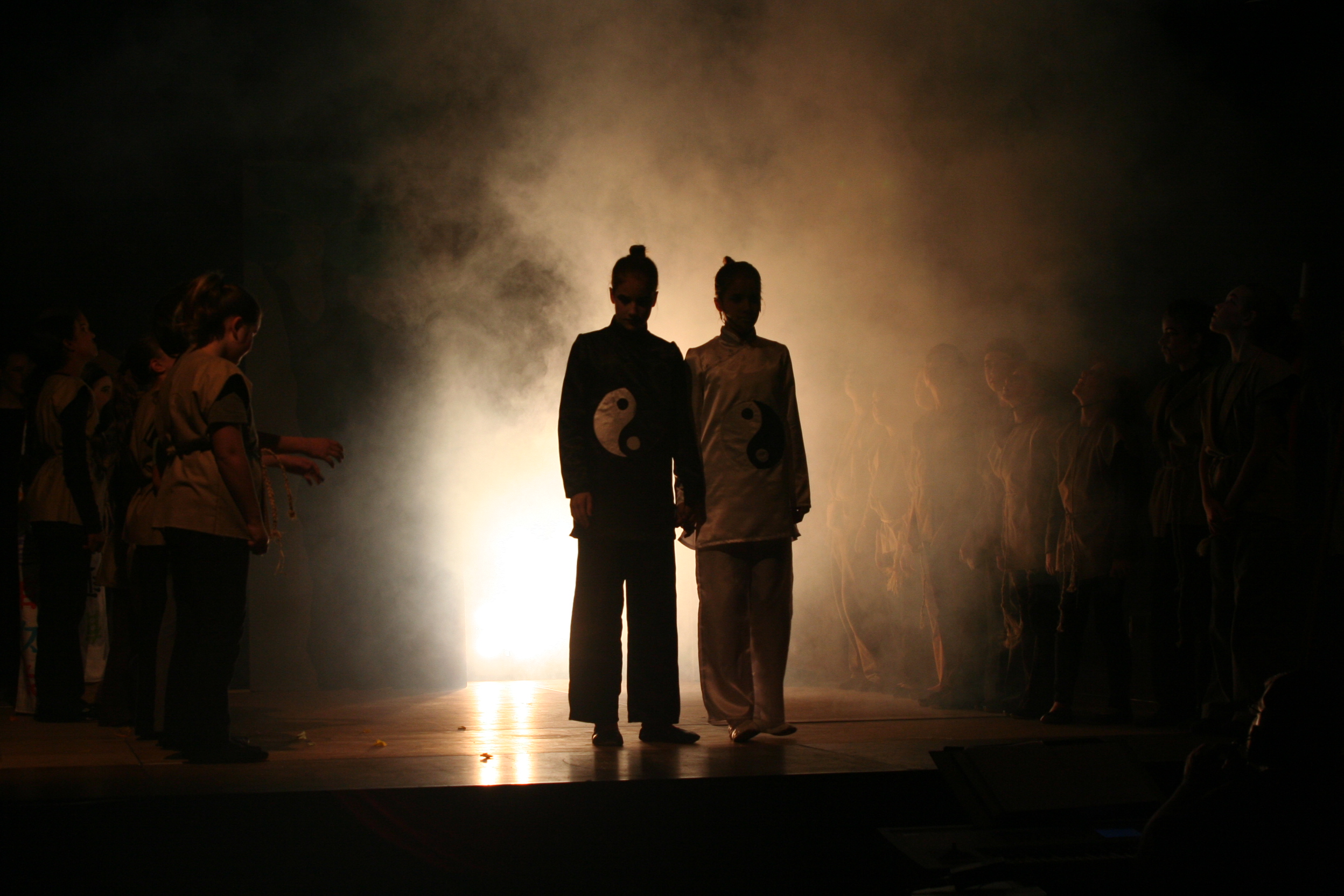
It's AbOUT Muyen, who has to find the "Yin" and the "Yang" and has to unite them. Like the other two musicals before, the main character (in this case Muyen) is on a journey and she gets help from some other person.
History
Recording and Performance
The first rehearsals for the musical had begun in early 2005 and were finished in summer 2006. The recording sessions for the CD began in spring and ended in early autumn 2006. Die Stimme der Muyen premiered on Sunday, 29th October. This musical was the biggest success of the Choir of Mainstockheim, since its formation in 1999. Over 1000 people watched the musical in four performances. It was planned that there had been a fifth show in January 2007 in the cinema "Cineworld", but it was cancelled later. It is the first musical of the choir, which had a live band at its four performances. 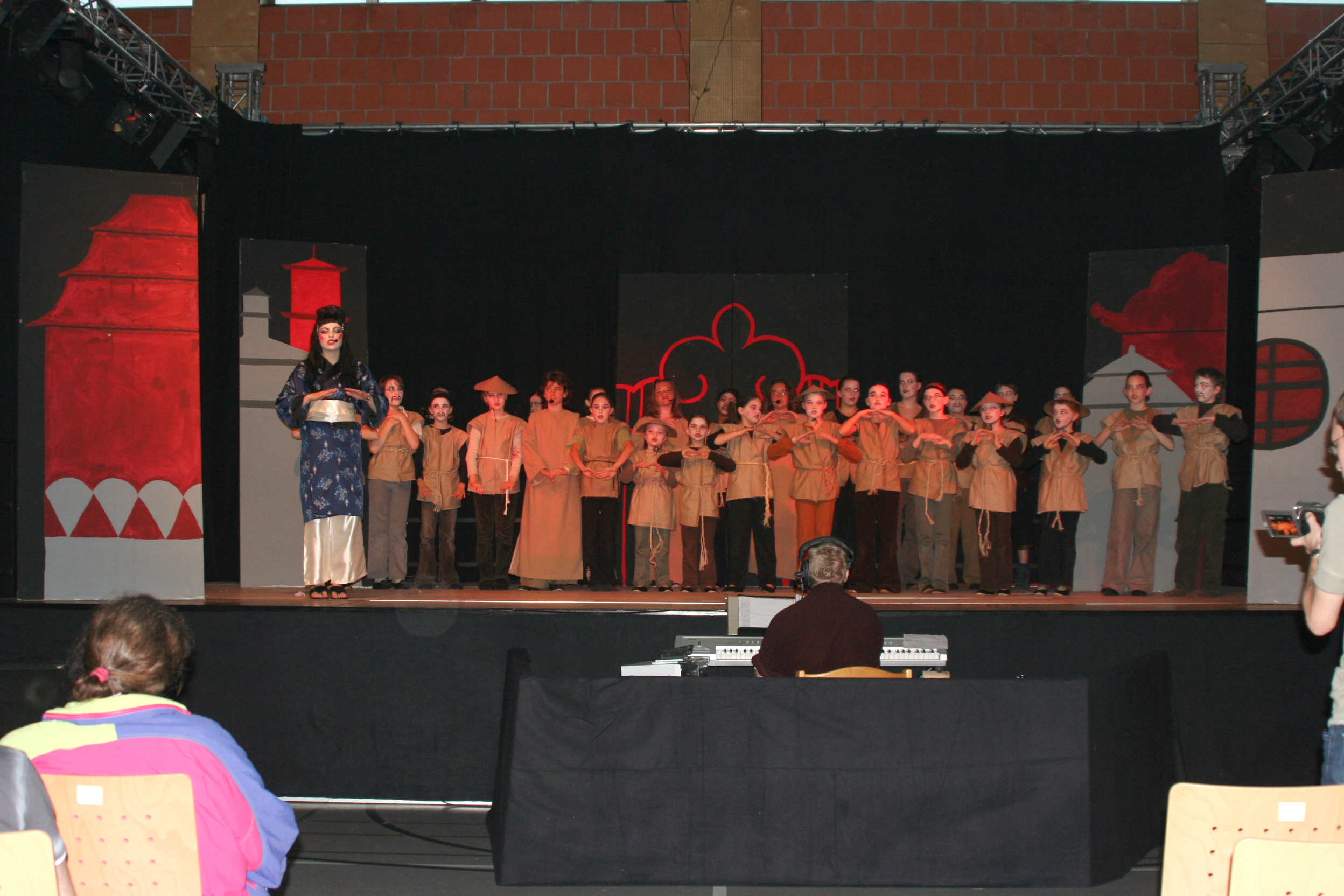


Track listing
CD 1
- "Land ohne Sonne" (Uwe Ungerer)
- "Geht auf die Suche" (Uwe Ungerer)
- "Arie der Muyen" (Uwe Ungerer)
- "Über Muyen" (Uwe Ungerer)
- "Wer wird mir folgen?" (Uwe Ungerer)
- "Wir sind die drei Gestalten" (Uwe Ungerer)
- "Der Weg zum Glück" (Uwe Ungerer)
- "Der Vogel im Käfig" (Uwe Ungerer)
- "Ein Meister seines Fachs" (Uwe Ungerer)
- "Wao Miaos Geheimnis" (Uwe Ungerer)
- "Wie wird mir warm ums Herz" (Uwe Ungerer)
- "Etwas muss sich ändern I" (Uwe Ungerer)
- "Lied der Samurai" (Uwe Ungerer)
- "Etwas muss sich ändern" (Uwe Ungerer)
- "Wie lang kann man nur so leben?" (Uwe Ungerer)
CD 2
- "Tanz der dunklen Schatten" (Uwe Ungerer)
- "Einst gab es Harmonie" (Uwe Ungerer)
- "Einst gab es Harmonie Teil 2" (Uwe Ungerer)
- "Ich bin so fies und gemein" (Uwe Ungerer)
- "Die Macht der Pinsel" (Uwe Ungerer)
- "Das Lied von den Lotusblumen" (Uwe Ungerer)
- "Weit sind wir gewandert" (Uwe Ungerer)
- "Ich seh die Wahrheit in mir drin" (Uwe Ungerer)
- "Das Duell der Stimmen" (Uwe Ungerer)
- "Etwas wird sich ändern" (Uwe Ungerer)
- "Land voller Leid, Land voller Sorgen" (Uwe Ungerer)
- "Das Freudenfest" (Uwe Ungerer)
Story
The plot is based on an opera singer, named "Muyen", who's very arrogant. She gets the order from princess "Chihiko", to search and unite the "Yin" and the "Yang", who seem to have disappeared. But in reality they have been dispelled by dark monarch "Fies Ling". So "Muyen" begins her journey to find the twins "Yin" and "Yang" and must sing for the pair of twins, to bring them back. Chambermaid "Mikado", cook "Wau Miao", monk "Chow Fat", blind soldier "Ti Lung" and opera-composer "Jo-Hei-Zang" (named after teacher, organist and composer Johann Heinrich Zang, who lived in Mainstockheim when Johann Sebastian Bach was alive) decided to go with her and help her on her way. On their journey, they met different characters such as samurais or "the fortune-cookie-porters" Sing, Sang and Song. Finally, Muyen defeats monarch "Fies Ling" and saves the twin "Yin" and "Yang".
Characters
- Prinzessin Chihiko - the princess of the asian land, the musical plays
- Muyen - an arrogant opera singer, who is changing during the story
- Mikado - the chambermaid of the princess and mate for Muyen on the journey
- Chow Fat - a wise monk and also mate on the journey, giving Muyen some advice
- Wau Miao - a cook without any sense of taste; he cooks on the journey for the other mates
- Ti Lung - a blind warrior; he is joining the trip, too
- Jo Hei Zang - the composer of the diva Muyen
- Yin and Yang - the keepers of the harmony, a twin
- Sam Murai - leader of the 7 samurais
- Fies Ling - the female monarch of the separated country
- Au Wei - fighter of the dark monarch Fies Ling
There are some other characters, too, for instance the "Glückskecksträger" ("fortune cookie carriers") Sing, Sang and Song and the "Kalligrafen" Tai Chi, Kara Te, Sumo und Feng Shui.