
Democratic Republic of the Congo–Zambia border
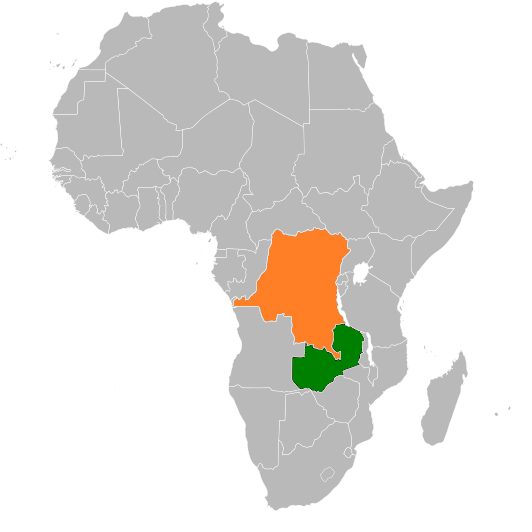 The Democratic Republic of the Congo–Zambia border is a 2,332 km-long international boundary separating the Democratic Republic of the Congo and Zambia in Central Africa.
The border is largely based on agreements established during the creation of the Congo Free State by Leopold II in his personal capacity.
Features
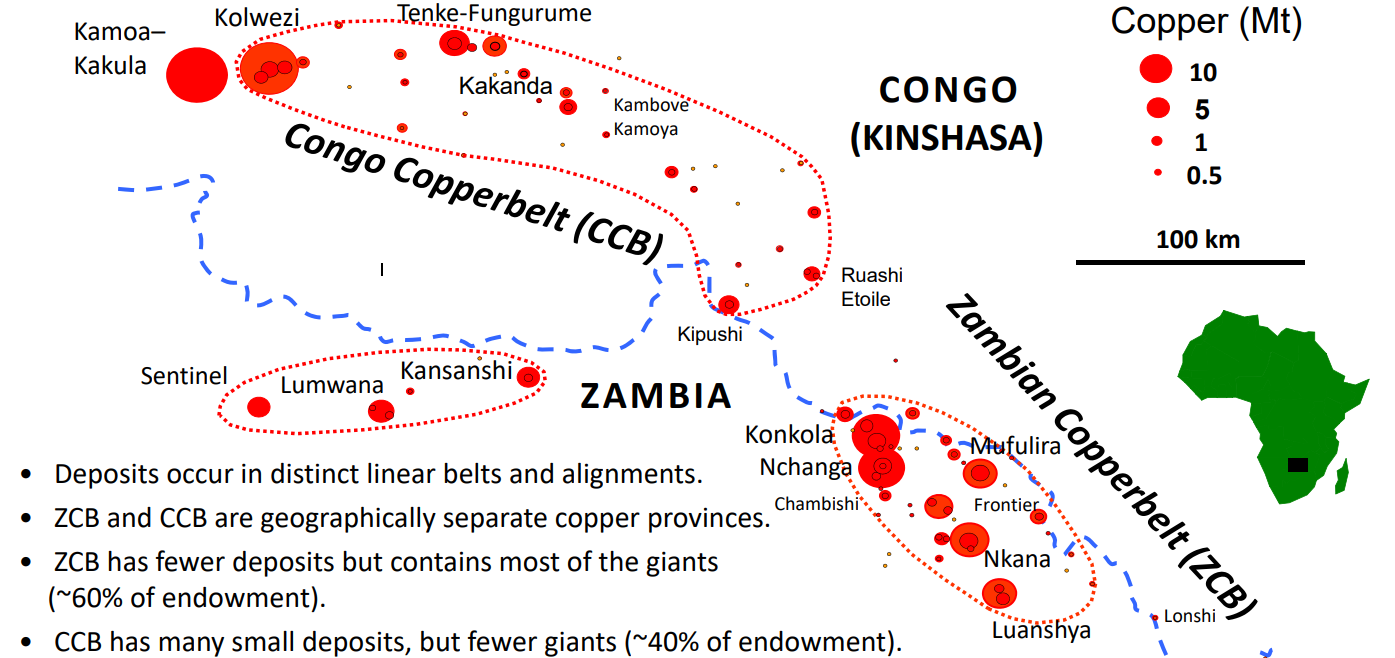 The length of the border is 2,332 km. It includes the Katanga "panhandle", a narrow extension of territory. Kasumbalesa is one of the main border crossings, serving both road and rail traffic on the route connecting Lubumbashi in the Democratic Republic of the Congo and Kitwe and Ndola in Zambia.
In its eastern section, the border is largely defined by the Luapula River and Lake Mweru. In the west, it closely follows the watershed divide between the Congo River basin (Luapula River) to the north and the Zambezi River basin to the south.
The border also passes through the Copperbelt, an important mining region.
History
The border is the result of compromises between three colonial powers with territorial ambitions in the region at the end of the 19th century.
At the time, Portugal sought to territorially connect its two colonies, Angola and Mozambique. Great Britain, from its Cape Colony, supported Cecil Rhodes' plans for northward expansion. The International African Association (IAA), led personally by Leopold II, aimed to create the largest possible territory within the continent to combat slavery and promote development.
See also
- Democratic Republic of the Congo–Zambia relations
References
Zambia Category:Borders of Zambia Category:International borders