
Culture of Wichita, Kansas
 The culture of Wichita, Kansas, encompasses the city's historical ties to the aviation and agricultural industries, its arts institutions, and its sports teams. During the 1920s, Wichita produced approximately one-quarter of all aircraft in the United States, leading civic leaders to promote the city as the "Air Capital of the World." The commercial growth during this era supported the development of early civic and cultural organizations, including the Wichita Art Museum and the Wichita Symphony Orchestra.
In 2016, the National Endowment for the Arts described the city as having a "vibrant cultural heritage" shaped by its history of diversity. Wichita is known as the "Air Capital of the World" due to its history in aviation manufacturing. The city has hosted the National Baseball Congress World Series since 1935. In collegiate athletics, the Wichita State Shockers have made multiple appearances in the Final Four of the NCAA Division I men's basketball tournament.
Academy Award winner Hattie McDaniel, Emmy winner Kirstie Alley, and Eagles guitarist Joe Walsh were born in Wichita. Golden Globe winner Don Johnson was raised in the city, participating in theater at Wichita South High School before continuing his studies at the University of Kansas.
Museums
Wichita has several museums and cultural institutions. The Wichita Art Museum holds a collection of American art, including the Roland P. Murdock Collection, which features works by artists such as Mary Cassatt, Edward Hopper, and Winslow Homer. The Wichita-Sedgwick County Historical Museum is located in downtown Wichita inside the original 1890 City Hall building. The museum contains exhibits detailing local history. Opened in 2000 along the Arkansas River, Exploration Place is a science and discovery center featuring interactive exhibits.
The Ulrich Museum of Art, located on the campus of Wichita State University, was founded in the 1970s and features modern and contemporary art. Its Martin H. Bush Outdoor Sculpture Collection includes a 28-by-52-foot glass and marble mosaic by Spanish surrealist Joan Miró, completed in 1977.
Located in the Old Town district, the Museum of World Treasures is situated in a three-story warehouse and displays artifacts spanning from prehistory to the modern era. The museum's collection includes "Ivan the T. rex," a Tyrannosaurus rex skeleton discovered in 2007 with a largely intact tail missing three vertebrae. Other exhibits feature a 34-foot Tylosaurus fossil, Egyptian mummies, original signatures from every U.S. president, and a section of the Berlin Wall.

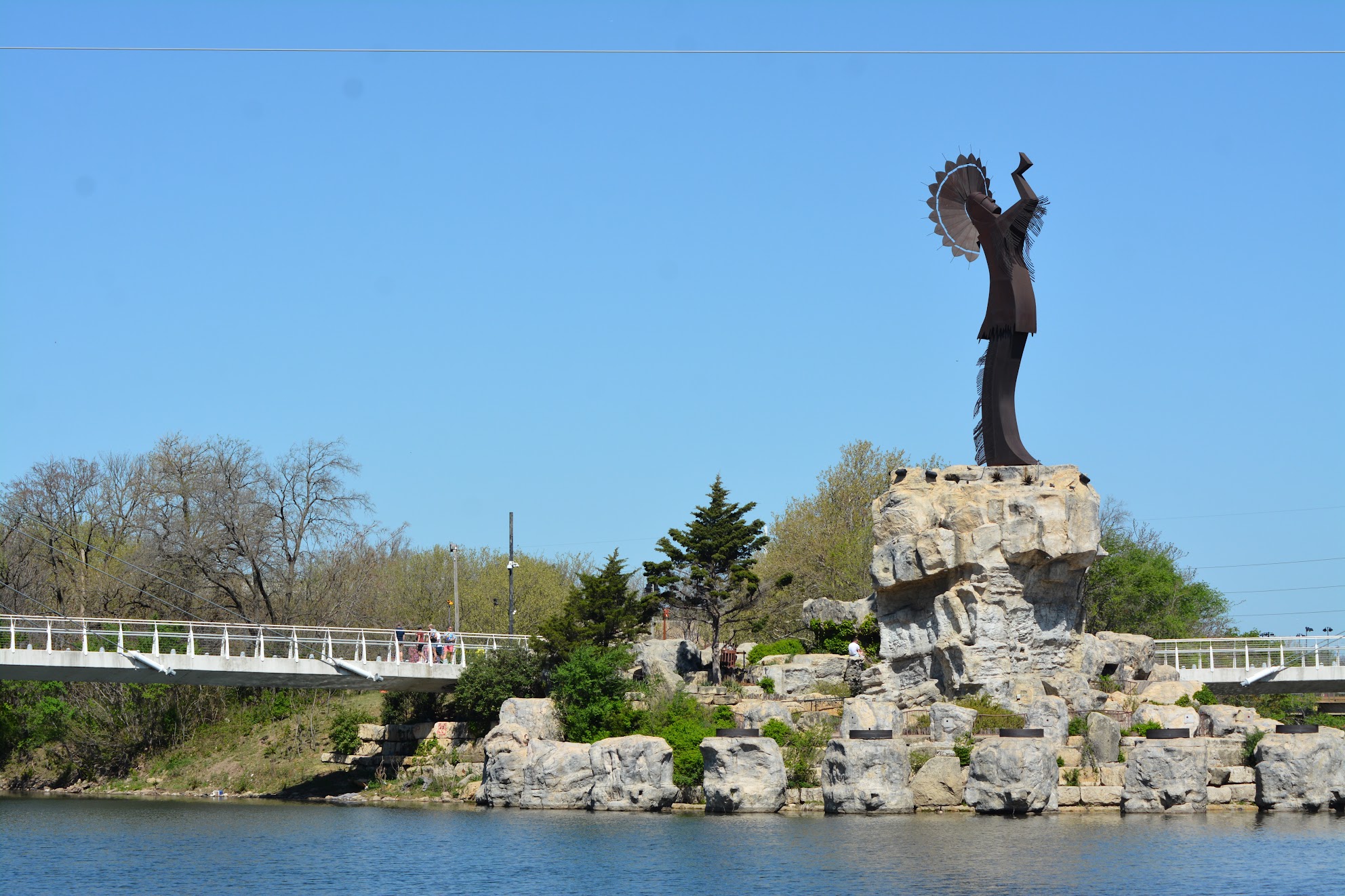
Other museums in Wichita include The Kansas African American Museum, located in the former Calvary Baptist Church in downtown, which features exhibits on the history of African Americans in Wichita and Kansas. The Old Cowtown Museum is a living history museum representing a 19th-century Midwestern cattle town. The site utilizes historical buildings, costumed interpreters, and artifacts to depict the city's 1865–1880s frontier era along the Chisholm Trail. Additionally, The Mid-America All-Indian Museum focuses on the art, history, and culture of Native Americans. It is situated at the confluence of the Arkansas and Little Arkansas rivers, adjacent to the Keeper of the Plains sculpture.
Performing Arts

The Wichita Symphony Orchestra was founded in 1944, and the Wichita Grand Opera was established in 2000. Ballet Wichita is a dance company that performs regularly at the Century II Performing Arts & Convention Center and the Orpheum Theatre. Music Theatre Wichita is a summer equity theater that produces Broadway-style musicals. The Orpheum Theatre, which opened in 1922 as the first atmospheric theater in the United States, and Century II serve as the primary performing arts venues in Wichita.
Roxy's Downtown and the Crown Uptown Theatre host professional theatrical works and cabaret-style performances, while the Mosley Street Melodrama produces comedic and interactive musical revues. Other performing arts organizations in the city include the Wichita Youth Symphony Orchestras, the Wichita Children's Theatre & Dance Center, and the Wichita Community Theatre, which is the city's oldest continuously running all-volunteer stage.
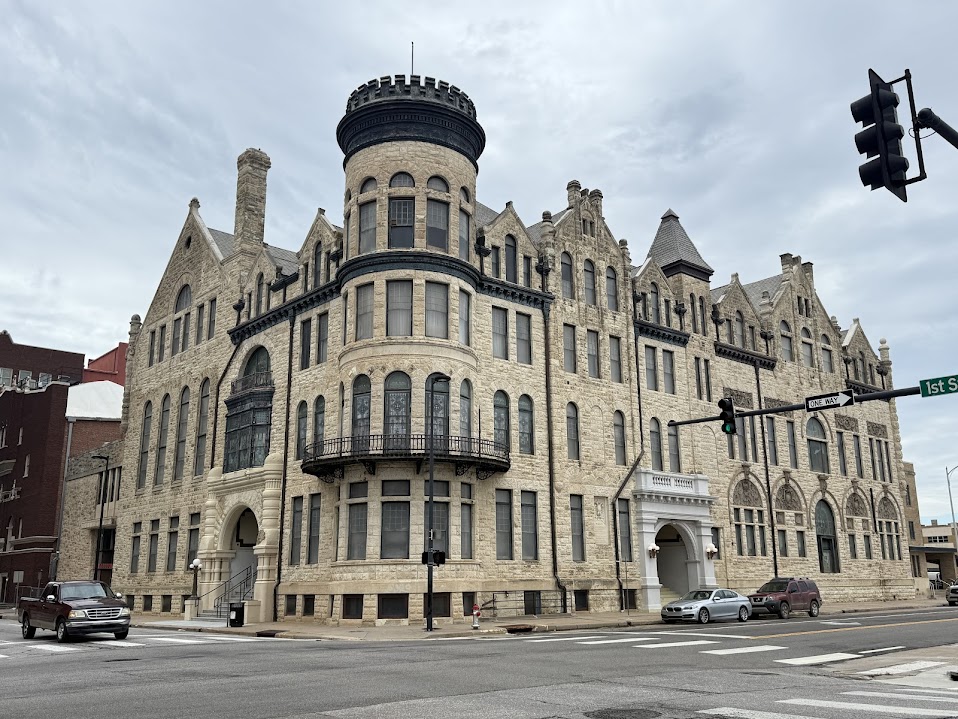
The historic Scottish Rite Temple, a downtown structure formerly serving as a Masonic center, also hosted concerts, theatrical productions, and community events in its auditorium. The facility ceased operations in 2025 and was subsequently purchased by Chase Koch. Koch also owns Movement Musik, an organization that has announced plans to develop a new music and performance venue along First Street.
Cuisine
Wichita's history as a cattle drive destination on the Chisholm Trail led to the establishment of several steakhouses, including Chester's Chophouse, the Scotch & Sirloin, and the now-defunct DOC's Steak House. Garlic salad, which was popularized by DOC's, remains a distinct regional dish in Wichita. This cattle-drive background is also reflected in the name of the city's former minor league baseball team, the Wichita Wranglers.
In downtown Wichita, the Old Town district contains multiple restaurants located within former brick warehouses. The city serves as the headquarters for Cargill Protein and is the founding location for national restaurant chains Pizza Hut, White Castle, and Freddy's Frozen Custard & Steakburgers. Early fast-food hamburger models developed in the city, with restaurants like Nu Way Cafe serving the region's crumbled beef hamburger. Wichita also maintains a significant barbecue sector; while the city does not claim a proprietary barbecue style, local establishments predominantly serve Kansas City-style.
Sports
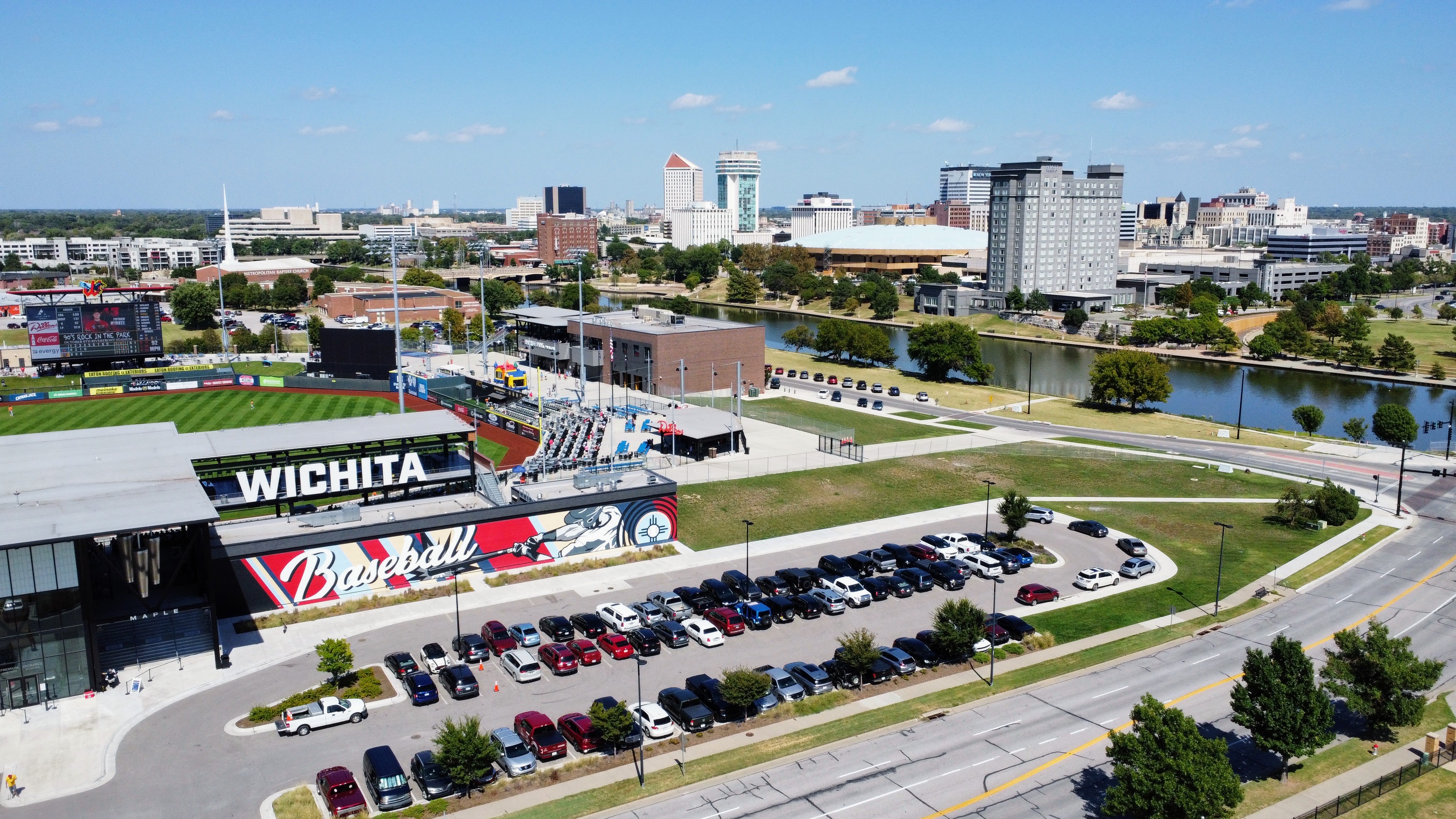
The National Baseball Congress (NBC) World Series has been hosted in Wichita since its founding by Hap Dumont in 1935. The city's minor league baseball team, the Wichita Wind Surge, is the Double-A affiliate of the Minnesota Twins and plays at Equity Bank Park in downtown Wichita. This venue replaced Lawrence-Dumont Stadium, which previously hosted teams such as the Wichita Wranglers and the independent Wichita Wingnuts. In minor league ice hockey, the Wichita Thunder of the ECHL play at INTRUST Bank Arena.
Wichita State University's athletic teams, the Shockers, compete in NCAA Division I. The university's men's basketball and baseball programs have both made multiple postseason appearances. Several notable athletes are from Wichita, including Pro Football Hall of Fame running back Barry Sanders, Basketball Hall of Fame player Lynette Woodard, who was the first female member of the Harlem Globetrotters, and Olympic track and field medalist Jim Ryun.
Other Cultural Highlights

The flag of Wichita, originally adopted by the city in 1937, has become a prominent cultural symbol in the 21st century. Designed by local artist Cecil McAlister, the flag features a central Native American Hogan symbol representing "home," set against a stylized sunburst. Following a resurgence in civic popularity during the 2010s, the design has been widely adopted by local residents and businesses. The flag's imagery is incorporated into apparel, sports gear, and public art, including numerous large-scale murals throughout the city's downtown and Douglas Design District. Additionally, elements of the flag are frequently adapted into other local logos, and the design is a common motif for tattoos among residents.
A portion of downtown Wichita is known as Old Town. A former warehouse district that housed manufacturing facilities, wholesale distributors, and other industrial buildings, it now contains shops, restaurants, bars, and art galleries. The area features brick streets and historic boardwalks. Botanica, The Wichita Gardens is an 18-acre (7.3 ha) botanical garden located along the Arkansas River in the Museums on the River district. It contains themed outdoor areas, including a rose garden, a woodland walk, a children’s garden, and a butterfly house. The grounds also include a pavilion housing a restored 1949 Allan Herschell carousel previously located at the city's former Joyland Amusement Park.
Rooftop and urban gardens in Wichita include RISE Farms, a 15,000-square-foot agricultural space and solar panel array located on the Fidelity Bank RISE Car Park. It is the largest rooftop farm in the Midwest and supplies produce to local restaurants. Community gardens in Wichita neighborhoods include the Delano Community Garden, SoCe Neighborhood gardens, ICT Farms, and plots supported by the local Master Gardeners program.
Visual and performance artists from Wichita include contemporary painter David Salle and sculptor Tom Otterness.
Wichita has four sister cities: Orléans, France (1944); Tlalnepantla de Baz (1973); Cancún, Mexico (1975); and Kaifeng, China (1985).
The annual Tallgrass Film Festival has been held in Wichita since 2003. As an independent film festival, it typically showcases a range of narrative features, documentaries, and short films from both domestic and international filmmakers. The multi-day event utilizes several local venues, including the Orpheum Theatre and Boulevard Theater Old Town, and hosts screenings, workshops, and panel discussions for independent film enthusiasts and industry professionals.