
Culture and art in the Aures
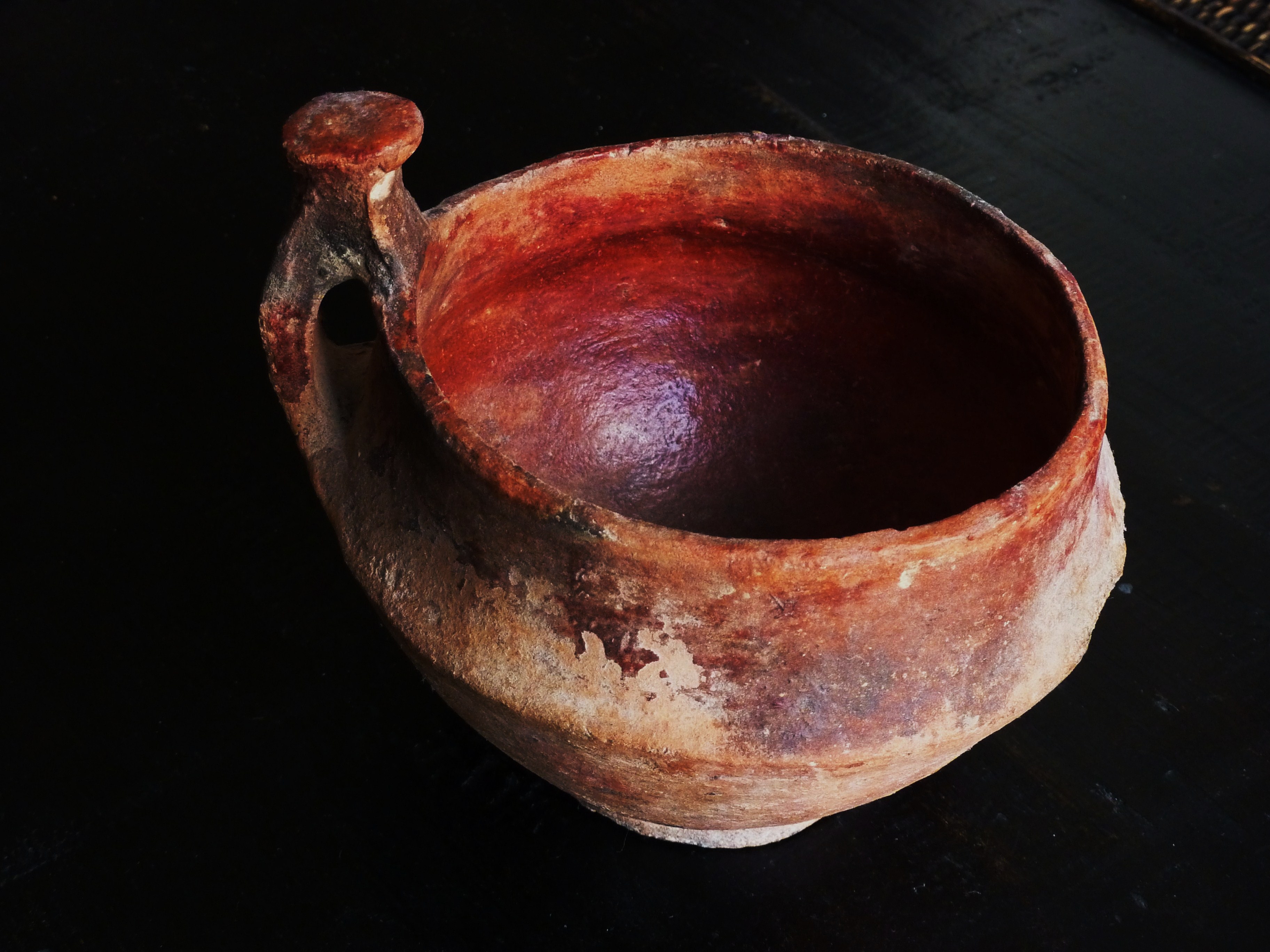 Culture and art in the Aurès are diverse. The Aurès is a vast territory of Algeria, and numerous artisanal activities are organized to represent the heritage of certain regions and provinces of eastern Algeria. Several artists from the Aurès participate in festivals and exhibitions throughout the country.
Crafts

Pottery
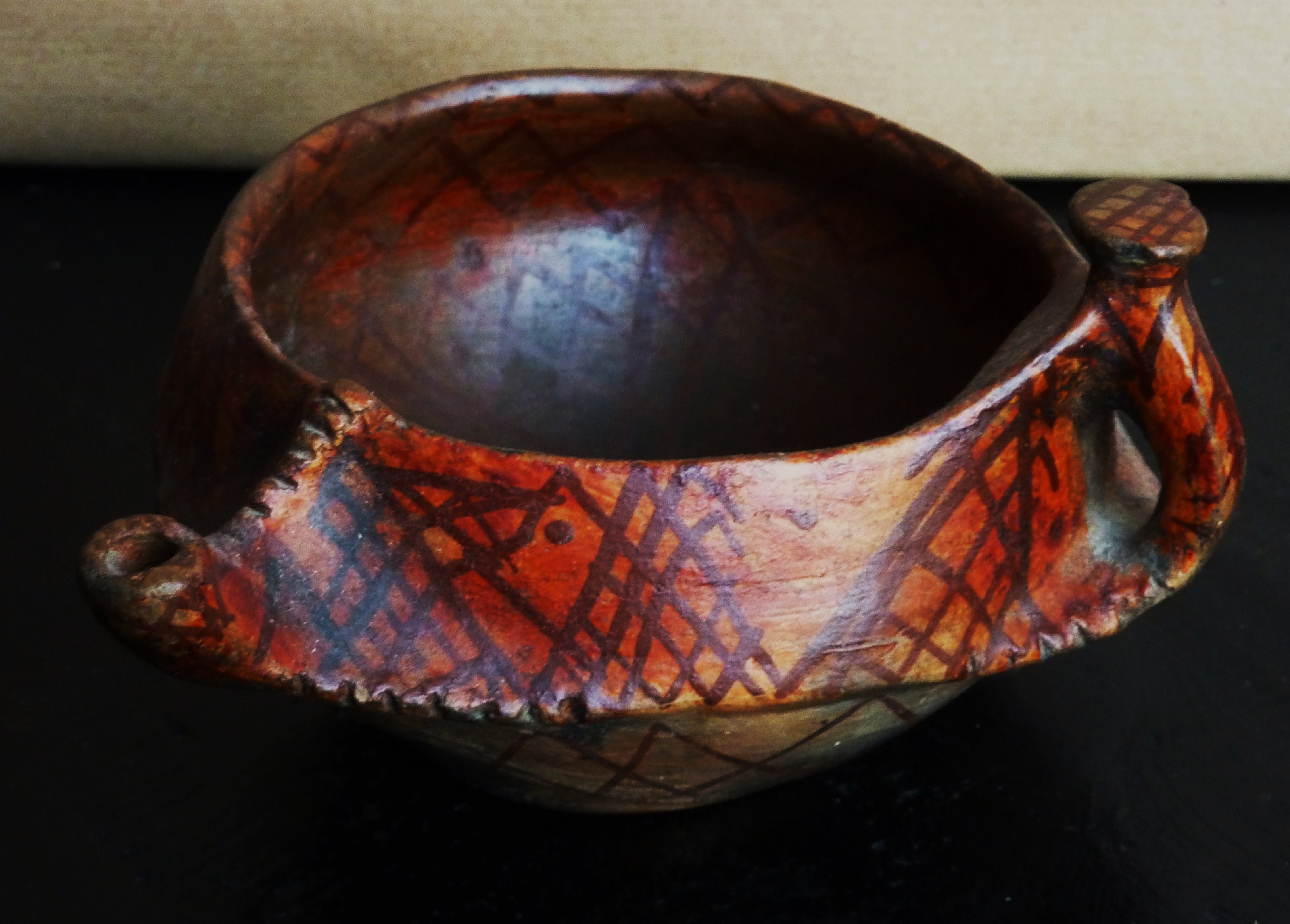
According to several historians, pottery from the Aurès displays distinctive characteristics in its incised decoration and carinated forms, making it among the forms of pottery closest to the earliest forms of Berber art.
Origins
"Although despite the Roman colonization of Lambaesis, the Chaoui Berbers remained apart from the great external currents", "one may therefore consider that this relief ornamentation (notches, ridges, bosses, etc.) is characteristic of genuine, or primitive, Berber pottery", wrote Arnold van Gennep. Analyzing this relief decoration, Gabriel Camps observed that "Aurès pottery alone is distinguished, among other features, by the multiplication of conical bosses on the body and handles, decoration which greatly contributes to its archaic appearance". Assuming a "Sicilian-Italic origin", he believed that this decoration, having spread during the Chalcolithic throughout a region extending from the coasts of Tunisia to the Aurès, and subsequently gradually disappearing with the advance of painted pottery, "would have survived in the Aurès stronghold".
Characteristics
Decorated with reliefs or incisions, pottery from the Aurès is coated with a dark red or brown lacquer, called "louq", made from resins that are "cooked, crushed, dyed and shaped into sticks that harden as they cool", which is applied to the pottery while it is still hot at the end of firing. This practice is both ornamental and functional, as it waterproofs the pottery. The "tarbout", a plate or dish, and the carinated-profile cup are often decorated with designs of symbolic significance.
The "tarbout" has an original profile, with the rounded edge, without a flat surface, sloping slightly outward at four opposite points, often emphasized by notches. These are also found on the rim of cups and milking pots.
The "fân", used to bake flatbread, is not glazed but is decorated with reliefs punctuated by lines and red circles.
Other pottery vessels, perhaps used as toys, are modeled in the shapes of animals, particularly birds.
Weaving
 Since high-pile carpet-making is not a local technique, woven textiles, the "tellis", blankets, cushions and grain bags are characteristic of the style of the Aurès. Goat hair is often mixed with the wool.
The "tellis" generally consist of bands of colors, although they may sometimes be decorated with a border or several copper-colored lines. Broad dark registers, on which a decoration appears to be embroidered, sometimes interrupt the background formed by plain bands. Diamond-shaped medallions, themselves composed of networks of small diamonds, may also be interwoven across the entire surface of the "tellis".
The same diamond shapes are found on the bands of blankets and on the surfaces of cushions.
Jewelry
 Titiana Benfoughal devoted a book specifically to jewelry and jewelers of the Aurès in 1997. Several types of jewelry were documented by her, including diadems, pendants, throat ornaments, earrings, necklaces, fibulae, breast ornaments, amulet boxes, mirror boxes, belts, bracelets, signet rings and pendants. Titiana Benfoughal also studied jewelry-making techniques.
Traditional clothing
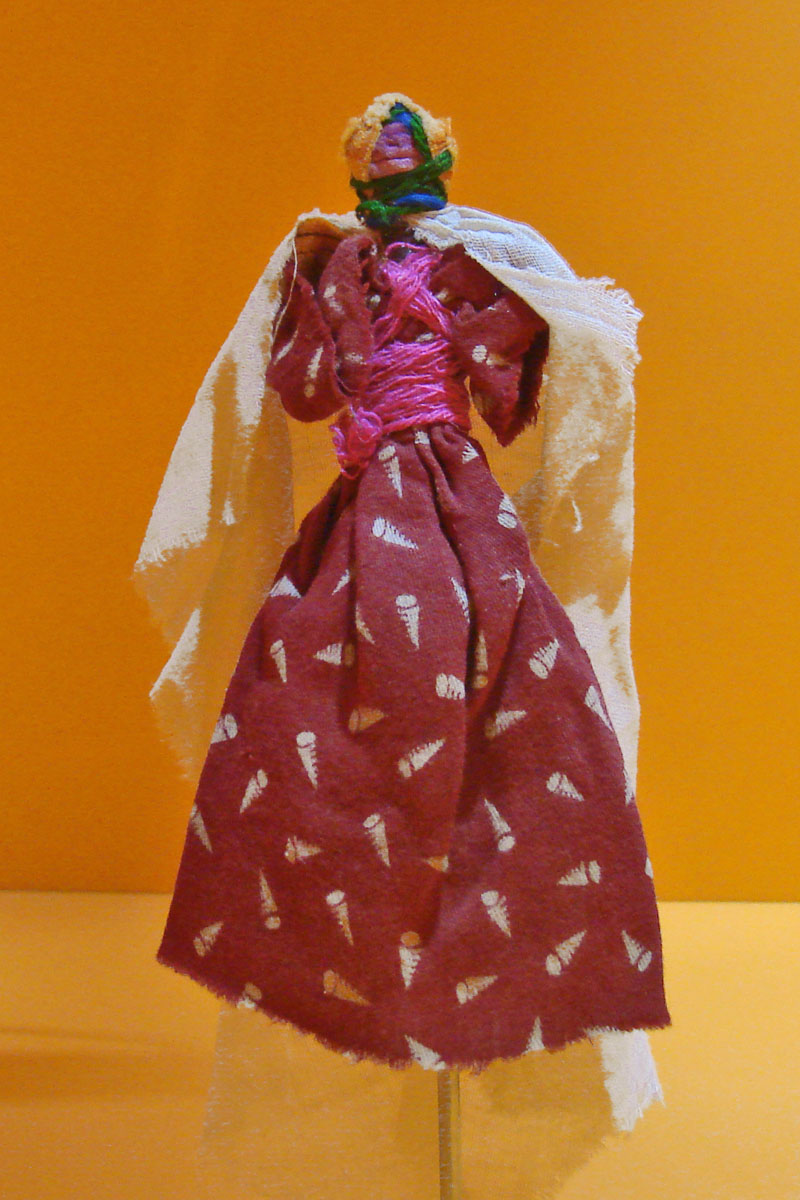 Women wear the tajdidh (winter coat), made of thick white wool with brown bands and fastened with the amessak (pin). The Ougâ is an outdoor coat, similar to the tajdidh, but made of fine white wool and woven with white silk. The kettaf is also worn and is made with silk fabrics. During summer, women wear the althâm or kettâf, made of black cotton. The shoes are made of braided esparto fiber, from the feet to the ankles. When going out, women wear the belgha (sandal), made of goat skin, in red and yellow, with a flat sole. Women wear scarves and also a turban, which is put on last. The melhafa is worn during ceremonies.
For men, the vest (b'diya) is worn with a white or ochre sleeveless and collarless fabric. The belt (h' zam) is embroidered with ochre silk thread. The serouel (trousers) resembles those worn in the Algiers region. The shoes are moccasin-type, with flat soles, and are brown, black or white. Horsemen wear leather boots. The turban (ammama) is made of fabric embroidered with ochre silk on a white background and measures approximately 3 m; the man wraps it around his head. The burnous is similar to that of the Algiers region, and the fabric is made of camel wool. The kachabiya is worn in winter.
Music
Folklore is diverse throughout the regions of the Aurès.
Traditional music is well represented by numerous singers from the Aurès. The first singers to achieve international success were Aissa Jermouni and Ali Khencheli. The Rahaba style is characteristic of the entire Aurès region. Several other musical styles also exist, such as Arabic Andalusian music, represented among Chaoui singers by Salim Hallali. Several singers from the Aurès were inspired by this style, including Youcef Boukhantech.
Women have also gained a place on the national stage. Algerian television broadcast songs by Thelja (Ya Saleh) and Beggar Hadda during the 1970s. Houria Aïchi has released several albums in France, as has Markunda Awras and the singer Dihya, named after the queen of the Aurès, who was supported by Messaoud Nedjahi, one of the most prominent Chaoui composers and lyricists. One of her best-known albums is Dzaier assa.
Another genre of modern Chaoui music became established in the region. This distinctive music combines influences from rock, blues, folk and raï in the Chaoui language and Arabic. During the 1970s, 1980s and 1990s, several singers and musicians from the Aurès distinguished themselves in this genre, including Djamel Sabri of the group Les Berbères, also known as Djo, Massinissa, Aïssa Brahimi, Nouari Nezzar, Katchou, Nacerdine Hora and Belbeche, among others, all of whom began performing in Chaoui. Other, younger performers use exclusively the Chaoui language, such as the group Tafert, Youba and Youress Sami. Some musical instruments are characteristic of the region, such as the gasba and bendir, while others such as the zorna are characteristic of Eastern music as a whole, including in Turkey. Many people incorrectly refer to this genre as "Staifi" because Arabic is used, whereas the music itself is Chaoui.
The Iwal Group from Tkout, founded by Nasrine and Fayssal, revolutionized modern Chaoui song by breaking taboos through a style incorporating theatre and singing. The group performed at the Algiers Opera. 


International Timgad Music Festival
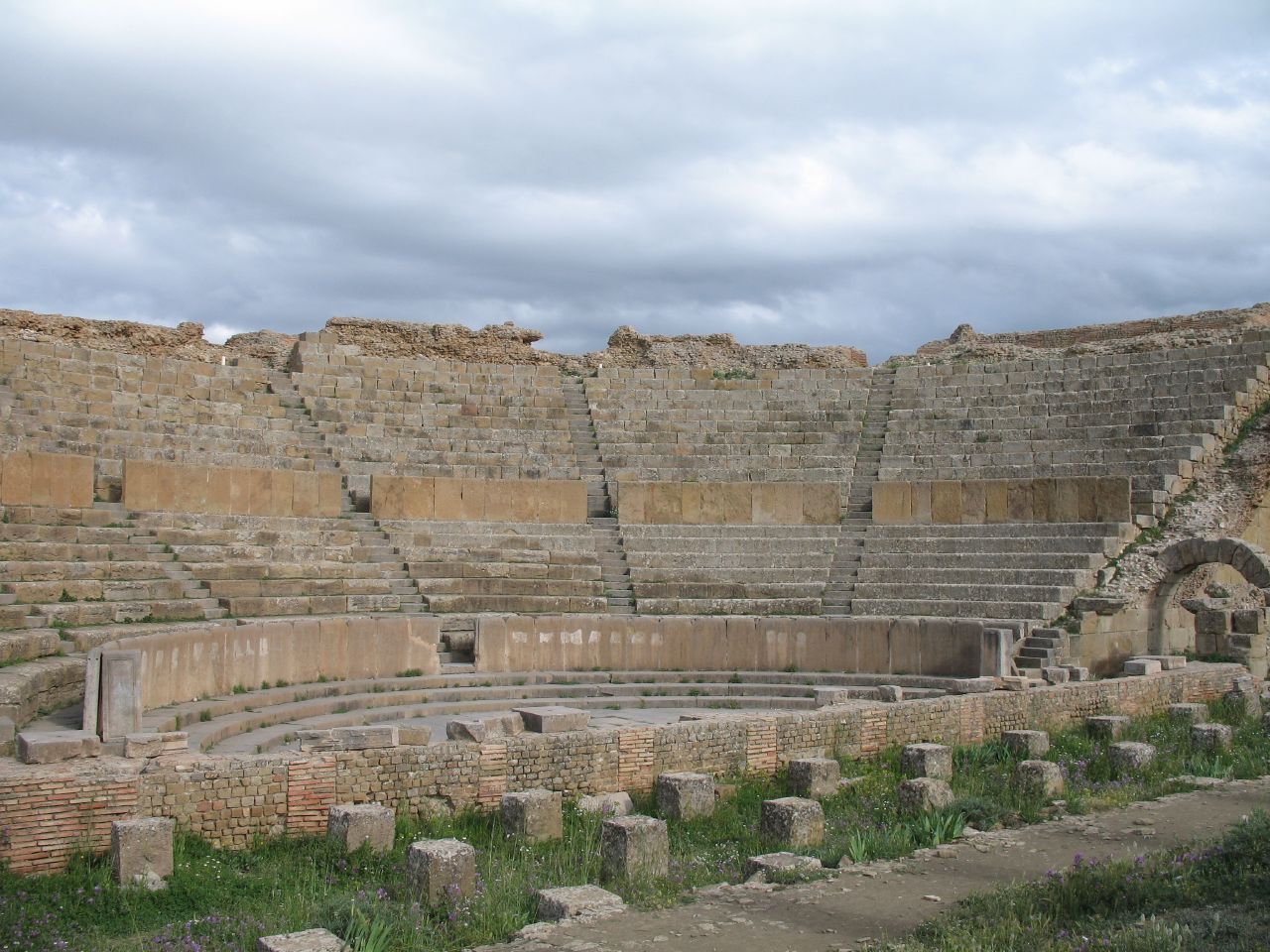 The International Timgad Music Festival, in Timgad, is organized each year by the festival commission in cooperation with the National Office of Culture and Information and the Batna Province.
It was established in 1967 and had several names. It was initially called the Mediterranean Festival, before becoming the Festival of Popular Arts in 1973.
The annual cultural festival takes place every July, although at one point in its history it was suspended from 1986 to 1996. It subsequently became a destination for numerous internationally renowned stars.
Aurès Song Festival in Batna
The Friends of Art and Culture Association was established in , bringing together several personalities from the Aurès, including Brahim Bouziane, Khaled Bouali, Hadj Tayeb, Ali Guerbabi and Chérif Merzouki. It was chaired by Hamid Meziani. In 1987, it organized a five-day festival in Batna. The festival brought together singers, musical groups and painters. The event was covered only by Algeria's Radio 2 channel and the local newspaper El-Aoures. Among the invited singers were Salim Souhali, Salah Boumaaraf, Mihoub, Hacen Dadi and Nouari Nezzar. Traditional Chaoui song was represented by Mohand Ouamer, Aissa Guellil, the Yabous group, Errefaâ, Idhourar and Chlaâlaâ. Modern groups included Your, Amenay Anzar, Kimel and Thiguiyyeres, who came from several provinces of the Aurès to attend.
A major exhibition of painting, jewelry and pottery, as well as a fantasia parade, took place during the festival.
Musical texts
Oral poetry, tales and legends are studied by specialists in literature and linguistics. The texts are recited by the Medaha and Gouaras (orators).
Dance
 Chaoui clothing (burnous), the horse, the rifle and ululations are part of Aurès dance. Some forms of dance include Rahaba, Mahzam, Trig el khil, Lahawawi, Izlen, Tigougaine or Taourial, Aourial, Zorna, Sebaha, Izlen, Rekrouki (gasba, mawal), L'azzekar, Tinzarine, Gasba, Aissawa, fkirettes, Allaoui, ghiyata, tabla, staifi, Batni and gnawi. Each region and tribe has its own style of dance. The Çrawi has variants such as Dmam, Çalhi, Rakruki and Ayash.
- Irahaben and fantasia
- Rahaba and baroud
- Fantasia
- Tahriba parade
- Dance specific to women
- Abdawi
- Bandu
- Trig al-khîl
- Mahzam or zandali
- Balbari
Literature
Several writers have written in both Arabic and French, including Kateb Yacine.
Literature before Algerian independence
Anna Gréki was a writer and activist for the cause of the National Liberation Front. André Gide visited the Aurès. He was a friend of Mohamed Hamouda Bensai.
The Swiss novelist Isabelle Eberhardt (1877–1904) lived in Batna in the Zmella district.
Several authors of French origin also wrote books dealing with themes related to the Aurès and the city of Batna, including Jean-Pierre Marin, Jean-Noël Pancrazi, Liliane Raspail, Jean Pèrés and Eugène Delessert, among others.
French-language literature
Several authors from Batna have written books, including Mohamed Nadir Sebaa, Abderezzak Hellal, Beïda Chikhi, a Doctor of State and professor at the Sorbonne, Hamid Benchaar, among others.
Messaoud Nedjahi wrote several novels in French about the life of the people of the Aurès. Liliane Amri, married to a Chaoui man, is the author of the novel La Vie à tout prix. Her book is an autobiography describing life in the Aurès, particularly that of women from the 1960s to the 1990s. She speaks Chaoui fluently and contributed to the development of the Aurès region.
Nassira Belloula is the author of several novels, narratives and essays, including La Revanche de May, Visa pour la Haine, Rebelle en toute demeure, Djemina and Les Belles Algériennes. Bachir Rahmani is a physician and writer who wrote Amrir in 2002.
Saïda Abouba has published poems and novels.
Arabic-language literature
Arabic poetry includes the poets Mohamed Laïd Al-Khalifa, Mohamed el Akhdar el Saihi and Mohamed Ababsa El Akhdari, who wrote several poems about the city of Batna and the Aurès.
Nouredine Bergadi published a dictionary in 2015 bringing together the entire press related to the Aurès.
Chaoui-language literature
In the , several books and dictionaries of the language were published, including a study by Émile Masqueray and the book by Gustave Mercier, Le Chaouia de l'Aurès, in 1896.
In the , the Chaouia–Arabic–French–Kabyle dictionary by P.G. Huyche was published in 1906. André Basset's book Le parlé des Ait Frah was published in 1961, as was M. Torchon's La grammaire chaoui.
One of the first poets writing in the Chaoui language was Lalla Khoukha Aït Boudjenit (1914–1963).
Following Algerian independence, Mohamed Salah Ounissi published several books, including a Chaoui–Arabic–French dictionary in 2003. He was followed by Fakihani Tibermacine with his book Parler chaoui in 2009, and subsequently by Ferhaoui Laid with an essay on conjugation.
In 2013, Khadija Saad published a Chaoui–Arabic dictionary, Bengasmia Laâmri wrote a book on Chaoui phonetics, and Abdellah Khelfa wrote a novel, Moumna, in 2002, and a collection of Chaoui poetry containing 1,600 verses, entitled Lmumen, in 2014. Several poets broadcast their work on local Chaoui-language radio programs, including Bachir Adjroud, Aghilas Mazigh, Salah Bezzala, Adel Solatni, Djamel Samir Chemlal and Dhifallah Khalef, among others.
A study was conducted by Naziha Hamouda entitled Les femmes rurales de l’Aurès et la production poétique.
Education
In 2014, the Amazigh Cultural Movement and the Association of Cultural Heritage Identity and Artistic Creativity of the Batna Province, during the commemoration of the events of the Berber Spring and the Black Spring at the House of Culture of Batna, developed proposals concerning the teaching of the Berber language as a mother tongue.
History and chronicles
Mostéfa Merarda and Redha Malek published books on the Algerian War. Authors such as Mustapha Bekkouche, Amar Mellah, Ali Merouche and El Hachemi Saidani wrote documentary and historical books.
Study and research
- Ethnography and ethnology
- In the 1920s, in her thesis La Femme chaouia de l'Aurès (1928), Mathéa Gaudry described the life of women in this region, particularly during the colonial period. She also traced the history of Kahina.
- Germaine Tillion (1907–2008) made several long stays in the Aurès between 1934 and 1940, conducting extensive scientific research on the region and its inhabitants. During the Algerian War, she intervened with the French government to defend the cause of Algerians.
- Mohamed Hamouda Bensai (1902–1998) was an essayist and philosopher.
- Claude-Pierre-Hyppolyte Polain, historian, died on in Batna.
Sculpture
Mohamed Demagh began his sculpting career after independence. He was followed by several sculptors, including Rachid Mouffouk, Bensaid Mohamed Nadjib, founder of the Prisma association and a visual artist and sculptor in Batna, and Said Berkane, sculptor and decorator, among others.
Painting
One of the first painters was Houamel Abdelkhader, who emigrated to Italy. He was an active member of the struggle against French colonialism and joined the maquis. He began painting at an early age, around 1960. In 1963, he was awarded a gold medal in Rome.
Several artists subsequently emerged, such as Jeballah Bellakh, and live in the cities of the Aurès.
In 1980, Chérif Merzouki, in collaboration with Radio Television Algeria (RTA), Établissement public de télévision, recorded a documentary with Rachid Benbrahim entitled Le mouvement des Arts plastique à Batna.
Some artists have died, including Abderrahmane Tamine, Chérif Merzouki, Abdelali Boughrara, Abderazak Aguini and Lazhar Hakkar, among others. Several artists have exhibited their work, including Hocine Houara, Mohamed Berkane and Souhali Salim. Another generation of future painters was trained by Chérif Merzouki, including Adel Abdessemed, Hassane Amraoui, among others. Several painters, including Noureddine Zekara, Mohamed Berkane, Souhali Salim, Chérif Mennoubi, Ahmed Khamari and Noureddine Tabrha, continue to portray the Aurès through their work throughout Algeria.
In the Aurès, the Houses of Culture of Batna, Khenchela, Biskra and elsewhere organize artistic activities such as exhibitions and meetings.
In 2007, during the "Algiers, Capital of Arab Culture" festival, several activities took place in the Aurès regions.
El Kantara in painting
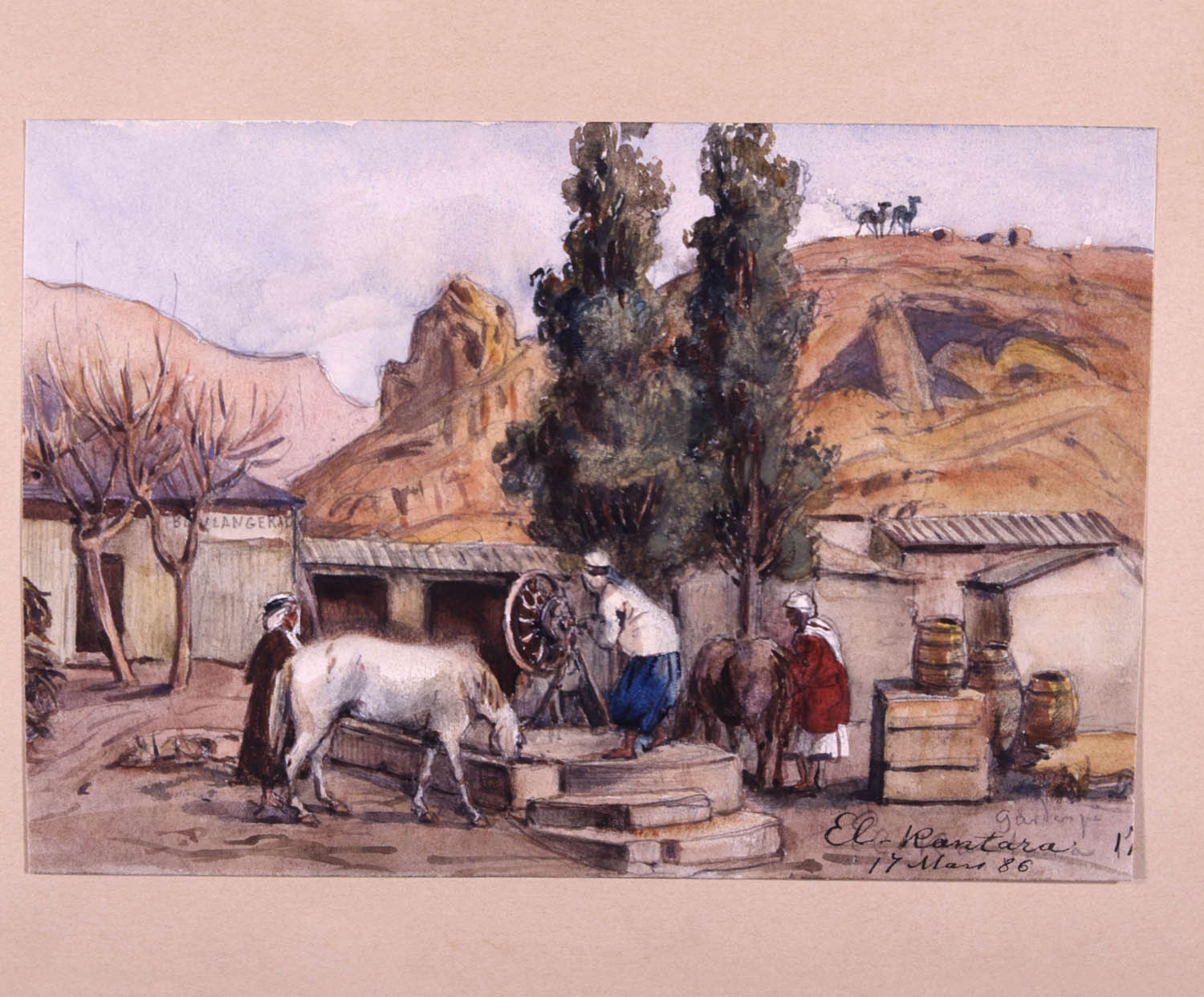 Over time, several painters from around the world have celebrated El Kantara in their own way. Hocine Houara, a native of El Kantara, developed a strong interest in art, which remained throughout his youth and continues to be a source of inspiration.
In 1975, on the occasion of World Stamp Day, Bachir Yellès immortalized Algeria's smallest post office, located in El Kantara, on a postage stamp. Other stamps have since been issued depicting the gorges and the society of the region.
During the period of French Algeria, painters came to the region from all over the world. On , the Swedish painter Fritz von Dardel painted a watercolor of the village as it appeared at the time; the work is now held in Stockholm at the Nordic Museum. In 1901, French artist René Charles Edmond His painted an oil-on-canvas work measuring 238 by 335 cm entitled Les gorges d'El Kantara près de Biskra. Adrien Lucy, who died in 1875, also painted a work entitled Le défilé d'el Kantara.
Many other artists painted the region, including Maurice Bompard in 1892 with La Rivière d'El Kantara, and Le tailleur à El Kantara by Eugène Girardet, dated 1897 and belonging to the collection of the Saintes city museum. There is also the painting Baignade à El-Kantara by Swiss artist Jules Blancpain, dated 1903. Numerous other paintings of El Kantara were produced during the period of French Algeria.
Orientalist painters
Many European painters, particularly French painters and generally Orientalist artists, painted landscapes and portraits during their stays in the Aurès.
- Gaston Bouchinet (Castelsarasin, 1898 – Verdun-sur-Garonne, 1966)
- Eugène Deshayes (three works at the Musée des Beaux-Arts d'Alger and one at the Musée d'Oran)
- Paul Fenasse (Algiers, 1899 – New Braunfels, Texas, 1976)
- Eugène Girardet (Paris, 1853 – Paris, 1907)
- Louis Granata (Spezzano Grande, 1901 – Salon-de-Provence, 1964)
- Édouard Herzig (Neuchâtel, 1860 – Algiers, 1926; two works at the Musée d'Alger)
- Roger Irriéra (Bordeaux, 1884 – Aix-en-Provence, 1957)
- L. (Léonie?) Lebas
- Constant Louche (Algiers, 1880 – Grenoble, 1965)
- Fritz Müller (Blida, 1867 – Algiers, 1926; one work at the Musée d'Alger)
- Maxime Noiré (Guinglange, Moselle, 1861 – Algiers, 1927), who worked there for many years and was nicknamed "the painter of the Aurès" for his so-called "rosy" views (four works at the Musée d'Alger)
- Jules Van Biesbroeck (Portici, Italy, 1873 – Brussels, 1965)
Cinema
Film enthusiasts and videographers from Batna, including Oussama Bounouara, producer of the film Self East, Azeddine Abdesselam and Salah Eddine, participated in the 38th edition of the Clermont-Ferrand Short Film Festival in France in 2016. Mohammed Lakhdar-Hamina produced The Winds of the Aures in 1966.
René Vautier directed Avoir vingt ans dans les Aurès in 1972.
Amor Hakkar directed Timgad, la vie au cœur des Aurès, a 52-minute documentary for France 5, in 2002.
Ahmed Rachedi directed Ben Boulaid, filmed in 2006 and 2007 as part of the "Algiers, Capital of Arab Culture 2007" event and produced in cooperation with the Ministry of Mujahideen, the Ministry of Culture and Missane Balkis Films in 2009.
Amor Hakkar made La Maison jaune, a film dealing with social life in the Aurès, in 2008.
In 2007, Lyes Salem's film Mascarades was filmed in the Ghoufi canyon.
Loucham ("tattoo") is a theatrical play broadcast on Canal Algérie, dedicated to the stonecutters of T'kout who suffered from silicosis. It was directed by Mahii Eddin Bouzid and the Batna Regional Theatre.
- Actors
- Athmane Ariouat, originally from Barika, has appeared in several Algerian films of historical, social, comic, dramatic and fictional character, including Carnaval fi Dachra (1994), Chronique des Années Pub, Cheikh Bouamama, among others.
- In La Maison jaune, director Amor Hakkar also acts alongside Aya Hamdi and Tounés Ait-Ali.
Theatre
Batna organizes the Festival of Amazigh Theatre (Batna) every year in December at the Batna Regional Theatre.
Traditions and festivals
T'kout
Several Berber festivals are celebrated in the commune, notably Yennayer (the Amazigh New Year), and Thamghra n'tmenzouth (the autumn festival). This four-day festival coincides with the end of summer and beginning of autumn, on every according to the Berber calendar. Farmers display their harvested fruit from the Oued Ighzr Amelal and other regions of the Aurès.
The festival of Ashura is a festival containing religious and pagan symbols and elements. It consists of reproducing a scenario centered on a woman named Mariama, the central character of the performance, who provokes temptation among men. A man must attempt to kidnap her, but he is physically punished by Mariama's obedient soldiers—a camel, a monkey and a lion—if he does not pay the fine. The performance takes place with musical accompaniment.
Menaâ
 Several Berber festivals are celebrated in the commune, notably Yennayer, the Amazigh New Year. During the night before the first day of Yennar, inhabitants prepare chakhchoukha el Kesra with beef or asida, as well as cherchem. Everything is cooked in a ditch, after it has been cleaned and the earth inside it and the stones supporting the cooking pot have been replaced. Families spend the night beside the fire cooking the cherchem, telling stories to one another. On the day following the first day of Yennar, the baroudeurs appear to provide entertainment.
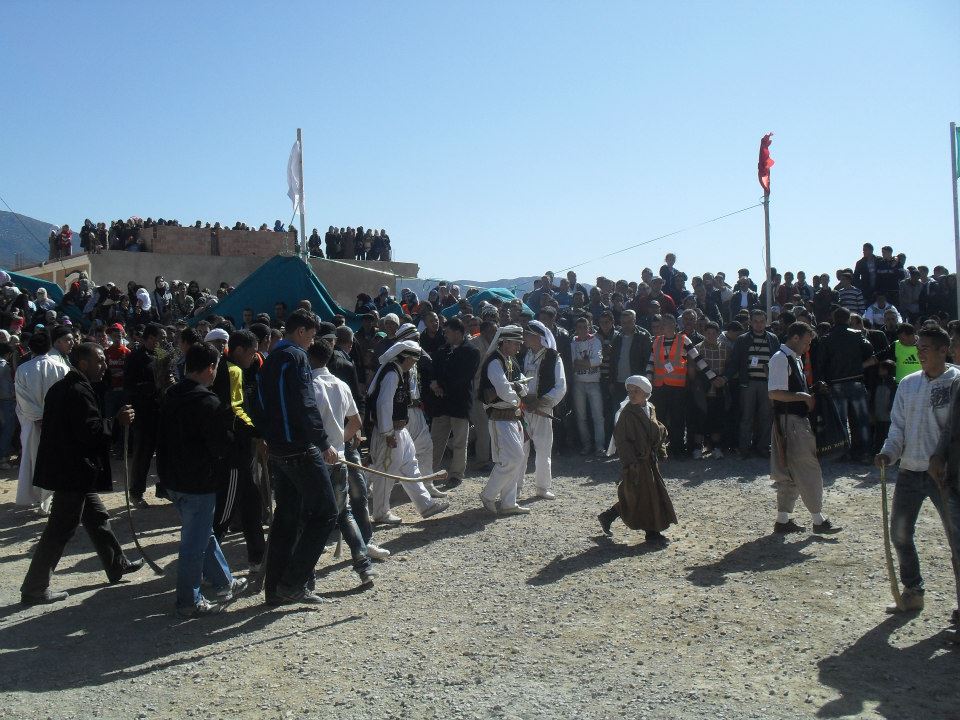 Thifsouine is the festival marking the arrival of spring according to the Berber calendar. During the festival, inhabitants of the commune hang their finest carpets on terraces and balconies, prepare pastries (Gorsat errabii, similar to R'fiss) and display local handicrafts, including pottery, jewelry, clothing and other wool products. Meanwhile, folklore groups, baroudeurs, horsemen riding Barb horses and troubadours perform in the streets of the town. The festival ends with a game of thakourth. Thifsouine is celebrated because, according to Chaoui beliefs, the season's harvest depends largely on the purity and sincerity of the farmers, whom God will reward.
Mayu Bouyghioun is a Chaoui spiritual festival practiced in the region between Menaa and Arris. Couscous is prepared with a sauce of fava beans and unpeeled onions. The 27th and 28th verses of Surah At-Tur are written on paper and hung on the doors of houses to prevent evil from entering.
Ibrir, the first day of April, is also celebrated, when chakhchoukha is prepared, as are the plowing festival in October and the harvest festival, as well as, of course, the religious festivals of Islam.
N'Gaous
The annual apricot festival in N'Gaous lasts three days and begins with the launch of the harvest campaign, around the third week of June. The event brings together apricot producers from all the municipalities of northwestern Batna Province, who exhibit their products and studies concerning apricots, including diseases and improvements to fruit quality.
Notes and references
Further reading
Related articles
- Aurès
- Culture of Algeria
- Algerian crafts
- Babar carpet