
Caving in the Balearic Islands
 Caving in the Balearic Islands encompasses the recreational exploration, surveying and scientific study of caves, shafts and flooded cave systems in Mallorca, Menorca, Ibiza, Formentera, the Cabrera Archipelago and the smaller islands of the Balearic Islands, Spain. In the local Catalan terminology, a cave is generally called a cova, while a natural shaft or pothole is an avenc.
The caves of the archipelago include vadose shafts and stream caves in the mountain karst of the Serra de Tramuntana, inland phreatic systems, and extensive coastal caves formed in the Upper Miocene limestones of Mallorca, Menorca and Formentera. Many coastal systems are partly or almost entirely flooded by brackish groundwater and seawater.
Documented cave exploration began in the early 19th century. Systematic speleology developed through expeditions by French and Catalan explorers, the establishment of local clubs after the 1950s, and a major period of cave surveying from the late 1960s onwards. Since the 1990s, cave diving has revealed extensive submerged passages, particularly in the coastal karst of eastern and southern Mallorca. The Federació Balear d'Espeleologia states that more than 7,000 caves are included in its present inventory. Most of the caves are relatively short, however around 40 exist over 300m in surveyed length with the Cova des Pas de Vallgornera the longest at around 78km.
History
Balearic speleology is divided into five periods: pre-speleology up to 1895; the period of the pioneers from 1896 to 1945; Catalan caving campaigns between 1945 and 1965; conventional Mallorcan speleology between 1966 and 1993; and the period dominated by cave diving from 1994 onwards.
Early exploration and surveying
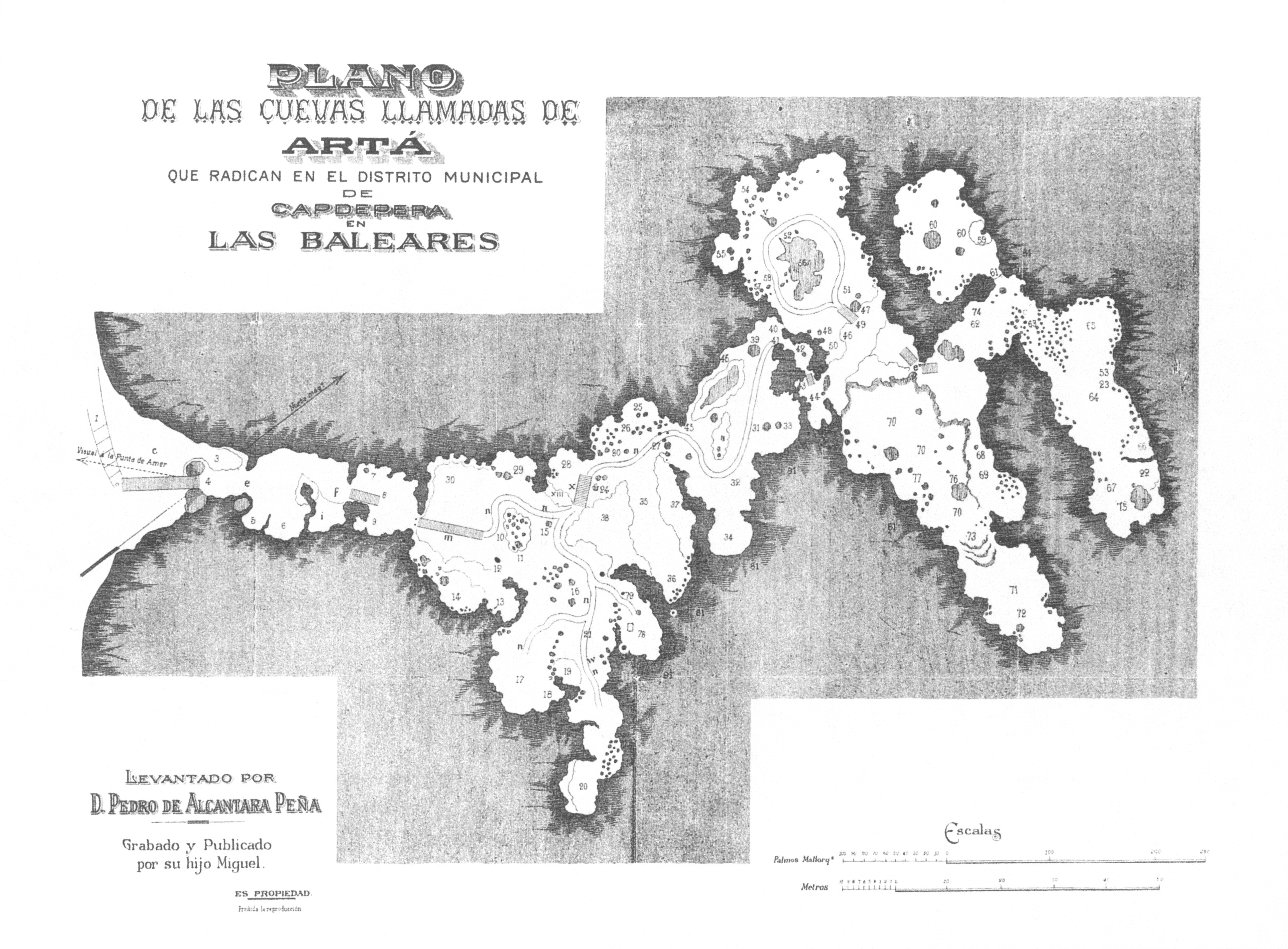 Among the earliest documented cave visitors was Antoni Cabrer, who entered the Coves d'Artà in 1807 and later published an account of the cave. Joaquim Maria Bover described Cova de Son Lluís in 1839, while Marià Conrado explored Avenc de Son Pou in 1865. Friedrich Will explored the Coves del Drac in 1880.
The first known measured cave survey for the islands was Pere d'Alcàntara Penya's 1862 survey of the Coves d'Artà. Will later produced a plan of the Coves del Drac in 1880.
Pioneer expeditions
The beginning of scientific speleology is generally associated with the visits of the French speleologist Édouard-Alfred Martel in 1896 and 1901. Martel explored the Coves del Drac using collapsible boats and documented previously unknown chambers and underground lakes. Further foreign expeditions included work by Jacques Maheu in 1911 and Robert de Joly in 1929.
Cave exploration was closely linked to the study of natural history. The Romanian zoologist Emil Racoviță collected the subterranean isopod Typhlocirolana moraguesi in the Coves del Drac in 1904 during the early development of biospeleology. The British palaeontologist Dorothea Bate investigated caves on Mallorca, Menorca and the Pityusic Islands from 1909 onwards. Her cave excavations contributed to the scientific description of the extinct endemic bovid Myotragus balearicus.
Catalan campaigns
Between the mid-1940s and the mid-1960s, cavers from Catalonia conducted a series of organised expeditions throughout the archipelago. Campaigns were undertaken on Mallorca in 1946, 1951, 1953 and 1960; Menorca in 1948 and 1954; Ibiza in 1952; Cabrera in 1959; and Formentera in 1962 and 1963. These expeditions produced descriptions, biological collections and nearly 50 cave surveys.
The expeditions were principally associated with organisations such as the Grup d'Exploracions Subterrànies of the Club Muntanyenc Barcelonès. They helped introduce contemporary surveying methods and provided a basis for the later development of local speleological organisations.
Development of local caving
The Equip Mallorquí d'Espeleologia was founded in 1955 within the Societat d'Història Natural de les Balears. It was the first specifically Mallorcan group devoted to spelaeology.
A rapid expansion of organised caving began in the second half of the 1960s. Groups including the Grup Espeleològic EST, Speleo Club Mallorca, Grup Nord de Mallorca and the speleological section of the Grup Excursionista de Mallorca explored and surveyed caves throughout Mallorca. Clubs on the other islands included the Grup Espeleològic de les Pitiüses and later organisations on Menorca, Ibiza and Formentera.
The period from 1966 to 1993 produced a large number of cave surveys. Cooperation between clubs, university researchers and naturalists also expanded the study of karst geomorphology, speleogenesis, palaeontology, archaeology and cave fauna.
Cave diving
The first published underwater cave explorations in the Balearic Islands took place on Menorca in 1954 and 1955. On Mallorca, the first period of documented cave diving occurred between 1971 and 1977, when Catalan and Mallorcan divers made relatively short penetrations into flooded coastal caves and inland sumps.
German and Czech expeditions explored Cova dets Estudiants between 1978 and 1987. Occasional Mallorcan dives followed between 1986 and 1992. British cave divers conducted repeated campaigns between 1988 and 1997, including expeditions by members of the Cwmbran Caving Club. Their work included Cova Genovesa, Cova des Pont, Cova des Coll, Cova dels Ases, Cova de sa Gleda, the Coves del Drac and Cova des Pas de Vallgornera.
A continuous local cave-diving programme developed from 1994. Divers associated with Grup Nord de Mallorca and other Balearic organisations surveyed extensive drowned networks in the Migjorn and Llevant coastal karst. This work transformed estimates of the dimensions and complexity of several Mallorcan cave systems.
Geology and Spelaeology
The distribution and form of Balearic caves are controlled by the geology and geomorphology of the individual islands. A typology published by Ginés & Ginés (2011) divides caves of the archipelago into four broad groups: vertical shafts in the vadose zone, vadose caves, phreatic caves, and littoral caves.
Mallorca
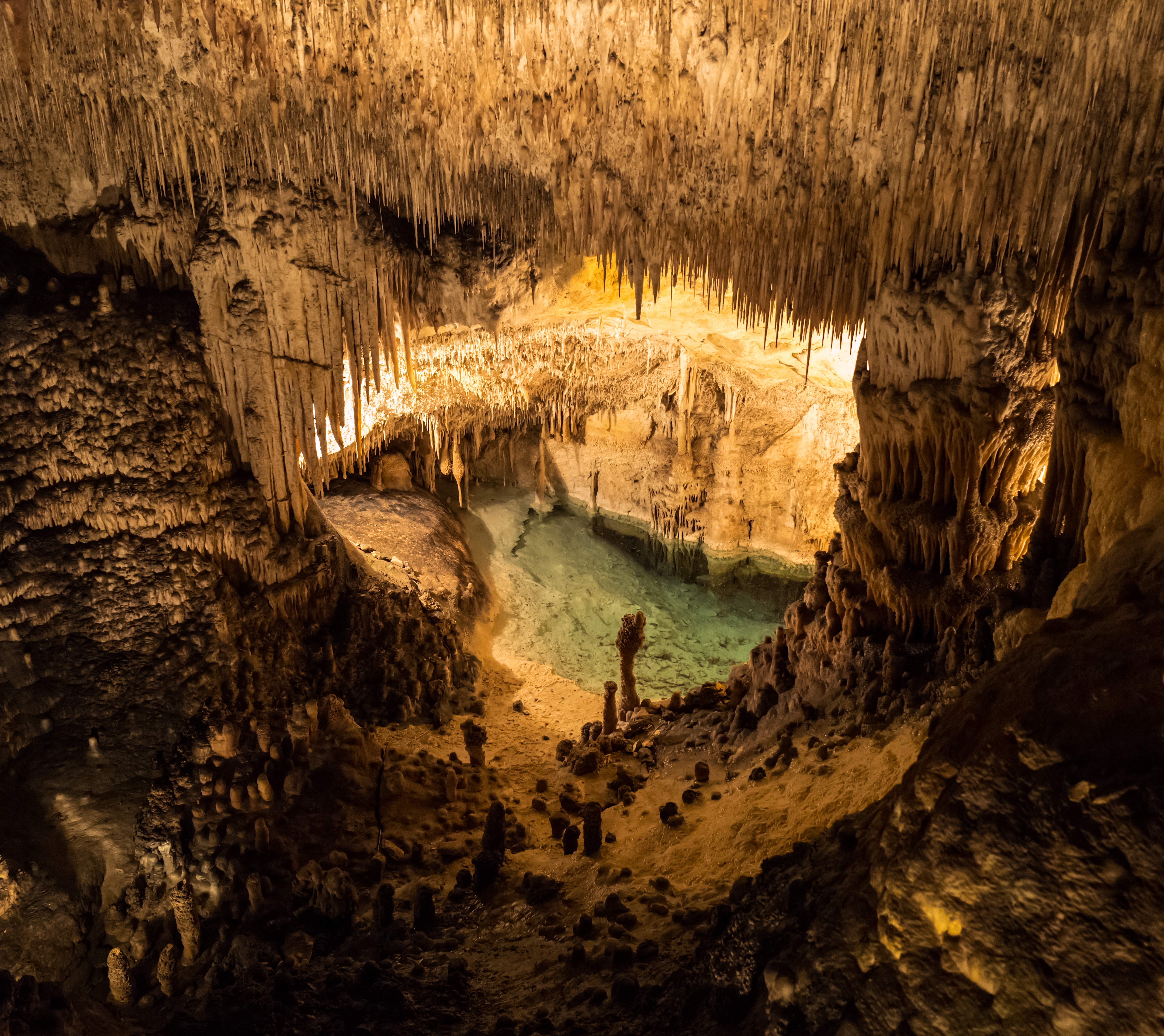 Mallorca has the most caves of all the Balearic Islands. The Mesozoic limestones of the Serra de Tramuntana contain various phreatic and vadose systems. Examples include Avenc de Son Pou, Cova de sa Campana, Cova de Can Sion, Cova dets Estudiants and Font des Verger.
The flatter Migjorn and Llevant regions of southern and eastern Mallorca consist largely of post-orogenic Upper Miocene reef and platform limestones. These contain extensive quaternary coastal phreatic systems, commonly arranged as networks of low passages, breakdown chambers and phreatic mazes. Many are intersected by the modern water table and have large submerged extensions. Their formation has been associated with dissolution in the freshwater–seawater mixing zone, meteoric recharge and, in some areas, ascending hypogene groundwater.
Menorca
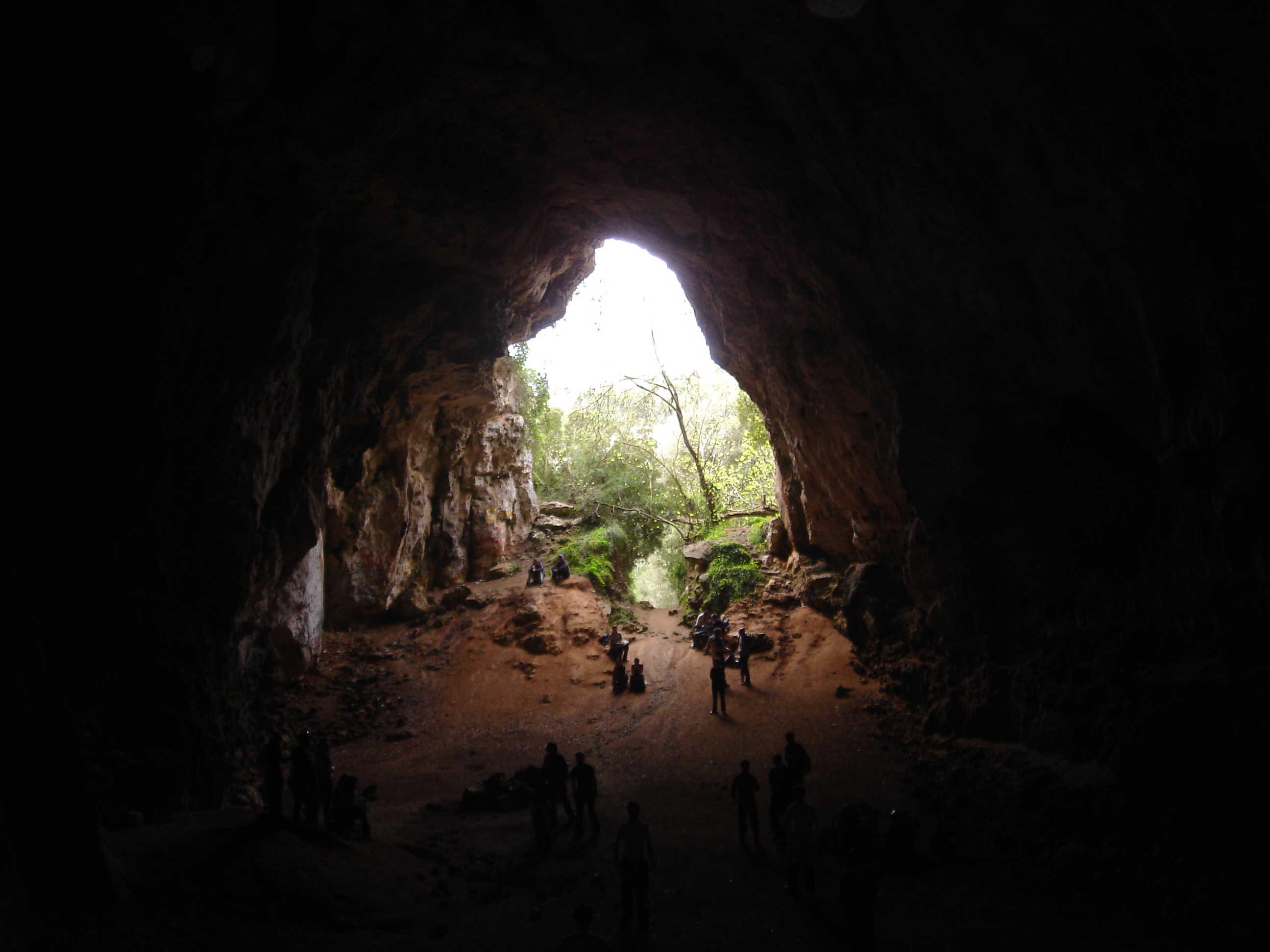 Southern Menorca is also formed mainly from Upper Miocene limestone dissected by Quaternary deep ravines. Its caves also include phreatic and littoral systems. Important examples include Cova des Coloms, Cova d'en Curt, Font de sa Vall and Avenc des Canutells.
Other notable Menorcan caves include Cova d'en Xoroi on the southern cliffs and Cova de na Polida on the northern coast. Menorca was also one of the first parts of the archipelago in which underwater cave exploration was documented, during Catalan diving expeditions in 1954 and 1955.
Ibiza and Formentera
The caves of Ibiza and Formentera are usually considered together in the speleological literature as those of the Pityusic Islands. Surveys have recorded vadose, break down, littoral and phreatic caves. Cova de Can Marçà in northern Ibiza is a well-known example of vadose speleogenesis.
A 1982 account described eight caves explored during a campaign on Ibiza and Formentera and recorded phreatic lakes and subterranean aquatic fauna on Formentera. A wider synthesis was subsequently published as Espeleologia de les Pitiüses.
Formentera contains numerous coastal solitional caves in Upper Miocene limestone, especially around the sea cliffs of sa Mola and Cap de Barbaria. Some are interpreted as flank-margin or littoral caves produced near former positions of the freshwater–seawater interface. Further cave descriptions and surveys were added to the Formentera catalogue during the 1970s and 1980s.
Cabrera Archipelago
The karst of Cabrera is geologically related to the Serres de Llevant of Mallorca. A 1993 catalogue brought together previous records and recent explorations, and published descriptions and surveys of the caves then known in the archipelago. The catalogue noted a comparatively high proportion of structural and collapse caves and a close relationship between the caves and the sea.
A 2020 review described 17 underwater cave systems in the Cabrera Archipelago and documented their principal physical and biological characteristics.
Major cave systems
Cova des Pas de Vallgornera
Cova des Pas de Vallgornera, in the municipality of Llucmajor, was discovered accidentally during construction work in 1968. Exploration remained comparatively limited until a breakthrough in 2004 opened access to a much larger network.
A 2014 published survey reported more than of passage, including more than underwater. The system contains two principal tiers of dry passage as well as extensive submerged galleries. Its morphology includes phreatic mazes, joint-guided passages, collapse chambers, hypogene features and an unusually diverse assemblage of speleothems.
The cave is protected as part of the European Union's Natura 2000 network and is not a general recreational caving site.
Gleda–Camp des Pou system
The Gleda–Camp des Pou system, near Manacor, is an extensive, predominantly submerged coastal cave. A survey published in 2010 documented approximately of passages and described it at that time as the longest known underwater littoral cave in Europe.
The system has entrances at Cova de sa Gleda and Camp des Pou. It is part of a concentration of large flooded caves on the Manacor coast, alongside systems such as Pirata–Pont–Piqueta, Cova Genovesa and Cova des Coll.
Coves del Drac
The Coves del Drac at Porto Cristo have played an important part in both the history of cave exploration and the development of cave tourism in Mallorca. Friedrich Will produced their first known survey in 1880, and Martel's 1896 expedition explored passages and lakes beyond the parts already known.
A new survey published in 2018 reported of development, of which approximately was underwater. The surveyed passages covered approximately .
Surveying and Cave Registry
 Cave surveying has been a central part of Balearic speleology since the plans of the Coves d'Artà and Coves del Drac were produced in 1862 and 1880. A 1993 review by Àngel Ginés reconstructed the development of cave topography between 1862 and 1992 and provided a checklist of published surveys from across the islands.
The first archipelago-wide published inventory appeared in 1979. It expanded the previous Mallorcan list from 545 to 883 recorded natural cavities and added the available information for Menorca, Ibiza and Formentera.
An updated inventory published in 1997 listed 3,037 natural underground cavities. It revised earlier entries and was designed as an index to a more detailed speleological catalogue.
Specialised regional catalogues and surveys have also been published for Menorca, the Pityusic Islands, Formentera and Cabrera. Other catalogues concentrate on particular cave environments, such as anchialine caves and non-littoral freshwater caves.
The Federació Balear d'Espeleologia maintains a digital inventory arranged principally by municipality. It includes cave locations and, for many entries, downloadable topographic surveys. The federation states that the database contains more than 7,000 catalogued caves, of which 30 are protected as Special Areas of Conservation in the Natura 2000 network.
Because exploration and survey revision are continuing, published passage lengths and rankings may represent the state of knowledge at the date of publication rather than the present extent of a cave.
Caving and research organisations
Federació Balear d'Espeleologia
The principal governing body for organised caving is the Federació Balear d'Espeleologia (FBE). Balearic clubs were organised as a regional delegation of the Comité Catalano-Balear d'Espeleologia in 1972. A separate Balearic committee was established in 1975, and the FBE was constituted as a federation in 1982.
The federation coordinates clubs, training, sporting licences, cave surveying and the regional cave inventory. Caving organisations affiliated with or historically associated with the federation have included Grup Espeleològic EST, Speleo Club Mallorca, Grup Nord de Mallorca, Grup Excursionista de Mallorca, Grup Espeleològic de les Pitiüses and clubs based on Menorca, Ibiza and Formentera.
Cave-rescue is organised within the Balearic caving community by specialist rescue cavers, including the Grup Espeleosocorro Balear.
Scientific and learned societies
The Societat d'Història Natural de les Balears (SHNB), founded in 1954, has had a long association with cave research. The Equip Mallorquí d'Espeleologia originated within the society, and the SHNB's journal and monograph series have published studies of cave geology, biology, palaeontology and archaeology.
The Earth Sciences research group GEOKARST at the University of the Balearic Islands conducts research into karst, carbonate sedimentology, palaeontology, coastal geomorphology and related subjects. Its members have collaborated extensively with caving organisations in the exploration and scientific study of Balearic caves.
The Societat Espeleològica Balear publishes original research on the karst and caves of the islands through Papers de la Societat Espeleològica Balear. The annual series began in 2018 and subjects submitted for publication are reviewed by a scientific committee.
Scientific research
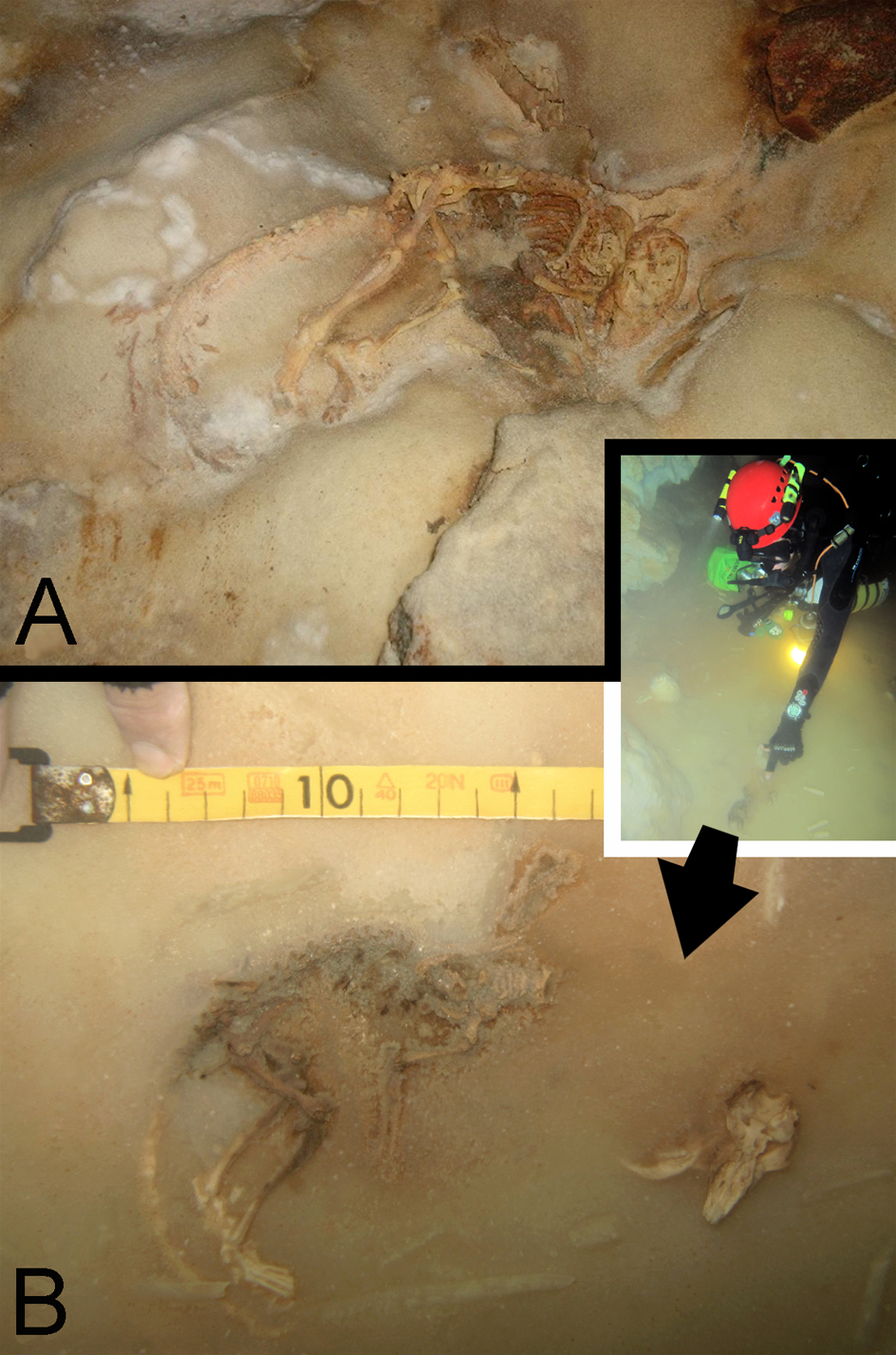 Balearic cave research has made contributions to geomorphology, hydrogeology, Quaternary geology, palaeontology, archaeology and subterranean biology. Caves have preserved fossils of endemic island vertebrates, including species of Myotragus, Hypnomys and Nesiotites, as well as archaeological deposits associated with prehistoric occupation.
The flooded coastal caves support anchialine ecosystems in which marine and fresh groundwater mix without an open surface connection to the sea. Surveys have documented specialised subterranean crustaceans and other stygobiont animals, as well as threats to their habitats from pollution, development and groundwater disturbance.
Speleothems in Mallorcan coastal caves have also been used to reconstruct former sea levels. Phreatic overgrowths on speleothems form close to the water surface and can preserve evidence of earlier positions of the Mediterranean sea and coastal water table. Research on these deposits has become an internationally significant part of Balearic cave science.
Show caves
Cave tourism in the Balearic Islands developed from visits to the Coves d'Artà and Coves del Drac during the 19th century. The commercial development of the Coves del Drac, especially after the construction of paths, lighting and visitor facilities, made them one of the most popular tourist attractions on Mallorca.
There are currently eight operating show caves in the archipelago: five on Mallorca and one each on Menorca, Ibiza and Formentera:
- Coves d'Artà, Coves del Drac, Coves dels Hams, Coves de Campanet and Coves de Gènova on Mallorca;
- Cova d'en Xoroi on Menorca
- Cova de Can Marçà on Ibiza.
Conservation and access
Balearic caves contain vulnerable speleothems, fossil/archaeological material and delicate ecosystems. Coastal caves may also form part of groundwater systems that are sensitive to pollution.
Some caves are protected under nature-conservation, archaeological or species-protection legislation. Thirty catalogued caves are identified by the FBE as Special Areas of Conservation within the Natura 2000 network. Major systems such as Cova des Pas de Vallgornera are managed principally for conservation and research rather than open recreational access.
Information resources
Periodicals
Endins was the principal specialist journal of Balearic speleology from its foundation in 1974. It published cave descriptions, surveys and research concerning geology, biology, archaeology, palaeontology and the history of exploration. Its published run extends from volume 1 in 1974 to volume 36 in 2014.
Papers de la Societat Espeleològica Balear has been published annually since 2018 and continues the publication of specialist research on Balearic caves and karst.
The Bolletí de la Societat d'Història Natural de les Balears and the society's monograph series also contain research on caves, karst, cave fauna and palaeontology.
Archives and catalogues
The Digital Library of the Balearic Islands, maintained by the University of the Balearic Islands, provides online access to Endins, Papers de la Societat Espeleològica Balear, SHNB monographs and other regional scientific publications.
The FBE inventory provides a searchable or downloadable catalogue organised by municipality, including locations and topographic plans for many caves.
Longest surveyed caves
This table lists caves in the Balearic islands with over 300m surveyed passage length. It is based on a survey by Gràcia et al. (2009) together with a 2011 update and later values where published.
Cave or system |
Island |
Municipality |
Published length (m) |
Source year |
Notes |
Reference |
|---|---|---|---|---|---|---|
Cova des Pas de Vallgornera |
Mallorca |
Llucmajor |
>78,000 |
2019 |
The paper gives “more than 78 km”, not an exact total. |
|
Sistema Gleda–Camp des Pou |
Mallorca |
Manacor |
14,620 |
2020 |
13,720 m submerged and 900 m air-filled. |
|
Sistema Pirata–Pont–Piqueta |
Mallorca |
Manacor |
8,600 |
2019 |
6,385 m submerged. |
|
Coves del Drac |
Mallorca |
Manacor |
7,690 |
2018 |
5,260 m submerged. |
|
Cova des Coll |
Mallorca |
Felanitx |
7,020 |
2005 |
5,529 m submerged |
|
Font de sa Vall / Cova de s’Aigo de Son Boter |
Menorca |
Es Migjorn Gran |
6,000 |
2011 |
||
Es Dolç |
Mallorca |
Ses Salines |
4,100 |
2014 |
Almost entirely submerged. |
|
Cova dets Ases |
Mallorca |
Felanitx |
3,122 |
2025 |
2,261 m submerged; exploration was described as continuing. |
|
Cova Genovesa / Cova d’en Bessó |
Mallorca |
Manacor |
2,415 |
2011 |
Three additional dry passages were published in 2014, but no revised aggregate length was stated.{{cite journal |
first1=José |
Cova de Can Sion |
Mallorca |
Pollença |
1,811 |
2011 |
||
Cova de sa Campana |
Mallorca |
Escorca |
1,517 |
2011 |
||
Cova d’en Bassol / Cova d’en Passol |
Mallorca |
Felanitx |
1,491 |
2011 |
||
Coves d’Artà |
Mallorca |
Capdepera |
1,100 |
2021 |
Maximum depth reported as 33 m. |
|
Cova des Diners |
Mallorca |
Manacor |
1,096 |
2011 |
||
Cova de Cala Varques B |
Mallorca |
Manacor |
1,068 |
2011 |
||
Cova de sa Teulada |
Mallorca |
Santa Margalida |
990 |
2011 |
||
Cova des Drac |
Mallorca |
Santanyí |
973 |
2011 |
||
Bufador de Son Berenguer |
Mallorca |
Santa Maria del Camí |
964 |
2011 |
||
Covota de sa Penya Rotja |
Mallorca |
Alcúdia |
917 |
2011 |
||
Cova Figuera |
Mallorca |
Manacor |
875 |
2011 |
||
Cova des Drac des Rafal des Porcs |
Mallorca |
Santanyí |
866 |
2022 |
Includes 137 m of submerged passage. |
|
Avenc de l’Infern |
Mallorca |
Calvià |
827 |
2011 |
||
Cova des Xuetes / Cova de Cala Varques ACD |
Mallorca |
Manacor |
819 |
2011 |
||
Cova des Drac de Cala Santanyí |
Mallorca |
Santanyí |
803 |
2011 |
An earlier cave-specific paper reported 1,005 m total development; the 2011 table retained the standardised projected measurement.{{cite journal |
first1=Francesc |
Cova Nova de Son Lluís |
Mallorca |
Porreres |
779 |
2011 |
||
Cova de les Rodes |
Mallorca |
Pollença |
751 |
2011 |
||
Avenc de Fra Rafel |
Mallorca |
Escorca |
733 |
2011 |
||
Coves dets Hams |
Mallorca |
Manacor |
719 |
2011 |
||
Avenc d’en Corbera |
Mallorca |
Esporles |
710 |
2011 |
||
Cova de na Megaré |
Menorca |
Ciutadella |
662 |
2011 |
||
Cova de Cal Pesso |
Mallorca |
Pollença |
649 |
2011 |
||
Avenc d’en Xim |
Mallorca |
Pollença |
>600 |
2019 |
The paper gives “more than 600 m”, so its exact position in a ranking is uncertain. |
|
Covota des Puig Gros de Bendinat |
Mallorca |
Calvià |
593 |
2011 |
||
Cova dets Amagatalls / Cova de Can Bordils |
Mallorca |
Manacor |
579 |
2011 |
||
Cova des Coloms 1 |
Mallorca |
Manacor |
575 |
2011 |
||
Cova de Cornavaques |
Mallorca |
Pollença |
561 |
2011 |
||
Complex Mamelles |
Formentera |
Formentera |
559 |
2011 |
||
Cova dets Estudiants |
Mallorca |
Sóller |
554 |
2011 |
||
Avenc de Son Pou |
Mallorca |
Santa Maria del Camí |
550 |
2011 |
||
Cova Polida de Fornells |
Menorca |
Es Mercadal |
543 |
2011 |
||
Cova des Reganots |
Mallorca |
Alcúdia |
541 |
2011 |
||
Coves del Pilar |
Mallorca |
Palma |
531 |
2011 |
||
Cova de Llenaire |
Mallorca |
Pollença |
515 |
2011 |
||
Cova des Serral |
Mallorca |
Manacor |
511 |
2011 |
||
Cova de la Base |
Mallorca |
Pollença |
503 |
2011 |
||
Cova de sa Punta des Moro |
Mallorca |
Manacor |
489 |
2025 |
||
Cova de sa Bassa Blanca |
Mallorca |
Alcúdia |
484 |
2011 |
||
Cova d’en Curt |
Menorca |
Ferreries |
465 |
2011 |
||
Coves de Campanet |
Mallorca |
Campanet |
450 |
2024 |
New survey replacing the 397 m value used in 2011. |
|
Font des Verger |
Mallorca |
Sóller |
423 |
2021 |
The same paper gives 510 m of actual three-dimensional development. |
|
Cova de Can Millo / Cova de Coanegrina |
Mallorca |
Santa Maria del Camí |
420 |
2011 |
||
Cova de s’Ònix |
Mallorca |
Manacor |
407 |
2011 |
||
Es Bufador de Solleric |
Mallorca |
Alaró |
405 |
2011 |
||
Cova Argentera |
Mallorca |
Pollença |
404 |
2011 |
||
Cova des Màrmol |
Menorca |
Ciutadella |
387 |
2011 |
||
Cova de sa Sínia |
Mallorca |
Manacor |
378 |
2011 |
||
Cova Morella |
Mallorca |
Pollença |
376 |
2011 |
||
Cova des Mirador / Cova dets Arbrets |
Mallorca |
Escorca |
342 |
2011 |
||
Cova de ses Llàgrimes |
Mallorca |
Alcúdia |
341 |
2011 |
||
Cova de Cala Mitjana |
Mallorca |
Felanitx |
340 |
2011 |
||
Cova des Gurs |
Mallorca |
Calvià |
334 |
2011 |
||
Cova de ses Meravelles |
Mallorca |
Bunyola |
325 |
2011 |
||
Crull de ses Termes |
Mallorca |
Escorca |
325 |
2011 |
||
Cova des Coral·loides |
Mallorca |
Calvià |
324 |
2011 |
||
Cova del Boc |
Mallorca |
Pollença |
322 |
2011 |
||
Cova des Coloms |
Mallorca |
Calvià |
321 |
2011 |
||
Coves de Sant Val·lero |
Formentera |
Formentera |
318 |
2011 |
||
Cova de Mina Petit |
Mallorca |
Pollença |
310 |
2011 |
||
Coves des Màrmol |
Mallorca |
Calvià |
310 |
2011 |
||
Cova de Canet |
Mallorca |
Esporles |
307 |
2011 |
||
Font de l’Algaret |
Mallorca |
Pollença |
305 |
2011 |
||
Avenc des Puig Caragoler |
Mallorca |
Escorca |
304 |
2011 |
||
Cova de ses Abelles |
Menorca |
Ferreries |
301 |
2011 |
See also
- List of caves in Spain
- Caving in the United Kingdom
- Cave diving
- Karst
- Speleology