
British in India
On 12 August, 1765, the Mughal Emperor appointed the East India Company as the Diwan of Bengal. This event took place within Robert Clive's tent.
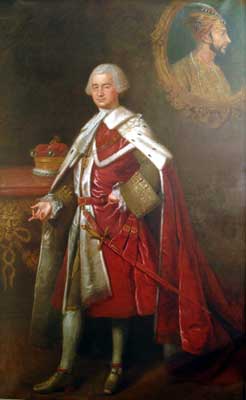
As a Diwan, the Company had become the Chief Financial Administrator of the territory under its control. As the Diwan, the company also had responsibilities like administering the land and organizing the revenue resources, to buy and sell products what it wanted, to pacify and control the rulers. Thus the company came to colonize the country-side, organise the revenue resources, redefine the rights of the people and produce the crops it wanted.
Thus after the company became the Diwan it had to:
- Think of administering the land.
- organise its revenue resources.
- These both had to be done in a way that
- The revenue would meet the growing expenses of the company.
- The revenue could also be used in buying goods from India.
Revenue for the company
The company wanted large revenue but was unwilling to set up any regular system of assessment and collection. Their only aim was to increase the revenue and buy cotton and silk at as cheap rates as possible.
Soon, it was sure that Bengal economy was going to face crisis. Artisans deserted the villages since they were forced to sell the goods cheaply and only to the British. Peasants were unable to pay their dues and so, they left their work. Artisanal production was in decline and agriculture was showing signs of collapse.
Permanent settlement
Introduction
The company now felt that it could not be sure of its revenue now. It had to encourage agriculture in order to be certain of Revenue. Rajas and Taluqadars were appointed to collect revenue. The revenue amount was fixed and it was promised that it would not be increased ever again.
Effects
With the Permanent Settlement, the peasants were happy that whatever happens, the revenue would not be increased and they had to pay only that much per period and their work was over. But the British, after some years, realised that the revenue must be increased as the prices in the market went high and the British were unable to buy them using the revenue. Even the zamindars were not interested in investing on land. Some lost their land before Permanent Settlement. The peasants felt this very oppressive. They paid rent and worked there but their rights on land was insecure. The peasants who didn't pay rent were evicted from land on which they had been working since ages.
New systems are devised
Mahalwari system
This was the system in North India. There was zamindari system in Northern India. Their land and crops were inspected, their rights and customs were observed and then Taxes were charged. "Mahal" meant a village. So, this system became to be known as Mahalwari System.
Mahal In British revenue sources, it is a village or a group of villages
Ryotwari system
This was the system in South India.
The only difference between this and Mahalwari was that here, in South India, there were no zamindars. The assessment had to be made to the Ryots.
Ryots were the cultivators.
These were the last changes in the revenue systems.
Crops for Europe
By nineteenth century, the British realised that that they could not only get revenue from India, but could also make Indians forcibly cultivate the crops they require. So by the late 18th century, the company was trying its best to expand the cultivation of opium and indigo. Besides these crops, the British persuaded The INDIAN cultivators to produce other crops such as:
- Jute in Bengal
- Tea in Assam
- Sugarcane in the United Provinces (now Uttar Pradesh)
- Wheat in Punjab
- Cotton in Maharashtra and Punjab
- Rice in Madras