
Artist-run publishing
Artist-run publishing is publishing initiatives independently created, edited, and distributed by artists or artist-run organizations outside traditional commercial or institutional publishing structures. Emerging prominently in the late 1950s, 1960s and 1970s alongside conceptual art, Fluxus, underground press movements, feminist art, and later punk culture. Artist-run publications have functioned as platforms for artistic experimentation, critical discourse, political expression, and alternative cultural distribution.
Artist-run publications have included magazines, newspapers, artists' books, zines, posters, pamphlets, and multimedia editorial projects. Many were produced using low-cost printing methods such as mimeograph, Xerox, offset printing, and photocopying.
History
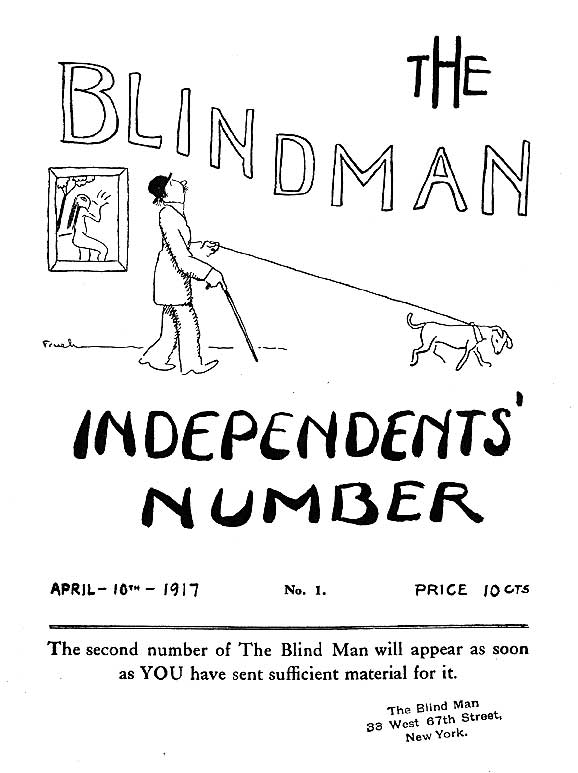
 Artist-run publishing first developed at the intersection of avant-garde art movements and experimental printing practices. Early precedents included the self-published journals and manifestos of Futurist, Dadaist and Surrealist groups during the early 20th century, many of which used magazines and pamphlets as primary vehicles for artistic dissemination and collective identity formation.
Short-lived publications such as 391 by Francis Picabia and The Blind Man (1917), edited by Henri-Pierre Roché, Beatrice Wood and Marcel Duchamp in New York, had blurred distinctions between magazine, artwork and manifesto. These publications associated with the New York Dada milieu, including Duchamp's Rongwrong (1917), further anticipated later forms of artist-run publishing by treating editorial space itself as a site of artistic intervention.
As many artists increasingly rejected the commercial gallery system, magazines and artist books became alternative spaces for artistic production and circulation.
During this period, new reproduction technologies allowed the reprinting of early publications facsimile, such as Duchamp's three magazines. These were published in a small edition by Arturo Schwarz. Art historian Gwen Allen described artists’ magazines of the period as "alternative spaces for art", functioning as exhibition sites and communication networks. 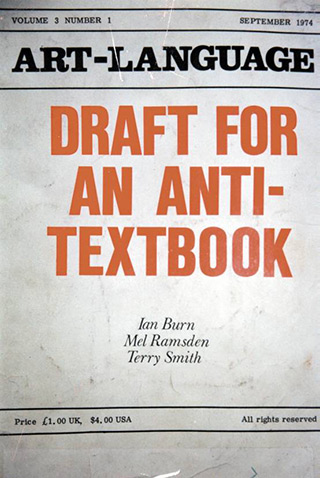
The development of printing technologies (including mimeograph machines, offset printing, Xerox photocopying and desktop publishing) allowed artists and collectives to produce publications independently and at relatively low cost.
Publications associated with Fluxus played an important role in the development of artist-run publishing during the 1960s and 1970s. The Fluxus Newspaper, edited collectively by members of the Fluxus movement and largely designed by George Maciunas, combined artists’ projects, announcements, advertisements, order forms and appropriated mass-media imagery within a collaborative and anti-commercial editorial structure in DIY spirit.
Fluxus Newspaper is an early example of the artist newspaper, a format that expanded alongside underground press movements and alternative publishing networks that came after the so called mimeo revolution. Among the publications of the time were Tuli Kupferberg and Sylvia Topp's Birth Press and Yeah magazine, Ed Sanders' Fuck You, a Magazine of the Arts and Hettie Jones' Totem Press.
Many publications emphasized wide circulation and international exchange over rarity or commercial value. Mail art networks in particular enabled artists to distribute printed works transnationally through informal postal systems, often bypassing traditional institutional structures.
One example was The Xerox Book (1968), a publication-exhibition by American curator Seth Siegelaub, featuring works by Carl Andre, Robert Barry, Douglas Huebler, Joseph Kosuth, Sol LeWitt, Robert Morris and Lawrence Weiner.
Produced around the aesthetics of photocopy reproduction, the project treated the book itself as an exhibition space in the development of conceptual art publishing.
Publications such as Aspen, Avalanche created by Liza Bear and Willoughby Sharp, FILE Megazine, 0 to 9 and Interfunktionen, incorporated interviews, performance scores, documentation, artists’ projects, correspondence and experimental typography directly into their editorial structures. In many cases, the publication itself was conceived as an artwork rather than merely a medium of documentation.
Published between 1973 and 1978 and edited by Joshua Cohn, Edit DeAk and Walter Robinson, Art-Rite became an influential artist-run publication associated with New York's downtown art scene. Combining a fanzine ethos with critical writing, interviews, reviews and artists’ projects, the magazine documented performance and video practices while rejecting the formal tone of many art journals.
Art-Rite became known for its experimental editorial structure and thematic issues devoted to subjects such as video art, performance, painting and artists’ books. Its coverage of emerging artists, alternative spaces and interdisciplinary practices helped establish a more informal, scene-based model of art publishing closely connected to the new downtown counterculture in 1970s New York City.
Other forms of publishing could befind in examples such as Tellus, a magazine distributed in the form of cassette tapes.
Starting with the 1960s, artists began to question the very meaning of art also through the use of different mode of circulation formats such as the magazine. Its ephemerality and popular nature seemed to be ideal for challenging the exalted status of more conservative ideas on art, traditionally referring to painting and sculpture, helping to open the art practice and its limited distribution network of mainstream galleries. 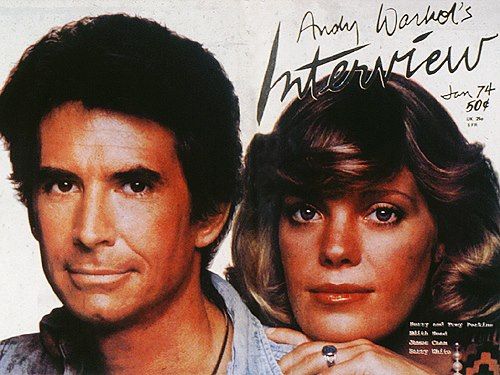
During the 1970s and 1980s, artist-run publishing also intersected with pop art and courted the commercial, so did 1968 Interview, Andy Warhol's artist's magazine, becoming one of the rare periodical publications until 2018.
Activist graphics and artist-run centers frequently operated outside commercial distribution systems and were circulated through bookstores, exhibitions, artist-run spaces, performances and independent cultural networks. Organizations such as Printed Matter, Inc. and Art Metropole played a role in the preservation, distribution and institutional recognition of artists’ publications.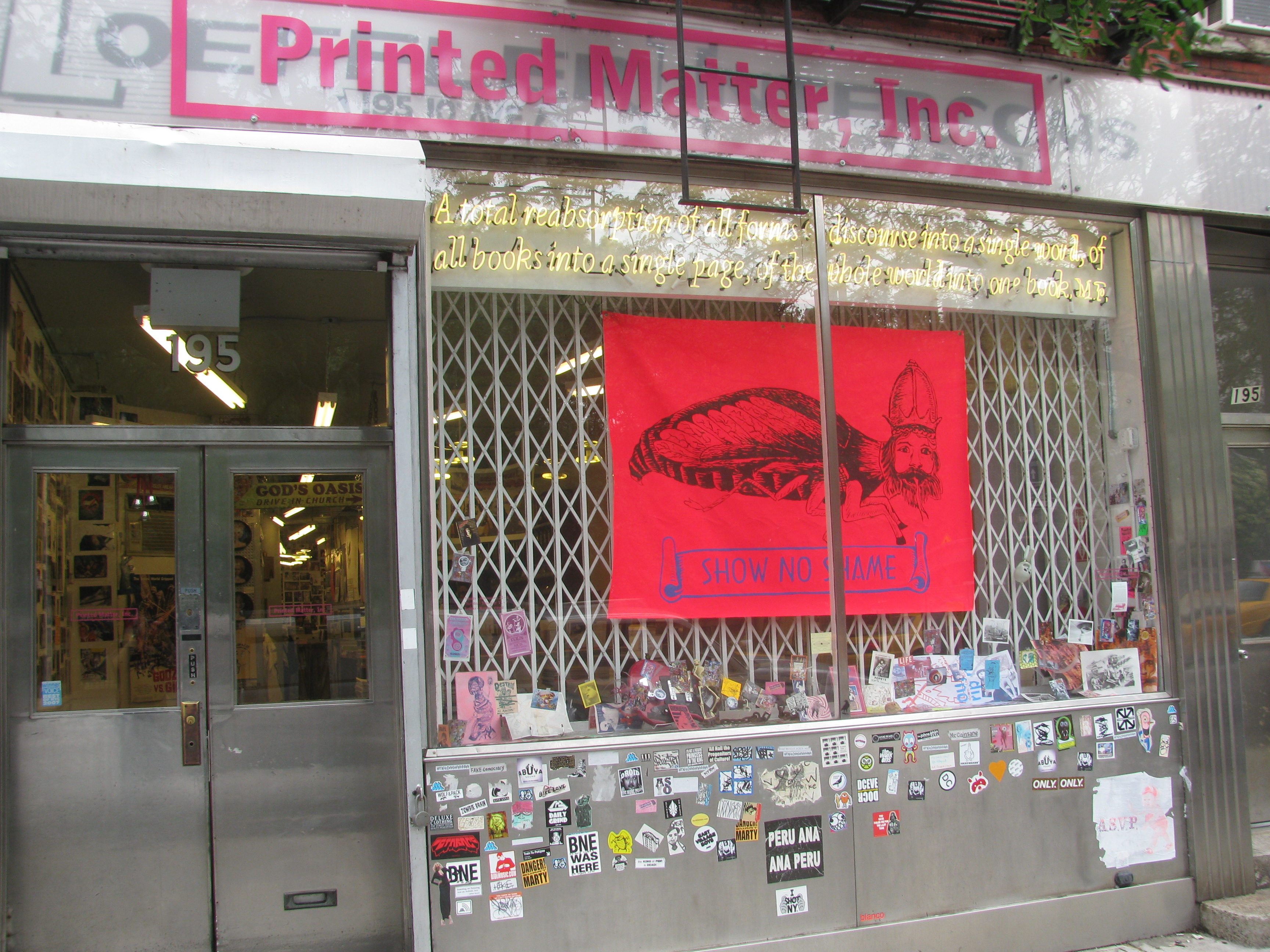
Contemporary era
Since the late 1980s, and particularly following the emergence of digital publishing and the World Wide Web, artist-run publishing has expanded beyond print-based conceptual art into hybrid editorial, performative and networked practices. Scholars and curators have noted that contemporary artist-run publishing increasingly operates less as a discrete print medium than as a flexible organizational structure combining publishing, curating, archiving, research, performance, digital distribution and social networking.
In this context, artist-run publications often function as editorial platforms, and forms of alternative infrastructure sometimes embedded within the mainstream media.
Contemporary artist-run publications have frequently combined graphic experimentation, curatorial practice, institutional critique, fashion imagery, political commentary and internet culture. Many projects blurred distinctions between magazine, exhibition space, archive, branding platform and social network.
Examples include Toiletpaper, founded in 2010 by Maurizio Cattelan and Pierpaolo Ferrari, which merged contemporary art, advertising aesthetics and Post-Internet visual culture through image-based publishing;
Purple, which connected independent publishing with fashion, photography and contemporary art; and 032c, a Berlin-based publication combining art, theory, fashion and political commentary.
Other contemporary artist-run editorial projects have functioned as collective platforms for performance and alternative cultural organization. These include E il Topo, founded in Naples (1992) as an experimental artist-run magazine and later reactivated through exhibitions and performative publishing practices; K-HOLE, a New York–based collective known for its trend-forecasting texts including the concept of normcore; and Voice Over Issues, an artist-run publication initially embedded in European diplomatic institutions.
Examples of experiments in language crossover and digital culture are the twice-yearly magazine Dot Dot Dot developed hybrid models combining publishing and visual critique pushing the idea of designer-as-author; and the online Esoteric.Codes by Daniel Temkin, covering self-expression in coding text.
Publications
Avant-garde and Dada publications
- The Blind Man (1917)
- Rongwrong (1917)
- 391 (1917–1924)
- Cannibale (1920)
- Noi. Rivista d'arte futurista n° 1 (1923)
Countercultural and conceptual art publications
- Birth (1958–1965)
- Yeah (1961–1965)
- Fuck You a Magazine of the Arts (1962–1965)
- The Fluxus Newspaper (1964–1979)
- Aspen (1965–1971)
- Interfunktionen (1968–1975)
- 0 to 9 (1967–1969)
- Art-Language (1969–1985)
- Avalanche (1970–1976)
- Art-Rite (1973–1978)
- FILE Magazine (1972–1989)
- Semiotext(e) (1974)
- High Performance (1978–1997)
Mail art and network publications
- VILE (1974–1983)
- Umbrella (newsletter) (1978–2008)
- Commonpress (1977–1990)
Postmodern and punk publications
- Tellus (1983–1993)
- RE/Search (1980)
- LTTR (2001)
- Raw (1980–1991)
- Temporary Services (1998)
- Frigidaire (1980–2008)
- THING (1989–1993)
Contemporary and post-internet publications
- E il Topo (1992–2023)
- Dot Dot Dot (2000–2010)
- Toiletpaper (2010)
- K-HOLE (2011)
- Esoteric.codes (2011)
- Voice Over Issues (2020)
Further documentation
- The Blind Man, Marce Duchamp, Henri-Pierre Roché, Beatrice Wood (1917) 1
- Xerox Book, Seth Siegelaub (1968) 2
- The Magazine as an alternative space, https://www.adventures.teaching-documents.org/ 3