
Armath Engineering Laboratories
The Union of Information Technology Enterprises (UITE) undertakes to establish a program of engineering club-laboratories within the public school system of Armenia. The aim is to improve the technical education base of Armenia, guide the professional orientation of pupils, prepare the professional workforce with a technical education, which in turn will expand the sector.
The project, with its expected wide-ranging social-economic impact, is linked to the national strategies of national security, economic development and education.
The most important results, expected from the implementation of the project, are the stimulation of technological education in Armenia, the expansion of technological employment, and the establishment of additional economic activity both in the area of advanced technologies and the adjacent sectors.
It is noteworthy, that besides the mentioned economic consequences, the project stands out thanks to its large impact on the social values of Armenians. It is expected that an educational system of this kind will lead to a shift in the social values of the young due to a change in mentality and creativity.
Strengthening technical education, this program will enhance Armenia’s reputation on the international landscape as being a knowledge-based country. The “Chess Empire” will stand out for another reason – the wide-ranging national program of engineering education in the public school system.
The implementation of the project requires the development of high-quality content, the establishment of appropriate infrastructure and the training of high-quality trainers.
The prototype upon which the project is based is the Armenian Robotics Development and Support Program (Armrobotics), which has been implemented by UITE since 2008. Through the latter, 60 Robotics groups were created in the 55 regions of Armenia, including Artsakh. 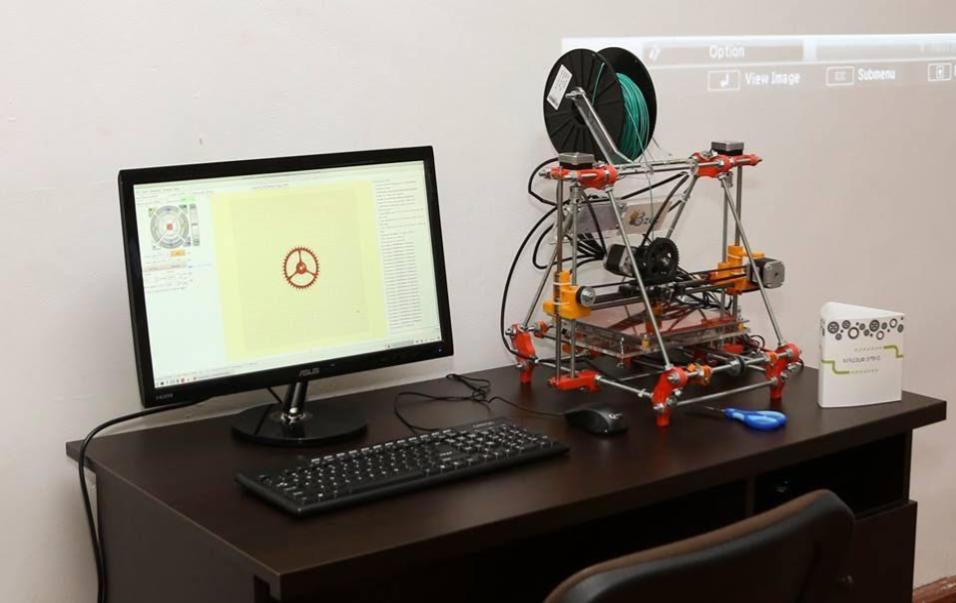 Annual competitions are being organized alongside style the project: Line Tracking Robot, Line Tracking Robot and Object Collector Robot contest, Minesweepers contest, Unmanned Aerial Vehicles contest and Robots in Everyday Life contest of ideas.
So, the UITE has the aim to establish a large number of engineering laboratories with wide geographical spread in the school system of Armenia. Every engineering club will be equipped with “Armath lab”. Armath Lab was designed by “Nairi” consortium and includes an Armenian operating system “Arax”, the local versions of the educational programs, a 3D printer which is regulated by a computer program, a CNC machine, the possibility to program the robots in Armenian as well as arobot constructor.
There are now more than 200 robotics and engineering club-laboratories in Armenia and Artsakh.
By 2019-2020 we are planning to have established an “Armath” Lab in every school in Armenia. These will involve over 40 000 pupils
The UITE also aims to involve in this educational program children and teenagers with limited abilities. The educational method and program of the engineering labs and robotics clubs allow people with limited abilities to learn and use the programs and equipment without any inconvenience or difficulty. Also, the fact that this methodology is useful to them, especially the importance of developing motoric capabilities, results in a positive feeling of achievement and success. . In addition, the engineering clubs bring together people of similar interests. This is a good stimulus for active and effective socializing as well as to encourage students develop team working skills. People with limited abilities very often have problems with professional orientation. The clubs will provide them with the opportunity to find out what their abilities, skills, potential and knowledge are without any problems, inconvenience or limits. Concerning this, we can declare that the IT sector is a sphere where physical defects are not an impediment to professional achievement and growth. Besides, the representatives of the IT sphere are the most tolerant, modern and open-minded people within the business sphere of Armenia.
The purpose and expected outcomes of the project
The project stands out due to its wide-ranging social-economic impact. The main impacts that are expected as a result of the implementation of the project are discussed below.
Professional orientation towards engineering profession: one of the most important impacts of the project is the professional orientation of the young generation towards technical sciences supporting the strategy of developing a knowledge-based economy in Armenia. Furthermore, the spread of engineering clubs in the public education system will bring change to the public’s way of thinking giving the young generation the possibility to work in science. As a result of the latter, the importance and reputation of engineering/technical education will increase which will promote the development of science-based sectors and high-tech industry by providing an appropriate workforce to the sectors.
Workforce with new quality/technical education: the educational program of the engineering clubs guarantees that the graduates of the clubs (without graduating from a university) will be armed with an appropriate technical knowledge when entering the labor market. This will establish a new era in the technological labor market of Armenia of technical specialists with advanced skills.
Transformation of the “role model” in the society: new jobs created as a result of the program implementation, high salaries, and perspectives of development will show the young generation the opportunities to achieve success with the help of education and own intellectual capacity.
The success stories of professionals in the technological area transform the role models within society. Currently in society the business owners and representatives of governmental authorities are considered as “successful examples”. However, as a result of the program a critical mass of successful professionals will be formed from the technological sector, which will establish a role model of a new quality.
As a result of such a transformation social values, one of the cornerstones of economic development and remedy of social-economic system will significantly change.
Additional economic activity: the development of new skills will open new markets for technological companies of Armenia. Currently, the Armenian technological sector is mainly specialized on outsourcing its services of higher than average additional value, which is due to the domination of the specialists with a higher education and higher than average skills. Meanwhile, the domestic IT and engineering companies affirm that in cases of existence of a high-quality technical workforce with an average professional level they could enter the segment of exportation of services with lower added value. They could then compete with China and India which have an advantage in their labor costs. The entrance into those markets will serve as a platform for Armenia’s technological sector, as a result of which the domestic companies will accumulate the appropriate experience and skill for activity in international markets. In the long-term, the latter will contribute to the enlargement of export markets.
Development of the adjacent sectors: the increasing economic activity in the technological sector will inevitably develop adjacent sectors. The experience of various economies in the world shows that 1 new workplace, created in the technological sector, creates up to 6-7 new workplaces in the adjacent sectors. Even the modest assessments of this impact show great promise for the economy of Armenia.
Other impact areas
- Regional development, as the program will be implemented within the whole country. Currently, the domestic technological companies already have a solid experience of working in the regions and in regional development. The major part of the social-economic impacts of the program will be decentralized from the capital city.
- Promotion of the entrepreneurial culture
- Establishment and strengthening of the “school system – labor market – university system – labor market” link
- Improvement of demographic situation by decreasing the age of productivity and creativity and lowering the level of emigration due to provision of financial incentives,
- Link between the companies of the sector and the educational system,
- Formation of the critical mass of the leaders and entrepreneurs of new quality.
Action plan of the project
The project consists of 4 phases:
1 stage - Selection of coaches
Human capital is the key to success of the project. This is why the selection of coaches of engineering groups is one of the critical points in the project implementation.
Selection criteria of coaches are
- Universal availability of technical knowledge
- Pedagogical skills
- Preferably a professional and teaching experience
- Ability to use computer programs
- Enthusiasm, desire to develop
- Consistent set of values with the project idea
2 stage - Training of coaches
To qualify for participation in the program the coaches will be trained to a prescribed curriculum. UITE, together with the implementation team of the project, will define the training content, duration, teaching method, choose the teachers and the classrooms equipped with the appropriate material, and will follow the process and progress of the training. For the training methodology and content development, UITE will cooperate with experts from industry, as well as introduce/involve international practices to implement similar projects.
The main components of the training will be:
- Intensive courses guided by teachers
- Videos and video classes developed for this project
- Guidelines on technical knowledge, as well as on pedagogical skills and teaching methods
3 stage - Armath labs installation
Armath Lab education programs are based on advanced learning methodologies and tools, such as Scratch and K-turtle, most of which are developed by Massachusetts Institute of Technology (MIT), a leading research and education institution in the fields of physical sciences and engineering.
Armath Lab education programs enable the learning of mathematical and sciencitific concepts, basics of programming through applications that enable the creation of cartoons and games, and even support robotic kits that can be programmed and operated. The production of such robots and mini-computers, which can later be used by the students for their own projects, is implemented within the framework of Armath Lab.
These programs start with basic programming and take pupils from robotics to production in an environment of exploration and creativity.
The package incorporates several components:3D Printer
Courses on 3D printing: making a three-dimensional object from a digital model makes it possible to virtually create objects of any shape. Students can model and print parts to assemble new 3D printers, to fabricate boxes for mini-computers that can be used for other projects, etc.
Computer Controlled CNC devices
Learning to model and print on advanced computer controlled CNC devices, gives students the opportunity to get acquainted not only with programming, modeling, and engineering basics, but also with the production process.
Arax OS environment
An open source, enhanced and adapted Linux environment that is easy to use for kids, supports multiple languages of the region, and is compatible with older computers.
Aghves
“Aghves” is a visual programming environment and a toolkit, that lets kids make games, animated stories, interactive art, as well as share their creations with others on the Net. It is enhanced with modules that support sensors, motors, and robots. The underlying program is an adaptation of the Scratch environment.
Kria
“Kria” is an adaptation of MIT's Kturtle, an educational programming environment. “Kria” is suitable for teaching kids the basics of maths, geometry and programming. One of the main features of “Kria” is the ability to translate commands into the native language of the programmer.
Hand-made mini-computers
The computers that are packaged in Armath Lab are compact, lightweight and universal. Although they are not as powerful as modern computers, they can use regular TVs as monitors and can be connected to the Internet:
SERob Robot Kit
School Educational Robotic Kit “SERob”, from Symotec LLC, is designed as a cost effective tool to teach school-aged children the basic principles of mobile robotic systems as well as facilitate the development of applications in amateur robotics clubs.
School Educational Robotics Kit allows learning through practice of the following tasks:
- Assembling mobile robots with details and parts
- Mounting and connecting motors, sensors and cameras
- Controlling DC motors programmatically
- Acquisition and analysis of data from the robot's sensors
- LAN wireless networking
- Remote control and monitoring of mobile systems
- Video image acquisition and processing with object recognition and tracking
IV stage – the monitoring and consulting of the coaches
Throughout the project there will be monitoring of the program through visits and evaluations of the engineering lab clubs. The consulting services will also be integrated within the frame of the project. Besides, the mentor of the engineering labs will be able to visit and review the educational process in the labs.
Contests, events and camps
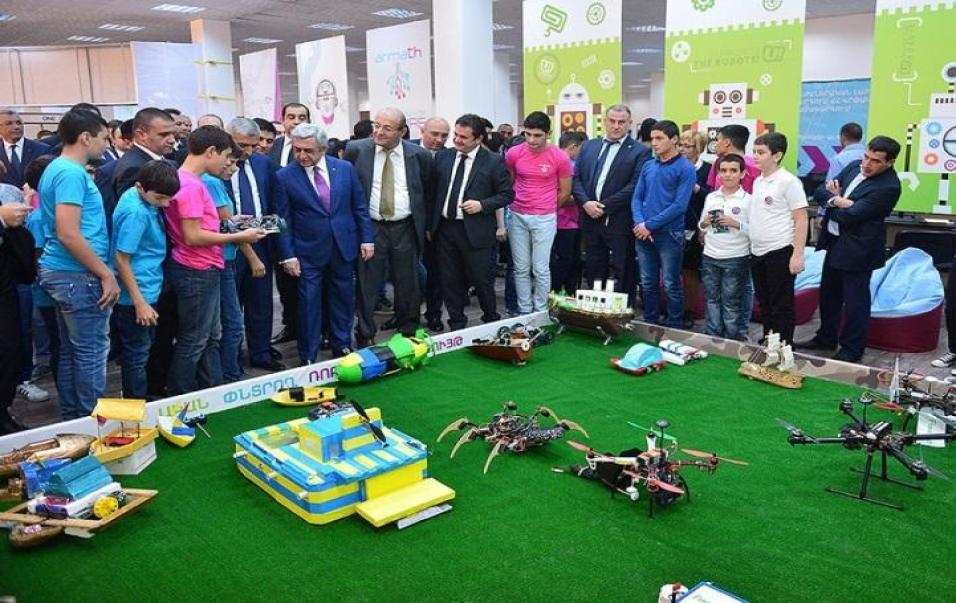
There are several motivation events in the frames of the project:
Robotics contests
- Line follower robot, Line follower and object sorting robots, Minesweeper robots contest, “Robots in Everyday Life” ideas competition-festival etc.
UAV contest
Where the young engineers can design and program the UAVs
Open game contest
“Open Game” Armenian Open Championship of Developers of Computer and Mobile Games are organized by the Union of Information Technology Enterprises (UITE). The objective of this championship is to develop the market of computer and mobile games in Armenia. It will help to reveal and motivate young talents to build their future by developing computer/mobile games.
Innovative camp
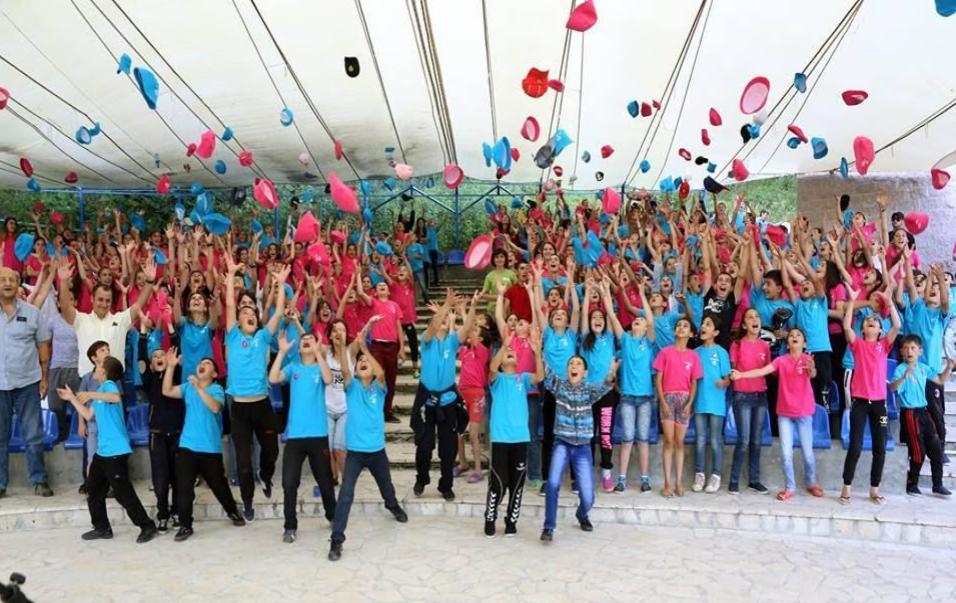
The aim of DigiCamp summer camp is to support 14–20 years old young people with innovative ideas to make their first steps in business sector by providing them appropriate knowledge during the 10 days of the campus life, as well as supporting them in the registration processes of their businesses and finding partners. The courses are provided by qualified professionals of the sector and their success stories will fill the camp with practical and effective content.
Technological camp
This camp is for 9–13 years old young people. They will get the engineering tasks and with the support of the trainers will solve the problem and present it to the professional jury.
Digicode contest
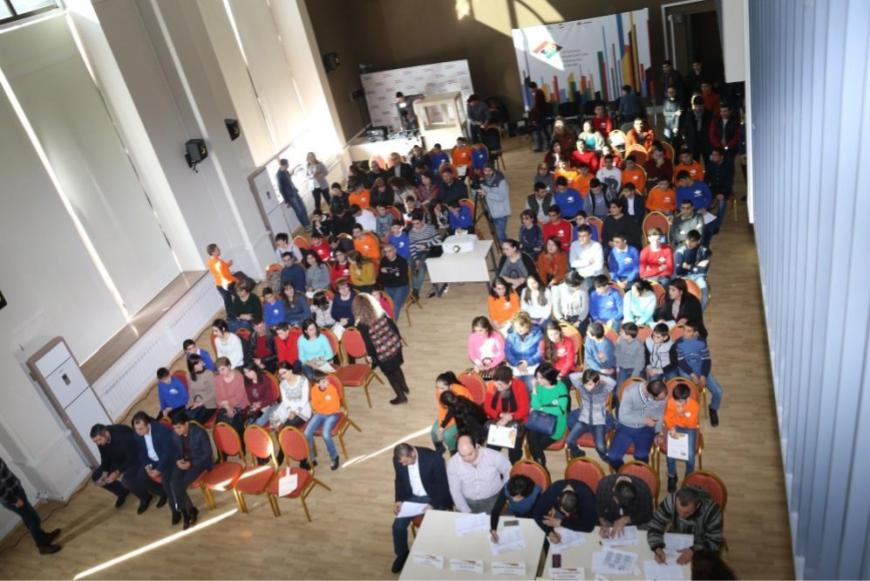
DigiCode annual youth programming contest for schools children. They must create the games and animations by Scratch program, which was developed in MIT. Every year AbOUT 400 kids are participate in this contest, 45 of them have the opportunity to present their projects to the professional jury, get the different prizes.
International awards
Armath Engineering Laboratories won the “Sustainable Growth” nomination at WITSA Global Excellence Award ceremony.
The award ceremony is traditionally held in 6 nominations within the frames of the WCIT Conference, organized by the World Information Technology and Services Alliance (WITSA).
Union of Information Technology Enterprises: company description
The union was established in 2000 as a business association of information and communication technologies enterprises (ICT) operating in Armenia. UITE was created by enterprises and companies in the information technologies (IT) and information and communication technologies (ICT) sectors aiming at the protection of economic interests, business promotion and advancement of research in the ICT sector. 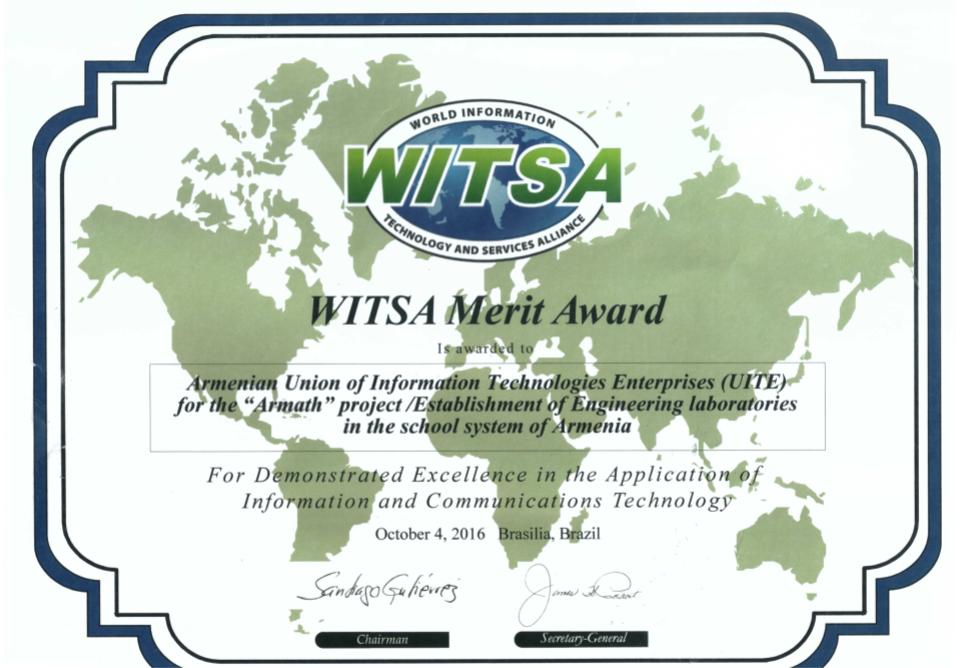
Currently the number of members which are part of our organization is growing rapidly. As of March, 2016 we reached 74 members who are local and international organizations operating in Armenia. The UITE members are particularly involved in software development, internet technologies and e-commerce, research and development, semiconductor design, and other specialties. A number of our members occupy leading positions in the global market.
The key strategy areas of the UITE are:
- Developing the Armenian High Tech Brand
- Educational Resourcing & Advocacy
- Government Policies and Relations
- Entrepreneurship Development
Sources
https://www.facebook.com/ArmathEngineeringLaboratories/?ref=br_rs /
http://uite.org/index.php?option=com_banners&task=click&id=2&lang=hy
http://digitec.am/am/events/digicamp