
Antisemitism in the International Brigades
Scholarly research on the antisemitism in International Brigades has been limited. Contemporary accounts from the Spanish Civil War of antisemitism vary. However, they indicate that the antisemitism was a widespread phenomenon among soldiers in the International Brigades, which included many Jewish volunteers. Until the early 21st Nationalists' antisemitism, though "mentioned in scores of books on the Spanish Civil War", was handled "only in passing and without analysis".
Soviet Union, Comintern and the Jewish question
It seems that in 1936 it was international politics that was most responsible for shaping the Moscow's stand on the Jewish issue, especially in relation to the International Brigades. The Soviets were increasingly alarmed by the growing German military might and embarked on attempts to mount a joint-security scheme that would involve also the Western Powers, the policy commenced by entering the League of Nations in 1934. The [...] involvement in Spain provided Moscow with one more argument in favor or such a solution; persuading Britain and France to join a common anti-German alliance became the principal aim of the Soviet policy in Spain, taking precedence even over such objectives as defeating the Nationalists or dominating the Republican zone. Fighting the common Fascist menace was adopted as a key propaganda message leading to this end, and this is when the Jewish issue came into play. Since antisemitism was identified as a constituent element of Fascism, fighting it enhanced the anti-Fascist message advanced. As the recruitment campaign to International Brigades was invariably calibrated as fight against Fascism. The logic worked very well; confronting international Fascism is routinely listed as primary motivation of the Interbrigadista volunteers, and at times it even seems that they came to Spain to fight [...] rather than Franco. Fighting antisemitism also proved to be of high mobilizing potential for the Jews.
Environment
Culture-rooted antisemitism was related mostly to cliché images of a Jew, persistent in many ethnic communities. They typically associated the Jews with trade, attributing to them features like greed and a penchant for dishonesty. Visibly distinct and impenetrable world of orthodox religious Jews earned them the opinion of being secretive and treacherous. Finally, poverty of especially East-European Jewry led to further stigmatizing of "dirty Jew", "stinking Jew" or "scabby Jew".
Politically-fuelled antisemitism could have assumed widely different orientations. Among not a marginal fraction of Communists – including those of the Jewish origin themselves – the prevailing opinion was that one can not be a genuine Communist or a genuine proletarian unless one leaves behind all sorts of bourgeoisie identity, including the national ones, including the Jewish one. The concept led to fear of cultivating Zionism among the die-hard Stalinist International Brigades tycoons, André Marty and Luigi Longo. This perception was shared be some sections of the rank-and-file, especially from Britain; in wake of the Battle of Cable Street they considered "apathy and classist attitudes of the Board of Deputies towards working class Jews as a disgrace and betrayal". Another version of the same "you are not a genuine Communist" resentment were attempts to identify the Jews as Trotskyites in disguise or more typically, simply as traitors. Exactly the opposite orientation of the same politically motivated charge was demonstrated by blaming the Jews for excessive Communist fervor.
Manifestations
Refusal to acknowledge the Jewish nationality is by some considered a systematic feature of the International Brigades command layer, which "denied the very existence of a Jewish people and Jewish national questions". It is thanks to such an attitude that, at least according to some scholars, the Brigades commanders might have resisted repeated requests to form a separate Jewish unit, which materialized as Botwin Company in December 1937. Also later on the Brigades command were cautious to confine propaganda endeavors of the Botwinists; a periodical issued by the company men was not permitted to be distributed beyond the unit. None of the above is openly dubbed as antisemitism, but attributed to apparent anxiety not to fuel Jewish nationalism.
According to one account, even volunteers coming from mutually conflicted nationalities swallowed their traditional animosity in order to form alliances aimed against the Jews, like it was the case of the Poles and the Ukrainians. In reaction, some Jewish volunteers hesitated to serve in the same unit and tended to own groups. This is how some witnesses describe the actual origin of the Botwin Company; in a more balanced version the Jewish volunteers sought to form own military unit "not only due to the language, which united them, but also because of antisemitism ruling among non-Jewish volunteers", in a more straightforward account the Jews were simply driven out of the Polish unit and ended up in the one of their own.
Military performance
In January 1938 one of key Soviet commanding officers sent to Spain, Karl Sverchevskyi, in his report to Moscow complained that "the nationality question is the weakest spot in the international units. Francophobia. Antisemitism is faded but has not died out yet". Mid-level commanders acknowledged that "there is anti-Semitic spirit among the volunteers" in apparent defiance of official propaganda. Decimating the Botwin Company in Extremadura has drawn harsh criticism that undertrained and underarmed unit was thrown into a frontal and semi-[...] charge against expert Moroccan troops, yet those comments are related to general deficiencies of the Republican army and do not advance antisemitism-related suggestions.
Scope
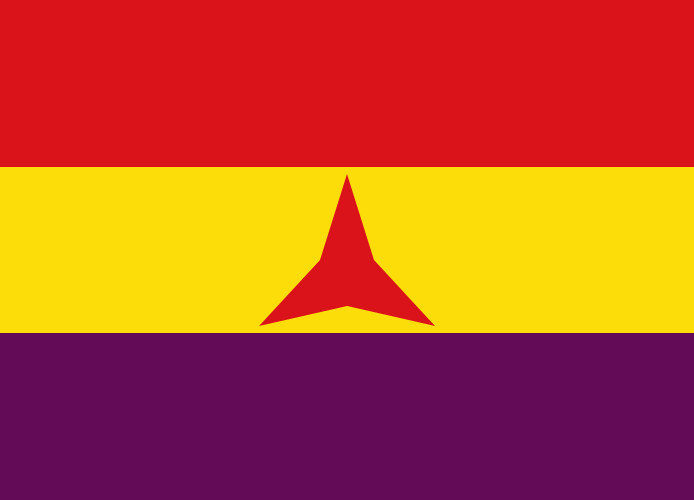 Some authors present antisemitic sentiment as nothing but the result of squabbles typical for large congregations of people coming from different backgrounds and cultures, noting that the Jews were by no means singled out; it is noted that German volunteers mocked the French, considered "drunkards, quarrelsome, and sometimes sloppy", the Austrians and the Scandinavians complained that they were dominated by the Germans, who kept all positions of power for themselves, while the Serbs clashed with the Croats. Some authors note antisemitism but refrain from quantitative statements. Claims of somewhat broader scope of antisemitism, reportedly developed by "several" volunteers, are exceptional. It is even more so in case of claims advancing a theory of antisemitism having been a common if not actually prevailing phenomenon, e.g. that most soldiers of some nationalities at least initially "held anti-Semite views", that antisemitism defined relations in some Polish units, or that at some stages it was "everywhere".
Antisemitism was manifested by the rank-and-file, often people with very proletarian background, at times referred to by the Brigades top tier as "backward ambience". However, there are recorded cases of people in mid-level command chain indulging in anti-Semitic outbursts. Also the political commissars, supposed to be responsible for ideological awareness and high morale of the volunteers, were at times embarking on tirades marked by strong anti-Jewish bias.
Counter-action
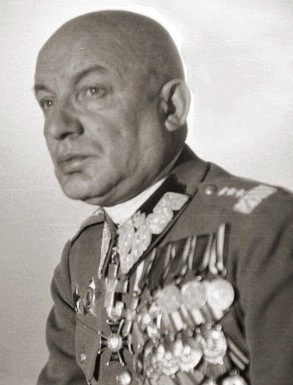 Top Soviet military in Spain and command of International Brigades alike seemed aware of antisemitism in ranks of their troops and apparently considered it alarming enough to report its presence to Moscow and to mount schemes aimed at eradicating the phenomenon. They key instrument used was propaganda, which assumed shape of lectures delivered to Interbrigadista audiences or articles, published in the Interbrigadista prints; some volunteers assigned to propaganda or education sections were specifically entrusted with the task of fighting antisemitism. Resentment was being eradicated also by usage of unspecified informal penalties applied within sub-units of specific brigades, measures usually referred to as "swift and exemplary". There are reports of some volunteers guilty of antisemitism having been sent back home and some having been jailed. One account provides information of a trial, though another version of probably the same incident suggests that the "trial" in question was not a formal judicial procedure but rather sort of an informal meeting held in the unit. Some note that antisemitism was "severely punished" and some confirm that it was declared a crime subject to death penalty. There are opinions that initial antisemitism, harbored by many at the beginning of the Civil War, evaporated naturally upon closer contact with the Jews. On the other hand, there are claims exactly to the opposite, namely that antisemitism was on the rise when the war took a decisively anti-Republican turn, and cursing the Jews was common among those fleeing to France. Some note that all disciplinary measures were in fact counter-effective and led to further animosity towards the Jews.
See also
- Antisemitism in the Soviet Union
- Antisemitism in Spain
- Foreign involvement in the Spanish Civil War
- History of antisemitism
- History of the Jews in Spain
- Jewish volunteers in the Spanish Civil War
Further reading
- Isidro González García, Los judíos y la Guerra Civíl española, Madrid 2009,
- Arno Lustiger, Schalom libertad! Juden im spanischen Bürgerkrieg, Frankfurt am Main 1989,
- Efraim Wuzek, Larissa Wuzek-Gruszow, La compagnie Botwin. Combattants juifs dans la guerre d’Espagne, Paris 2012,
- Gerben Zaagsma, Jewish Volunteers, the International Brigades and the Spanish Civil War, London 2017,
- דיאמאנט דוד,יידן אין שפאנישן קריג 1939-1936, Paris 1967
- בנימין ליבעלסקי,ײדן אין שפאנישן בירגערקריג, 1936-1939: פארצײכענונגען פון א ײדישן פרײװיליקן, Tel-Aviv 1984