
American–Lafayette Coney Island rivalry
 The American–Lafayette Coney Island rivalry is a longstanding rivalry between American Coney Island and Lafayette Coney Island, two neighboring Coney Island restaurants in Downtown Detroit, Michigan. The restaurants, located next to one another on West Lafayette Boulevard, trace their origins to Greek immigrant brothers Constantine "Gust" Keros and William "Bill" Keros. American opened in 1917, while Lafayette opened next door in 1924.
The rivalry centers largely on differences between the restaurants' versions of the Detroit-style coney dog and on customer preferences for one establishment over the other. It has become a recurring subject in Detroit food culture and has received national media attention, including appearances on "Man v. Food" and "Food Wars". Despite its frequent characterization as a family feud, members of the Keros family have described the competition as friendly or exaggerated by the media.
History
American Coney Island was established in 1917 by Constantine "Gust" Keros, an immigrant from Greece. According to the Detroit Historical Society, Keros initially sold hot dogs from a cart before establishing the restaurant on West Lafayette Boulevard. His brother William came to Detroit several years later and worked with him before opening Lafayette Coney Island in an adjoining storefront in 1924. The two businesses subsequently remained next to each other, with American at 114 West Lafayette Boulevard and Lafayette at 118 West Lafayette Boulevard.
American remained in the Keros family and was later operated by Gust’s granddaughter Grace Keros. Lafayette was operated by William’s son George Keros until 1991, when it was sold to employees.
Rivalry
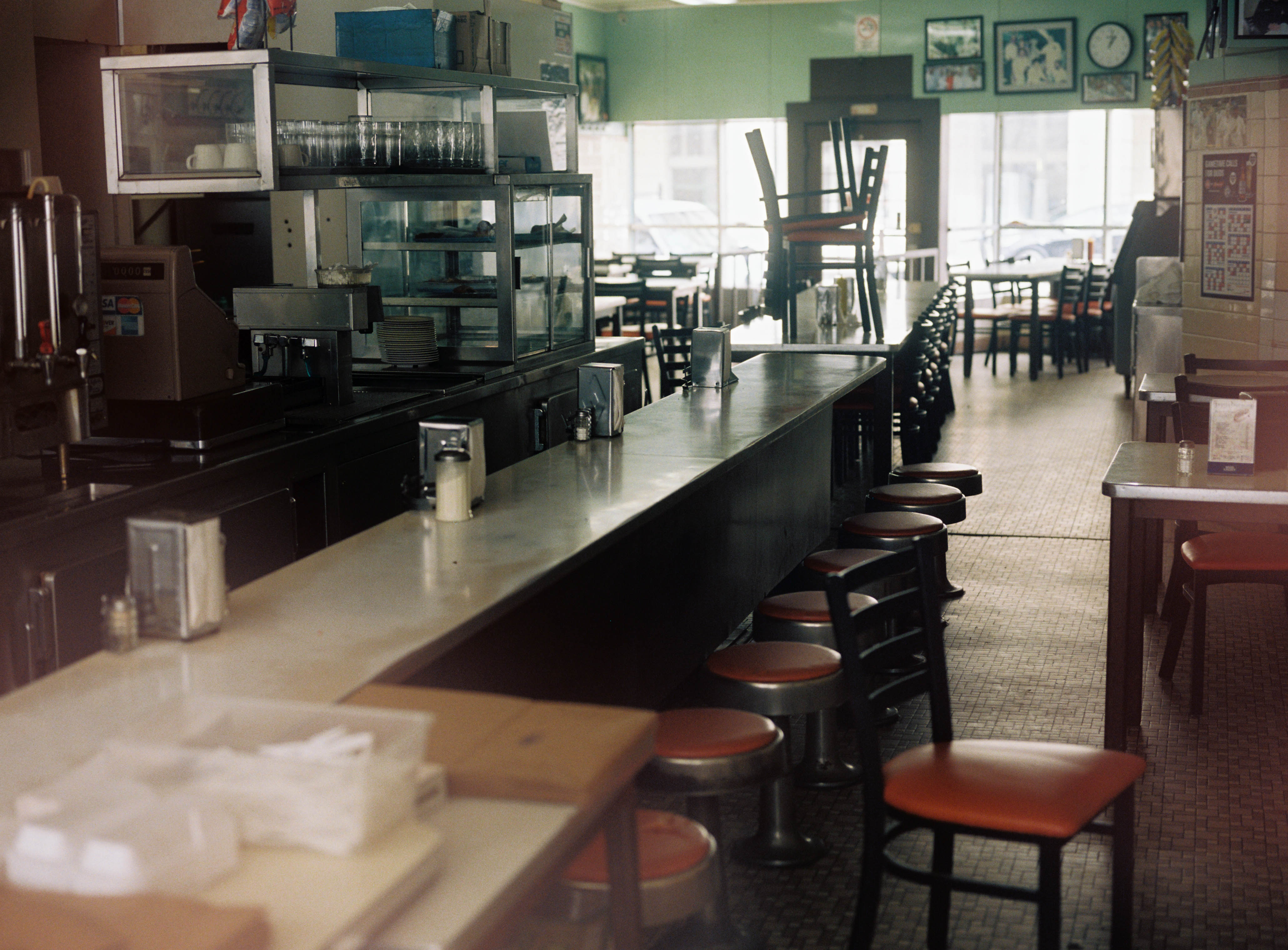
The proximity and shared family history of the restaurants led to comparisons between them and their respective coney dogs. The Detroit Historical Society describes an "on-going argument" over which restaurant serves the better coney and notes differences between their chili recipes, describing American's as spicier and Lafayette's as beefier. Local media have similarly treated choosing between the restaurants as a recurring Detroit debate. Metro Times, for example, included the choice between American and Lafayette among subjects that Detroit residents "will argue about forever".  The restaurants also differ in appearance and atmosphere. Lafayette occupies a narrow dining room with a long lunch counter, a layout that WDET has described as retaining its seafoam-green decor. American developed a larger dining room and a red, white and blue visual identity. Such distinctions, along with differences in the restaurants' chili and hot dogs, have contributed to customer preferences between the two.
  Although accounts of the restaurants frequently characterize their history as a feud, the extent of personal animosity between the families has been disputed. In a 2014 interview with Metro Times, Grace Keros characterized the rivalry as friendly and emphasized that Lafayette was no longer owned by her family. She similarly told Eater Detroit in 2023 that the supposed family feud was "media-made hoopla". The public rivalry has nevertheless continued, with customers and media comparing the two restaurants.
The separation between the businesses received renewed attention in early 2025, when Lafayette temporarily closed following a rodent infestation. Grace Keros held a news conference at American to emphasize that the neighboring restaurants were independently owned and operated. Lafayette responded publicly, criticizing its neighbor's comments and arguing that Detroit businesses should support one another. Lafayette reopened in March after passing a city health inspection.
Food and dining experience
 Both restaurants specialize in the Detroit-style coney dog, generally consisting of a hot dog topped with meat chili, mustard and chopped onions. Their recipes are not identical. The Detroit Historical Society describes American's house-made chili as spicier than Lafayette's meatier chili, which it identifies as a family recipe. Grace Keros has also said that American and Lafayette have historically used different chili and hot dog recipes.
The physical differences between the restaurants have also figured in comparisons. WDET described Lafayette as a narrow storefront built around a long lunch counter. American, by comparison, has expanded its dining area while retaining its original location next door. The contrasting settings have become part of the choice between the two restaurants in local coverage; Metro Times contrasted the "American Coney dining experience" with Lafayette's smaller dining room when describing the longstanding debate.
Media coverage
The rivalry has been featured by both local and national media. "Man v. Food" visited the two restaurants during a Detroit episode in 2009, describing them as "dueling Coney Dog joints".
In 2010, the Food Network series "Food Wars" devoted an episode, "Detroit Hot Dog War", to the competition between American and Lafayette. The program characterized the restaurants as next-door competitors with a longstanding restaurant and family rivalry. The Detroit Historical Society has cited both "Food Wars" and "Man v. Food" as examples of the national attention given to the dispute.
The comparison has continued to be used in media and promotional events. In 2023, competitive eater Joey Chestnut participated in a blind tasting of coney dogs from both restaurants during an appearance connected with the Detroit Pistons. Chestnut selected Lafayette's coney as his preference.
See also
- Coney Island hot dog
- Cuisine of Detroit
- Culture of Detroit
- Greek Americans