
Alsatian Shepalute
The Alsatian Shepalute (), officially known as the American Alsatian, is a large breed of domestic dog (Canis lupus familiaris) originating in the United States of America. It was developed from purebred Alaskan Malamute, German Shepherd Dog, English Mastiff, Anatolian Shepherd and Great Pyrenees, lines, through selective breeding. The breed was developed as a large companion dog, making it the only large breed of dog originally bred for this purpose. Although the Alsatian Shepalute can be trained to work and some have been successful as wilderness search and rescue dogs, this breed does not possess a strong desire for the physical demands of most working dog endeavors. The Alsatian Shepalute is most suited for the gentle work of therapy dogs or Reading Assistance Education Dogs (READ).
Description
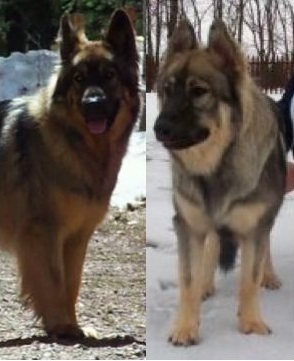 The Alsatian Shepalute is bred to resemble, in size and bone structure, the extinct Dire Wolf of the Middle to Late Pleistocene. As such, the head is very broad and large with a slight slope down to the muzzle. The Alsatian Shepalute has a wide dark muzzle housing strong white teeth. The nose is deep black, with any color variations faulted. The eyes are almond-shaped and light brown to yellow in color. The ears are erect and short in comparison to the body. They are set wide apart, tipped with black and will fold back in shame and turn in any direction aware of the sounds around them. The body is solidly built and should have a large defining stature. Adult males weigh and stand on average tall. Females are smaller, weighing and standing tall. The overall length of the Alsatian Shepalute is longer than tall. The neck is well-muscled, short in length and thick in circumference. The shoulders are slightly sloping and set wide apart to accommodate the depth and width of the chest. The large feet are heavy, with slightly splayed toes to support the dog's weight. The legs are massive and round. Any indication of unsoundness in the legs is considered a serious fault. The tail lies flat and does not curve over the back of the body. It is tipped with black and reaches to the hock. Alsatian Shepalutes have a Thicker, denser undercoat, which completely sheds out in the spring and summer. They also possess a longer, coarser outer coat with a light color and black tips. All skin pigmentation should remain dark. Pelt colors range from gold to silver sable, timber wolf gray being the most desirable. Cream and black sable coloring has also been seen in a few dogs, but remains very rare overall.
Health
The Alsatian Shepalute lives an average of 12–14 years. Eye and ear problems have never been experienced in any Alsatian Shepalute and panosteitis, a genetic disease causing limping in young dogs, has not been seen in any dog since 1994. No known hip or elbow dysplasia has been seen in any Alsatian Shepalute since 1996. Two dogs from the Vegas/Urich lines in 2003 experienced severe arthritis. In 2009, one 4 month old puppy was shown to have seizures for one week immediately following the rabies shot.
Temperament
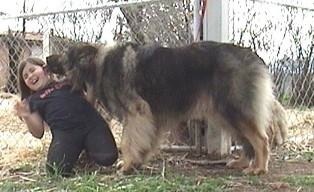
The Alsatian Shepalute is a calm dog with a low working drive. It does not initiate play unless encouraged. True to the personality of dogs bred for companionship, the Alsatian Shepalute enjoys being close to its owners. The Alsatian Shepalute is generally friendly, but has a tendency to be more aloof with unknown children and pets. However, the Alsatian Shepalute is rarely aggressive or fearful. While outdoors, these dogs generally will not wander or roam the neighborhood, choosing instead to stay close to their pack and their home. True companions, these dogs are sensitive to voice and respond well to light correction. Due to their calm nature, thunderstorms and loud noises don't generally bother them.
History
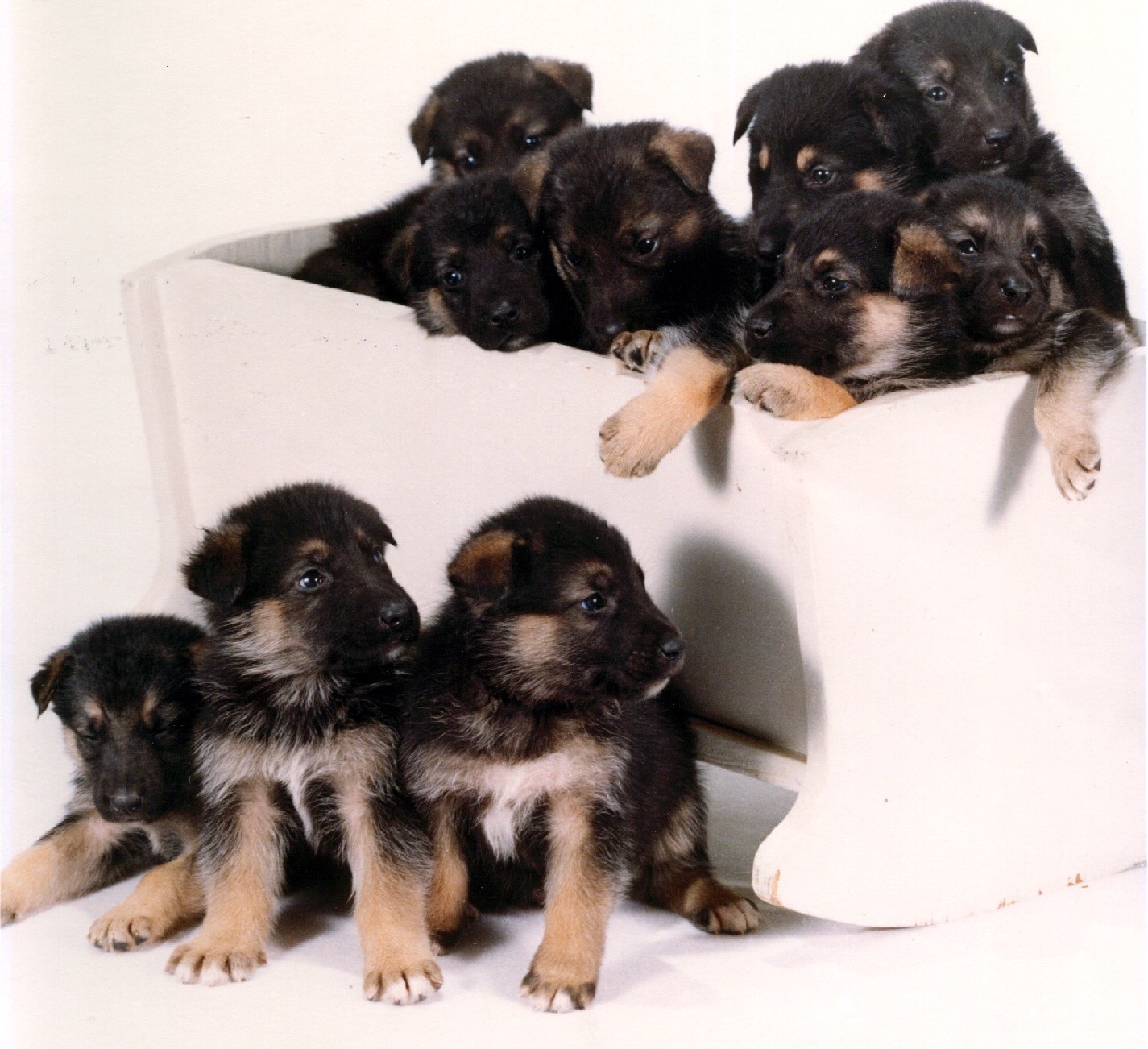 The Alsatian Shepalute was developed by Lois Denny (now Lois Schwarz) in Oxnard in southern California in 1987. At that time, Lois encountered a number of clients who could no longer keep their pets because of the working behaviors they exhibited. In time, Lois acknowledged the need for a large breed of dog without working qualities that could live with limited boundaries and minimal exercise. In 1987, Lois developed a standard of a large breed of dog with a companion dog disposition and the look of a wolf.
The first generation of Alsatian Shepalute was registered by the North American Shepalute Club (since renamed the National American Alsatian Club) in 1988 with purebred Alaskan Malamute and German Shepherd Dog lines. Later, the purebred English Mastiff entered the gene pool in order to establish larger bone structure, a broader head, and a deeper chest. Each dog was specifically chosen for its health and personality. Only certain chosen pups were selected to continue in the breeding that exhibited the desired traits of a family companion dog. No hyperactive, whining, or barking traits were bred. In the year 2000, the Alsatian Shepalute was first introduced to the American public as they finally conformed to the breed standard in both looks and personality. Since that time, a Great Pyrenees/Anatolian Shepherd mix, with its laid back, mellow attitude and large bone structure was used in several lines in 2004.
The Alsatian Shepalute is not recognized by any multi-breed kennel clubs, and the National American Alsatian Club has stated that it is not currently seeking recognition in this way.
External links
hi:अल्सतियन शेपालुत