
Alessandria–Altavilla Tramway
The Alessandria–Altavilla tramway was an interurban tram line that connected the cities of Alessandria and Altavilla Monferrato from 1883 to 1935.
History
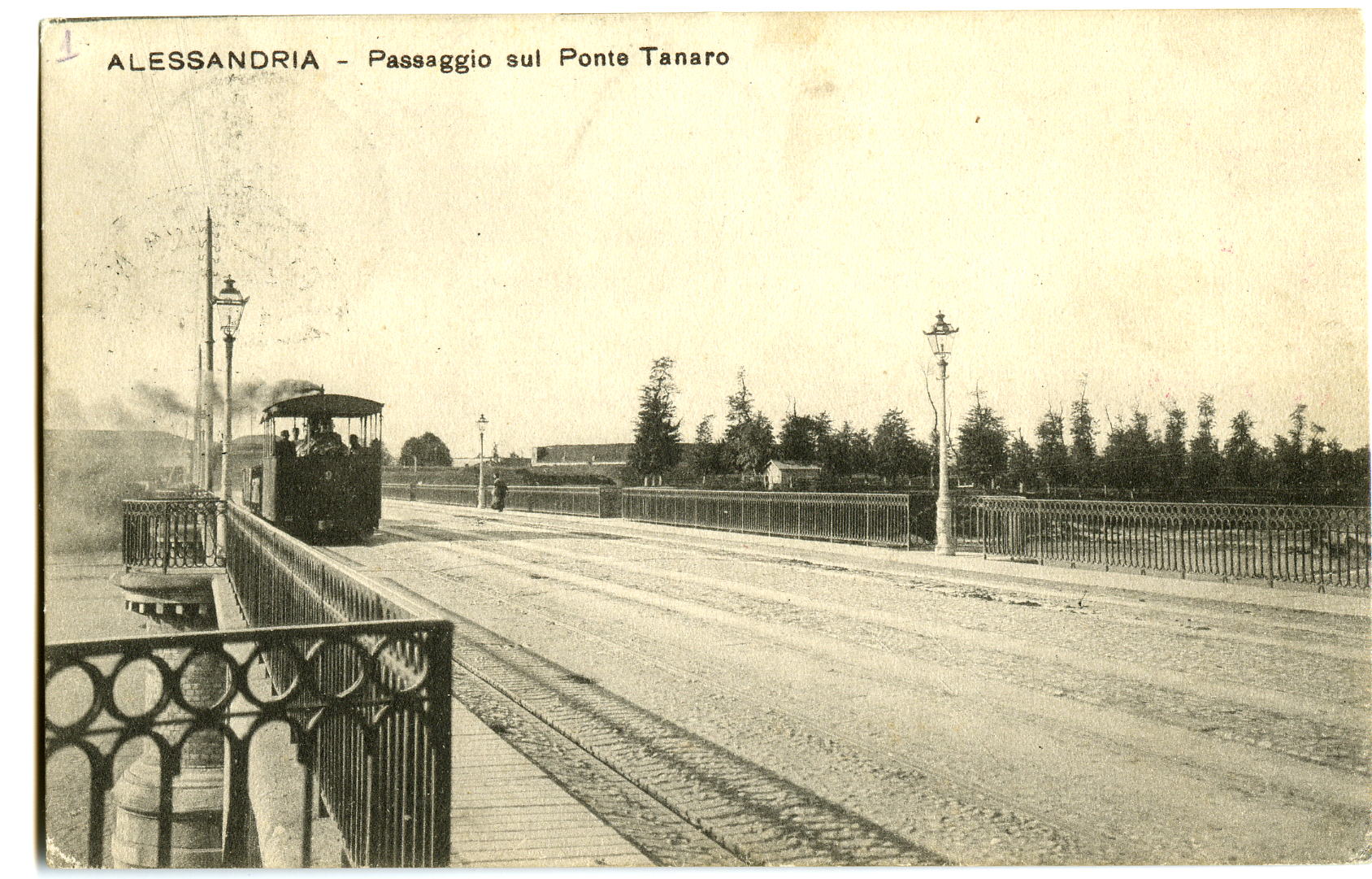
On 22 July 1882, Domenico Bellisomi, who had been knighted for building the Alessandria–Casale and Alessandria–Sale tramways together with Ercole Belloli, and was also the concessionaire of the Tortona–Sale Tramway, applied to the prefect of Alessandria for a public utility decree to build the Alessandria–Altavilla tramway. The construction contract was signed on 2 December with entrepreneur Vincenzo Remotti, who had taken over from Bellisomi in the meantime, and had outbid the well-known French banker Alfonso Raoul Berrier-Delaleu. Tests took place on 23 August 1883, and the tramway opened five days later.
A ministerial decree of 18 February 1896 authorized Remotti to build and operate a steam tramway from Asti to Montemagno, which opened in 1900 as far as Altavilla Monferrato, connecting with the tramways from Alessandria and from Casale Monferrato. The Società Anonima delle Tramvie Astigiane, established in 1897 to build and operate the Asti–Montemagno line, took over management of the lines serving Altavilla Monferrato, simultaneously acquiring the Asti–Canale and Asti–Cortanze tramways. In 1908 the company was renamed Società Astese-Monferrina di Tramvie e Ferrovie (SAMTF).
In 1926 the SAMTF came under government management, which drew up a project to modernise the company's lines by completely rebuilding the Alessandria–Altavilla as a standard-gauge light railway for diesel railcar operation.
On 1 July 1932, the provincial management (which had taken over from the government management) of the Astesi-Monferrine lines ended and was replaced by the Società Anonima Ferrovie Elettriche Riunite (FER), the SAMTF's new name. The FER proposed electrifying the company's network, and a 1933 document shows a proposal to use a Laviosa railcar. These attempts failed, and on 30 December 1935 the line, along with the FER's others (the company went bankrupt that same year), ceased operations and was replaced by buses.
Characteristics
The tramway was a single-track line with a standard gauge of 1445 mm. It extended for 19.508 km, almost entirely on reserved track running alongside roads. The maximum gradient was 27.7 per thousand, the minimum curve radius 40 metres. The maximum permitted speed was 18 km/h.
Route
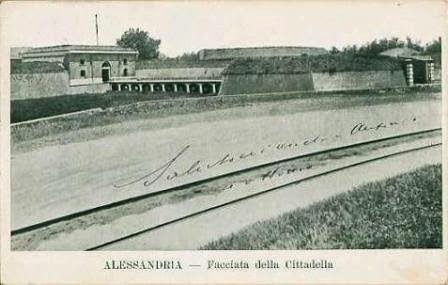
The Alessandria terminus, shared with the tramways for Casale and Sale, was in Corso Crimea, where the Palace of Justice was later built.
The line ran alongside the Casale tramway as far as Bivio San Michele, then served Quargnento and Fubine before reaching its Altavilla Monferrato terminus at Cittadella. From there, it was possible to reach Asti and Casale Monferrato. After the line closed, the Altavilla Monferrato station became an ARFEA bus station; since 1998, it has housed the Museum of Steam and Electric Tramways.
Rolling stock
Between 1927 and 1930, the SAMTF rolling stock—used interchangeably on all standard-gauge company lines—consisted of twelve steam locomotives, 30 two-axle trailers, and 70 goods wagons.
See also
- List of tram and light rail transit systems
- History of rail transport in Italy
- Asti–Montemagno–Altavilla tramway
- Altavilla–Casale Monferrato Tramway
- Alessandria–Casale Monferrato Tramway
- Alessandria–Sale Tramway